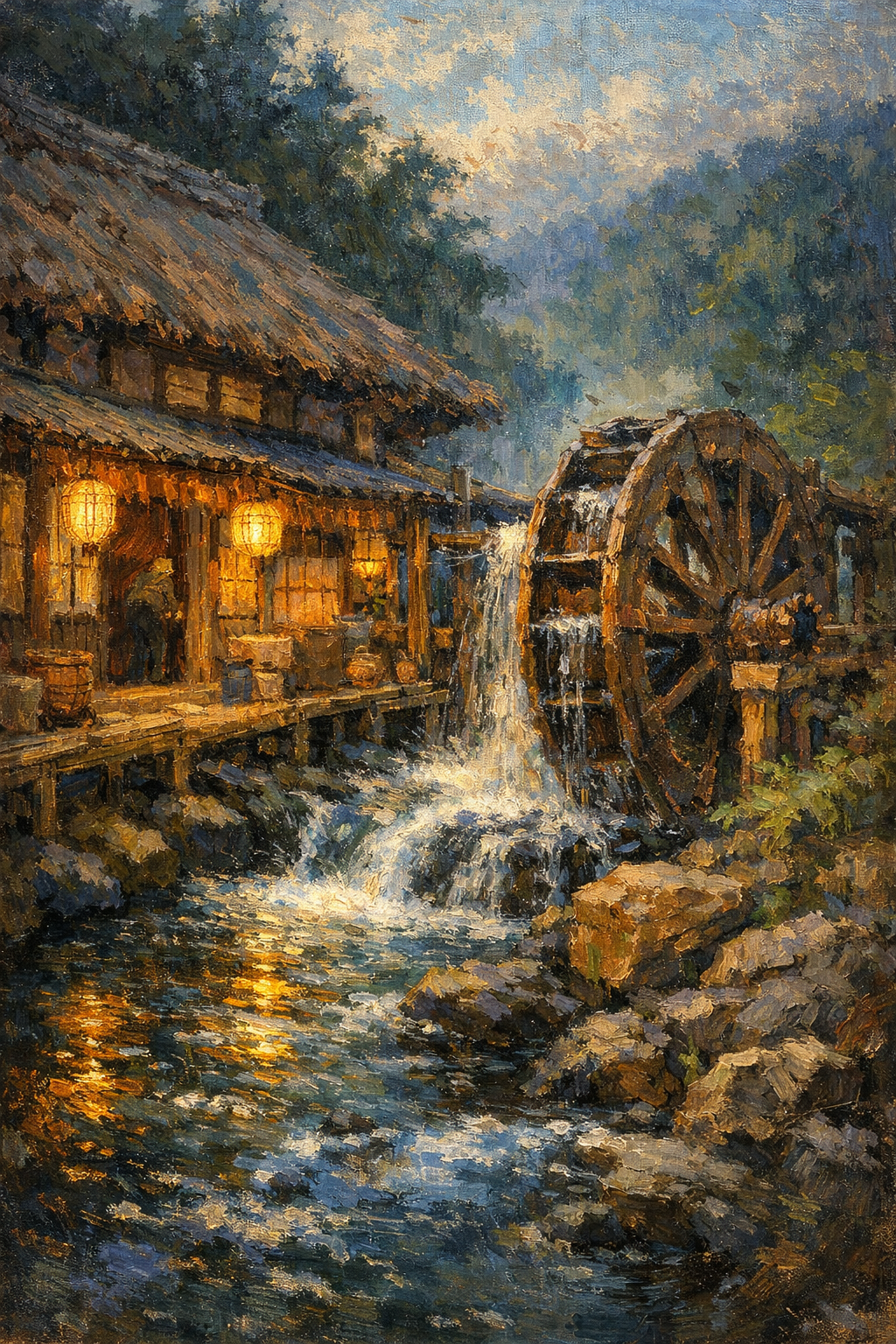
Lantern Light in the Whispering Woods
Critique
1. Introduction The landscape painting depicts a traditional watermill situated adjacent to a rustic dwelling during the transition from dusk to evening. The scene captures a moment of quietude in a mountainous or forested setting, where man-made structures integrate seamlessly with the natural environment. It serves as a study of architectural form and the interplay between light and shadow. 2. Description On the left side of the composition, an old house with a thatched roof is illuminated by warm lanterns, casting a golden glow onto the wooden veranda. A large wooden waterwheel occupies the right foreground, positioned over a rushing stream that cascades over rocky terrain. The water splashes and reflects the interior lights, creating dynamic highlights against the dark, cool tones of the surrounding foliage. 3. Analysis The artist utilizes a rich, impasto-like texture with visible brushstrokes that emphasize the materiality of wood, thatch, and stone. The color palette is built on a strong contrast between the incandescent oranges of the lanterns and the deep blues and greens of the twilight background. This chiaroscuro effect directs the viewer's eye from the house to the movement of the water. 4. Interpretation and Evaluation The work evokes a sense of nostalgia and tranquility, suggesting a harmonious relationship between human industry and the natural world. The technical execution of the water's movement is particularly effective, balancing the solidity of the mill with the fluidity of the stream. It can be evaluated as a successful atmospheric piece that prioritizes emotional resonance over precise botanical or architectural detail. 5. Conclusion While the initial impression is one of a simple rustic scene, closer observation reveals a sophisticated handling of light as a narrative element. The painting ultimately stands as a testament to the beauty found in traditional life and the enduring power of rural landscapes. The deliberate use of texture ensures that the scene feels tactile and immersive for the observer.
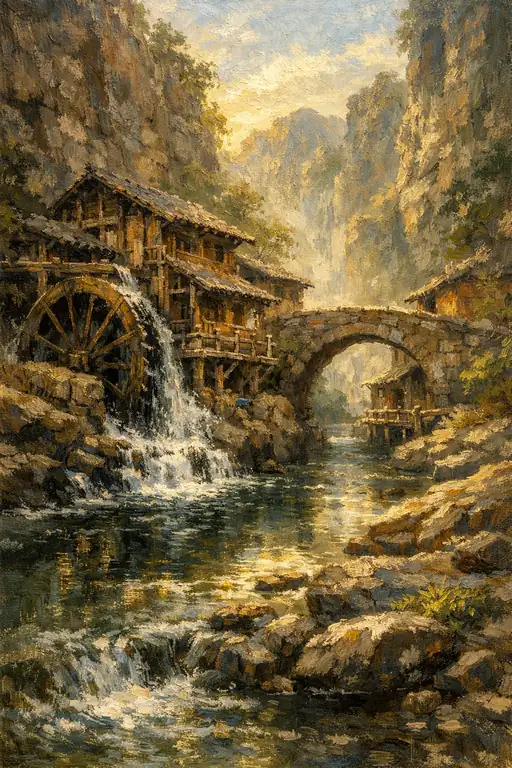 The Eternal Wheel of Time
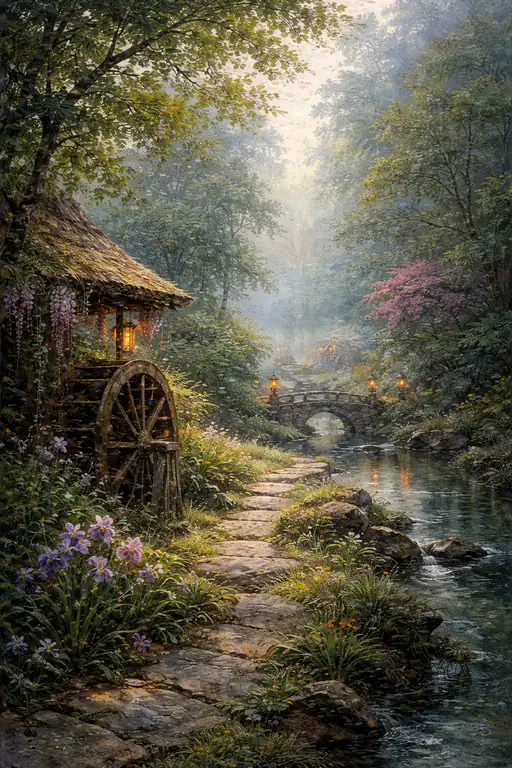 Whispers of the Waterwheel
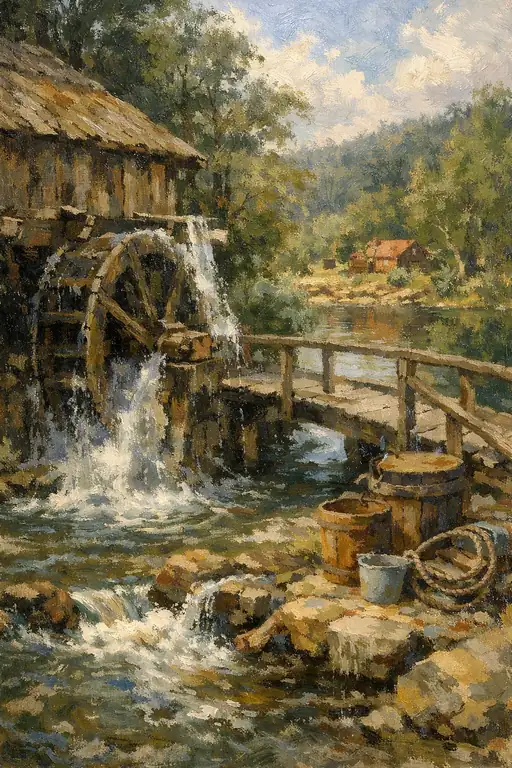 Song of the Forest Mill
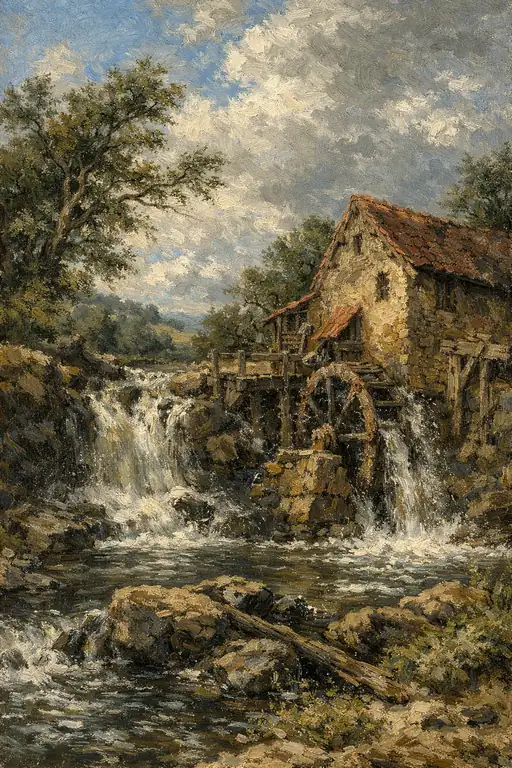 Echoes from the Old Mill
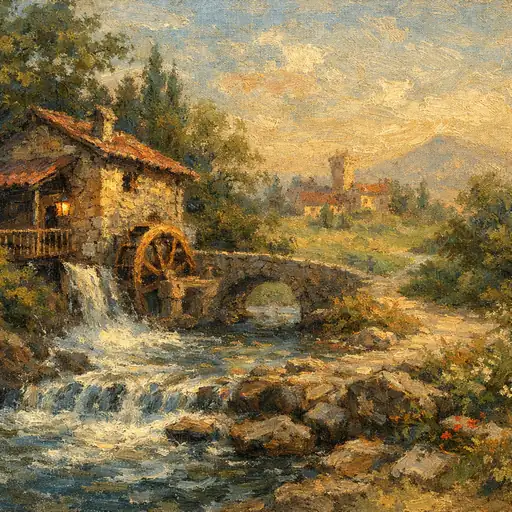 Golden Morning at the Rustic Mill
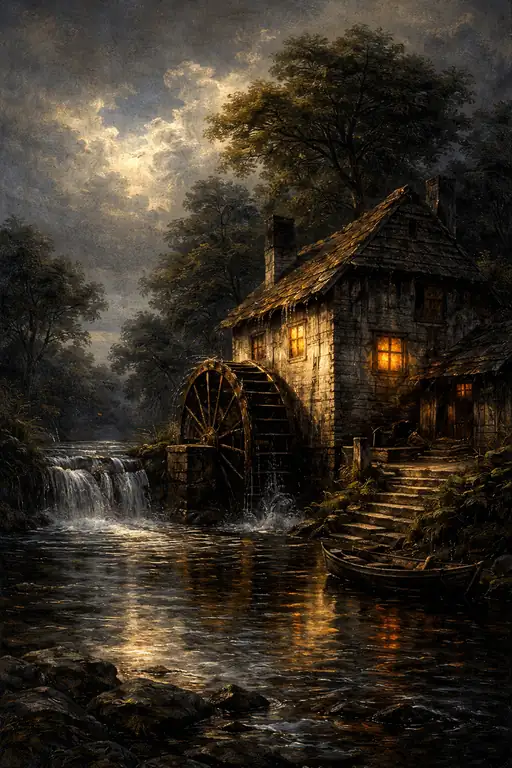 Moonlight over the Restless Wheel
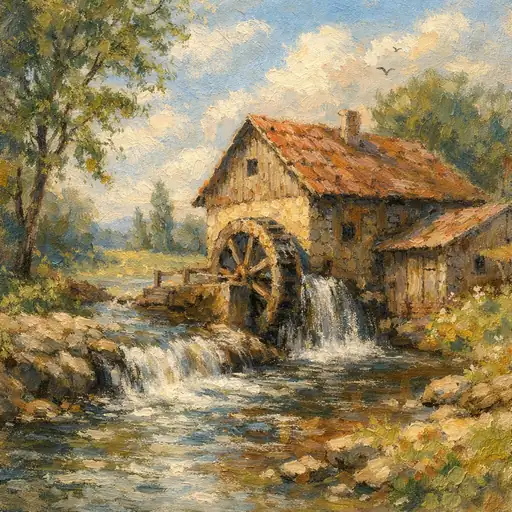 Rustic Watermill and Stream on a Sunny Day
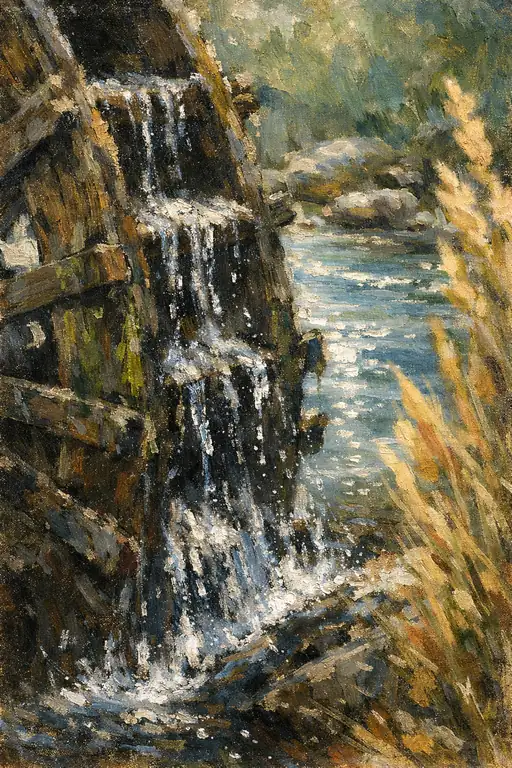 The Wheel of Time
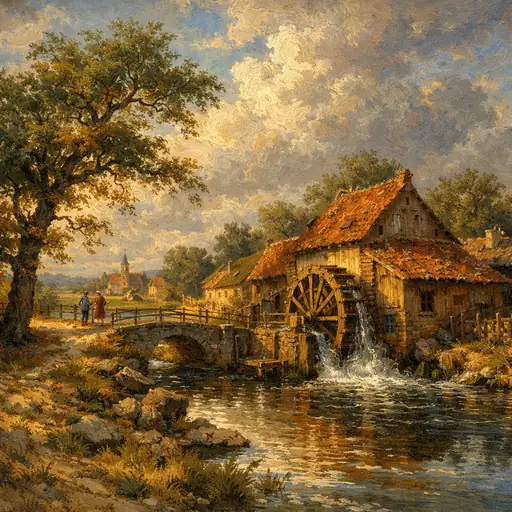 Silent Watcher by the River
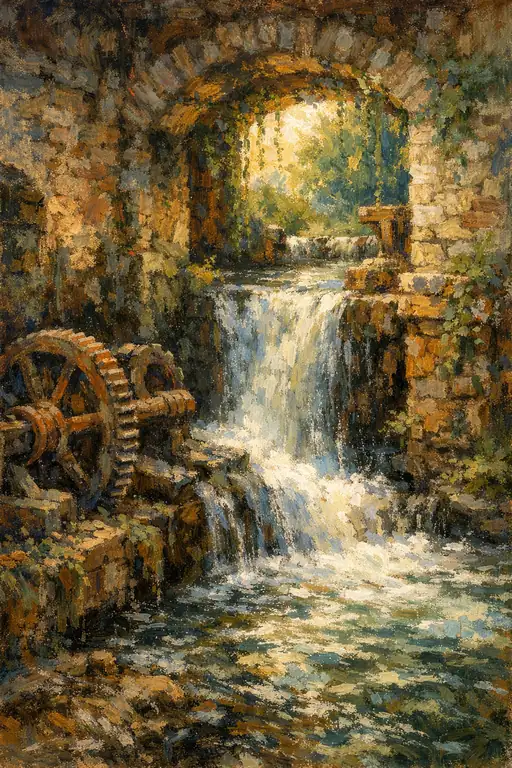 Embrace of the Ivy: The Forgotten Wheel