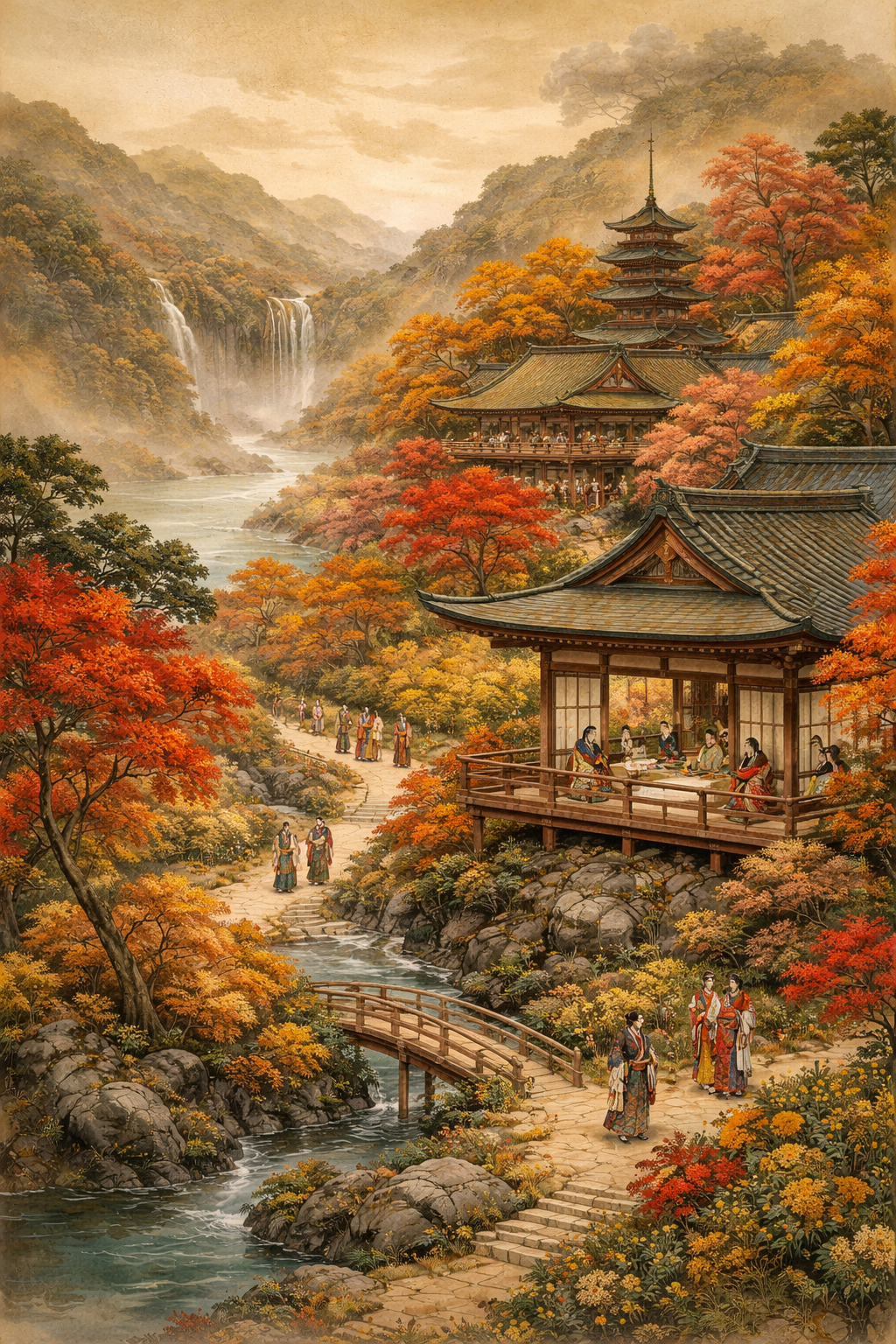
Crimson Canopy
Critique
1. Introduction This expansive landscape painting depicts a grand mountain temple during the height of autumn, capturing a scene of serene grandeur. The entire canvas is bathed in warm, golden tones, inviting the viewer into a world where nature and human civilization exist in harmony. It stands as a remarkable testament to the beauty of the seasons and the enduring grace of traditional culture. 2. Description On the right, a multi-storied wooden structure with heavy tiled roofs serves as a focal point, with figures in elegant attire seen socializing within. In the foreground, a stream flows under a wooden bridge, while women in colorful kimonos walk along a sun-drenched stone path. The background features mist-covered peaks and a slender waterfall, framed by brilliant red maple foliage. 3. Analysis The composition utilizes diagonal planes to create deep perspective, leading the eye from the foreground bridge to the distant mountains. The color palette is dominated by rich ochres and crimsons, balanced by the cool blues of the water and weathered wood. Soft, diffused light filters through the atmosphere, highlighting the meticulous details in every leaf and garment pattern. 4. Interpretation and Evaluation Beyond its realistic portrayal, the work suggests an idealized vision of a spiritual sanctuary, offering profound tranquility. The precision of the brushwork and the sophisticated use of color reveal exceptional technical skill. By merging the majesty of the natural world with the refined beauty of architecture, the artist has created a piece that is visually and intellectually engaging. 5. Conclusion This masterpiece encapsulates the transient beauty of autumn within a framework of timeless tradition. While the initial impact comes from the vibrant colors, a closer look reveals a wealth of detail that deepens the appreciation for the scene. Ultimately, the painting serves as a powerful expression of respect for nature and the pursuit of aesthetic balance.
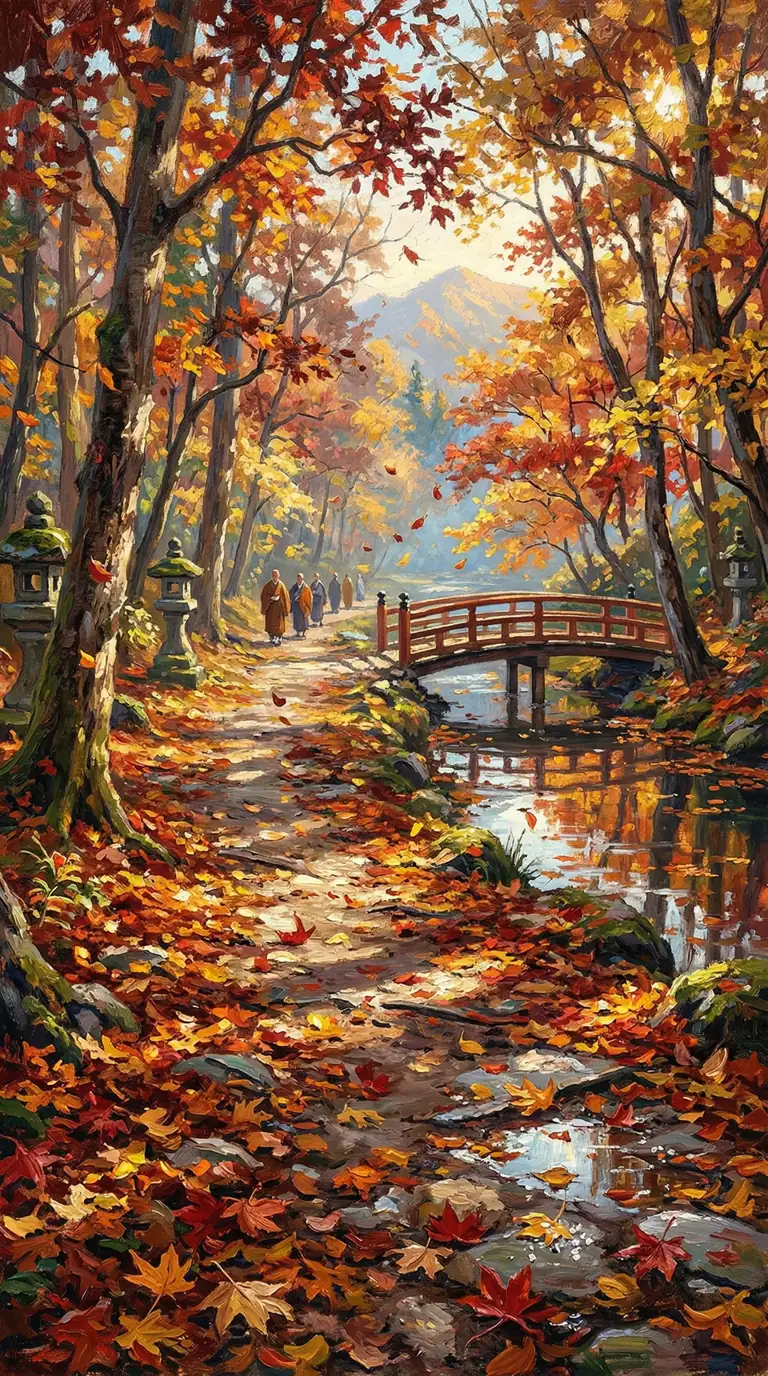 Whispers of the Autumn Trail
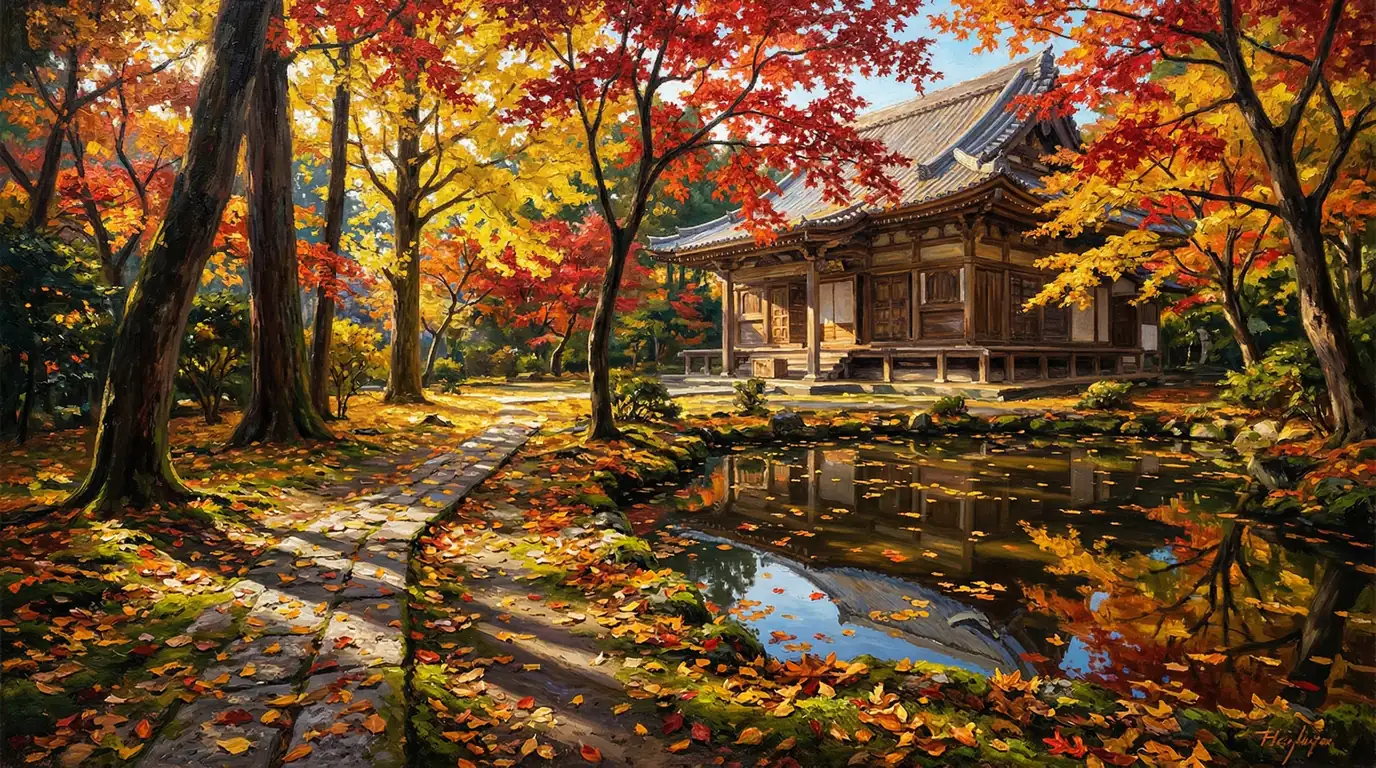 Crimson Reflections at the Temple Pond
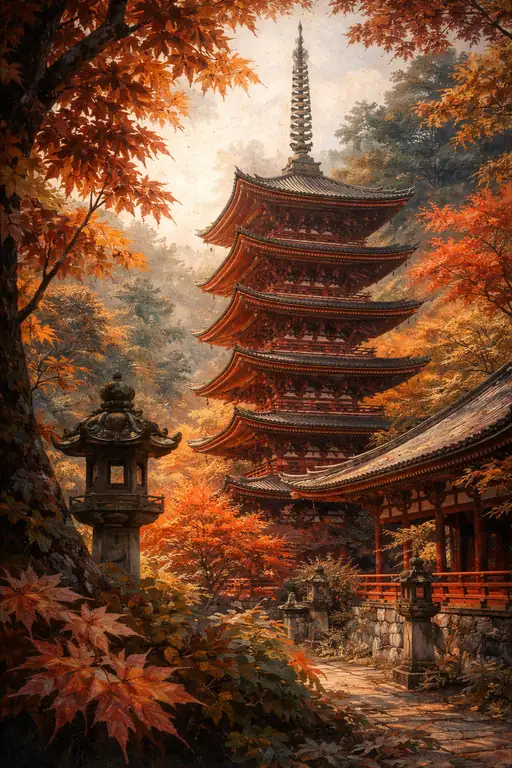 Autumn's Golden Reverie
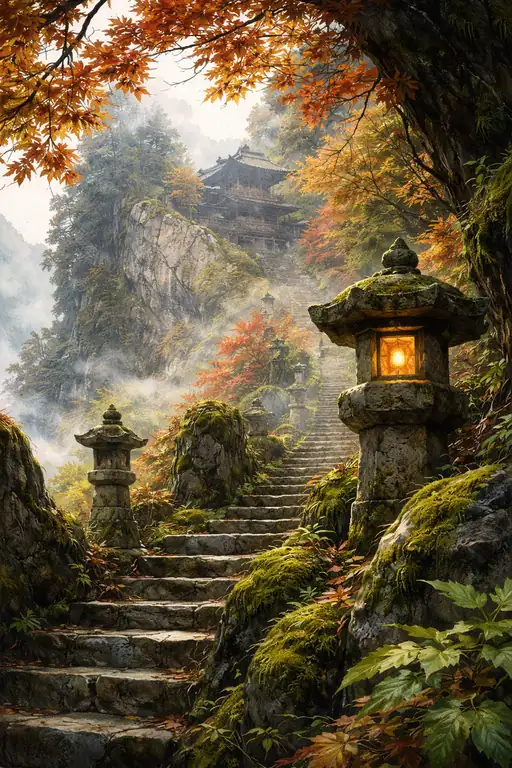 Guiding Light in the Mystic Mist
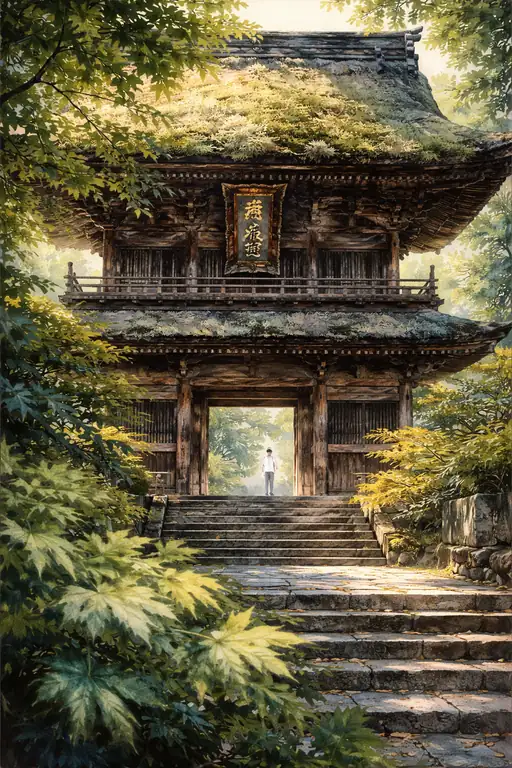 Light Through the Ancient Gate
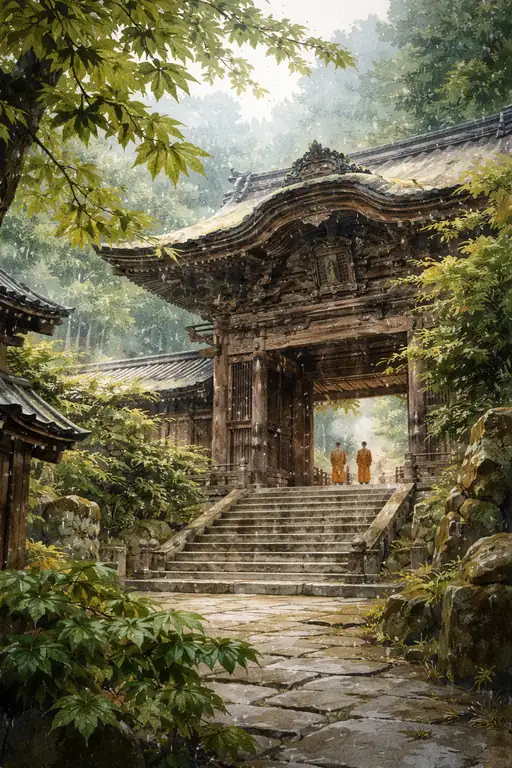 Rain's Serenade in the Sacred Grove
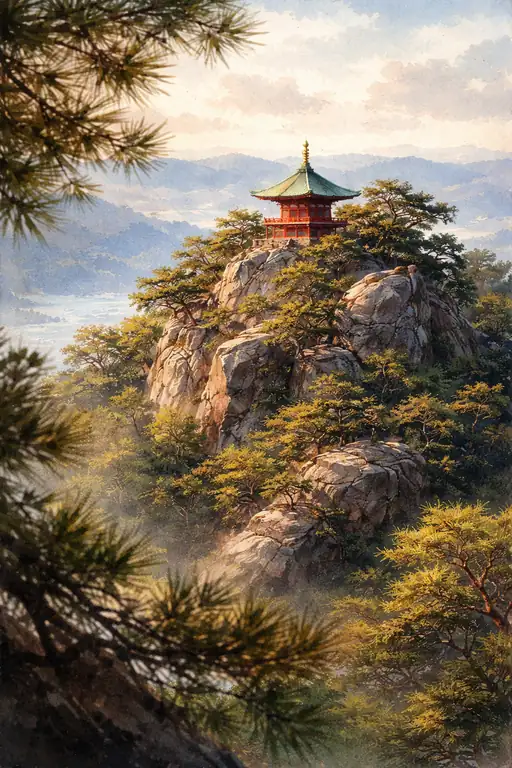 Sanctuary Above the Clouds
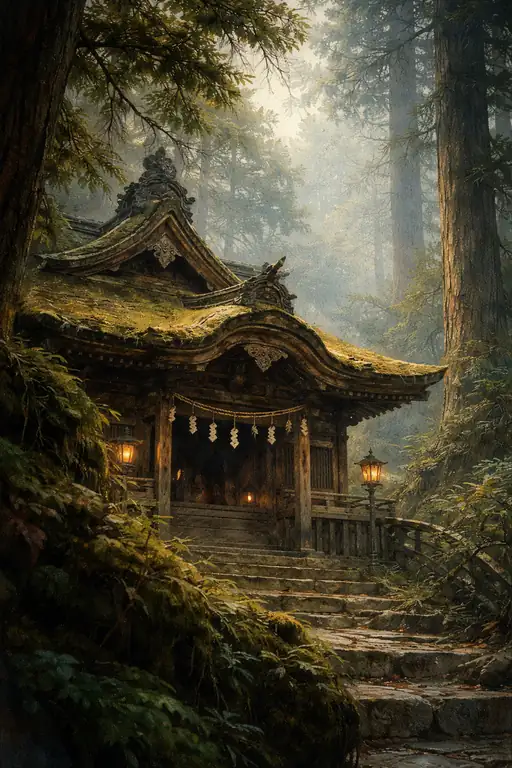 Sanctuary in the Shadows
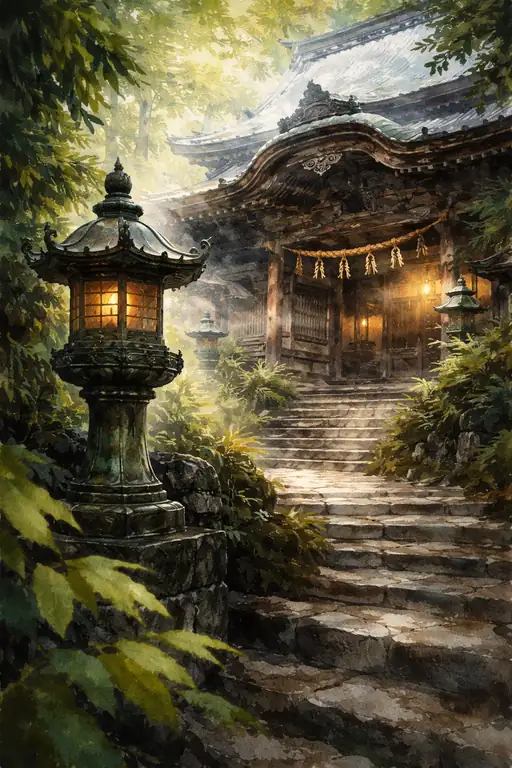 Sanctuary of the Silent Forest
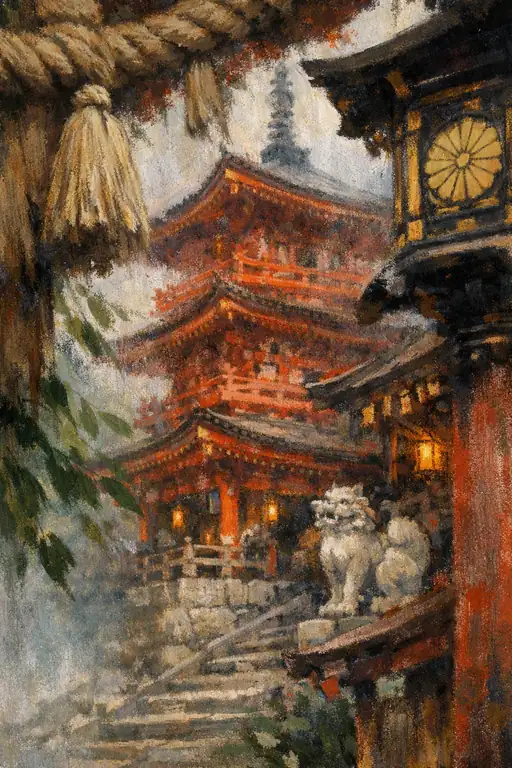 Vermilion Reverence