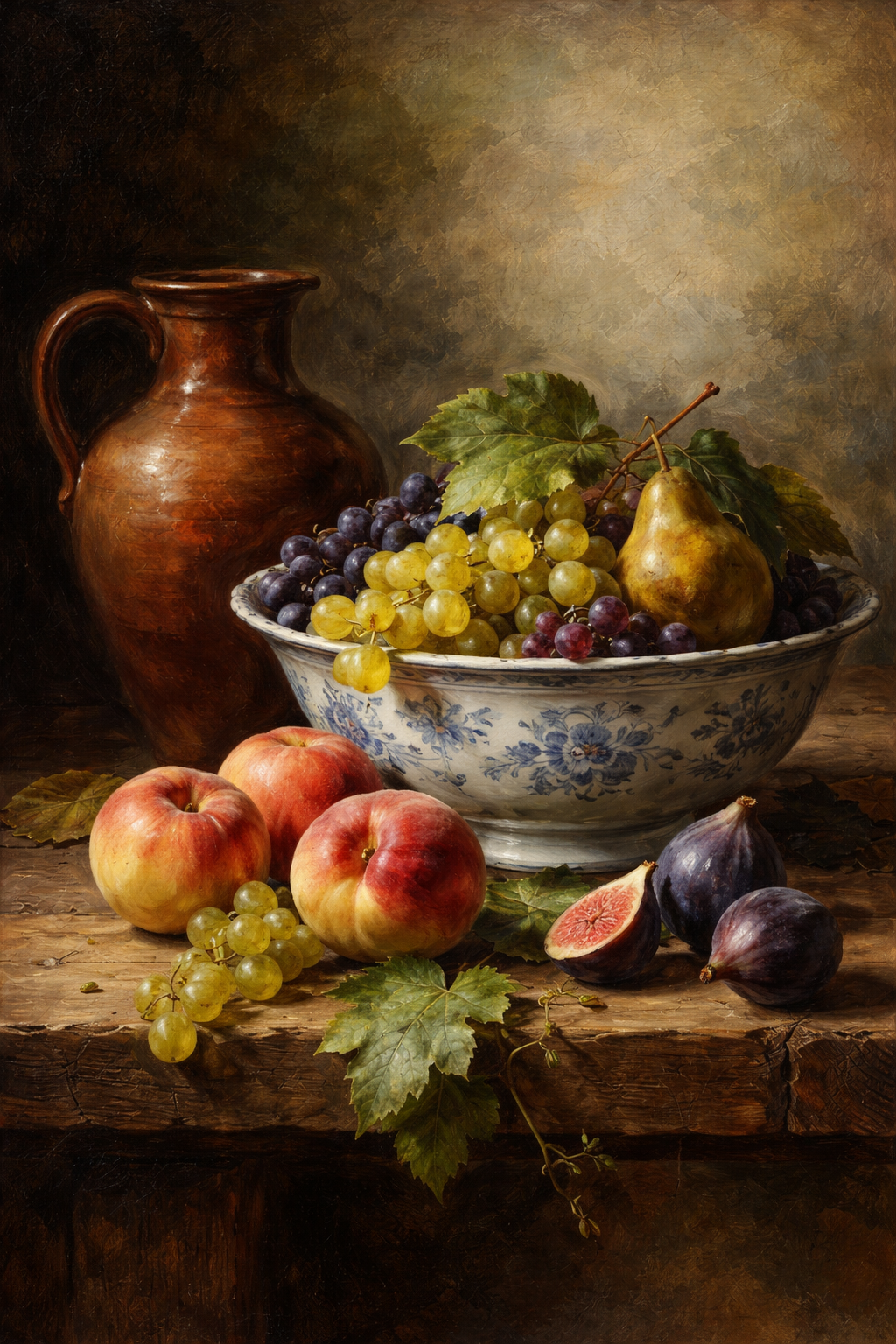
Harvest of Passing Seasons
Critique
1. Introduction This work is a classical still life painting that adheres to the traditions of Western academic art, particularly reminiscent of the Dutch Baroque era. The composition features a harmonious arrangement of common household objects and a variety of fruits, presented on a rustic wooden tabletop against a textured, neutral background. The lighting and color palette suggest a deliberate attempt to capture the quiet dignity of everyday items, elevated through careful artistic rendering. This piece serves as a study in texture, light, and form, inviting the viewer to contemplate the subtle beauty of a domestic setting. 2. Description The central focus of the painting is a large, white porcelain bowl with delicate blue floral patterns, overflowing with ripe green and deep purple grapes and a large yellow pear. To the left, a robust, glazed brown ceramic pitcher stands with a curved handle, its surface reflecting a subtle highlight. In the foreground, three vibrant peaches with soft, red and yellow skins are positioned alongside a small cluster of translucent green grapes. To the right, three figs are depicted, one of which has been sliced open to reveal its intricate, ruby-red interior. All these elements rest on a thick, aged wooden table with visible grain and wear. 3. Analysis The artist employs a strong chiaroscuro effect, with a primary light source originating from the upper left, casting deep, soft shadows toward the right. This technique creates a sense of three-dimensional volume and emphasizes the varied textures of the objects, from the smooth glaze of the pitcher to the velvety skin of the peaches. The color scheme is dominated by earthy browns and ochres, providing a warm foundation that allows the white of the bowl and the saturated reds of the fruit to stand out. The composition is carefully balanced, with the verticality of the pitcher on the left countered by the horizontal spread of the fruit on the right. 4. Interpretation and Evaluation This painting can be interpreted as a modern homage to the vanitas tradition, where the abundance of ripe fruit symbolizes both the wealth of nature and the inevitable passage of time. The technical execution is highly proficient, particularly in the rendering of light as it interacts with different surfaces, creating a tactile quality that is almost palpable. The choice of a low viewpoint places the viewer at the level of the table, fostering a sense of intimacy and presence within the scene. While the subject matter is traditional, the precision of the brushwork and the clarity of the composition demonstrate a high level of artistic discipline and aesthetic refinement. 5. Conclusion The initial impression of a simple domestic scene evolves into a profound appreciation for the artist's ability to transform ordinary objects into a sophisticated visual experience. The interplay of light and shadow, combined with the rich variety of textures, ensures that each element contributes to the overall unity of the work. This painting succeeds in capturing a moment of stillness and beauty, standing as a testament to the enduring appeal of the classical still life genre. Through this focused study, the viewer gains a renewed perspective on the intricate details and harmonious balance that can be found in a well-composed arrangement.
Same Subcategory
Similar Artworks
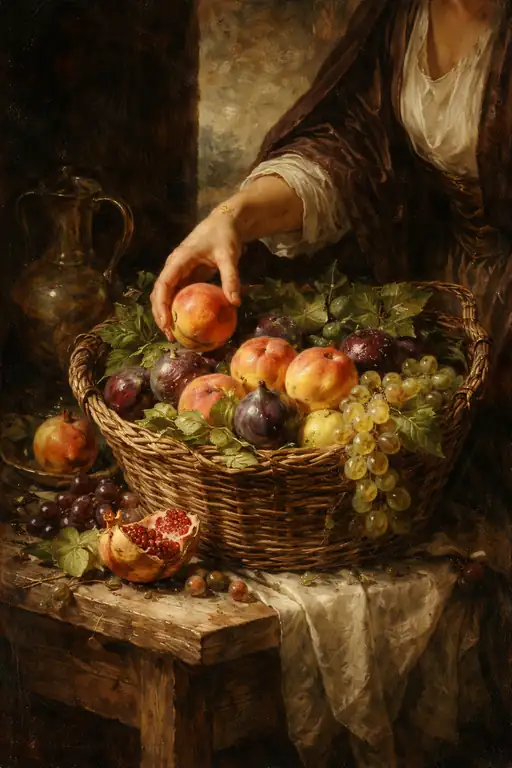 The Bounty of Autumn's Breath
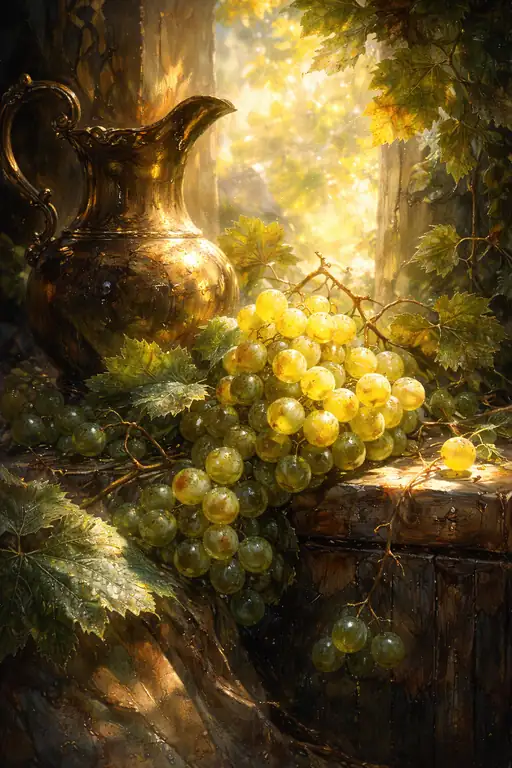 Whispers of the Sunlit Vine
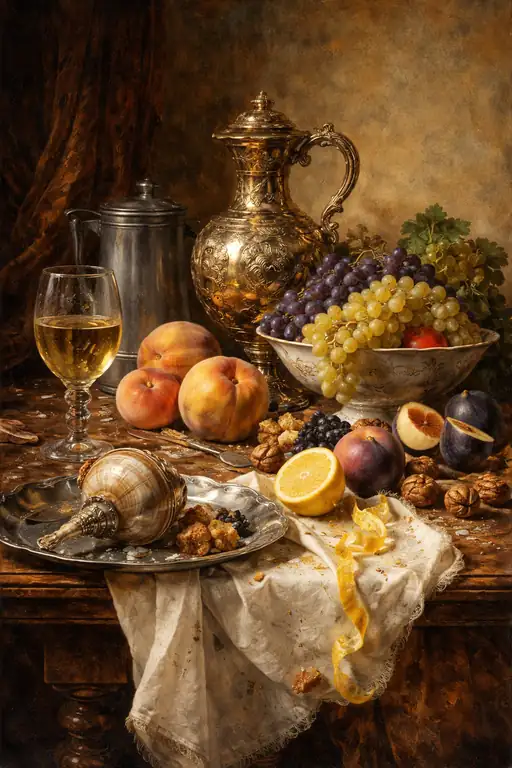 Classical Still Life with a Golden Ewer, Fruit, and Wine
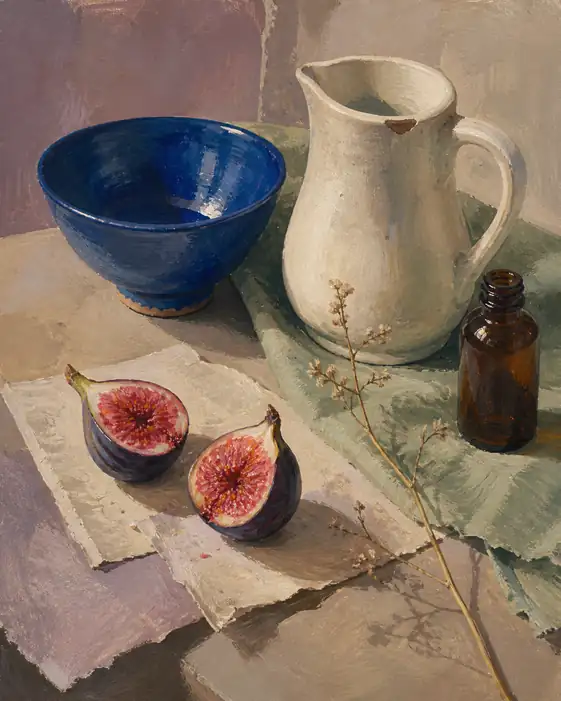 Fruits of a Fugitive Moment
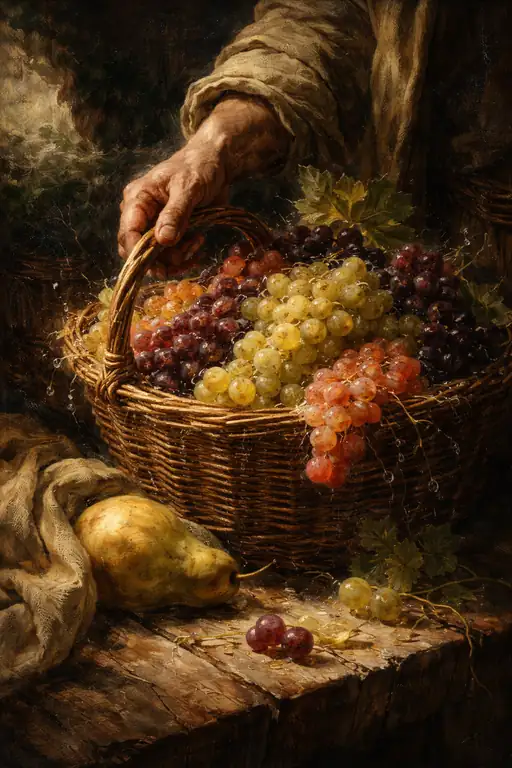 Grasp of the Harvester: The Abundant Yield
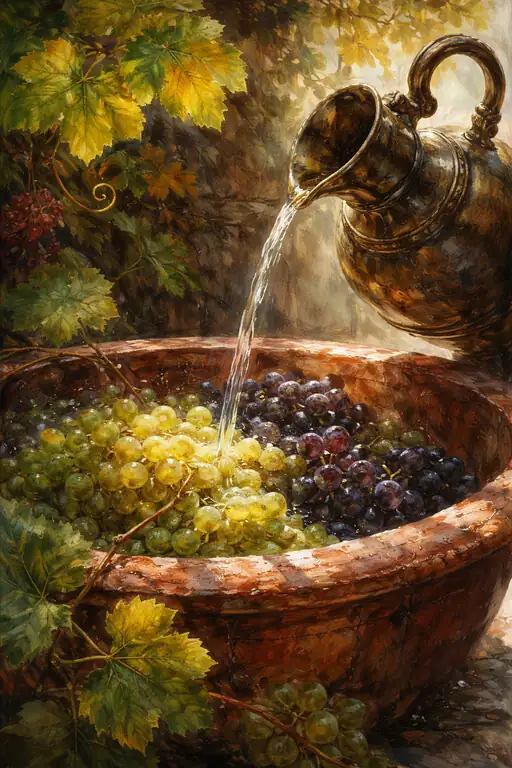 Crystal Tears on the Grapes
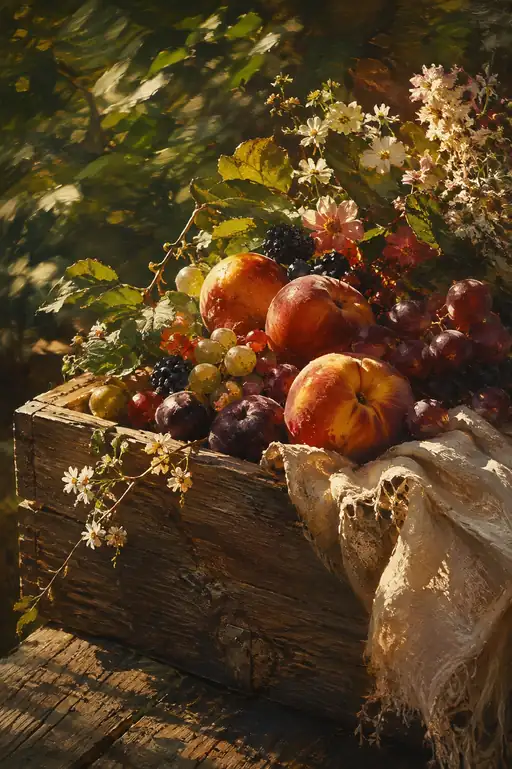 Rustic Wooden Box of Autumn Blessings
 Whispers of Abundant Peace
 Whispers of White and Gold
 The Golden Tears of Bacchus