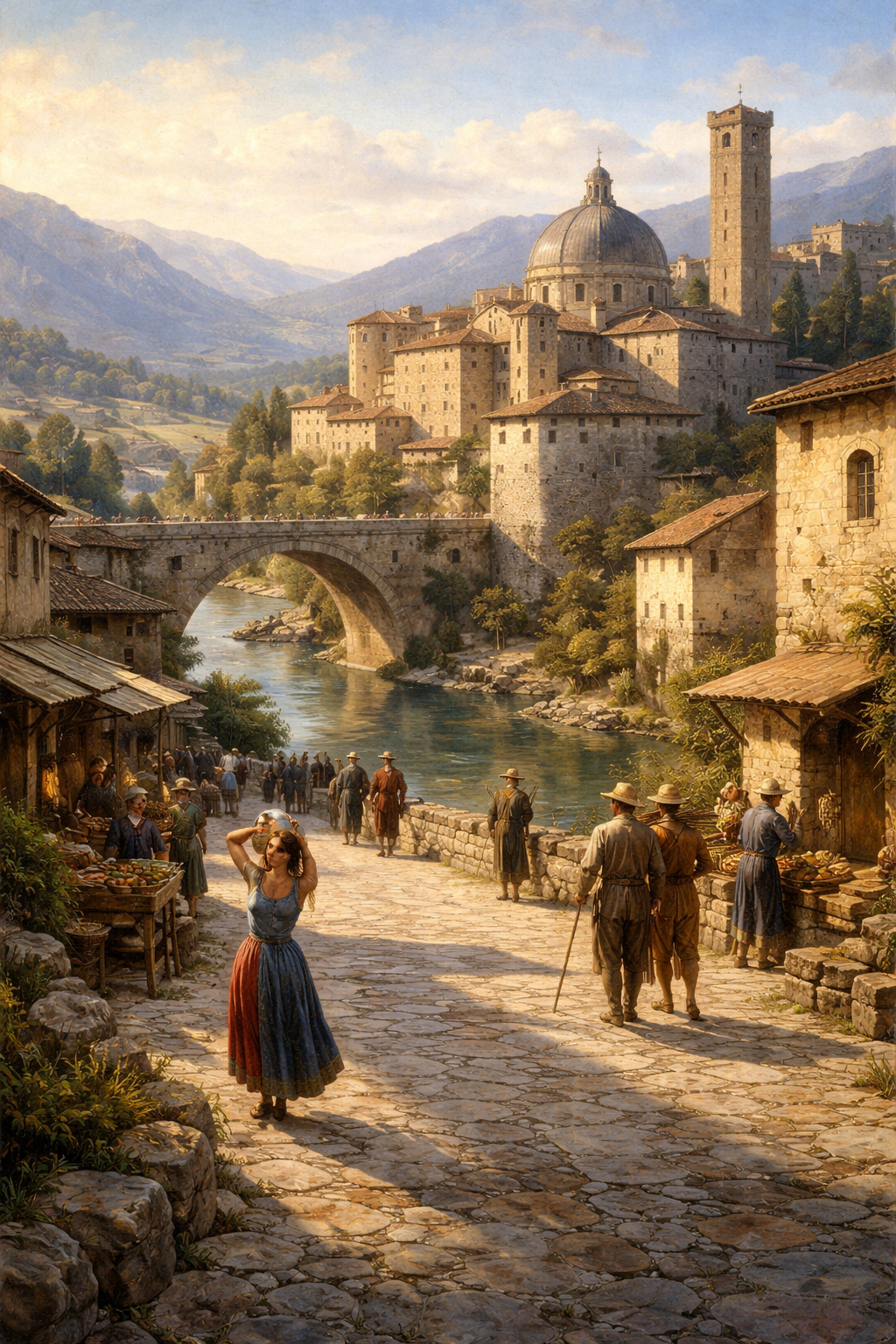
The Golden Pulse of the Ancient Town
Critique
1. Introduction This realistic landscape painting captures a bustling riverside town nestled within a mountainous region, reminiscent of historical European architecture. The work portrays a vibrant scene of daily life, blending monumental structures with the intimate details of common activities. Executed with technical precision and a clear sense of atmosphere, the painting evokes a feeling of timeless harmony between human civilisation and the natural environment. 2. Description In the middle distance, a grand domed cathedral and a tall campanile dominate the skyline, overlooking a sturdy stone arch bridge that spans a tranquil river. The foreground is alive with figures in period clothing; a woman in a blue dress carries a vessel on her head, while others gather near market stalls and walk along the sun-drenched cobblestone path. The background features layers of rolling hills and distant blue mountains under a soft, hazy sky, adding to the expansive feel of the setting. 3. Analysis The artist utilizes a balanced composition, employing linear perspective to guide the viewer窶冱 eye from the textured cobblestones in the foreground toward the architectural focal points. The color palette is characterized by warm earth tones窶俳chre, terracotta, and beige窶背hich are harmoniously countered by the cool blues of the river and the distant peaks. Masterful handling of light and shadow defines the volumes of the buildings and provides a tactile quality to the stone surfaces, suggesting a bright, mid-afternoon sun. 4. Interpretation and Evaluation This piece can be interpreted as an idealised vision of communal life where architecture and nature exist in a state of perfect equilibrium. The exceptional level of detail showcases the artist's commitment to academic realism, particularly in the rendering of diverse textures and the subtle play of light on the water. The work is highly successful in its ability to narrate a story of cultural continuity without the need for dramatic action, relying instead on the inherent dignity of ordinary existence. 5. Conclusion Upon careful observation, the initial sense of a grand vista gives way to an appreciation for the meticulously rendered details of the townspeople's lives. By successfully merging monumental scale with everyday warmth, the painting achieves a powerful and lasting aesthetic resonance that celebrates the enduring beauty of historical landscapes.
Same Subcategory
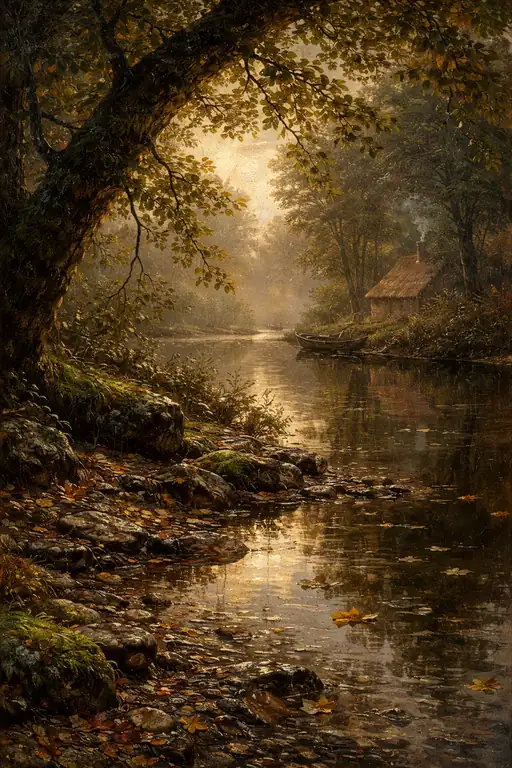 The Peaceful Slumber of the River
Similar Artworks
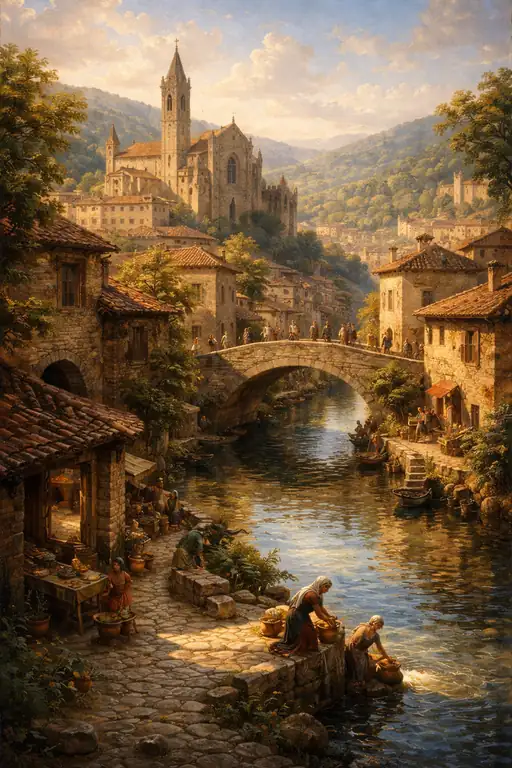 Life Flowing Through the Ancient Stones
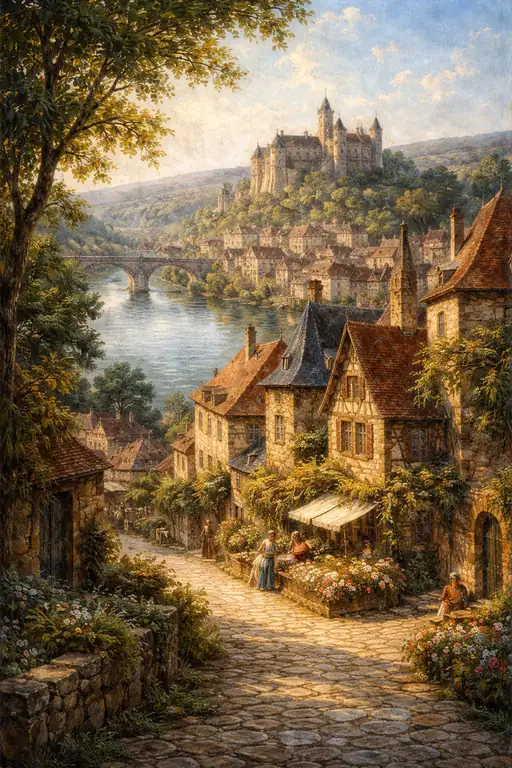 Fragments of a Fleeting Dream
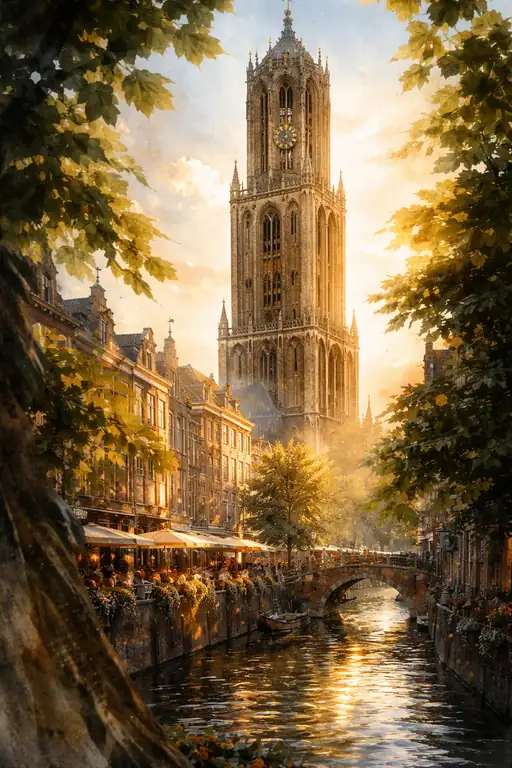 Sunset Over the Dom Tower
 Luminous Whispers on the Grand Canal
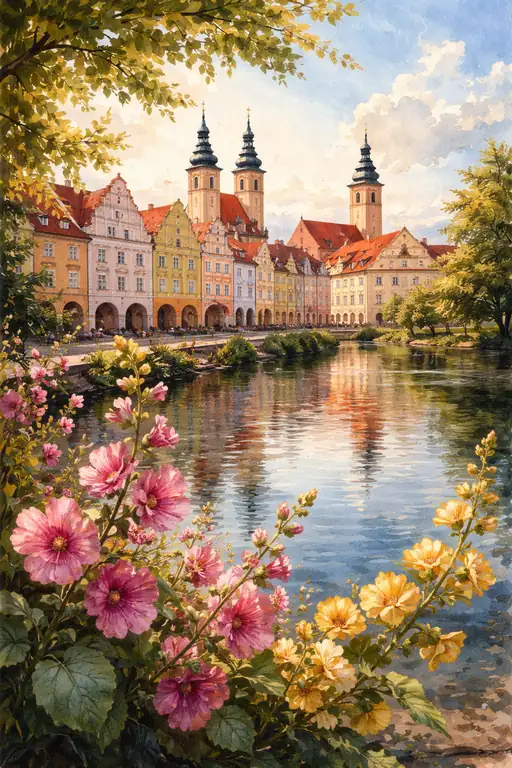 Summer's Reflection in Telč
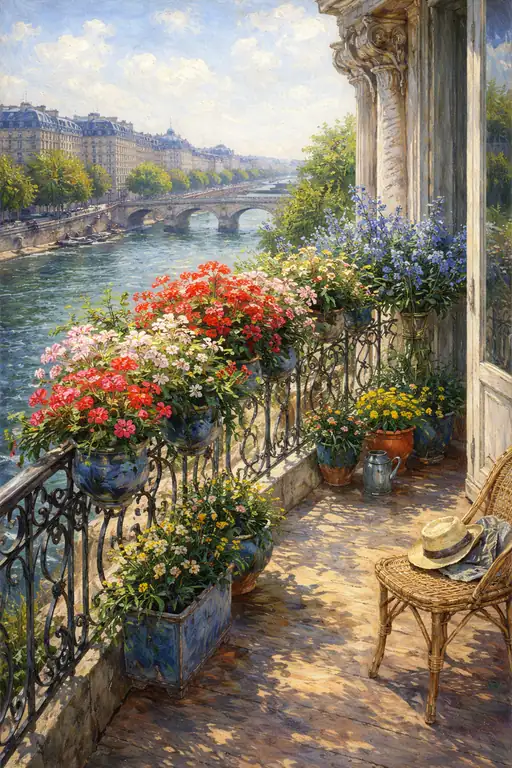 A Forgotten Hat Amidst the Blossoms
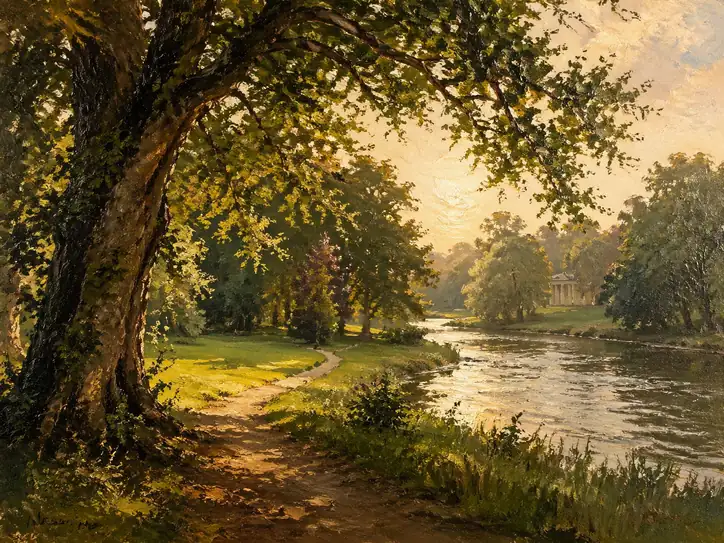 The Neoclassical Echo at Sunset
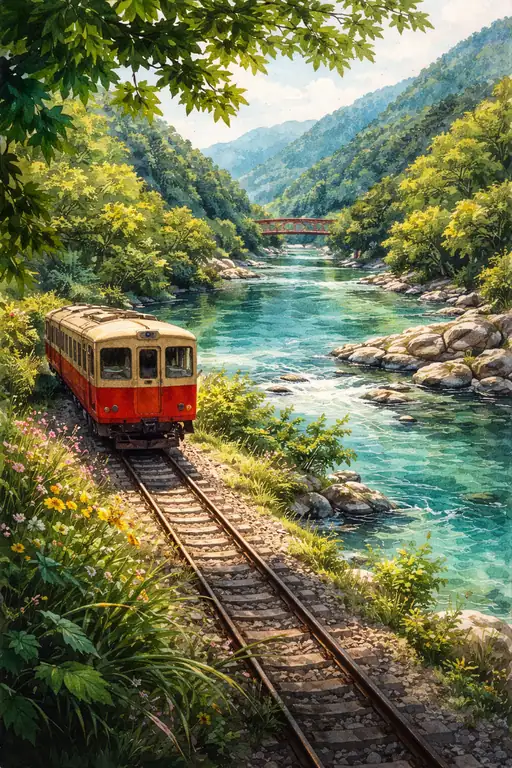 Echoes of the Green Gorge
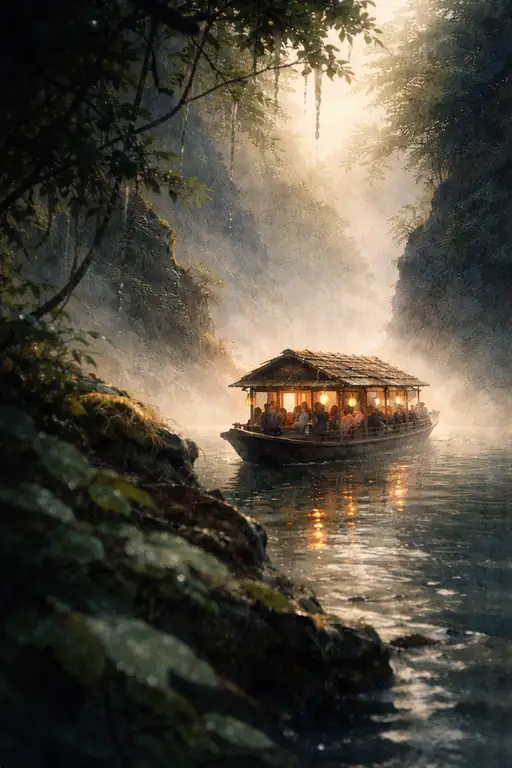 Lantern Light Upon the Mist-Cloaked Canyon
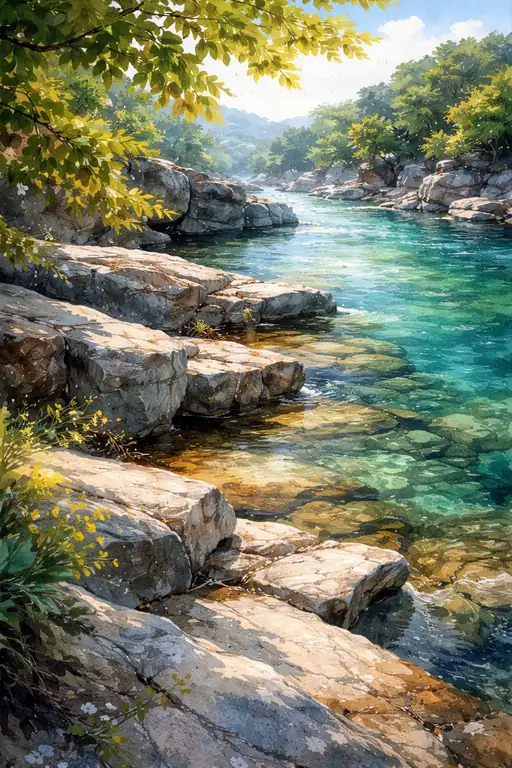 Whispers of the Crystal Current