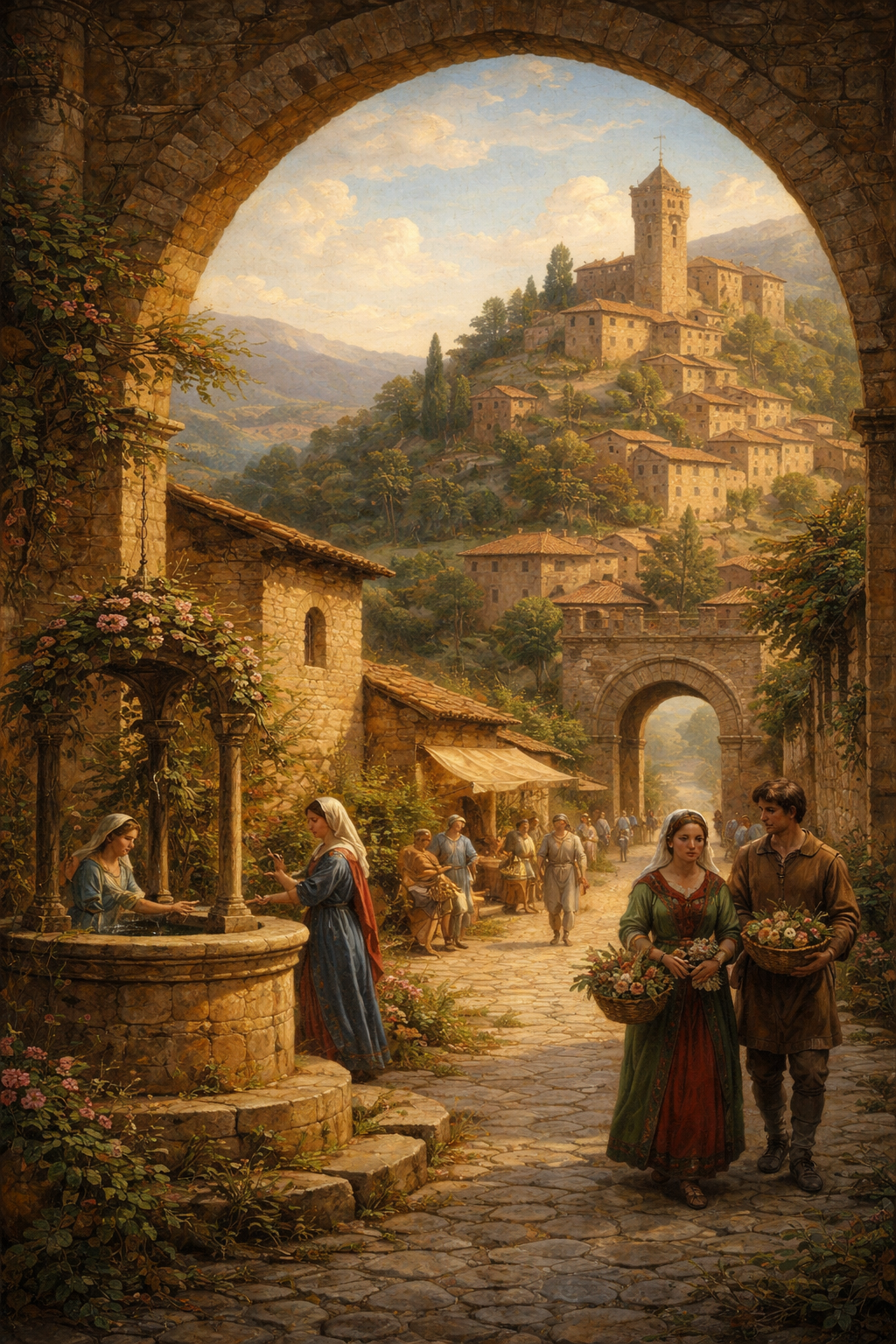
Echoes of the Stone Arches
Critique
1. Introduction The artwork presents a vibrant and detailed genre scene set in a historical hilltop village, viewed through a monumental stone arch. It captures the daily life of a rural community with a focus on communal spaces and traditional activities. The composition effectively frames a picturesque landscape of stone dwellings and a prominent watchtower that rises toward a soft, cloud-filled sky. 2. Description In the foreground, a group of figures is engaged in various tasks. Two women stand by a stone well, one drawing water while the other gestures toward the village. To the right, a young couple walks along the cobblestone path, carrying baskets overflowing with flowers. The middle ground reveals more villagers and market stalls, leading to an arched gateway that marks the entrance to the denser part of the town on the hillside. 3. Analysis The use of the arch as a framing device creates a strong sense of depth and invites the viewer into the scene. A warm, golden light bathes the stone surfaces, emphasizing their rugged texture and creating soft shadows. The color palette is earthy, featuring ochre, terracotta, and deep greens, which harmonize with the natural landscape. Detailed brushwork is evident in the individual stones of the path and the intricate foliage surrounding the well. 4. Interpretation and Evaluation This work succeeds in romanticizing historical rural life, portraying it as a harmonious and industrious environment. The artist's attention to architectural detail and human interaction adds a narrative layer that is both engaging and nostalgic. Technical skill is demonstrated through the complex perspective of the ascending village and the convincing rendering of varied textures. The balance between the foreground activity and the majestic backdrop shows a high degree of compositional maturity. 5. Conclusion While the initial impression is one of a charming village scene, the meticulous execution reveals a deep appreciation for architectural form and social rhythm. The work stands as a cohesive celebration of communal history and the enduring beauty of traditional stone-built environments. The successful integration of figure and landscape creates a compelling sense of place. Ultimately, it is a sophisticated example of historical genre painting that balances minute detail with a grand structural vision.
Same Subcategory
 The Bell of Prayer Echoing in the Silvery Silence
Similar Artworks
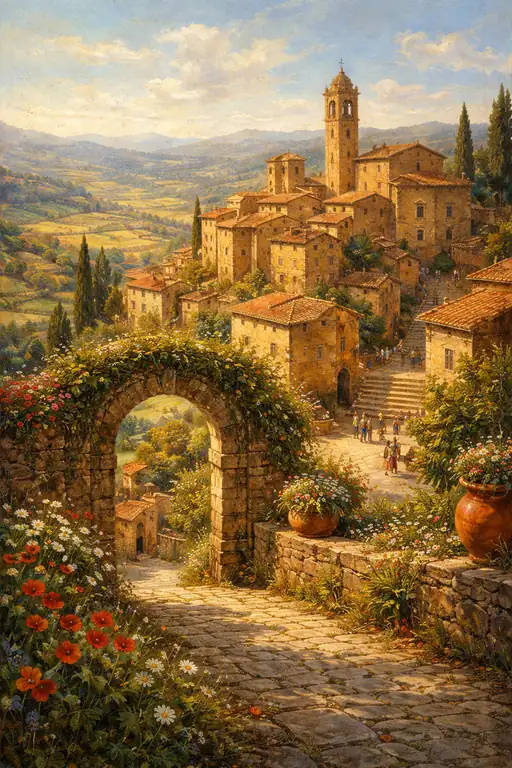 The Sun's Blessing on the High Terrace
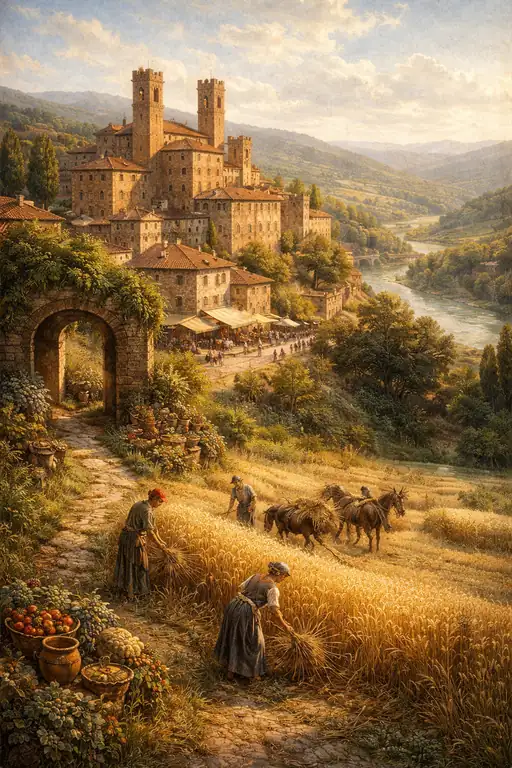 A Golden Harvest Under the Watchful Towers
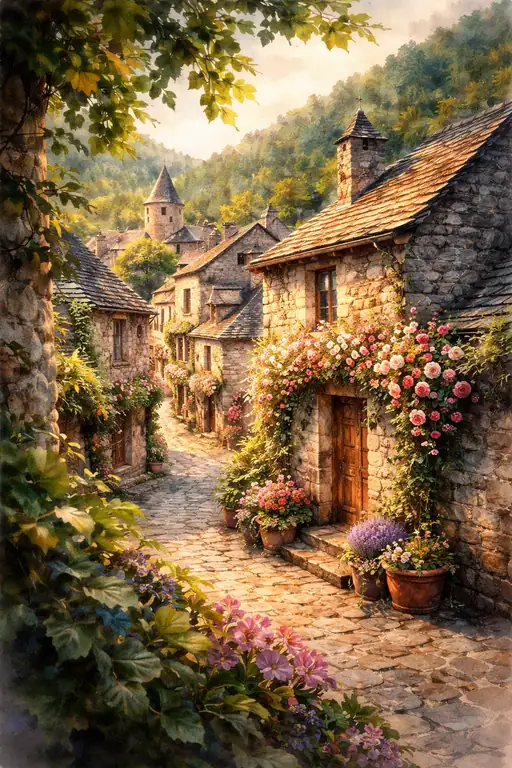 A Floral Path in the Village
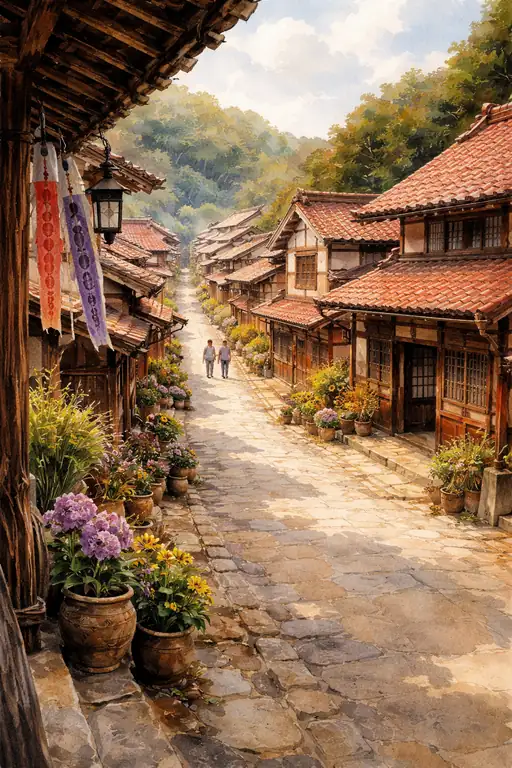 Footsteps on the Woven Canvas of Time
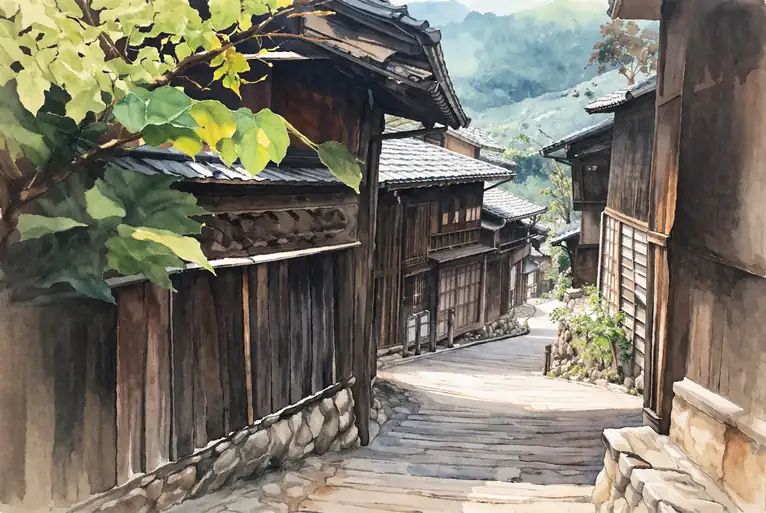 Echoes of the Sloping Town
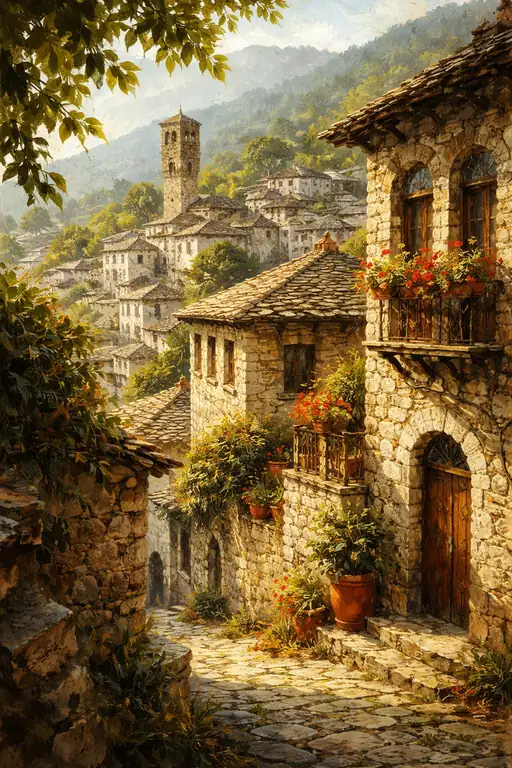 A Winding Path Through History
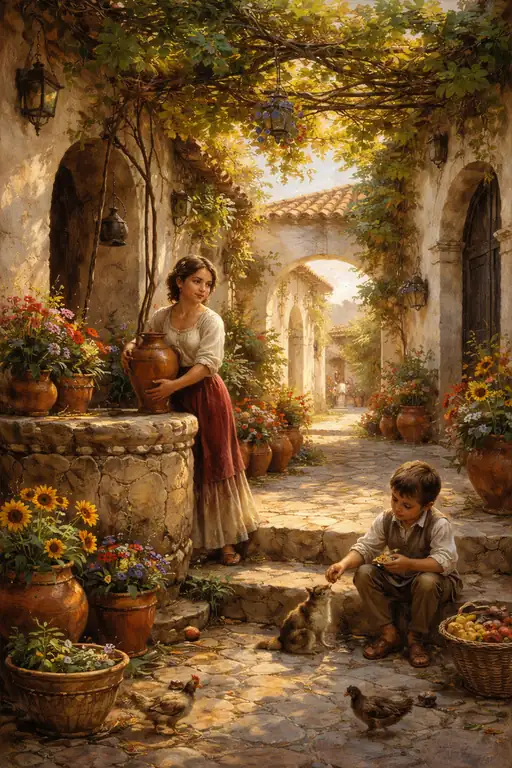 Sunshine Secrets in the Courtyard
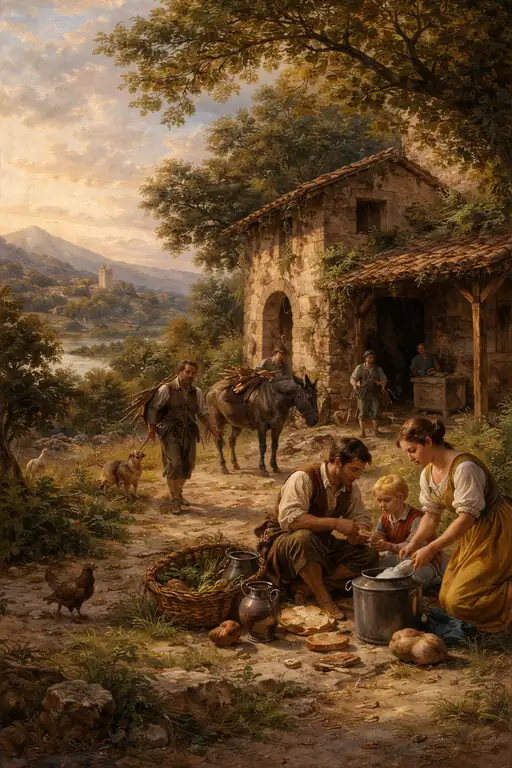 Harmony of the Golden Fields
 Cobblestone Harvest
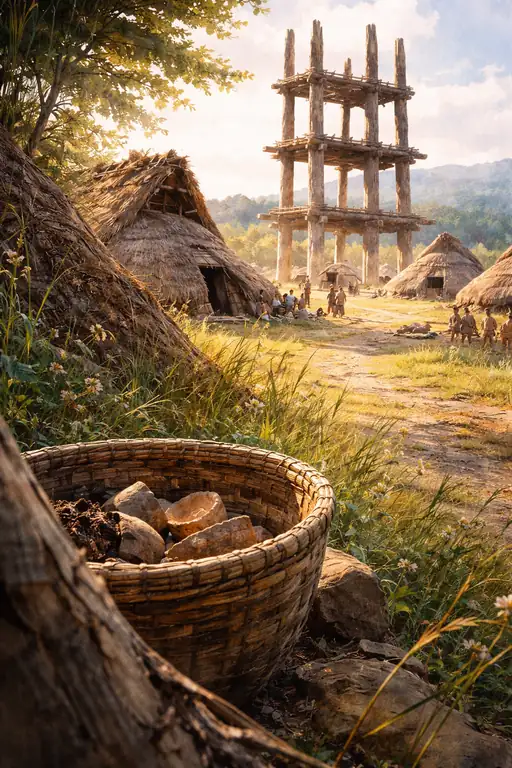 Whispers of the Ancient Valley