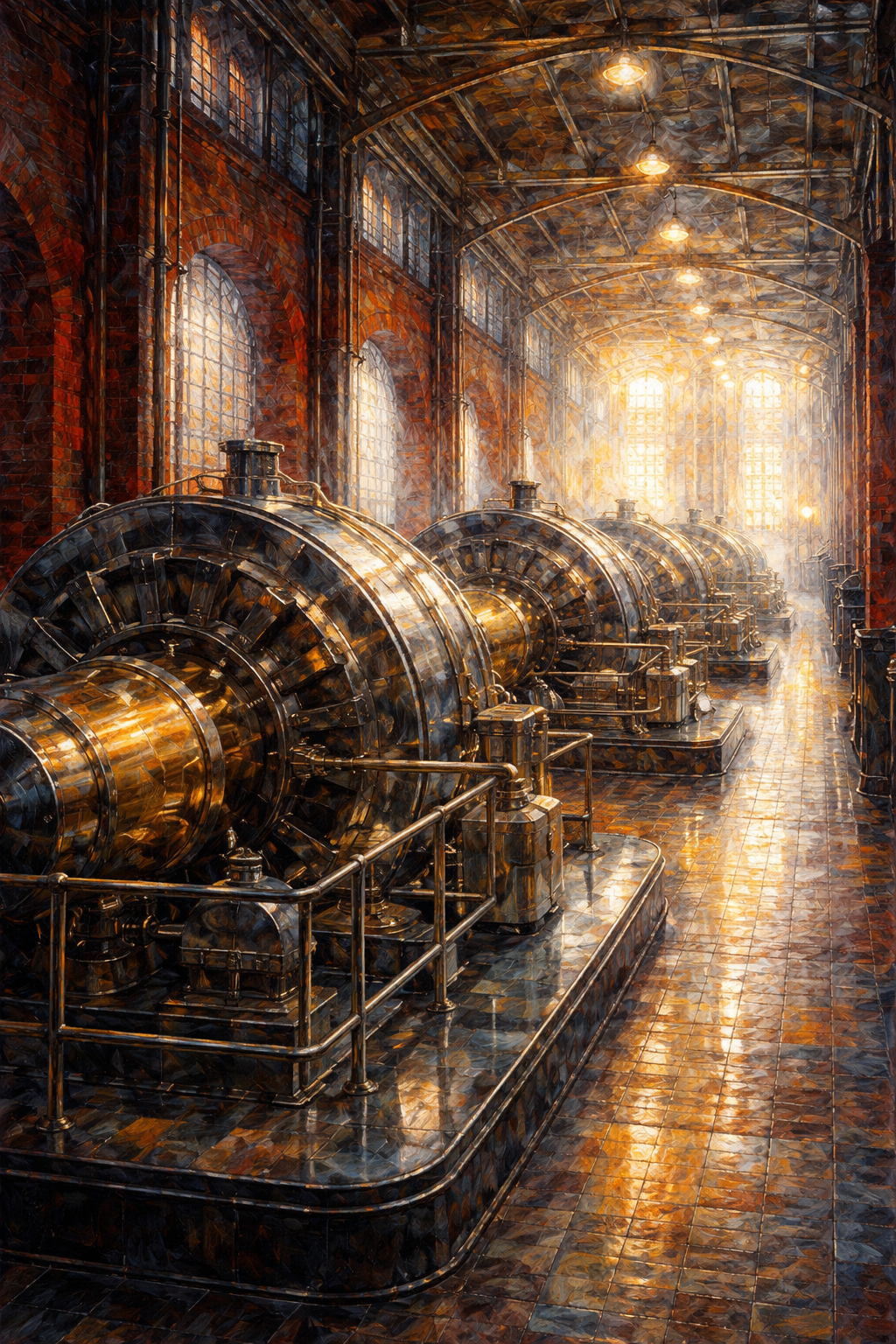
Heartbeat of the Iron Colossus
Critique
1. Introduction This vertical oil painting presents a monumental view of an industrial interior housing massive electrical generators. The composition focuses on the intersection of early 20th-century technology and classical architectural grandeur. Through scale and luminosity, the work elevates a functional space into a site of contemplation. 2. Description The primary subjects are several large, cylindrical turbines constructed of polished brass and darkened steel, arranged in a receding line along a hall with a reflective, tiled floor. Arched windows along the brick walls and at the far end of the structure allow intense, hazy sunlight to pour into the space, illuminating the machinery and the vaulted ceiling’s metal framework. Small, glowing lamps hang from the rafters, adding secondary points of warm light. 3. Analysis The artist employs a textured brushwork, using faceted strokes to create a shimmering effect on metallic and stone surfaces. The composition utilizes linear perspective to emphasize the vast length of the facility, drawing the eye toward the distant light. The color palette is dominated by warm earth tones complemented by cool floor reflections. 4. Interpretation and Evaluation The painting can be interpreted as a tribute to the sublime power of human engineering and the dawning of the modern technological era. By applying a reverence typically associated with cathedral interiors to an industrial setting, the artist highlights the spiritual and social significance of energy production. Technically, the mastery of light and reflection is remarkable, successfully capturing the atmospheric quality of a sun-drenched, working environment. 5. Conclusion This work succeeds in transforming a mechanical subject into a profound exploration of light and monumental form. The initial perception of a dense, industrial scene matures into an appreciation for the artist's sophisticated ability to find beauty in the precision of machinery. Ultimately, the painting serves as a powerful testament to the enduring legacy of the Industrial Age and the expressive potential of its forms.
Same Subcategory
 The Harmonious Pulse of Water and Brick
Similar Artworks
 Slumber of the Clockwork Soul
 The Night's Mechanical Constellation
 The Sleepless Body of the City
 Fulcrum of Cobalt Steel
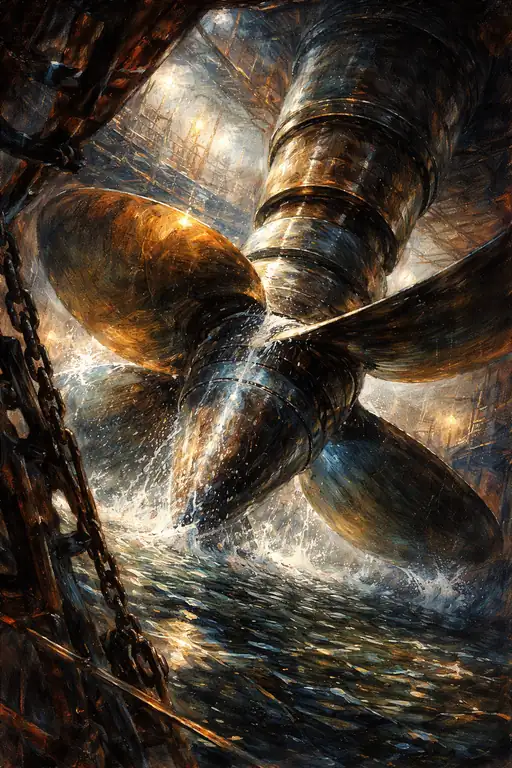 Awakening of the Steel Leviathan
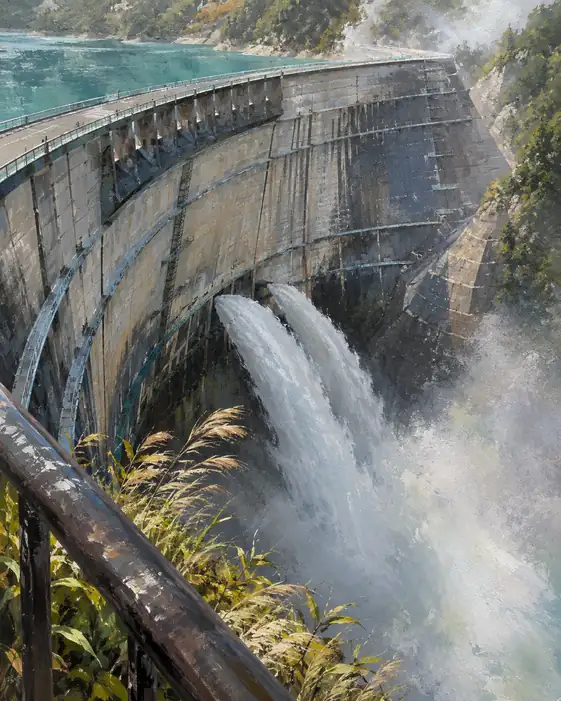 The Pulse of the Concrete Giant
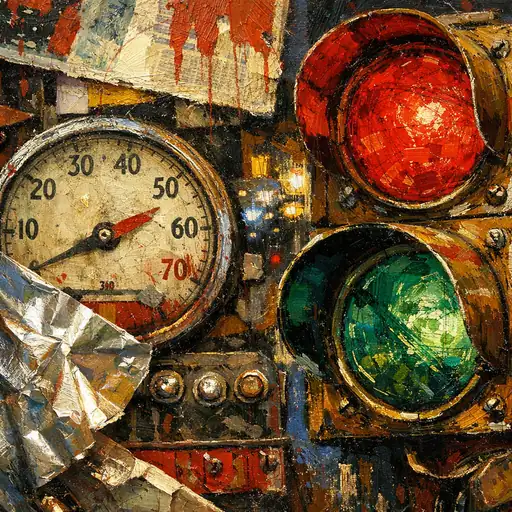 Rhythm of the Decaying Machine
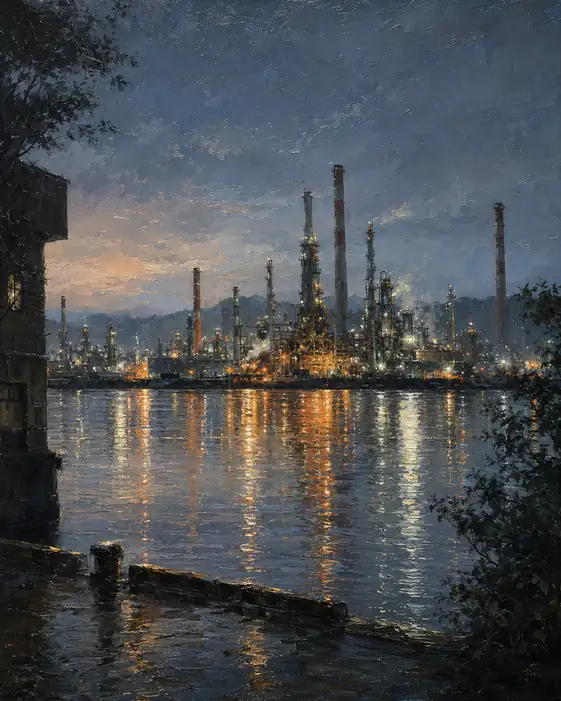 Midnight Furnaces Bloom Across the Bay
 Morning Forged in Steel and Steam
 Weaving Time in Light