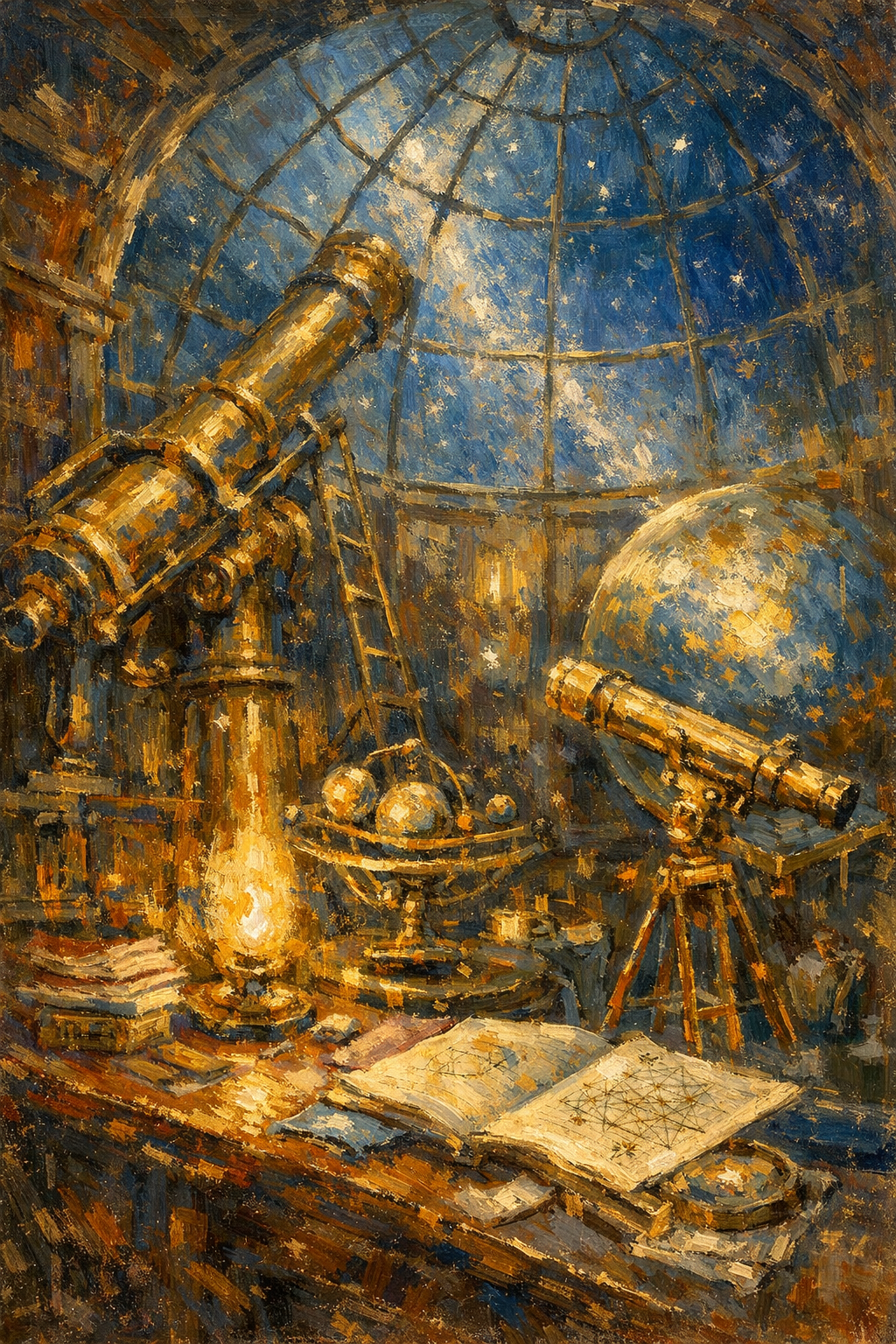
Stellar Nostalgia
Critique
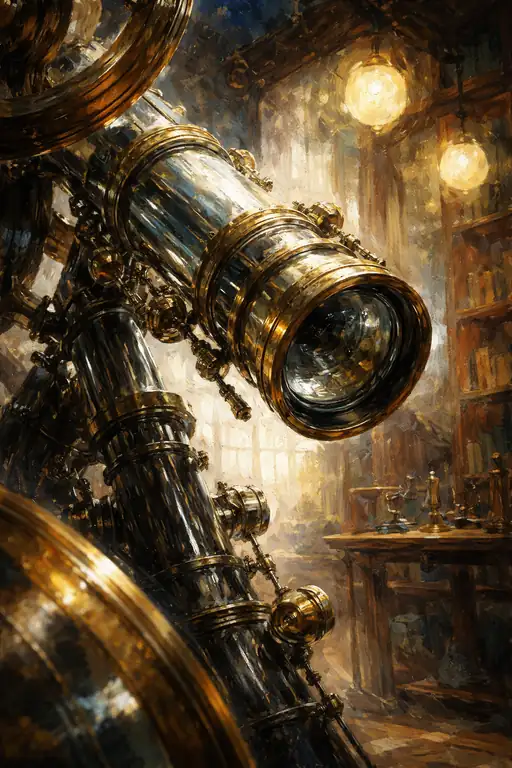
1. Introduction This evocative impasto oil painting transports the viewer into a classic astronomical observatory, blending the intellectual rigor of science with a romantic, nostalgic atmosphere. The work features an array of historical scientific instruments, including a large brass telescope and a celestial globe, all bathed in the warm, flickering light of an oil lamp. Through its heavy texture and dramatic lighting, the painting captures the wonder of celestial exploration, presenting a space where human curiosity meets the vast mystery of the night sky. 2. Description The foreground is dominated by a sturdy wooden desk laden with open books displaying complex geometric diagrams and stellar maps. In the middle ground, a magnificent brass telescope stands as a focal point, its metallic surface reflecting the amber glow of a nearby lamp. To its right, an armillary sphere and a second, smaller telescope on a tripod add to the richness of the scene. The upper half of the canvas is occupied by a large, paned domed window that reveals a deep blue night sky shimmering with stars, providing a stark color contrast to the warm interior. 3. Analysis Technical proficiency is shown in the artist窶冱 use of chiaroscuro, where the sharp contrast between the golden-brown tones of the room and the cool blues of the exterior creates a compelling sense of depth. The impasto technique is utilized to give the scientific tools a tangible weight and sheen, with thick dabs of white and yellow representing the highlights on the polished brass. The energetic, directional brushwork in the sky suggests the infinite movement of the cosmos, while the more grounded, horizontal strokes in the foreground stabilize the composition. 4. Interpretation and Evaluation The painting can be interpreted as a tribute to the Age of Enlightenment and the timeless human quest for knowledge. By placing the viewer within the cramped but cozy confines of the observatory, the artist emphasizes the intimacy of the scholarly pursuit against the backdrop of the infinite. The evaluation of this work rests on its successful atmospheric storytelling and its ability to balance intricate mechanical details with a loose, expressive style. Its strength lies in the masterful management of light, which serves as a metaphor for the illumination of the mind through observation. 5. Conclusion A deeper appreciation arises from the realization that the painting is less about the tools themselves and more about the spirit of inquiry they represent. The initial impression of a cluttered study matures into a profound contemplation of our place in the universe, bridged by the instruments on the table. Ultimately, the work stands as a beautiful and technically accomplished celebration of history, science, and the enduring allure of the stars.
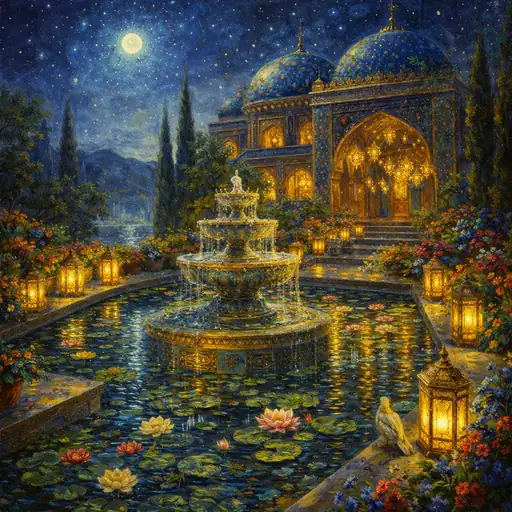 Moonlit Lullaby of the Sapphire Oasis
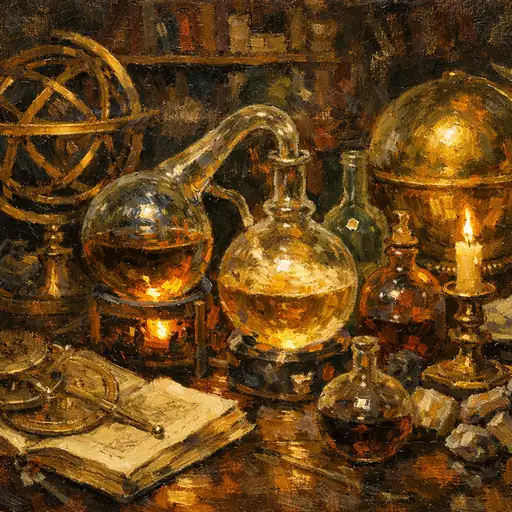 The Alchemist's Golden Dream
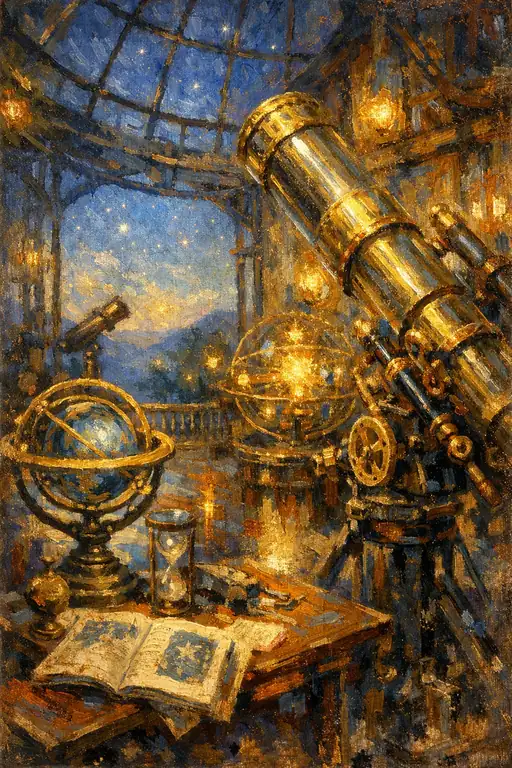 Navigating the Celestial Sphere
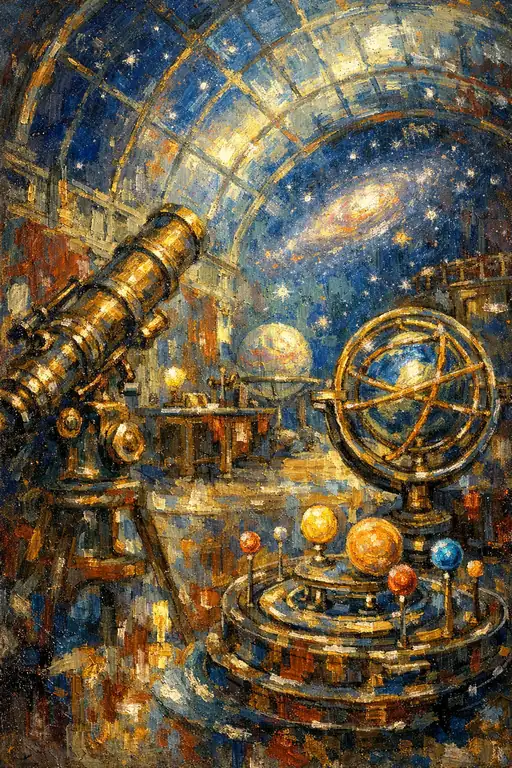 Whispers of the Cosmos
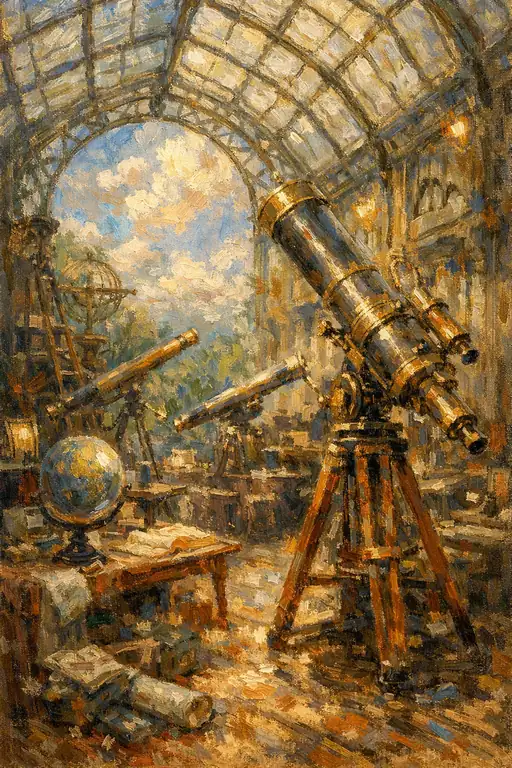 Slumber of the Clockwork Soul
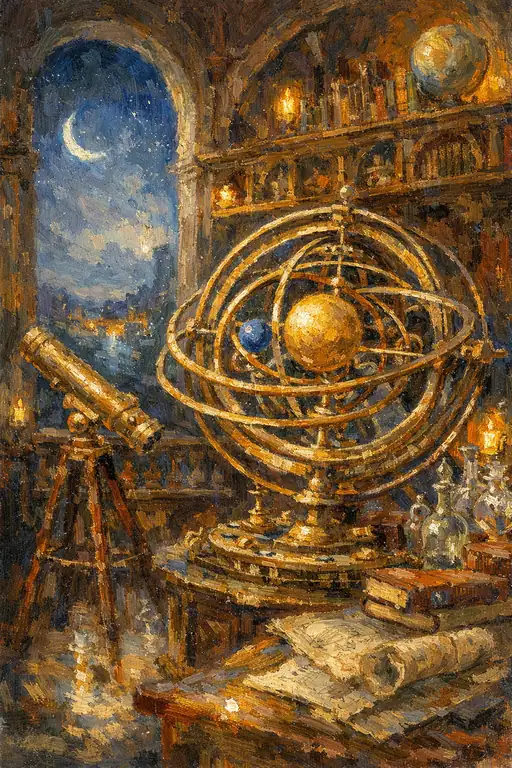 The Gaze Within the Geometry
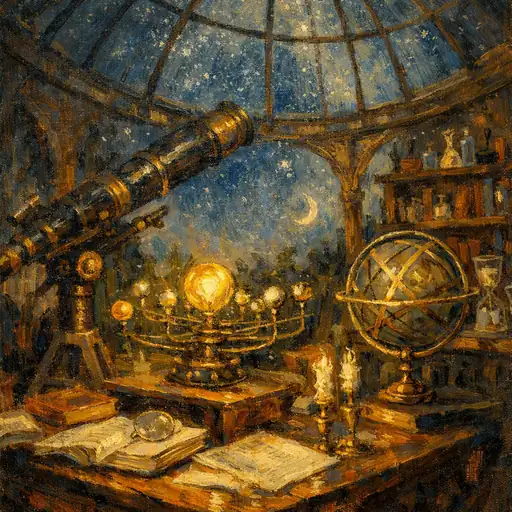 The Clockwork Heavens
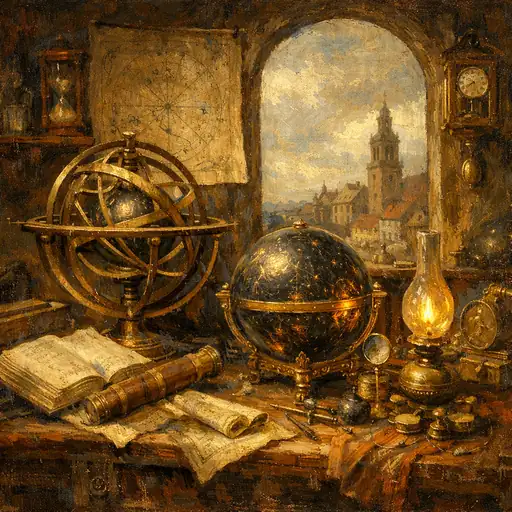 The Golden Sphere's Silent Promise
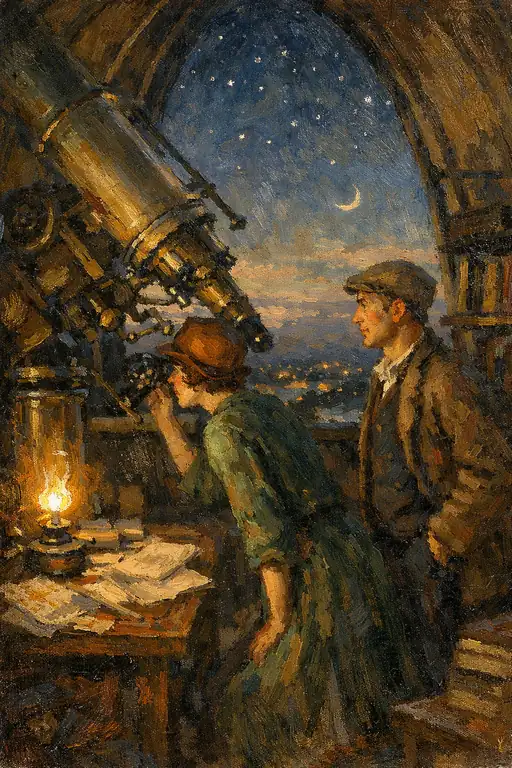 Curiosity Written in the Stars
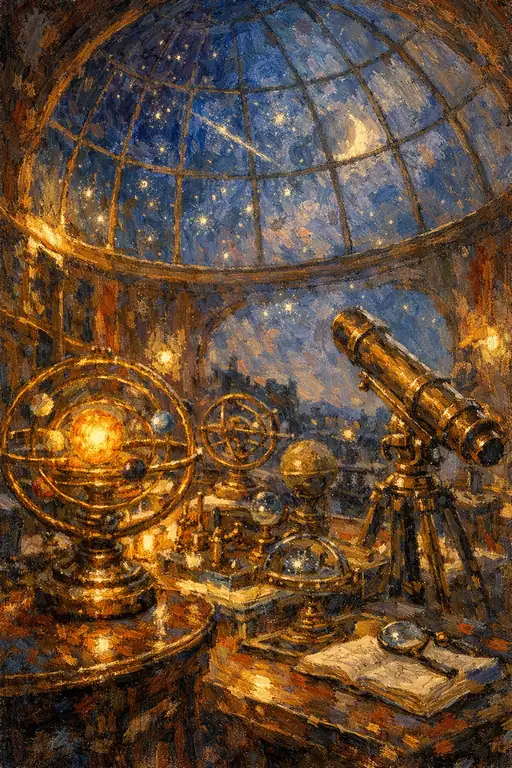 Where Mortals Meet the Celestial Sphere
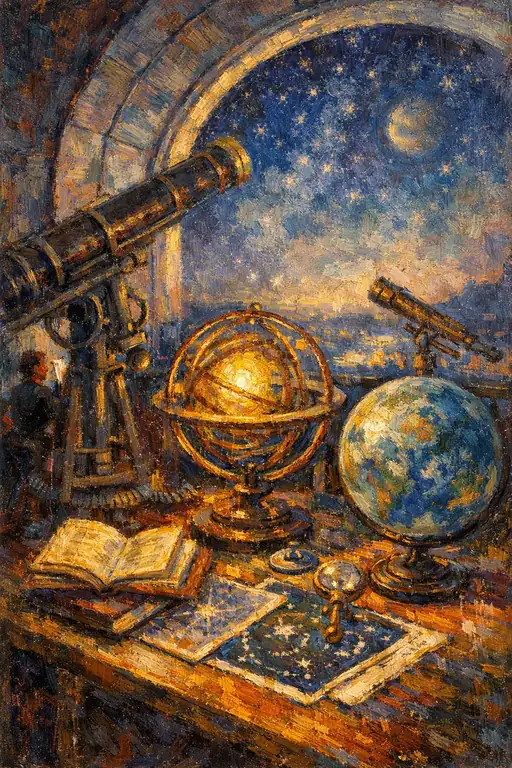 Symphony of the Starlit Sphere
 The Scholar's Cosmos