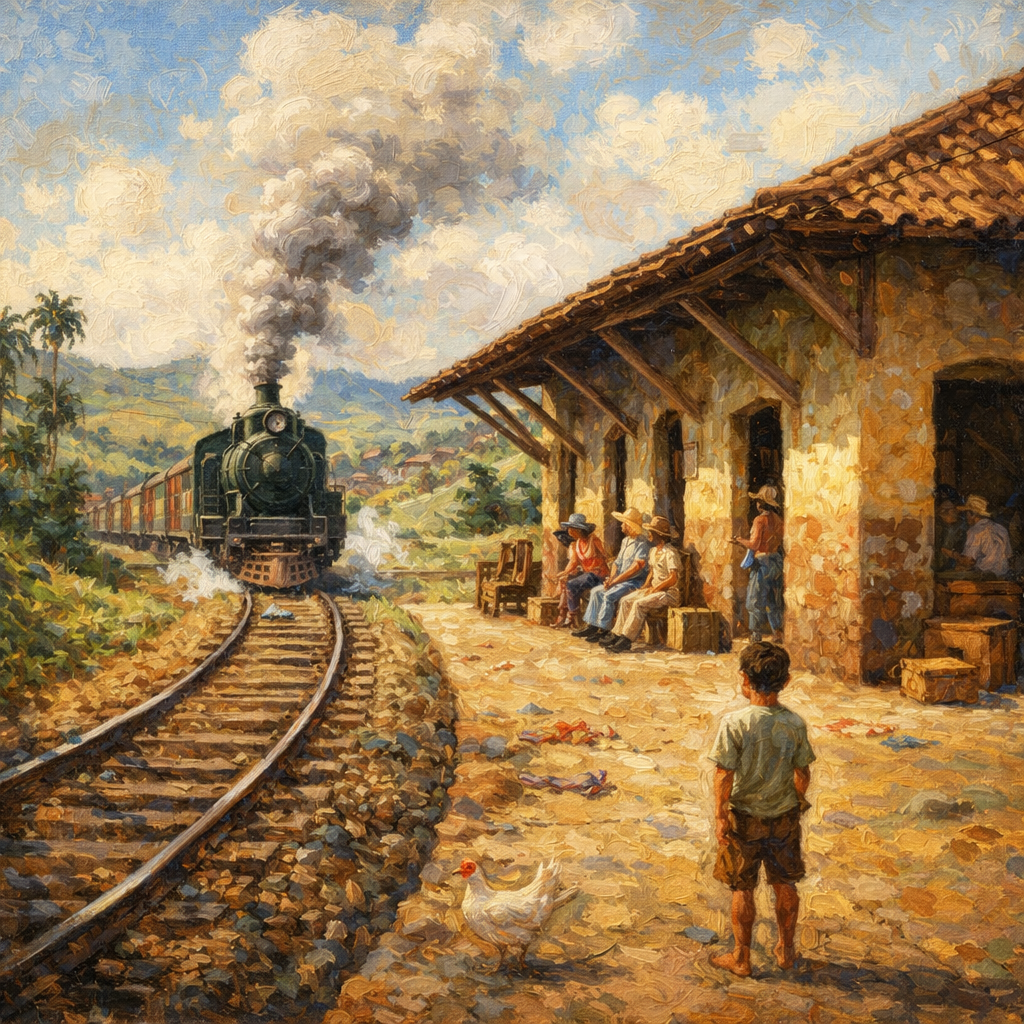
Echoes of the Whistle
Critique
1. Introduction This evocative oil painting depicts a nostalgic scene of a rural railway station, capturing a moment of anticipation as a steam locomotive approaches. The work portrays a sunny day in a countryside setting, where the arrival of the train serves as a significant event for the local inhabitants. By focusing on the relationship between the mechanical power of the locomotive and the quiet patience of the people, the artist creates a narrative of connection and movement. 2. Description The composition is anchored by a set of curved railway tracks that sweep from the bottom left toward the middle ground, where a dark steam engine puffs thick smoke into a bright, cloud-filled sky. To the right, a modest stone station building with a terracotta tiled roof provides shade for several waiting passengers seated on a bench. In the foreground, a young boy stands on the dusty platform, observing the incoming train, while a white chicken wanders near the tracks. 3. Analysis The artist utilizes an impressionistic technique with thick, textured brushstrokes that emphasize the play of sunlight across the stone walls and the gravelly ground. The color palette is rich in warm earth tones, including ochre, sienna, and golden yellow, which contrast sharply with the dark green of the locomotive and the brilliant blues of the sky. The curved line of the tracks creates a sense of dynamic depth, guiding the viewer窶冱 eye through the sun-drenched landscape. 4. Interpretation and Evaluation The painting successfully conveys a sense of timelessness and nostalgic longing for a simpler era of travel. The inclusion of the boy and the chicken in the foreground adds a charming, domestic touch that grounds the technological subject in a human context. The use of light is particularly effective, as the strong highlights and soft shadows suggest a high-noon sun, enhancing the atmospheric quality of the rural station. The work demonstrates a skilled balance between architectural structure and natural fluidity. 5. Conclusion Upon initial observation, the piece appears to be a straightforward historical scene, yet it reveals a profound study of light and communal rhythm. The tactile nature of the impasto technique gives the landscape a physical presence that resonates with the viewer窶冱 senses. Ultimately, the painting serves as a beautiful tribute to the romance of the railway, leaving a lasting impression of warmth, curiosity, and the quiet excitement of a journey about to begin.
Same Subcategory
 Nocturnal Symphony of Radiant Lanterns and Blooming Souls
Similar Artworks
 Echoes of the Glacier: The Golden Ice
 Pillars of the Crystalline Shallow
 Majestic Solitude in the Turquoise Bay
 Eye of the Infinite Deep
 Crimson Dawn Over the Tranquil Sea
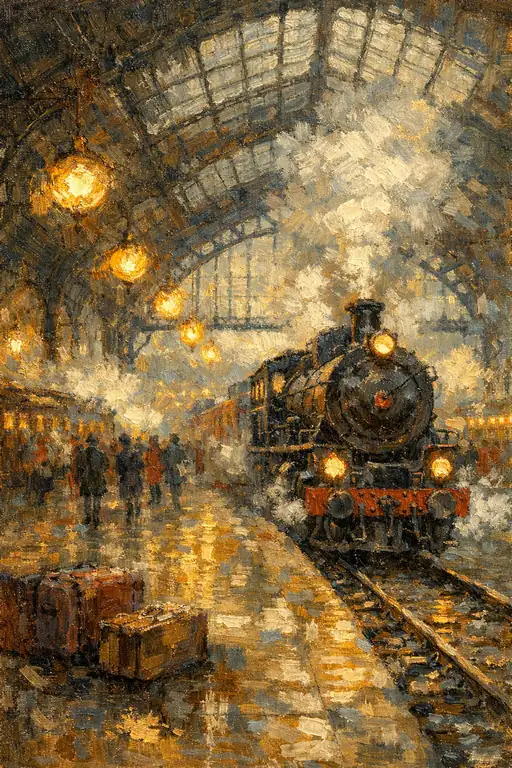 The Iron Giant's Smoky Sigh
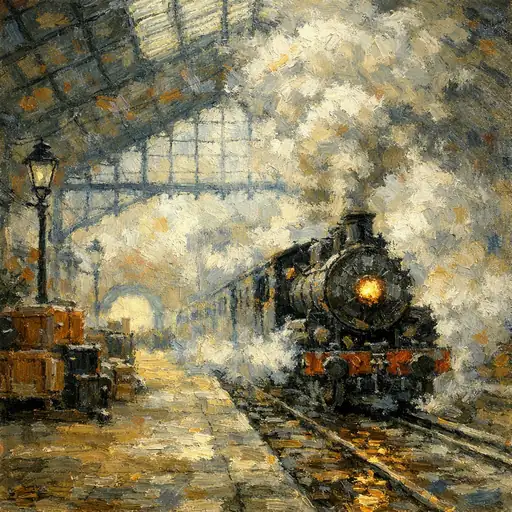 The Iron Breath of a New Dawn
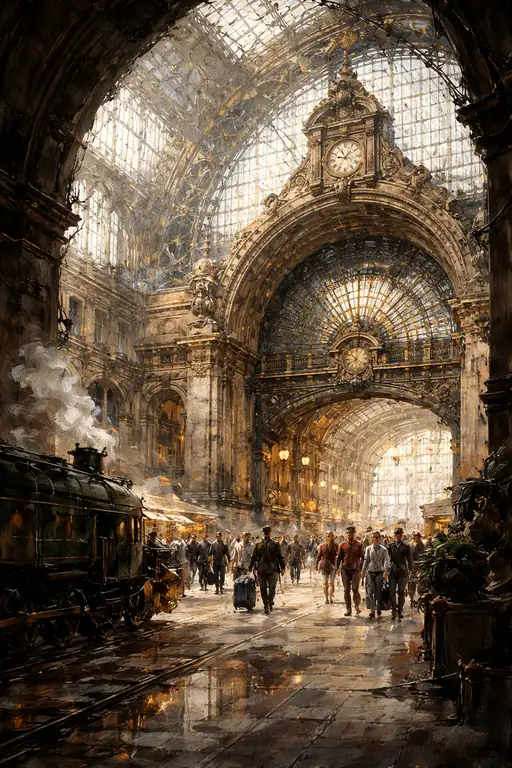 The Steam Engine's Breath: An Era of Departures
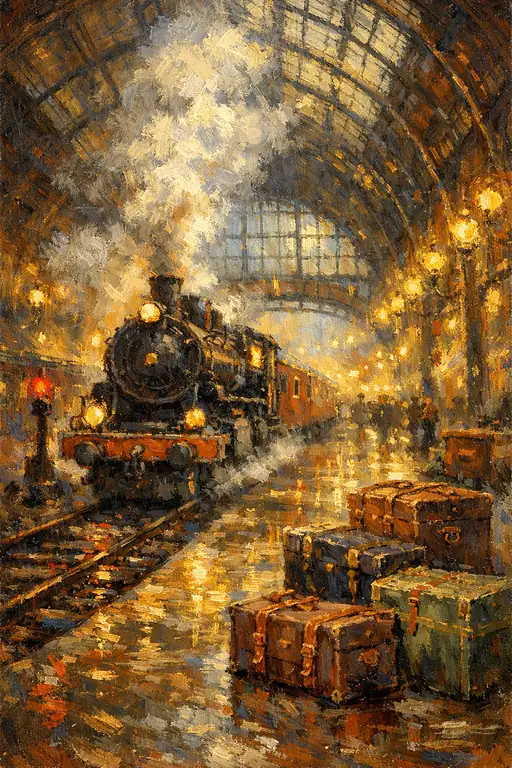 A Fleeting Farewell Amidst the Steam
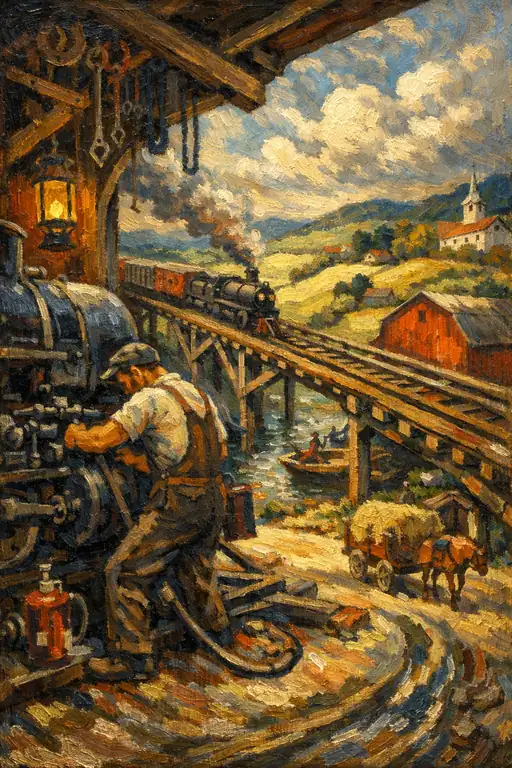 Heartbeat of the Iron Giant