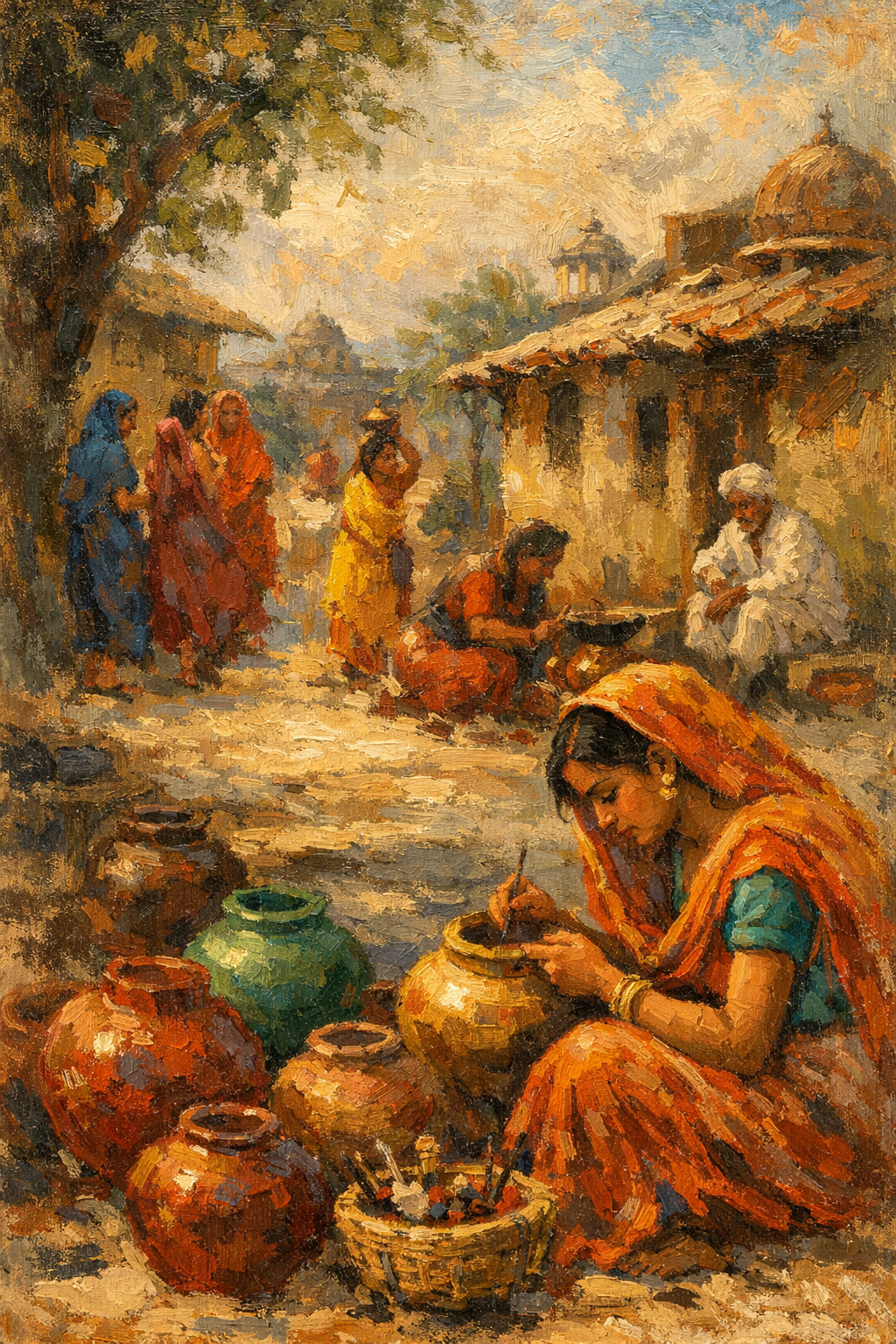
The Artisan's Golden Hearth
Critique
1. Introduction This oil painting depicts a vibrant street scene in an Indian village, illuminated by intense, direct sunlight. The composition centers on a woman diligently decorating clay pots in the foreground, surrounded by the lively activities of a colorful community. Utilizing a bold impasto technique, the work powerfully conveys the physical heat of the environment, the earthy texture of the pottery, and the vigorous life force of its subjects. 2. Description In the lower-right foreground, a woman wearing a bright orange sari is seated, focused on painting intricate designs onto a golden clay pot. Several other vessels in terracotta, green, and ochre hues are clustered around her. The background features simple mud or stone houses with domed roofs, where other villagers in colorful saris and turbans go about their daily lives. The entire scene is bathed in a warm, golden light that unifies the various elements within a rich palette of ambers and browns. 3. Analysis The color scheme is characterized by the overwhelming presence of warm tones, particularly oranges and yellows, which are punctuated by the cool greens and blues of specific pots and garments. This creates a balanced visual tension that enhances the vibrancy of the scene. The brushwork is expressive and rhythmic, with thick layers of paint creating a physical surface that reflects light and gives the space a sense of dynamic energy. The composition uses a strong diagonal to guide the eye from the artisan into the depth of the village street. 4. Interpretation and Evaluation This work serves as an affirmation of human creativity and communal connection through traditional craftsmanship. The act of decorating pottery is presented not merely as labor but as an artistic expression that preserves culture and enriches daily life. The exceptional handling of light goes beyond illumination, capturing the very spirit of the location and the passion of its people. The artist窶冱 technical prowess is particularly evident in the ability to define form and emotion through heavy, textured strokes. 5. Conclusion While seemingly a simple scene of village life, the painting possesses a high level of artistic complexity achieved through calculated color choices and powerful execution. It successfully harmonizes light, humanity, and the beauty of manual work. Ultimately, this piece stands as a deeply energetic and accomplished work that resonates with a profound sense of cultural dignity and aesthetic vitality.
Same Subcategory
Similar Artworks
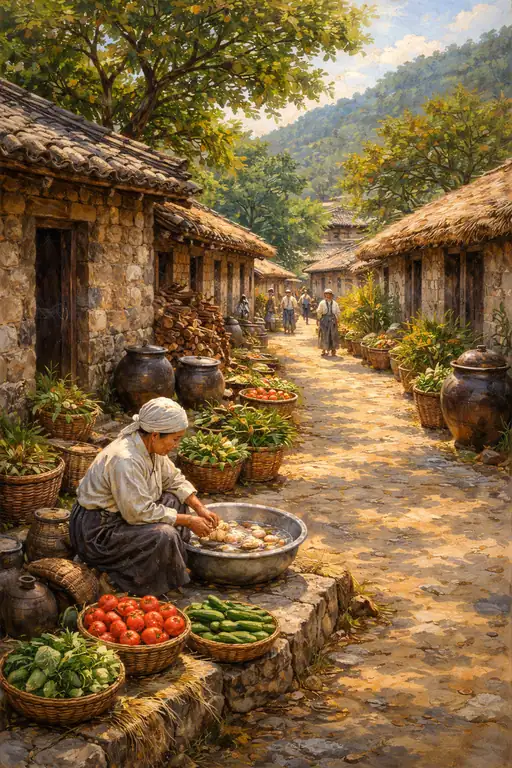 Winter's Silent Embrace
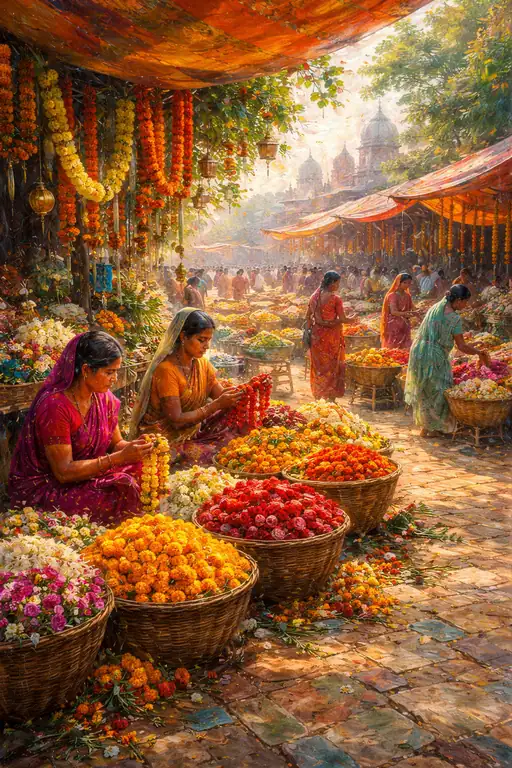 Sunlit Petals of the Morning Bazaar
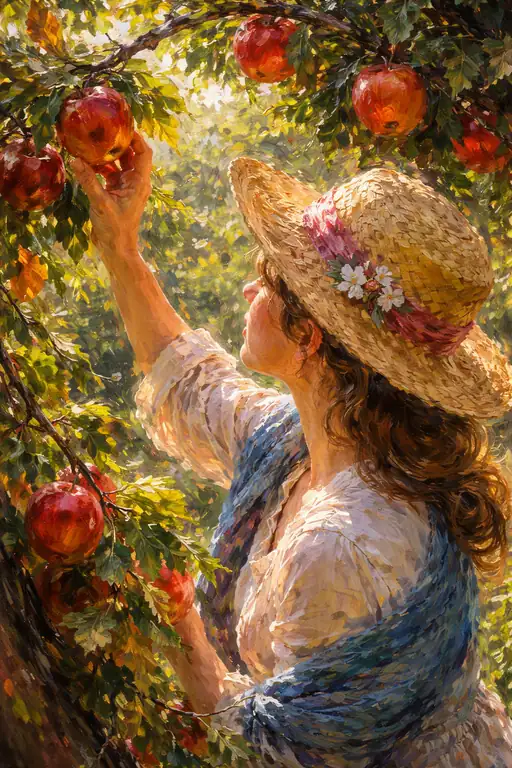 Joy of Life Ripened in Sunlight, Season of Grace
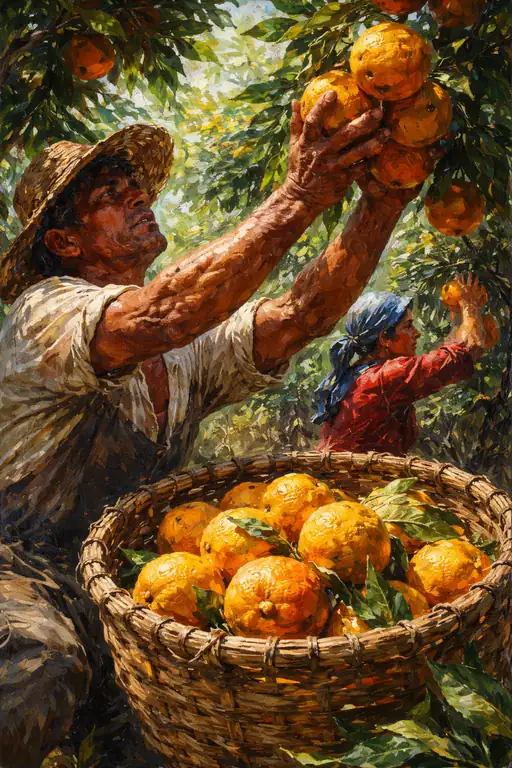 Symphony of the Sun-Kissed Grove
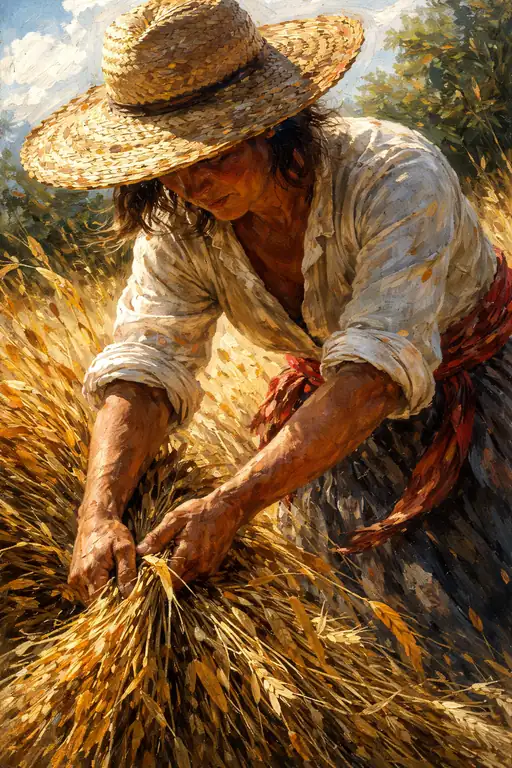 Golden Sweat and the Earth's Embrace
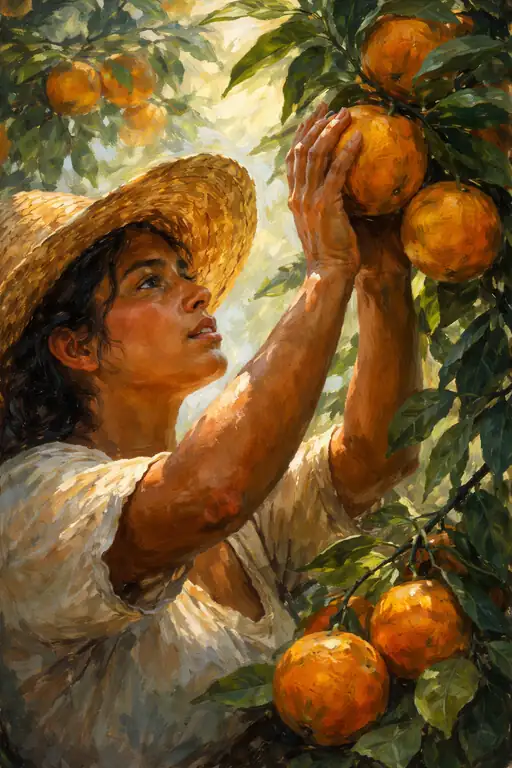 Embracing the Sweetness of the Sunlit Orchard
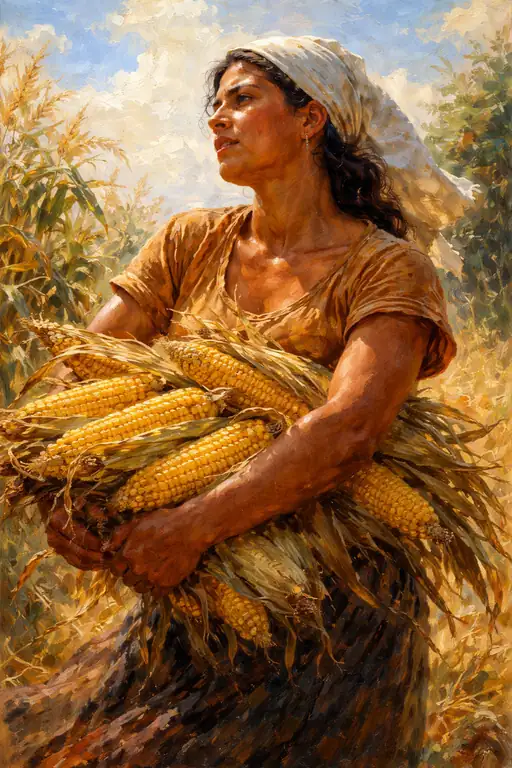 Tears of the Midnight Rain
 Hymn of the Sun-Kissed Earth
 Quenching the Soul's Thirst
 The Bell of Prayer Echoing in the Silvery Silence