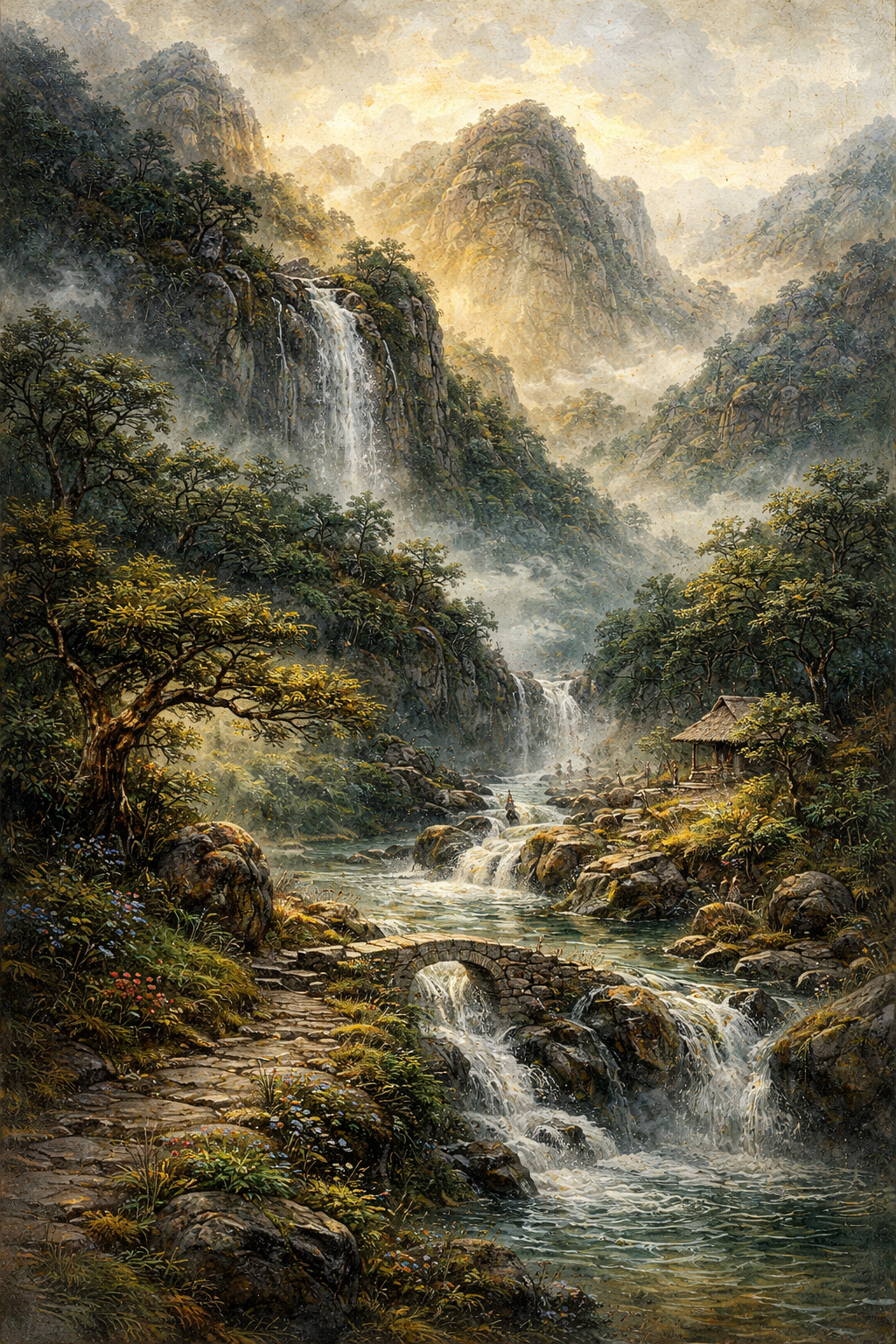
Embrace of the Wild Valleys
Critique
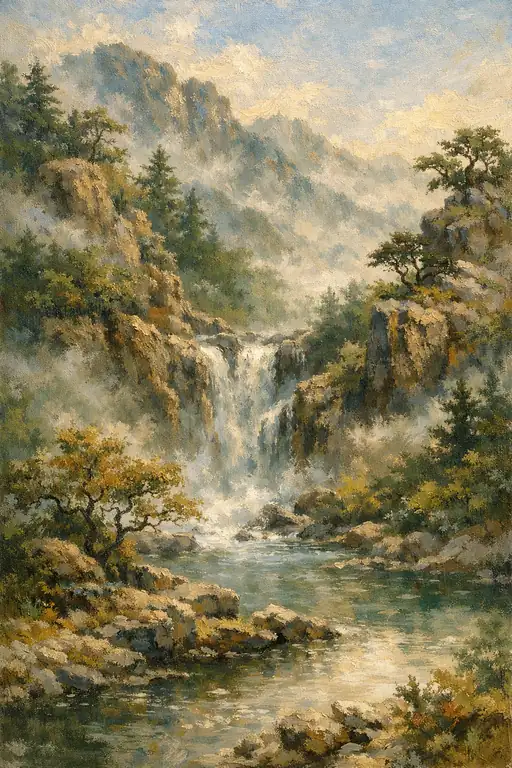
1. Introduction The artwork presents a grand mountain landscape that seamlessly blends a sense of wilderness with a touch of human presence. It captures a moment where water and stone converge in a harmonious display of natural forces. The composition draws the viewer into a deep valley, inviting exploration of its multifaceted scenery. 2. Description In the center, a powerful waterfall cascades down steep cliffs, feeding into a turbulent river that flows through a rocky gorge. A small stone bridge arches over the rushing water in the foreground, connecting to a narrow path lined with wildflowers and ancient trees. To the right, a modest thatched hut sits perched on the riverbank, overlooking several small cascades. 3. Analysis The artist employs a sophisticated vertical composition that emphasizes the height of the mountains and the downward flow of the water. Light filtering through the mist creates a soft, atmospheric perspective that gives the distant peaks a dreamlike quality. The brushwork is meticulous in the foreground, capturing the textures of mossy stones and delicate foliage, while becoming broader in the background to suggest depth. 4. Interpretation and Evaluation The painting can be interpreted as a celebration of the sublime, where the power of nature is both awe-inspiring and welcoming. The inclusion of the bridge and the hut suggests a peaceful coexistence between humans and their environment. Technically, the work is exceptional in its handling of light and shadow, and the balanced color palette of greens, browns, and soft yellows creates a tranquil mood. 5. Conclusion The initial impression of a vast, overwhelming landscape gradually transforms into a feeling of serenity as one notices the small details of human habitability. It is a masterful depiction of a sanctuary within the mountains. Ultimately, the work succeeds in conveying both the magnitude of nature and its capacity for quiet harmony.
Same Subcategory
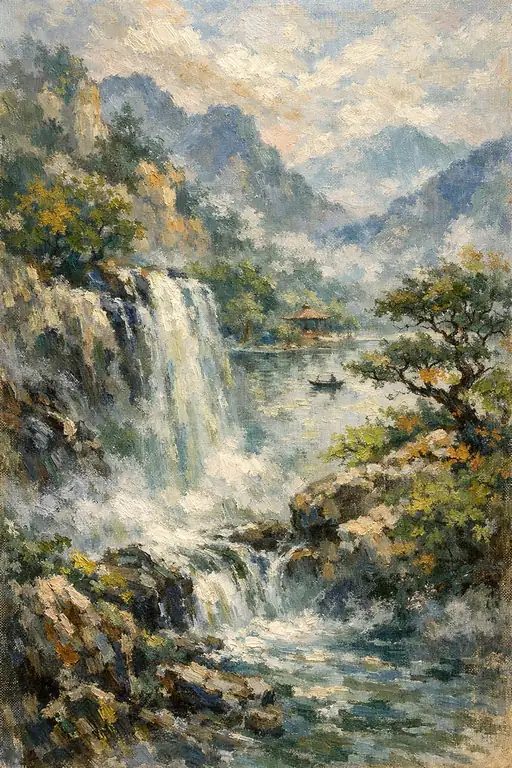 The Majestic Roar of the Hidden Cascade
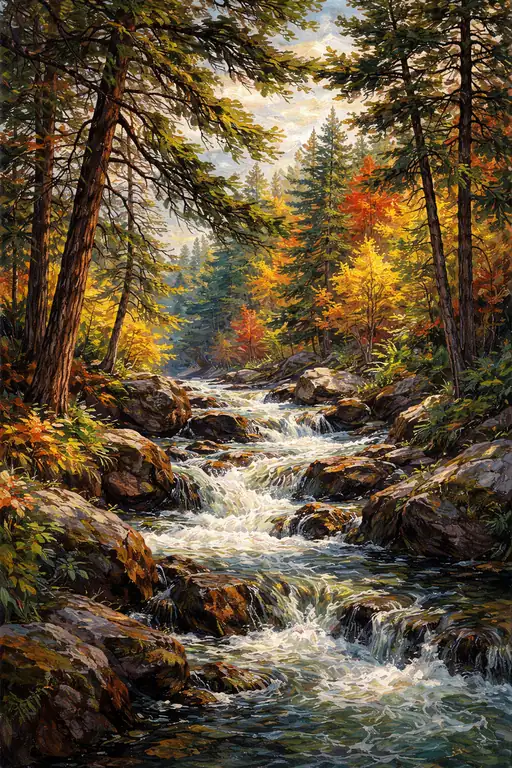 Echoes of the Autumn Torrent
Similar Artworks
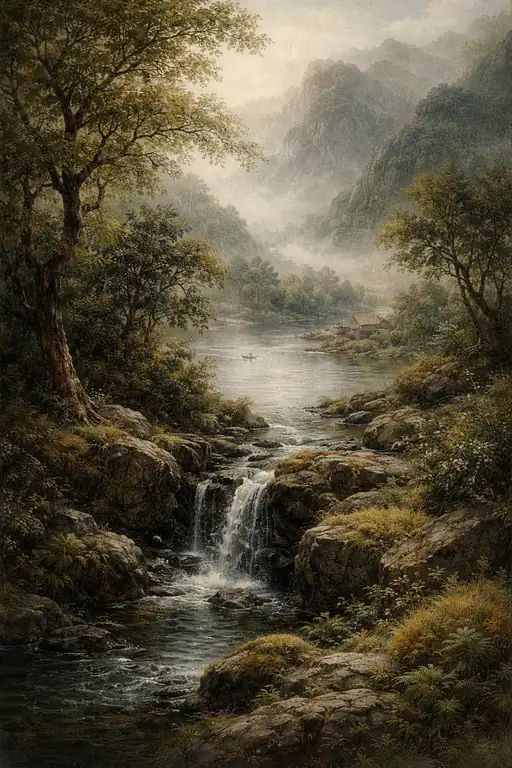 Journey to the Heart of the Misty Valley
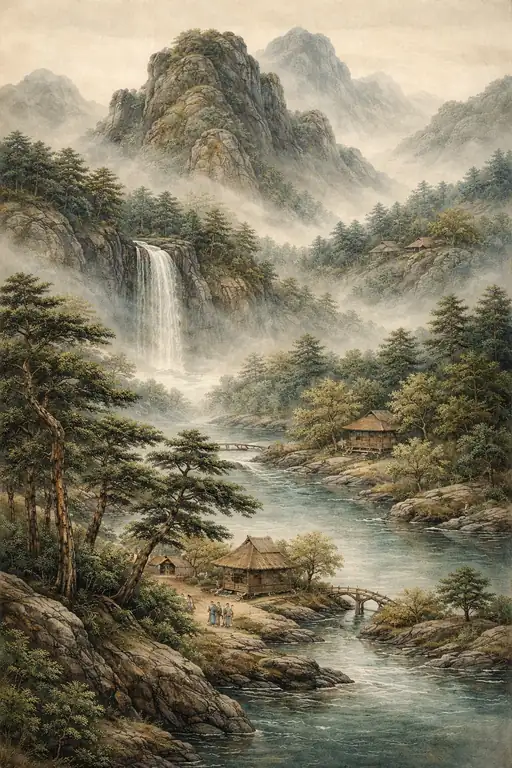 Embraced by the Grandeur of Time
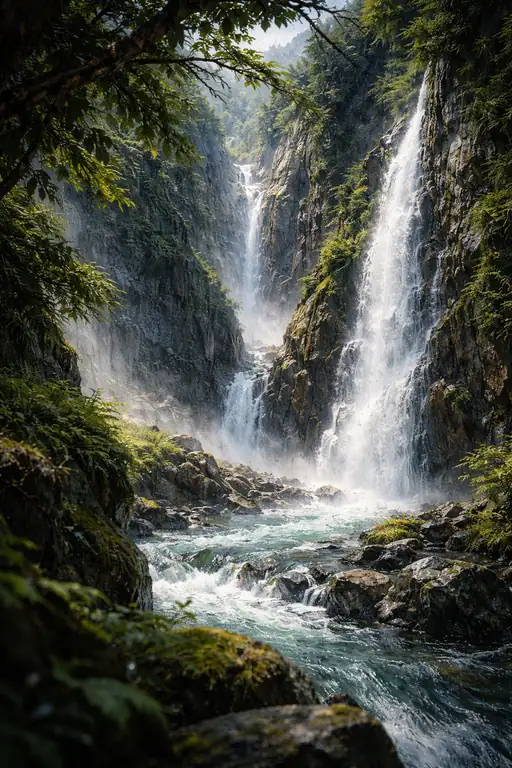 The Untamed Roar of the Gorge
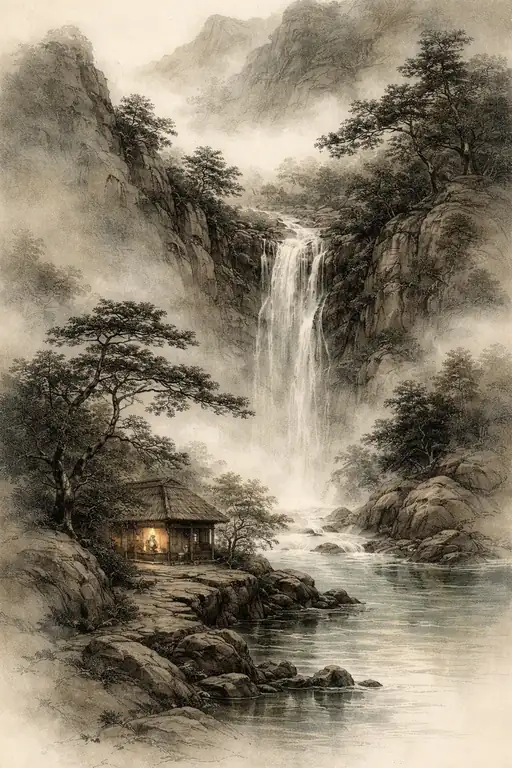 Whispers of the Misty Mountain Retreat
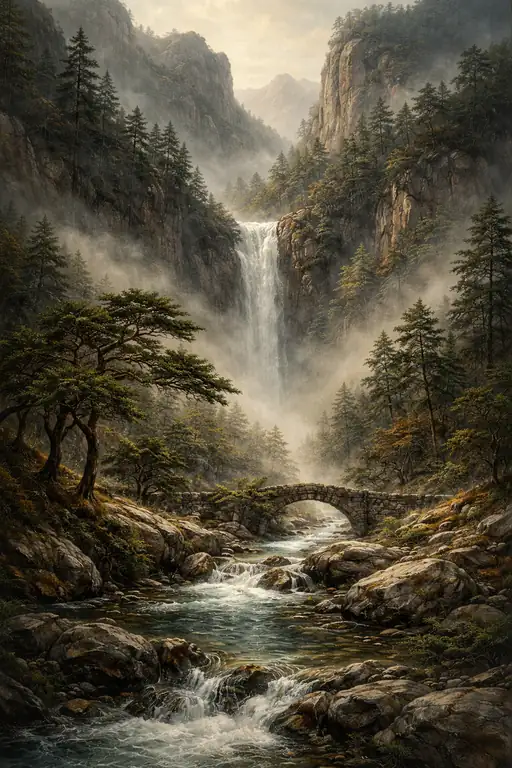 The Roar of Nature's Majestic Heart
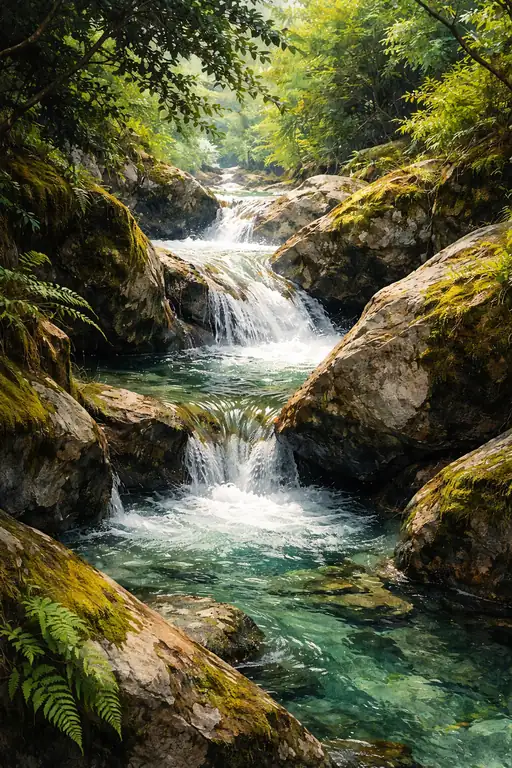 A Moment of Grace and Thought
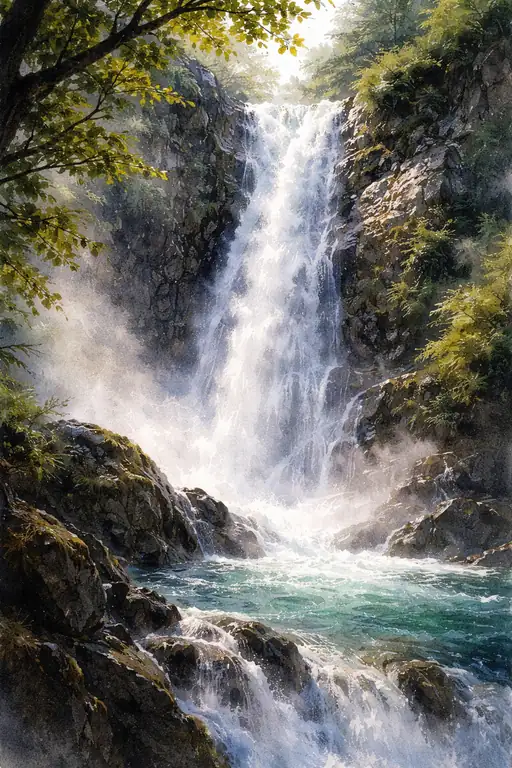 A Secret Symphony of the Emerald Waters
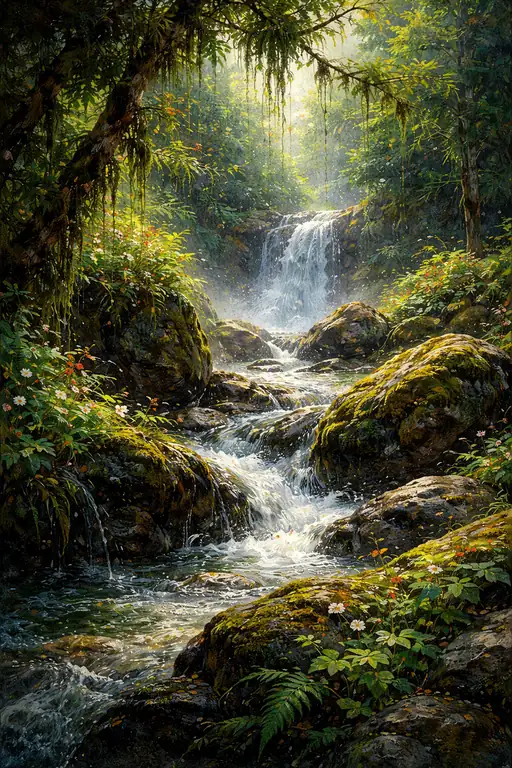 Sanctuary of Light and Water
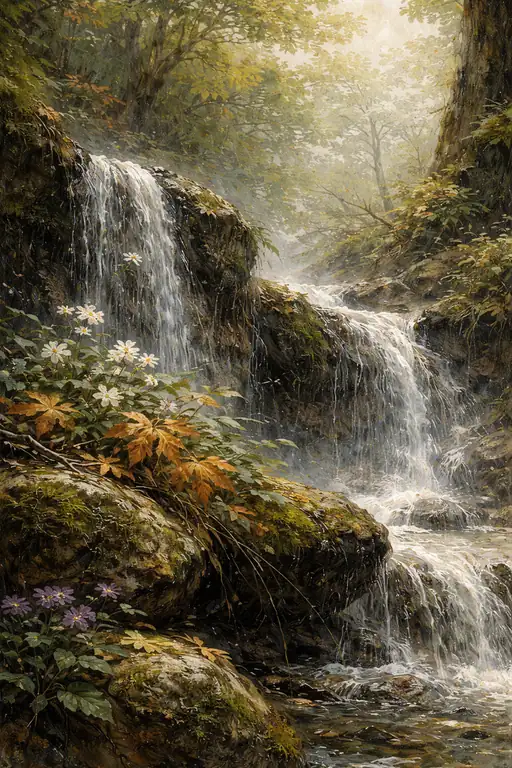 Crimson Twilight of the Soul
 Bathed in the Light of the Crystal Pool