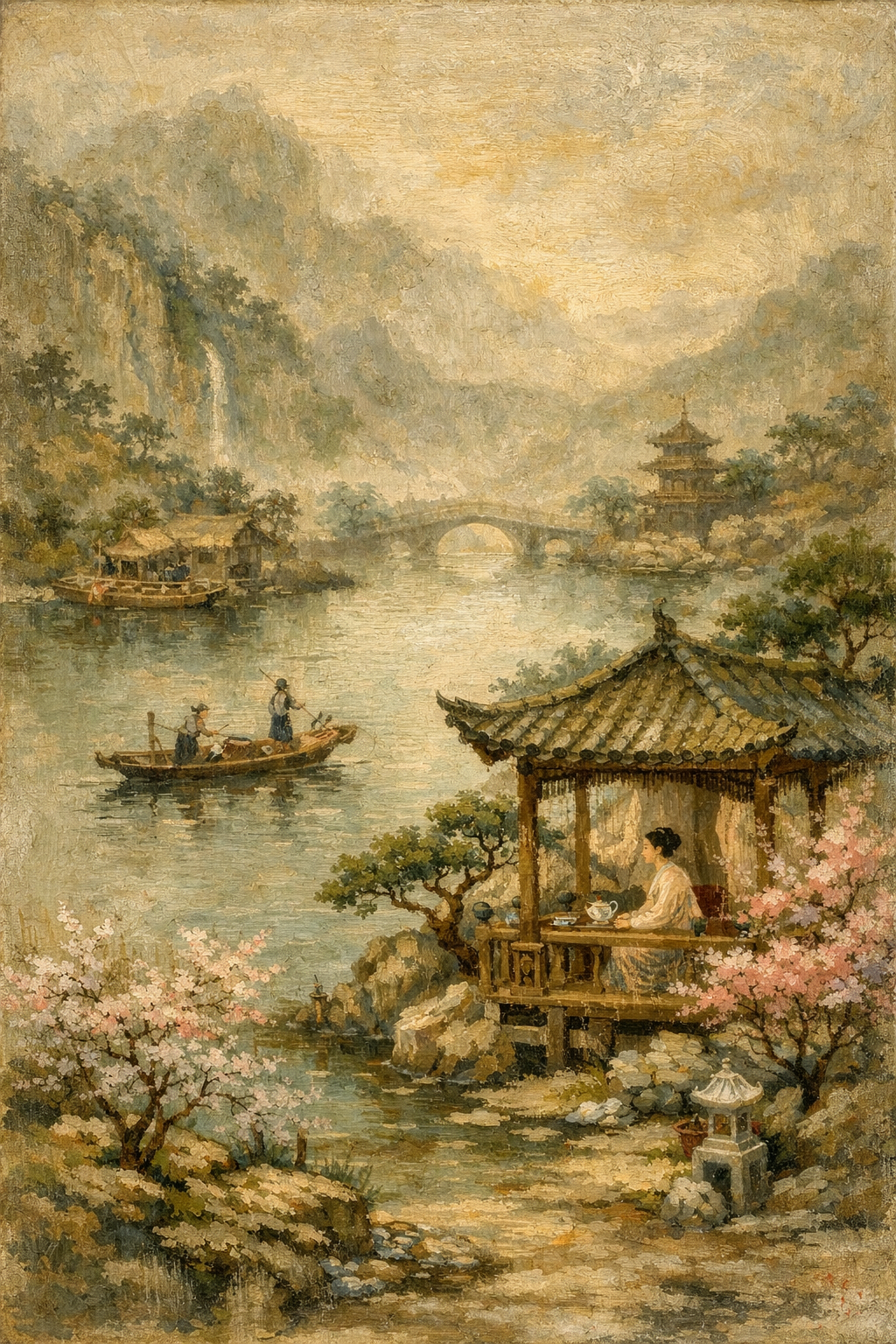
Spring Blossoms and Tea by the Peaceful River
Critique
1. Introduction The artwork is a landscape painting that depicts themes of East Asian Shanshui using impasto oil techniques reminiscent of Western Impressionism. The harmony between the powerful matiere covering the entire canvas and the delicate colors creates a unique expression that breathes life into traditional silence. Viewers will likely first sense the arrival of spring and a peaceful sentiment from the blooming cherry blossoms in the foreground. 2. Description In the lower right of the composition, there is a tiled pavilion where a woman dressed in a white robe is enjoying tea alone. Surrounding the pavilion are trees with pale pink flowers, and a stone lantern is placed in front. In the middle ground, a small boat operated by two boatmen glides across the water, with thatched houses and a stone arched bridge on the far bank. Rugged mountains rise through the mist in the distance, while a pagoda-like structure is situated in the far right. 3. Analysis The color palette is based on calm tones of beige and pale green, yet the pink of the blossoms adds a brilliant touch to the scene. Noteworthy is the rough brushwork, as if utilizing the canvas's grain, where the textures of rock surfaces and the water are three-dimensionally expressed through layers of paint. The composition reproduces the traditional "three distances" method using oil paint, guiding the eye from the dense foreground pavilion through the water to the distant mountains. 4. Interpretation and Evaluation This work can be evaluated as a highly original attempt where Eastern spirituality and Western material techniques are sophisticatedly fused. The philosophy of "leisurely wandering while staying home," characteristic of traditional landscape painting, is expressed with a sense of reality through the texture of oil paint. Particularly, the contrast between the figure relaxing in the pavilion and the boat on the water symbolizes a noble daily life away from secular noise. The advanced brush handling and delicate color sense provide new visual appeal to a classical theme. 5. Conclusion Through detailed observation of this work, one can rediscover the possibilities of modern formal expression hidden within a traditional composition. While initially overwhelmed by the powerful impasto texture, the viewer is gradually drawn into the tranquility of the depicted scene, leading to a sense of spiritual purification. Portrayed across ancient and modern techniques, this masterpiece embodies a universal beauty that transcends cultural boundaries.
Same Subcategory
Similar Artworks
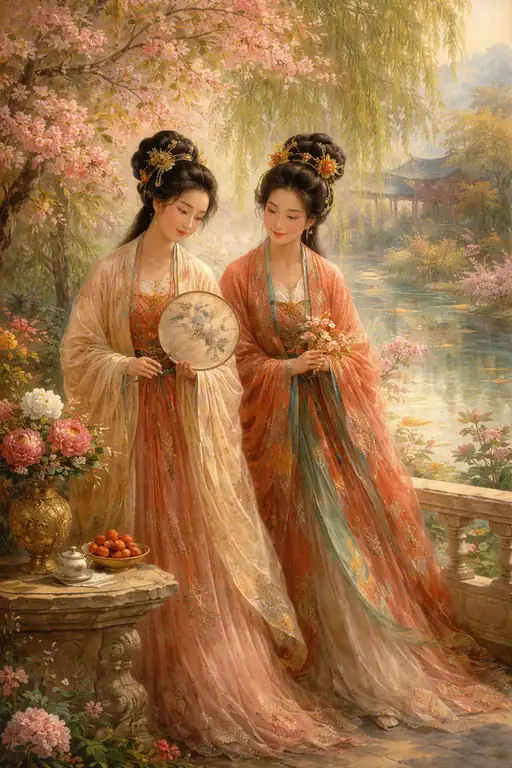 Whispering Spring Breeze on the Terrace
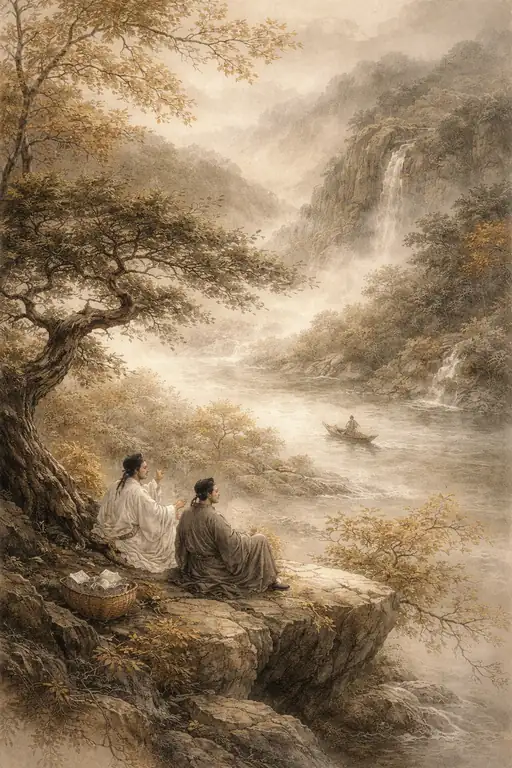 Dialogue with the Autumn Stream
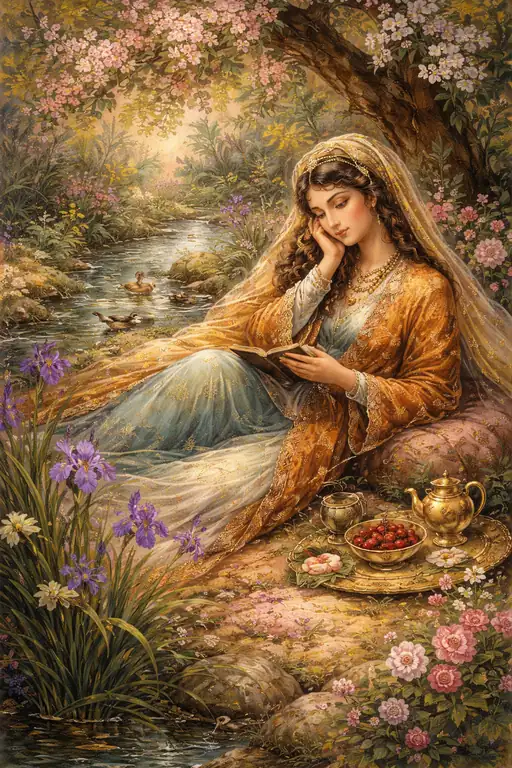 Serenade of the Golden Blossom
 A Fleeting Dream in the Peony Garden
 Springtime Swans of Bruges
 Slumber Within the Floral Utopia
 Melody of the Meadow
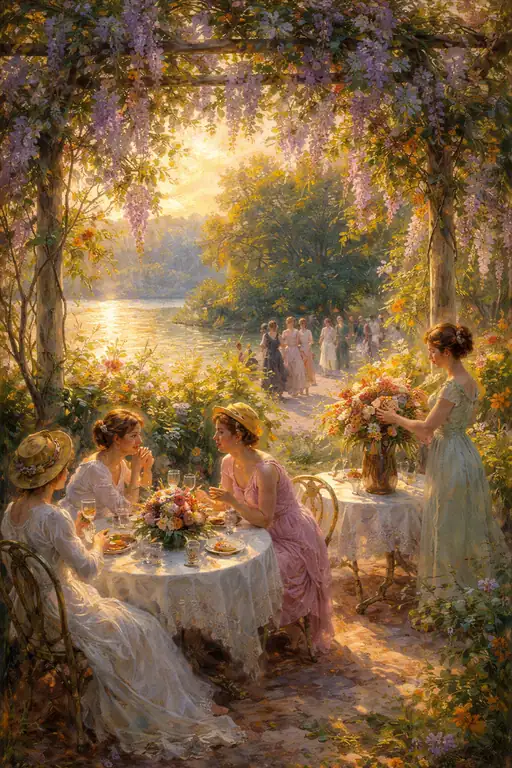 Golden Sunset Beneath the Weeping Wisteria
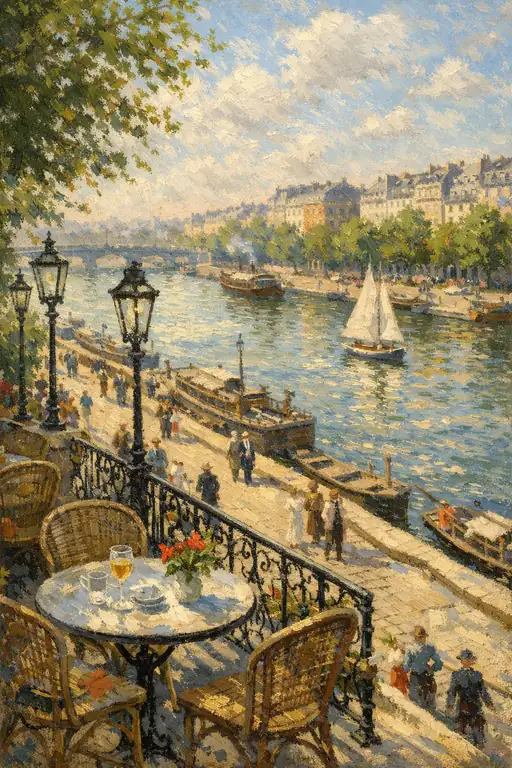 Dance of Light on the Parisian Waters
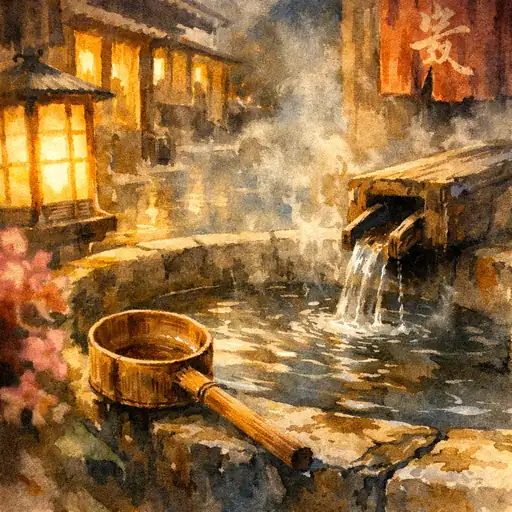 Solace in the Steaming Waters