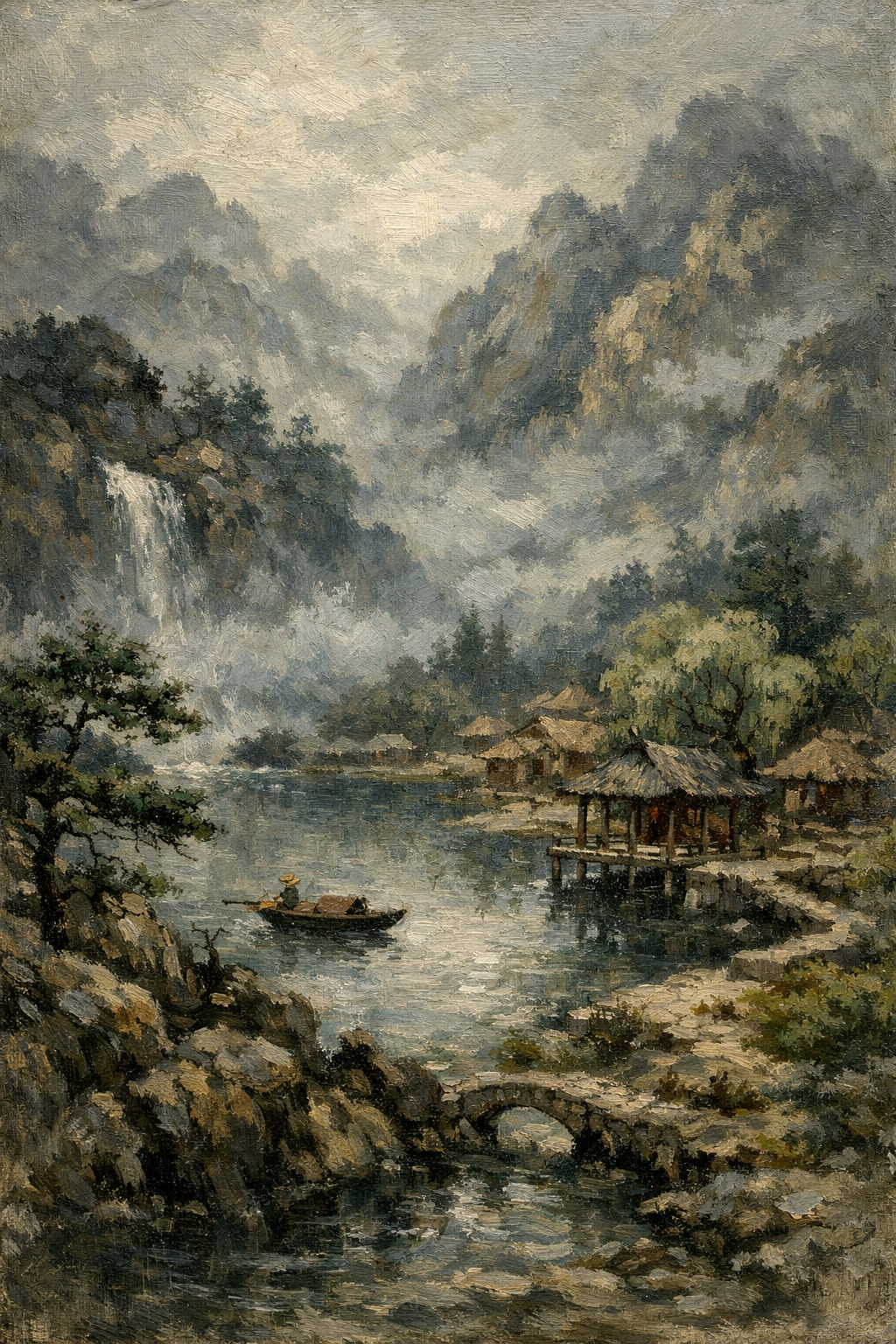
Mystic Village Amidst the Rolling Clouds
Critique
1. Introduction This evocative landscape painting portrays a secluded mountain village nestled along the shores of a dark, reflective lake. The composition is characterized by its dramatic verticality, leading from a rocky foreground toward towering, mist-shrouded peaks. Through its somber color palette and textured brushwork, the work captures a moody and atmospheric moment in a remote wilderness. It serves as a powerful meditation on the isolation and resilience of human life within a vast, untamed environment. 2. Description In the foreground, a rugged, rocky outcrop features a small stone arch bridge spanning a narrow inlet. A solitary figure in a traditional wide-brimmed hat rows a small boat across the calm surface of the lake. The middle ground reveals a cluster of thatched-roof dwellings, including a prominent pavilion built on wooden stilts over the water. To the left, a tall waterfall plunges from a steep cliff, disappearing into the mist below. The background is dominated by massive mountain ranges that merge into a heavy, grey sky. 3. Analysis The artist uses a predominantly monochromatic palette of greys, browns, and muted greens, which heightens the scene's atmospheric tension. The composition follows a zigzag pattern, moving from the rocks to the boat, then to the village, and finally up the waterfall and mountains. Thick, expressive brushstrokes provide a sense of volume to the stone and foliage, while the treatment of the mist creates a soft, ethereal quality. Light is low and diffused, appearing to struggle through the dense clouds and fog. 4. Interpretation and Evaluation The painting can be interpreted as a portrayal of the sublime, where the overwhelming scale of nature inspires both awe and a sense of human smallness. The inclusion of the lone fisherman and the small village suggests a life of quiet endurance and adaptation to the environment's demands. Technically, the artist's ability to create depth through varying degrees of clarity and atmospheric perspective is noteworthy. The work successfully evokes a specific mood of melancholic beauty, characteristic of a rainy or mist-filled day in the high mountains. 5. Conclusion A close examination of the work reveals how the small human elements are deliberately dwarfed by the monumental scale of the surrounding peaks. The initial impression of a dark, uninviting landscape transforms into an appreciation for the subtle textures and the life it sustains. The painting stands as a masterly example of atmospheric landscape art, focusing on mood over literal detail. It ultimately leaves the viewer with a lingering sense of the profound silence and mystery that defines the mountain wilderness.
Same Subcategory
Similar Artworks
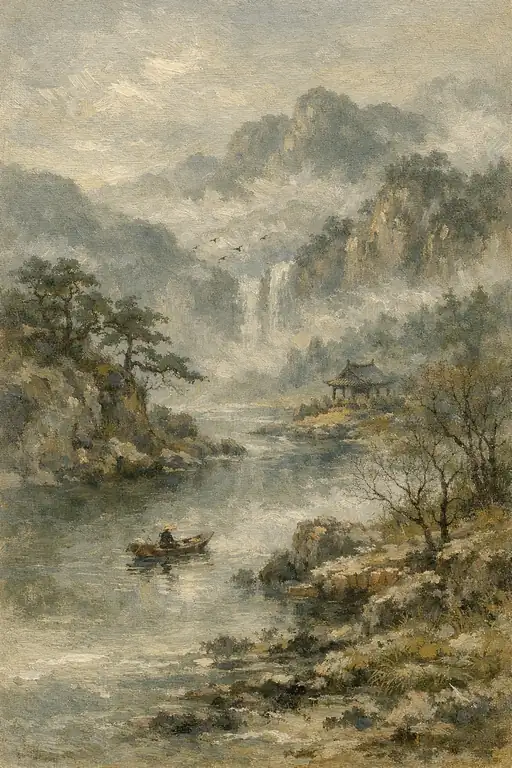 A Solitary Journey Through the Mist
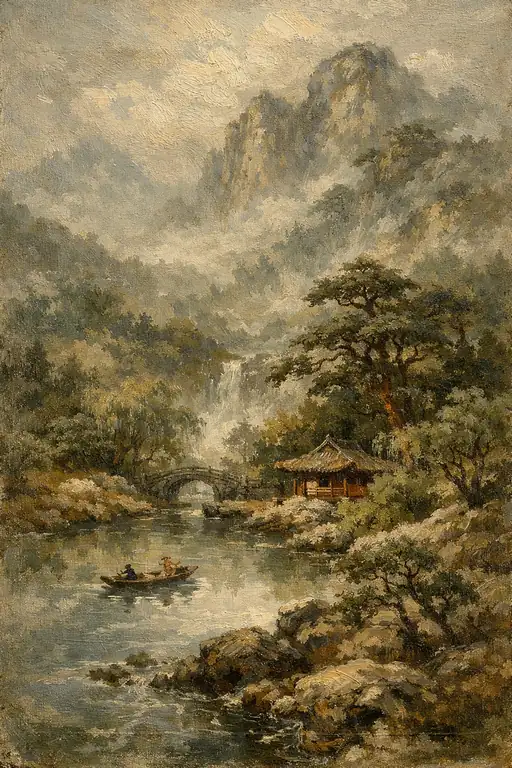 Golden Dreams of the Distant Utopia
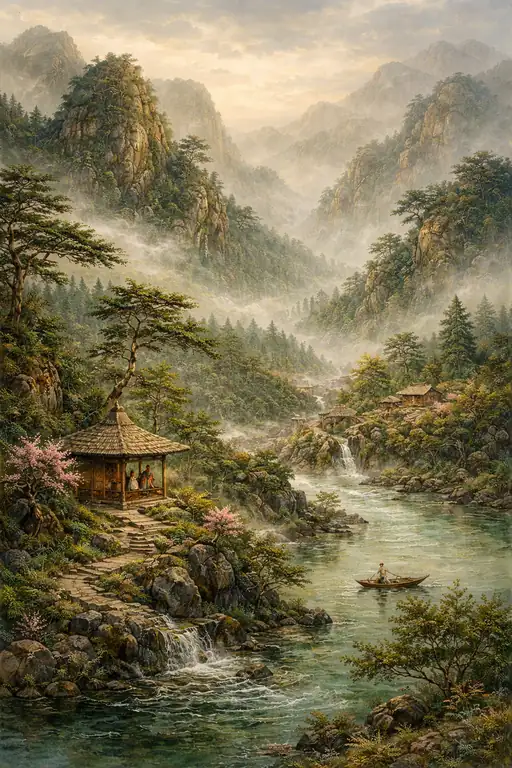 A Fisherman's Journey Through the Ancient Gorge
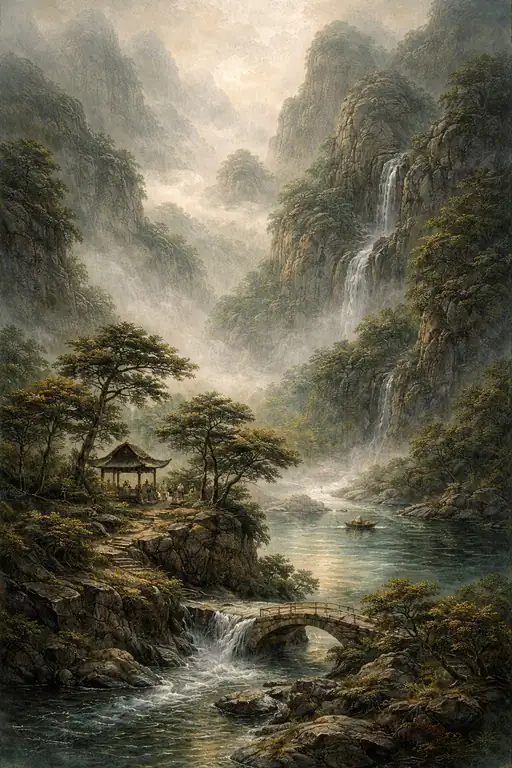 Sanctuary of the Falling Waters
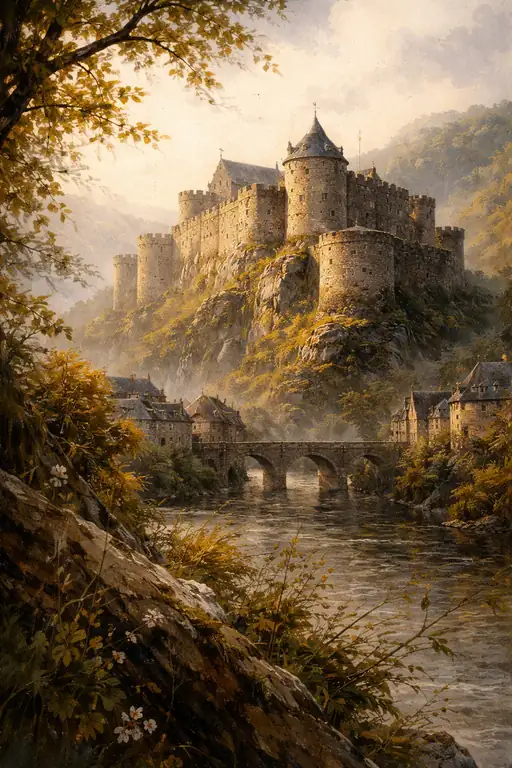 Sentinel of the Autumn Valley
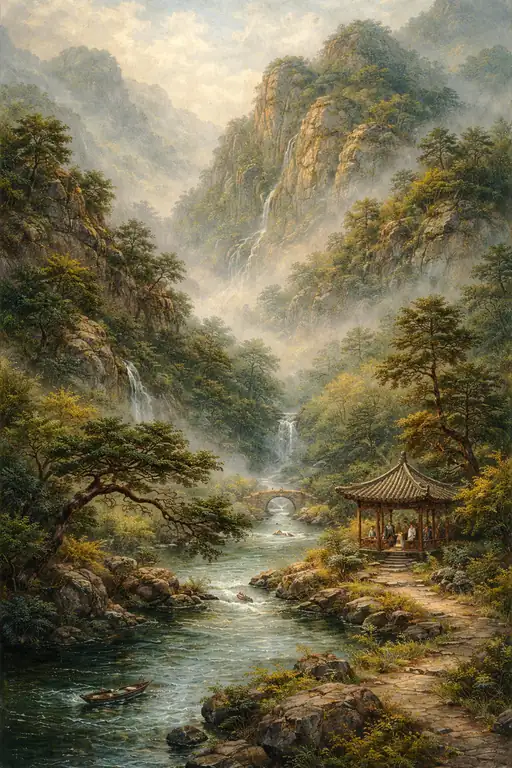 Journey Through the Misty Valley
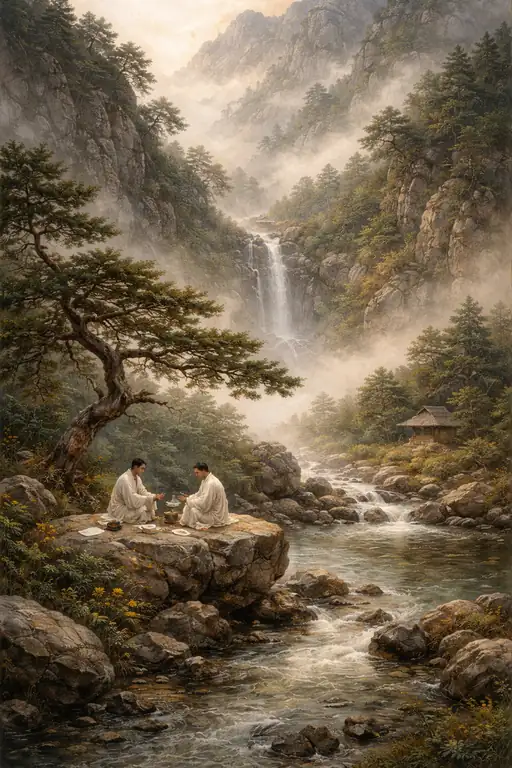 Silent Wisdom by the Cascading Waters
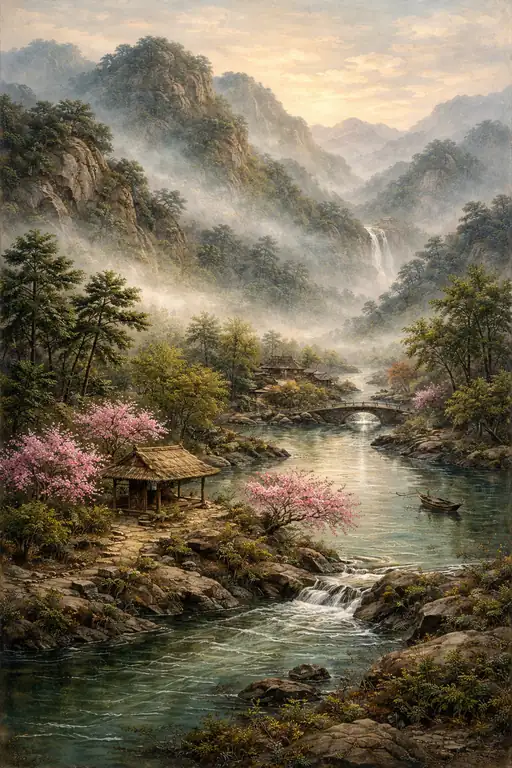 Whispers of Pink Mist
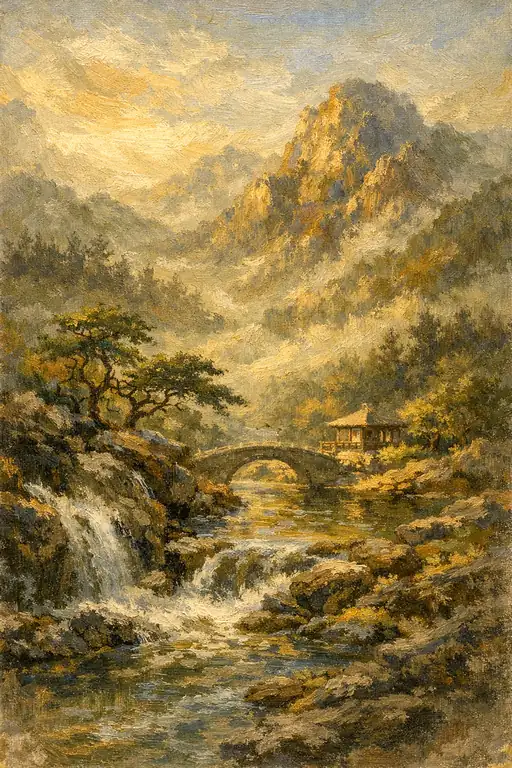 Golden Hour Cascade in the Majestic Valley
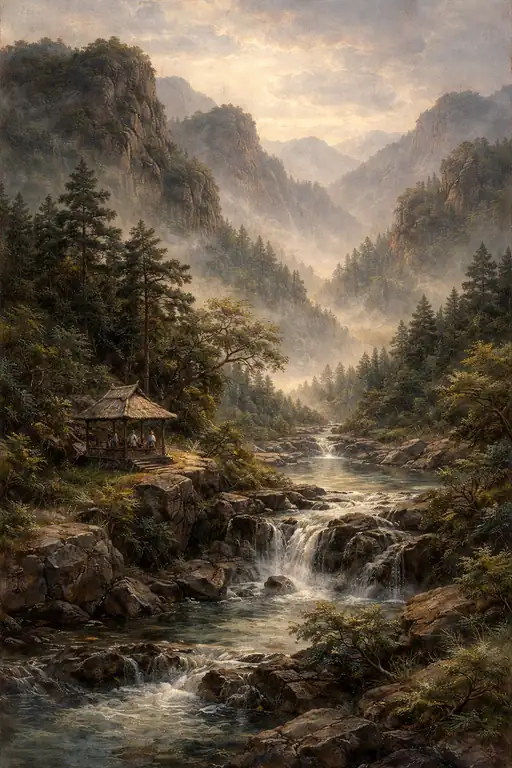 Tears of the Ancient Mountain