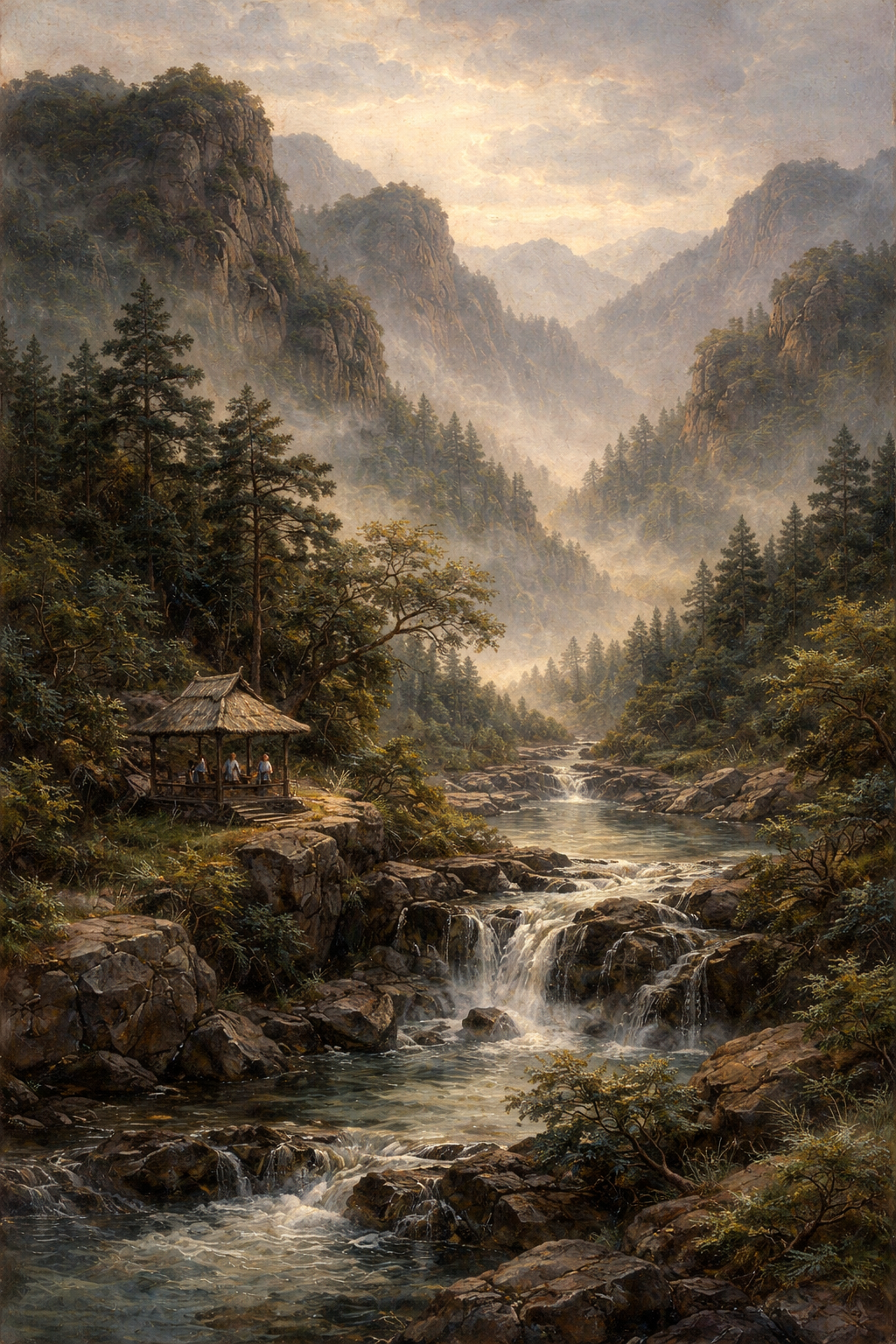
Tears of the Ancient Mountain
Critique
1. Introduction This oil on canvas landscape depicts a serene mountain valley characterized by a cascading river and misty peaks. The scene captures a moment of tranquil isolation, inviting the viewer into a vast natural wilderness. The work adheres to classical landscape traditions, focusing on the grandeur of the environment. 2. Description In the foreground, a rushing river flows over dark, rugged rocks, creating small waterfalls with white foam. On the left bank, a simple wooden pavilion with a thatched roof stands atop a rocky outcrop. Small figures appear to be resting inside the structure. The mid-ground is filled with dense evergreen forests, while the background features towering, hazy mountains partially obscured by a thick layer of golden mist. 3. Analysis The composition follows a vertical format, emphasizing the height of the mountains and the downward flow of the water. Atmospheric perspective is masterfully employed, with the colors becoming softer and more monochromatic in the distance. The lighting appears to originate from an overcast sky, casting a gentle, diffused glow across the entire scene. Precise brushwork captures the textures of stone, water, and foliage. 4. Interpretation and Evaluation The work reflects a romanticized view of nature, where the human element is dwarfed by the immense landscape. The inclusion of the pavilion suggests a harmonious coexistence between humanity and the wild. Technically, the artist demonstrates high proficiency in rendering the fluid movement of water and the depth of the valley. The subtle color palette enhances the meditative quality of the piece. 5. Conclusion Initially, the scene appears as a conventional wilderness study, but careful observation reveals a complex layering of light and texture. The painting successfully evokes a sense of timelessness and awe. It stands as a significant example of traditional landscape art, emphasizing the enduring beauty of the natural world.
Same Subcategory
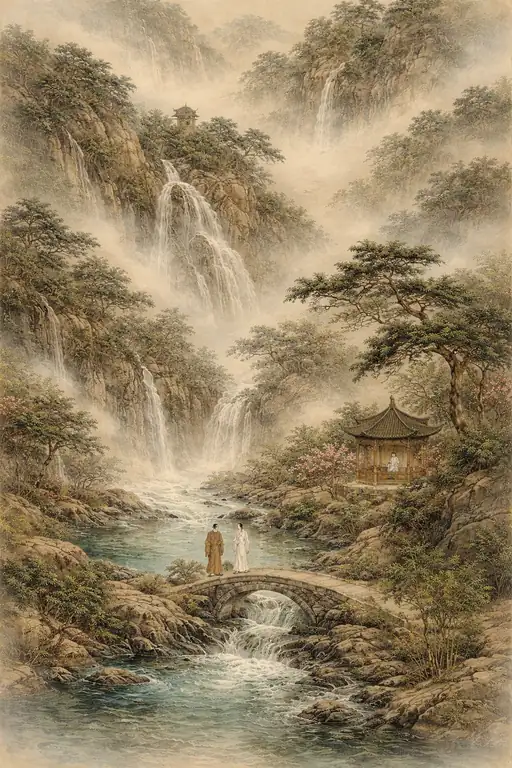 Echoes of the Mist in the Silent Valley
Similar Artworks
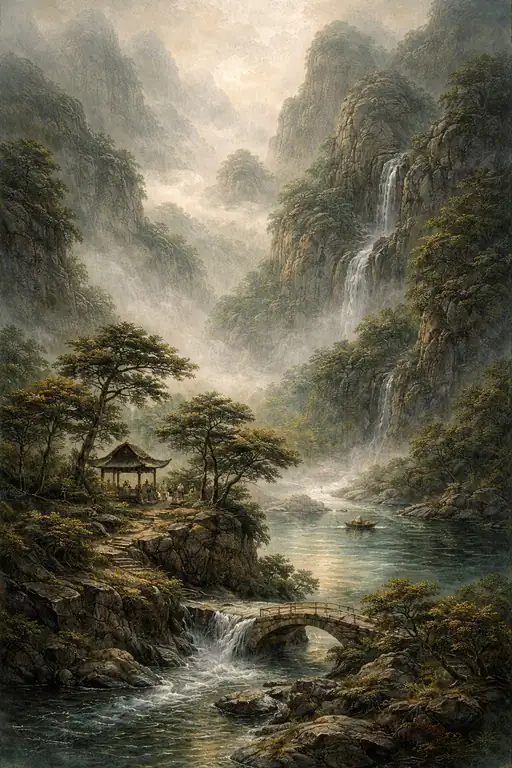 Sanctuary of the Falling Waters
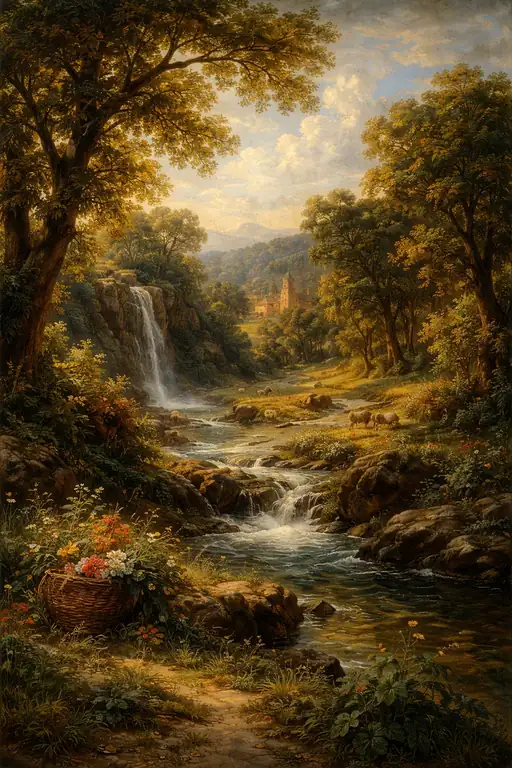 Pastoral Landscape with a Flower Basket
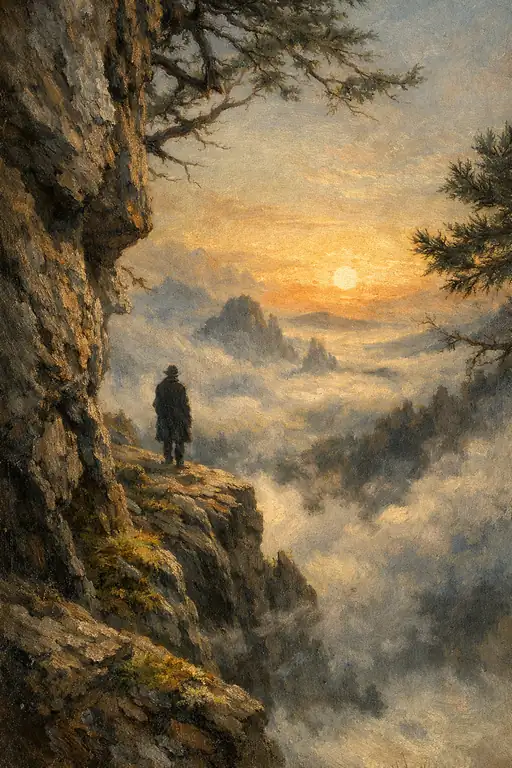 Solitude Above the Clouds
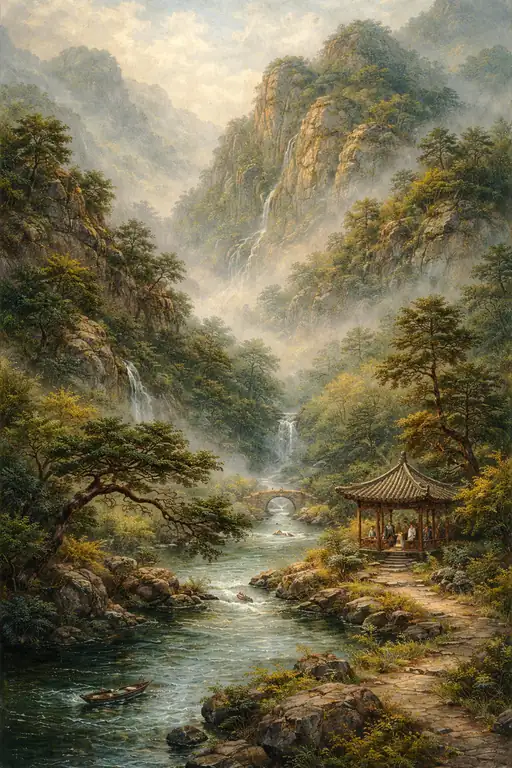 Journey Through the Misty Valley
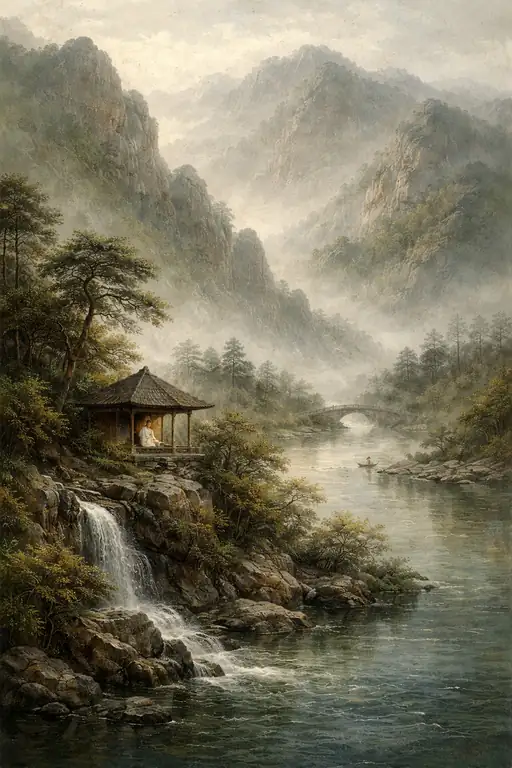 Solitude's Embrace in the Foggy Valley
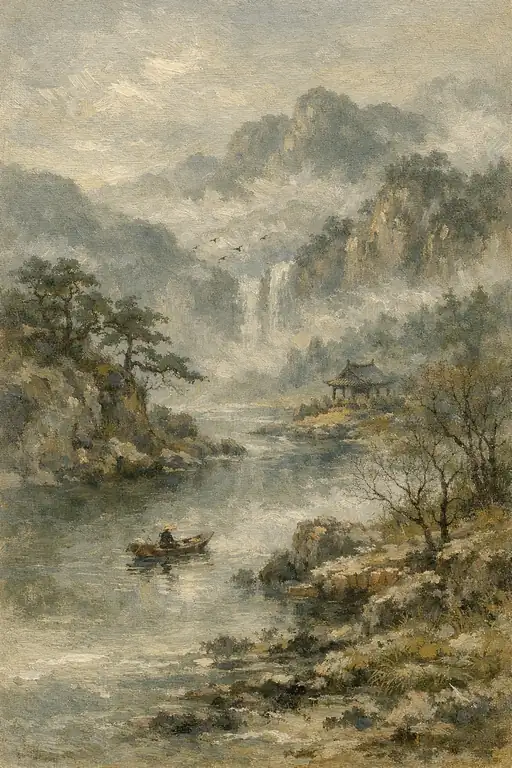 A Solitary Journey Through the Mist
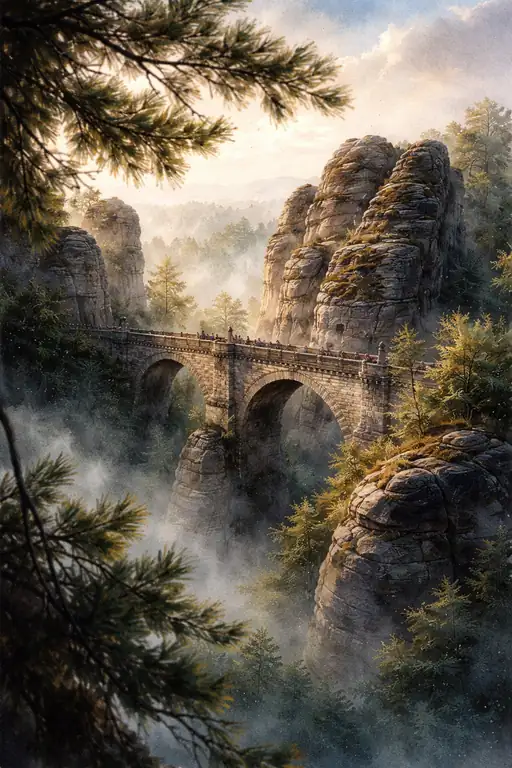 Bridge Through the Veil
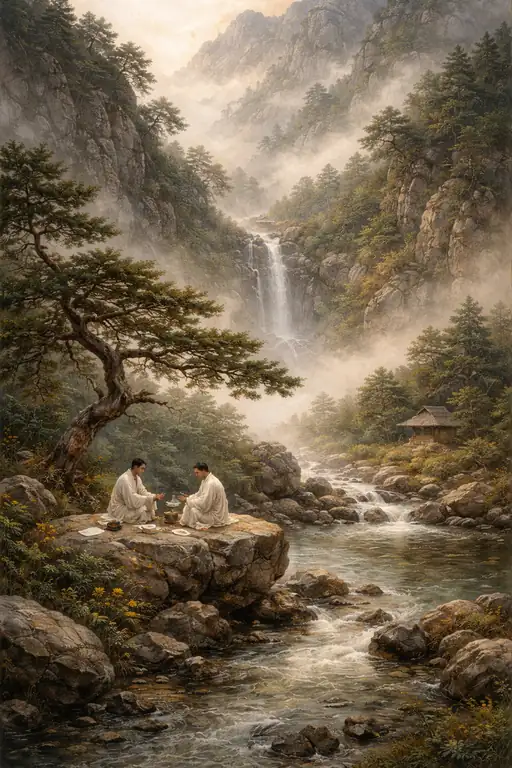 Silent Wisdom by the Cascading Waters
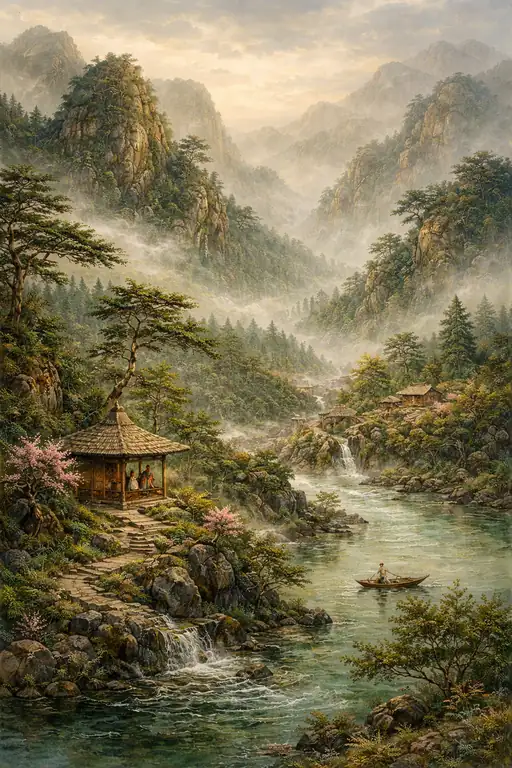 A Fisherman's Journey Through the Ancient Gorge
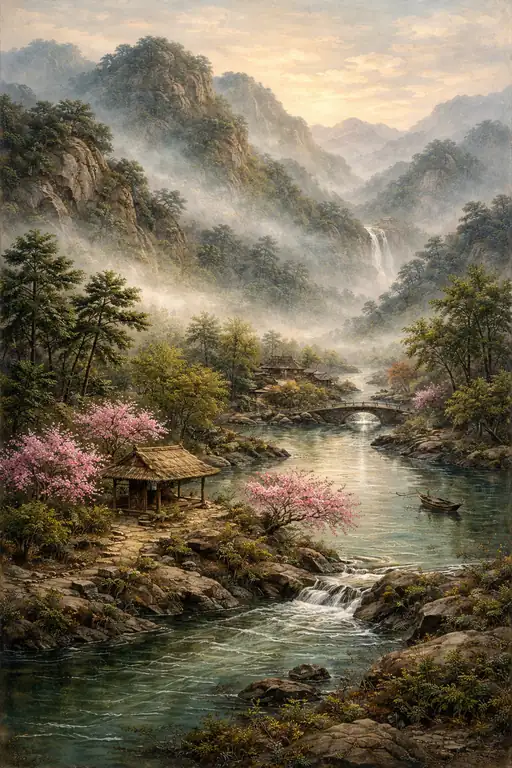 Whispers of Pink Mist