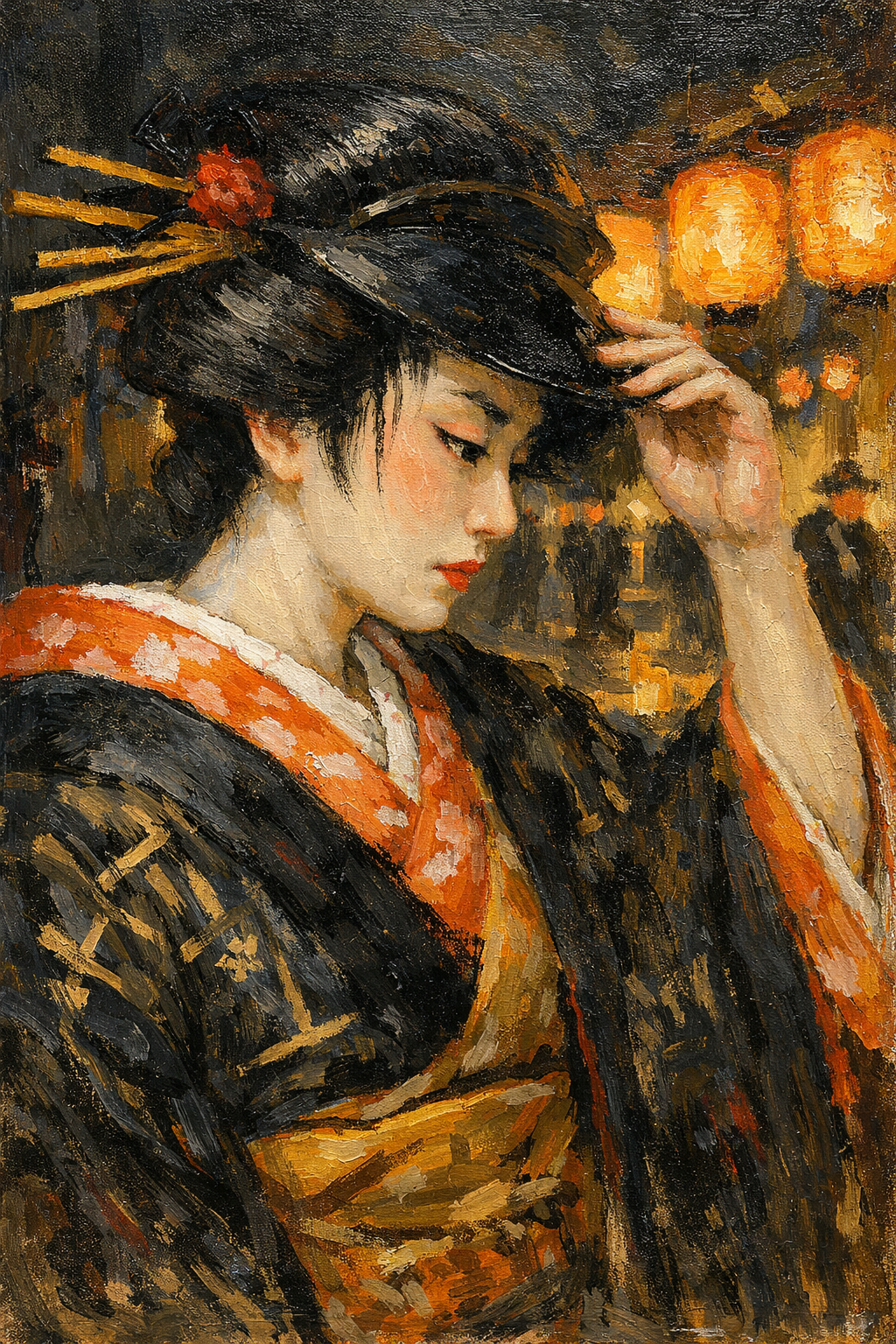
The Golden Thread of Night
Critique
1. Introduction This oil painting presents a captivating portrait of a woman in traditional Japanese attire, set against an atmospheric night background. The artwork masterfully blends classical motifs with a modern, expressive technique, creating a scene that feels both historically grounded and emotionally immediate. The profound use of color and light draws the viewer into a world of quiet elegance and mystery. 2. Description A woman is depicted in profile, dressed in a dark kimono with intricate patterns. Her hair is elaborately styled with traditional ornaments, including a prominent red floral piece. She gently rests her hand on her headpiece, casting her gaze downward in a reflective manner. Behind her, orange lanterns glow softly, their light reflecting like blurred orbs against the dark, possibly damp evening air. 3. Analysis Technically, the artist employs a bold impasto technique, where thick layers of paint create a rich, tactile surface. This approach is particularly evident in the texture of the kimono and the luminous quality of the background lights. The color palette is dominated by deep blacks and earthy tones, which serve to accentuate the vibrant oranges of the lanterns and the woman窶冱 collar. 4. Interpretation and Evaluation The work succeeds in capturing a fleeting moment of introspection. The composition is well-balanced, with the woman positioned slightly to the left to counteract the visual weight of the glowing lanterns on the right. The high degree of technical skill in managing light and shadow effectively highlights the woman窶冱 graceful presence and the delicate emotional depth of the scene. 5. Conclusion While the initial impact lies in its vibrant colors, a closer examination reveals a deep sense of lyricism in the subject窶冱 posture. This piece is a sophisticated fusion of realism and expressionism, resulting in a high-quality artistic achievement. Ultimately, the painting leaves a lasting impression of a serene moment frozen in time, transcending its specific cultural context.
Same Subcategory
Similar Artworks
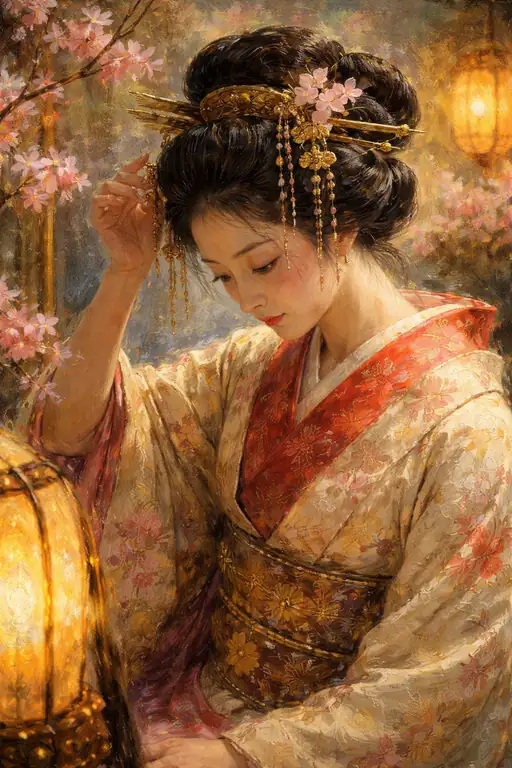 Whispers Under the Spring Lanterns
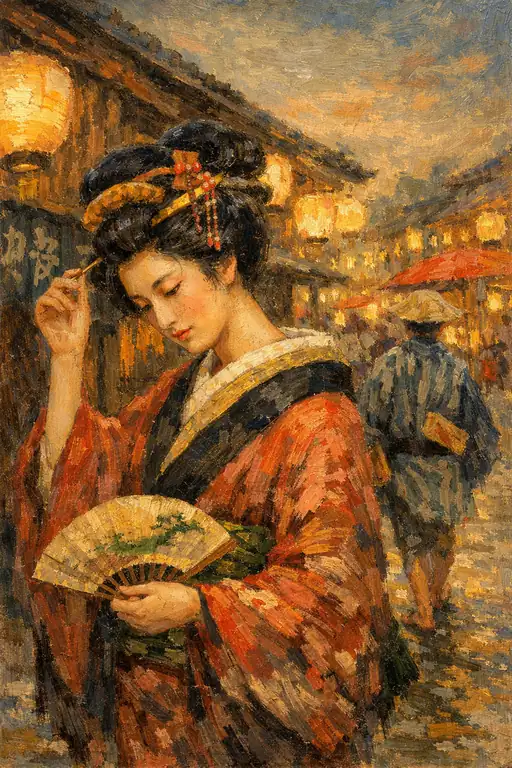 Fleeting Grace in the Spring Breeze
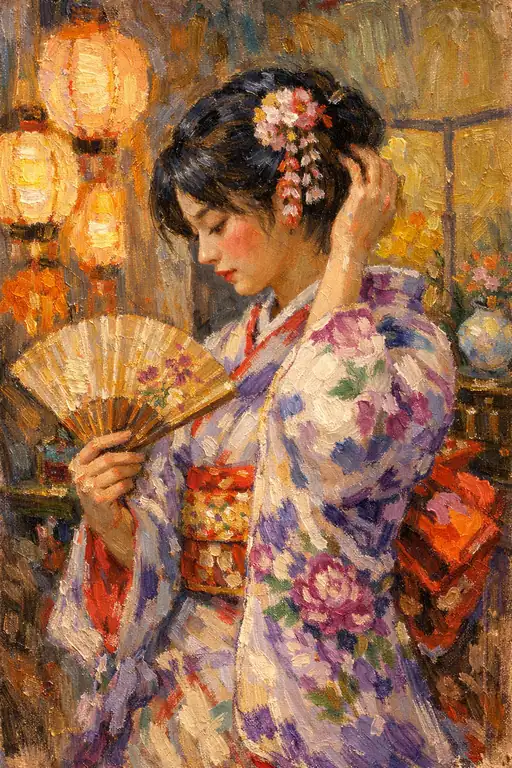 Fleeting Grace in the Spring Breeze
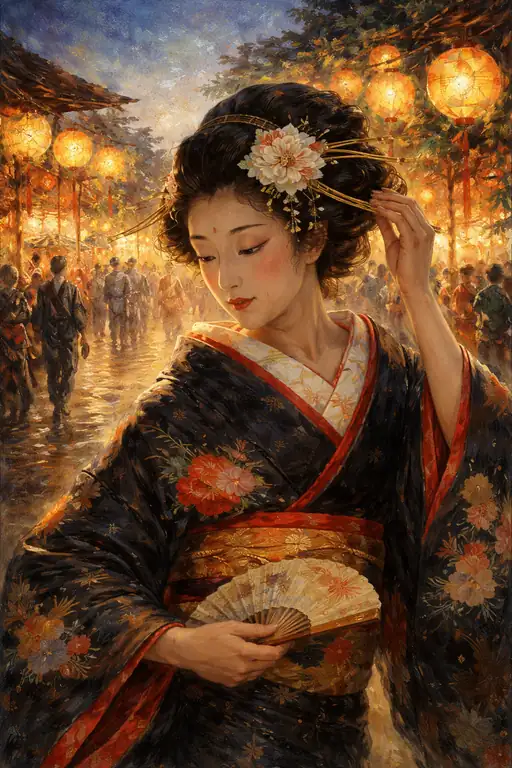 Solitary Reverie Amidst the Golden Glow of the Festival
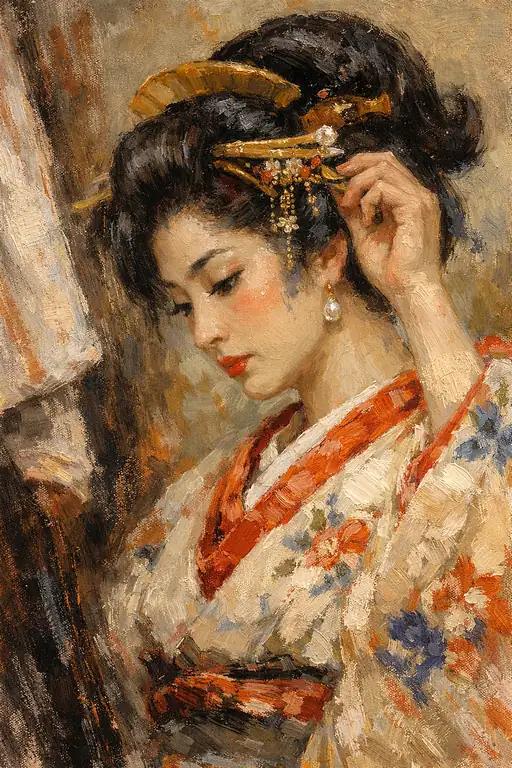 The Elegance of Quiet Preparation
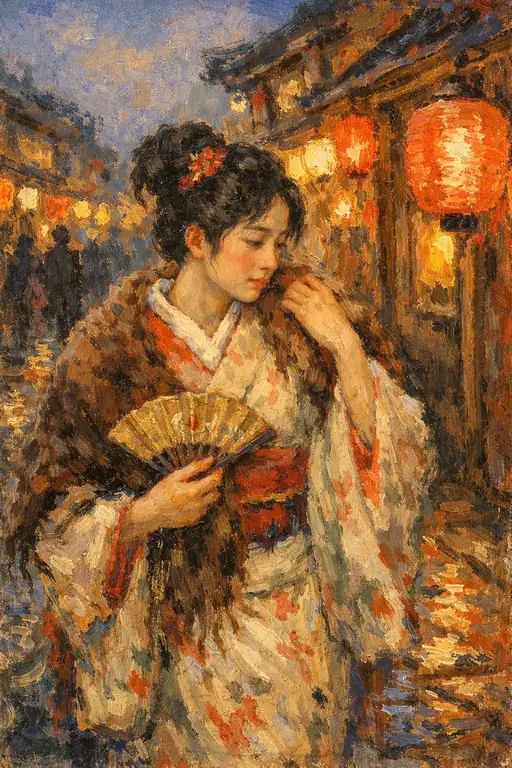 Illuminated Solitude: The Crimson Glow of a Nostalgic Night
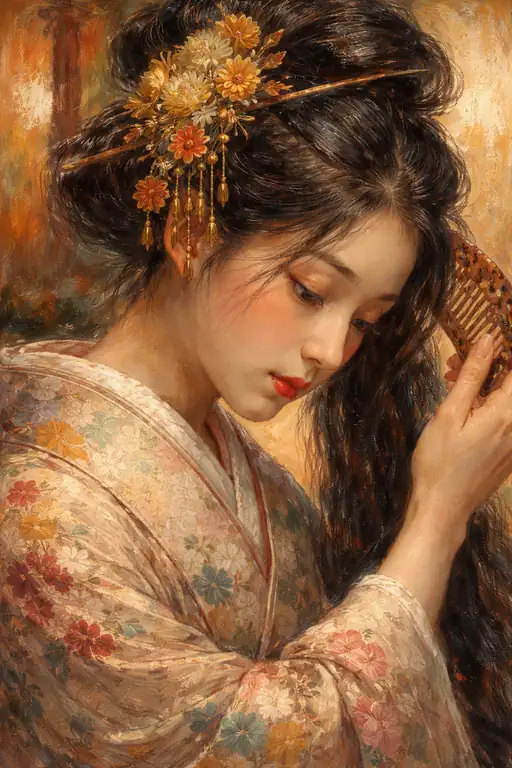 The Golden Threads of Introspection
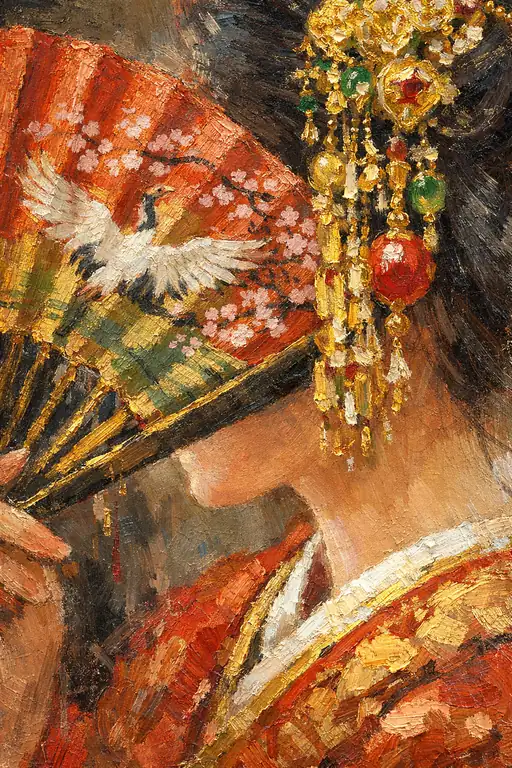 Crimson Elegance Behind the Fan
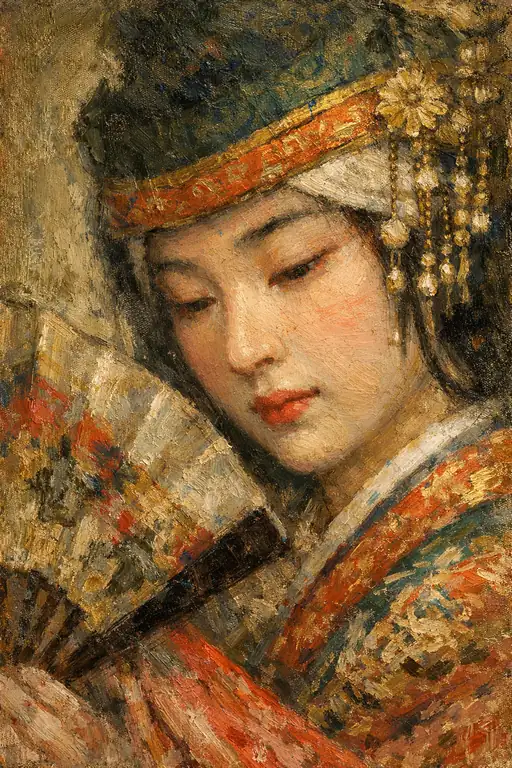 A Graceful Gaze Through Time
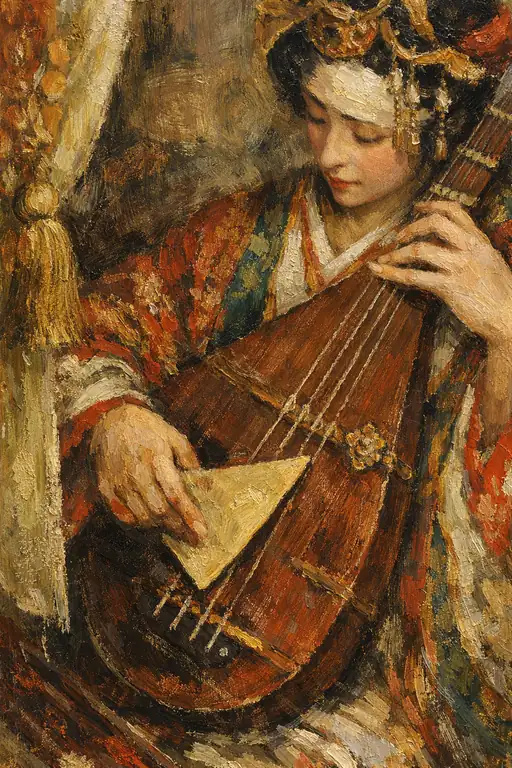 Echoes of the Golden Strings