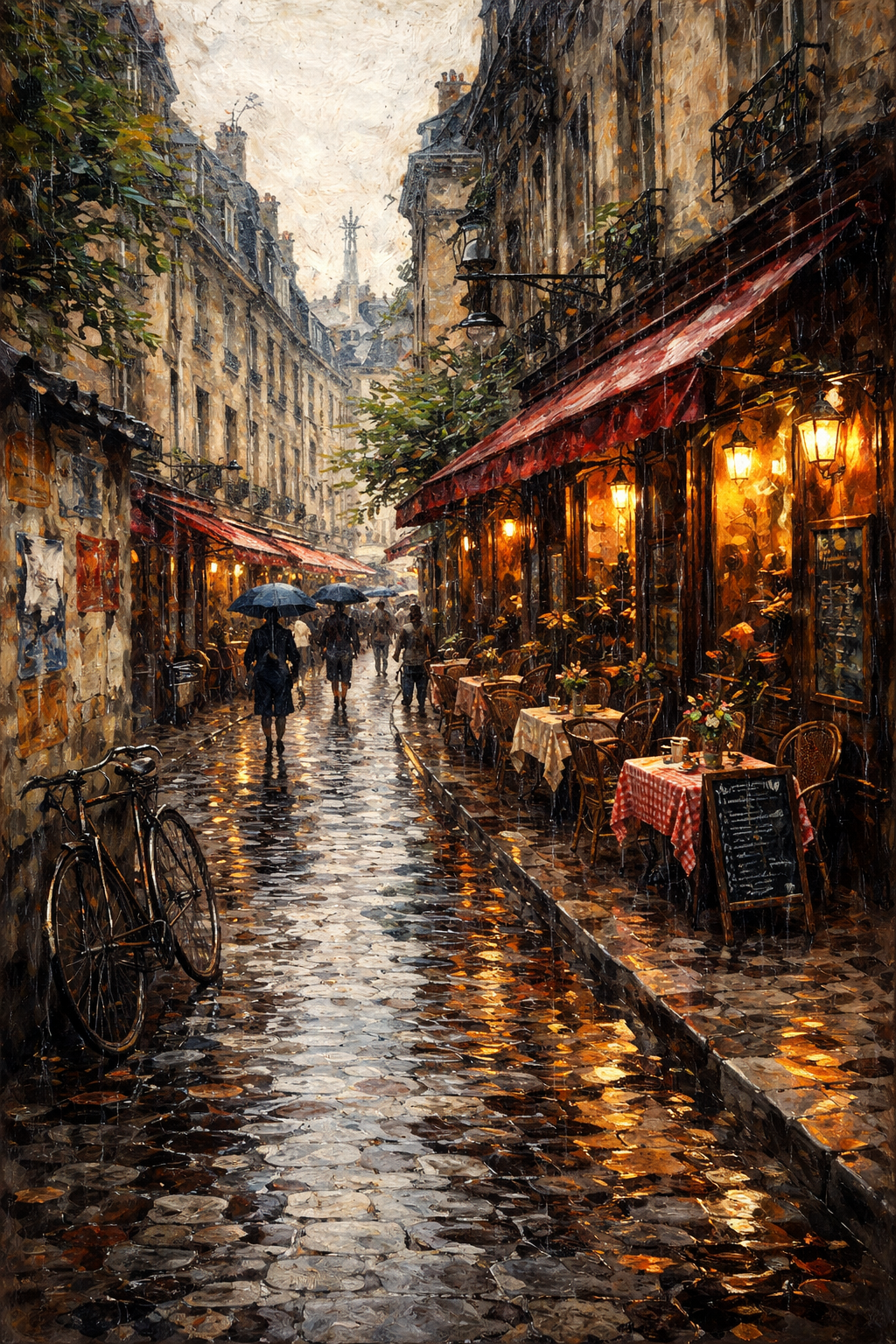
Tears of the Prismatic Night
Critique
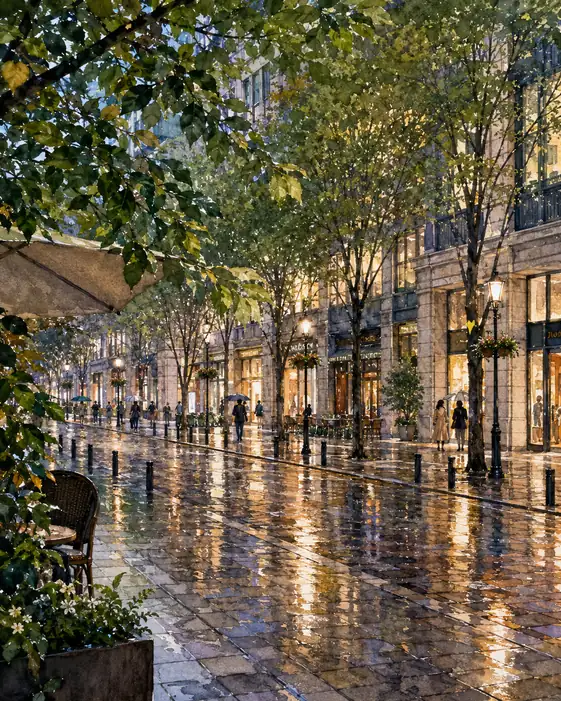
1. Introduction This oil painting captures the atmospheric charm of a rain-slicked European street at dusk. The composition leads the viewer’s eye down a narrow cobblestone lane, where the glow of cozy cafes contrasts with the damp, cool environment. The work masterfully conveys a sense of quiet urban life continuing despite the inclement weather. 2. Description The foreground features two bicycles leaning against a dark wall on the left, their forms slightly blurred by the rain. On the right, a series of cafe tables are set under vibrant red awnings, illuminated by warm interior lights that spill onto the sidewalk. Several figures, holding dark blue umbrellas, walk away from the viewer towards the hazy vanishing point of the street. 3. Analysis The artist uses a rich, impasto-like texture to represent the glistening reflections on the wet cobblestones. A dramatic contrast is established between the warm oranges and yellows of the cafe lights and the cool, muted tones of the buildings and sky. The vertical lines of the architecture are softened by the rainy atmosphere, creating a painterly depth that feels both intimate and expansive. 4. Interpretation and Evaluation The painting effectively evokes a mood of nostalgic melancholy combined with the inviting warmth of urban refuge. The technical execution of the reflective surfaces is particularly noteworthy, capturing the complex interplay of light and water with great sensitivity. This piece succeeds in transforming a common rainy evening into a captivating study of light, color, and atmosphere. 5. Conclusion Initially seen as a simple street scene, the work reveals a sophisticated understanding of light’s ability to define space and emotion. The presence of the figures and bicycles adds a narrative layer, suggesting the rhythms of daily life in a bustling city. Ultimately, this painting stands as a powerful testament to the beauty found in the transient and atmospheric moments of the urban landscape.
Same Subcategory
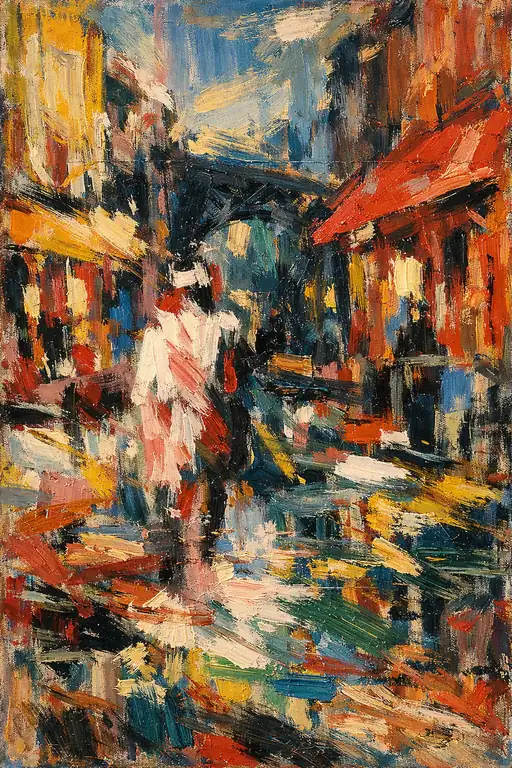 Echoes of the Neon Pavement
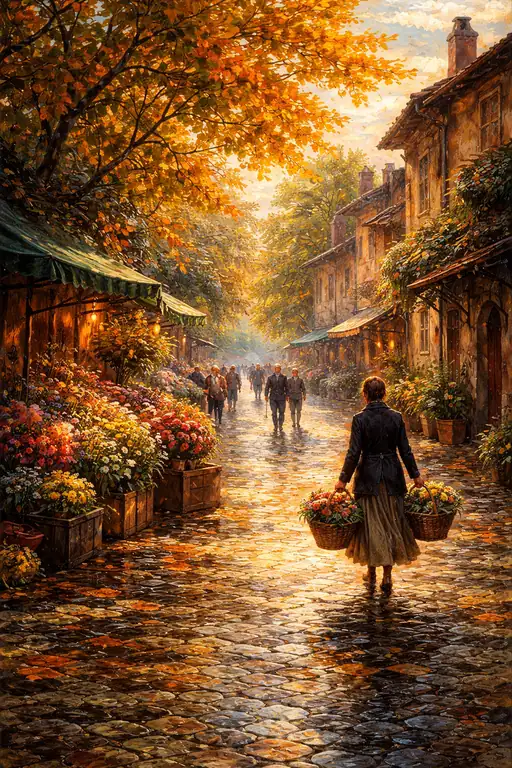 The Fragrance of Golden Memories
Similar Artworks
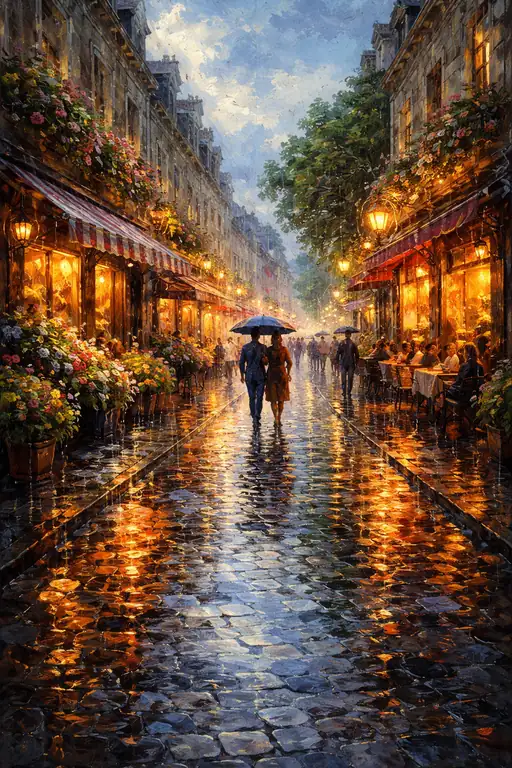 A Dance of Rain and Warmth
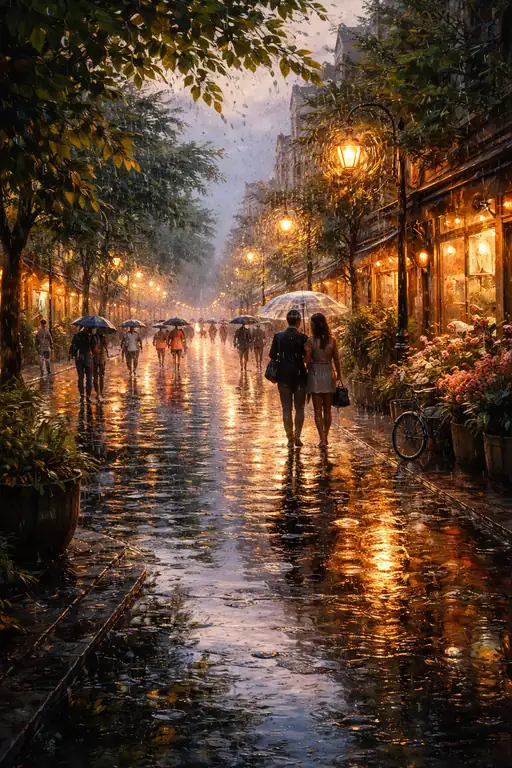 Echoes of Warmth in the Urban Downpour
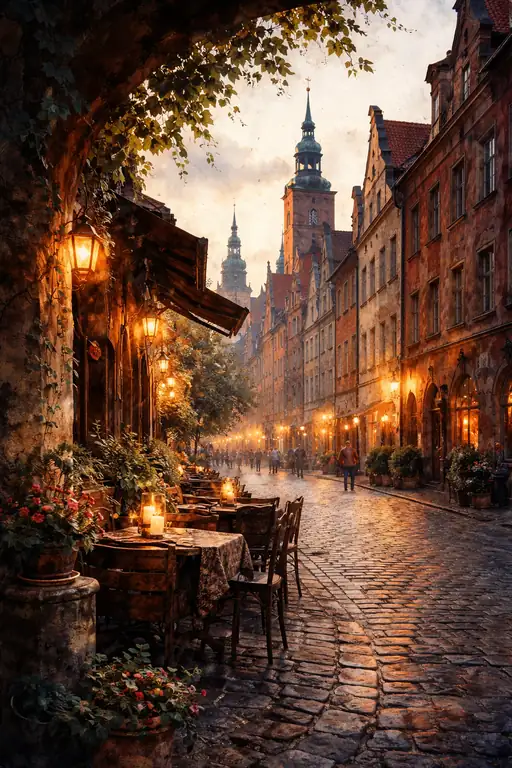 Twilight Symphony in the Alley
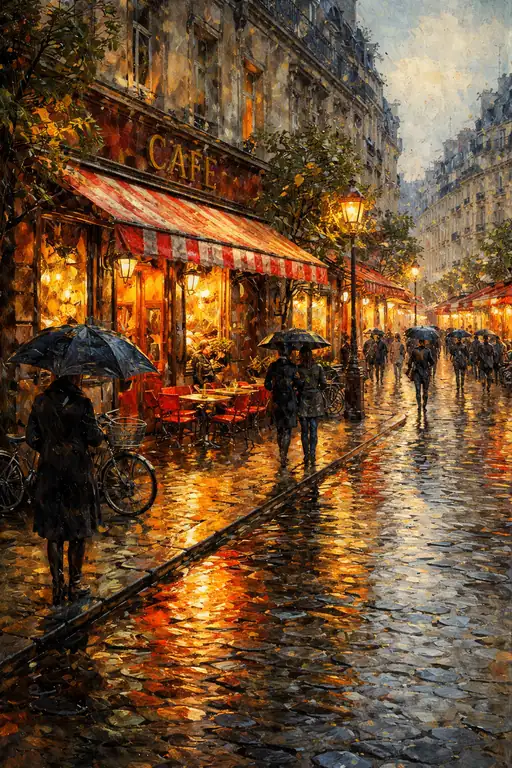 Whispers of the Rain: A Golden Haven in the Weeping City
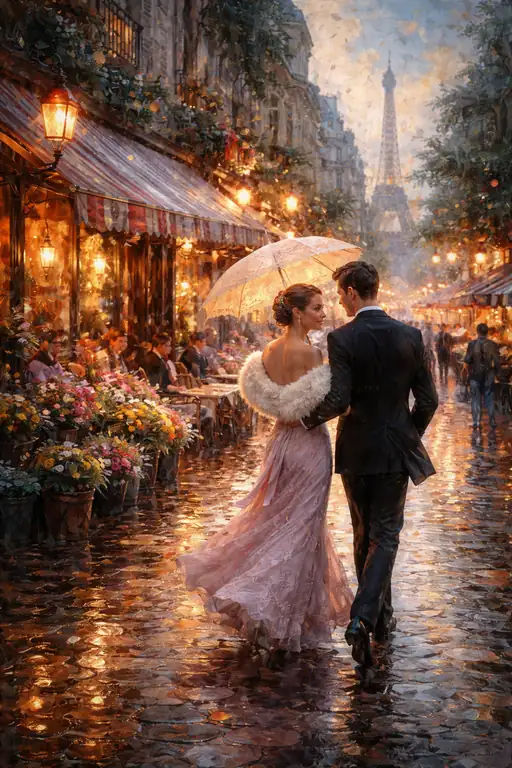 A Parisian Rain of Amber and Love
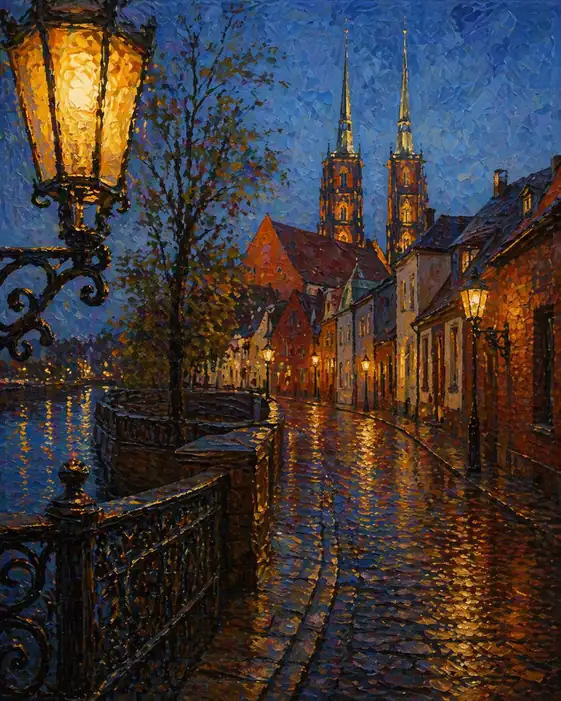 Gleaming Footsteps in the Cobalt Night
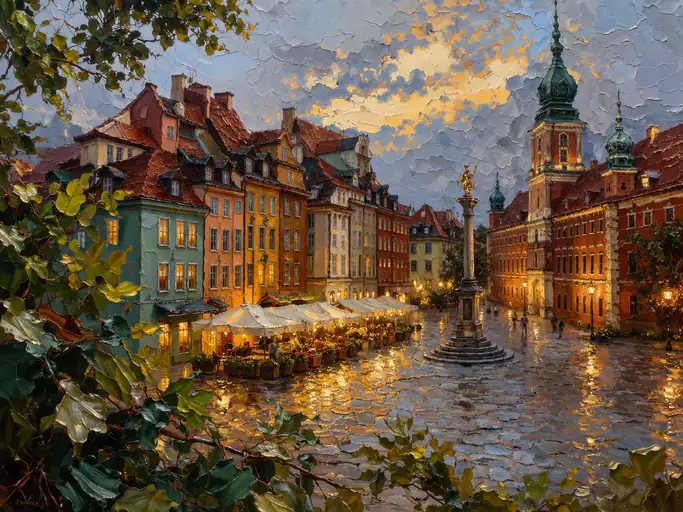 Twilight Reflections: The City's Golden Glow
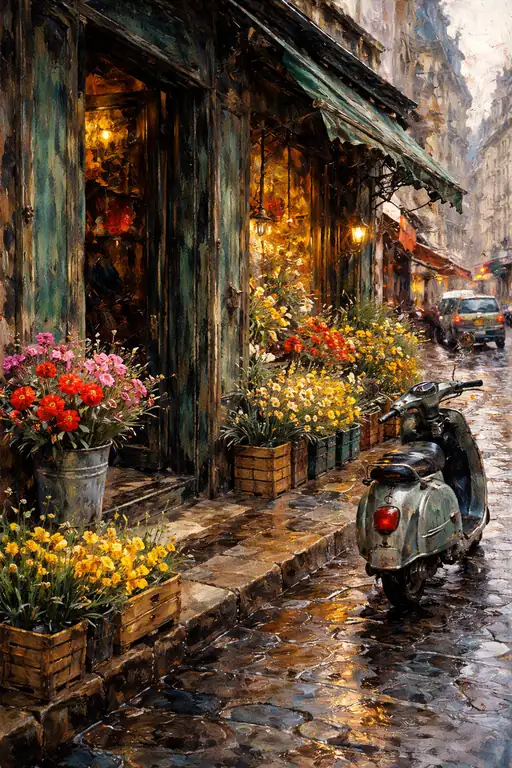 Reflections in the Rain-Kissed Street
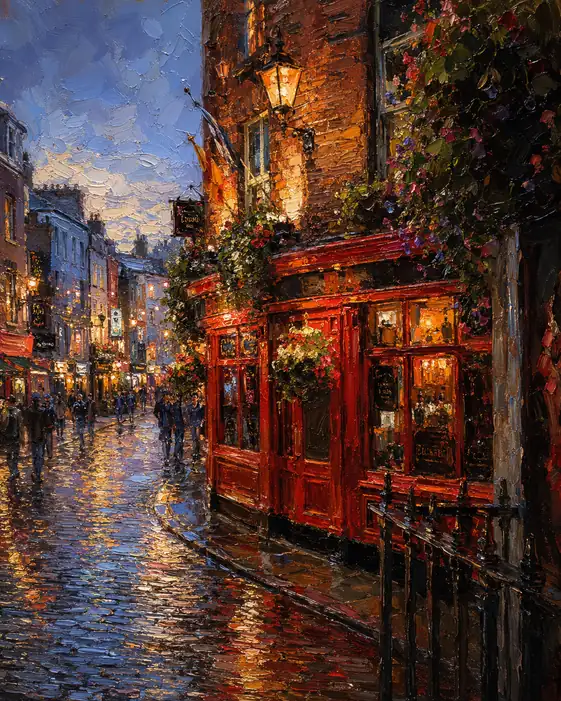 The Glow of Twilight: Warmth on a Rainy Street
 Reflections of Gold: A Stroll Through the Evening Rain