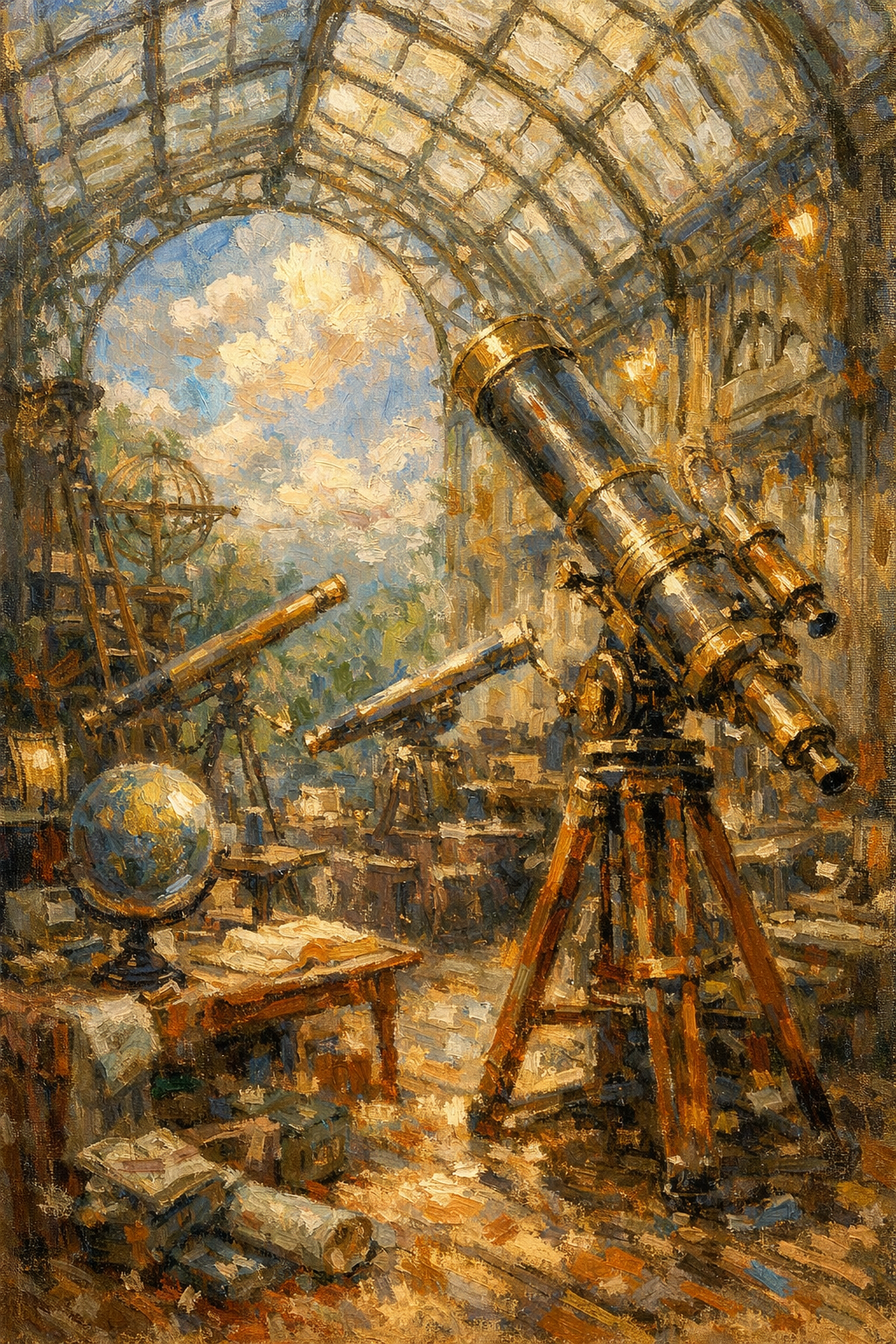
Slumber of the Clockwork Soul
Critique
1. Introduction This painting presents an interior view of what appears to be a historic observatory or a scholar窶冱 study dedicated to astronomy. The scene is characterized by its grand architectural elements, most notably a large arched opening that provides a clear view of the sky. The work captures a moment of quiet intellectual labor within a space filled with specialized scientific equipment. 2. Description In the foreground, a wooden table is cluttered with various objects of study, including a detailed globe, opened books, and parchment scrolls. Dominating the middle ground are several telescopes of different scales, with the largest one mounted on a sturdy wooden tripod and directed toward the heavens. The room is enclosed by a complex vaulted structure of glass and metal, allowing natural light to flood the dusty interior. 3. Analysis The artist employs a vivid impressionistic technique, utilizing thick, visible brushstrokes that emphasize texture and light over precise line work. A warm color palette of gold, ochre, and deep brown defines the interior space, creating a sense of history and gravitas. This is effectively contrasted by the brilliant cerulean and ivory tones of the sky visible through the arch. The interplay of light and shadow on the metallic surfaces of the telescopes adds a sense of three-dimensionality to the composition. 4. Interpretation and Evaluation The work evokes the romanticism of scientific discovery, suggesting an era where human curiosity sought to map both the Earth and the cosmos. The composition creates a narrative flow that moves from the grounded artifacts of the table to the lofty instruments of observation and finally to the infinite sky. This progression symbolizes the expansion of human understanding through dedicated observation. The execution is highly successful in its ability to render the atmosphere of the room and the reflective qualities of the glass and metal. 5. Conclusion While the initial impression focuses on the density of the scientific instruments, further viewing reveals a profound sense of spatial openness provided by the central arch. The painting successfully balances the weight of human knowledge with the ethereal nature of the universe. It serves as a compelling tribute to the enduring spirit of astronomical inquiry.
 Sanctuary of the Emerald Elixir
 Moonlit Lullaby of the Sapphire Oasis
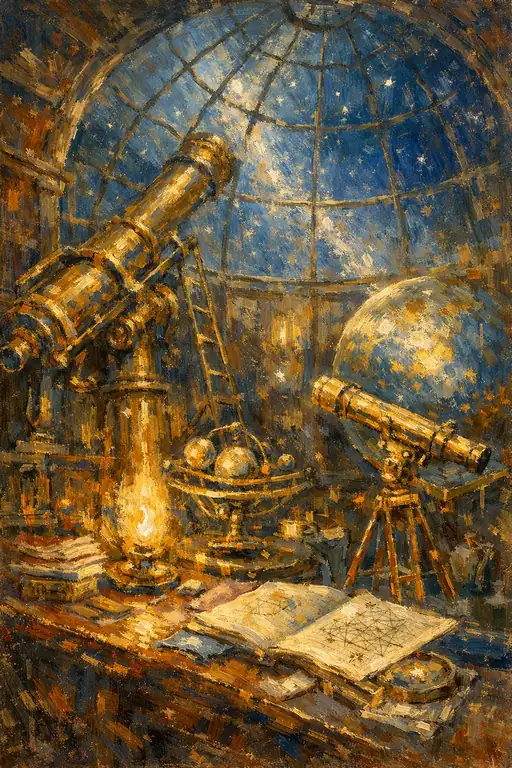 Stellar Nostalgia
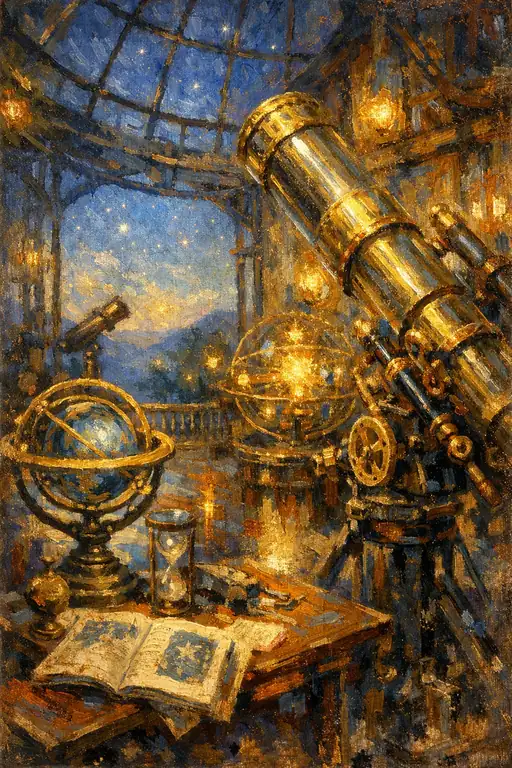 Navigating the Celestial Sphere
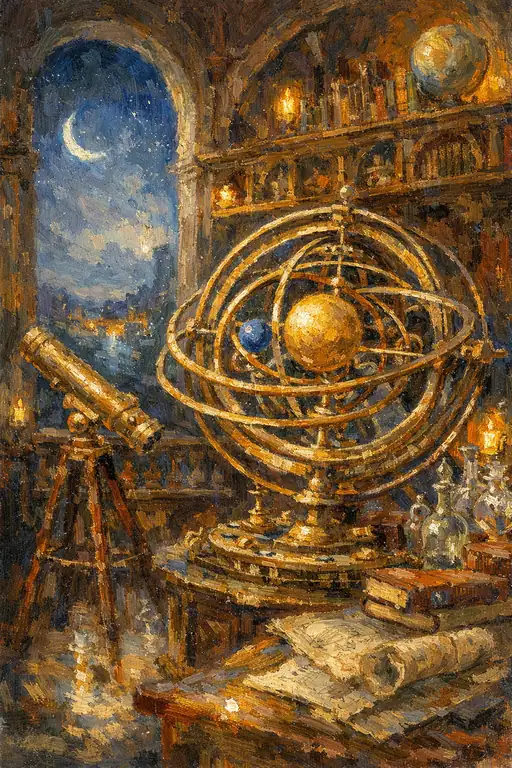 The Gaze Within the Geometry
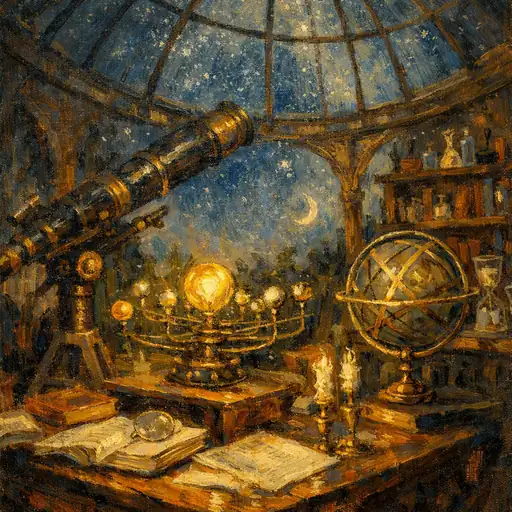 The Clockwork Heavens
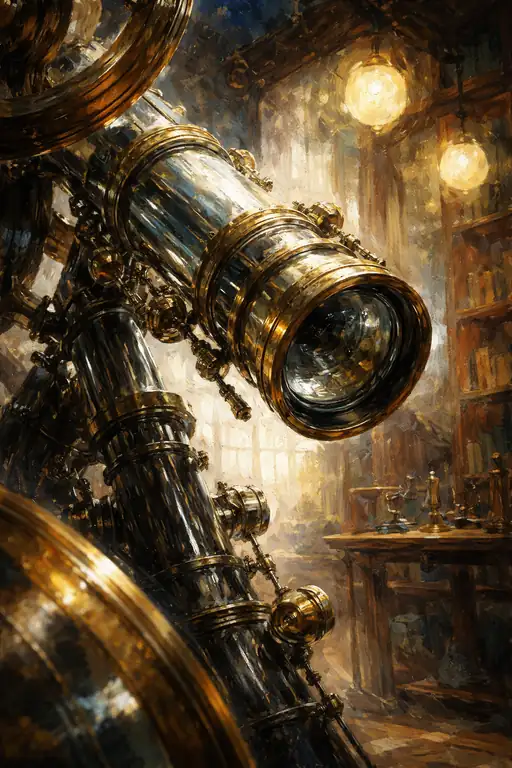 The Scholar's Cosmos
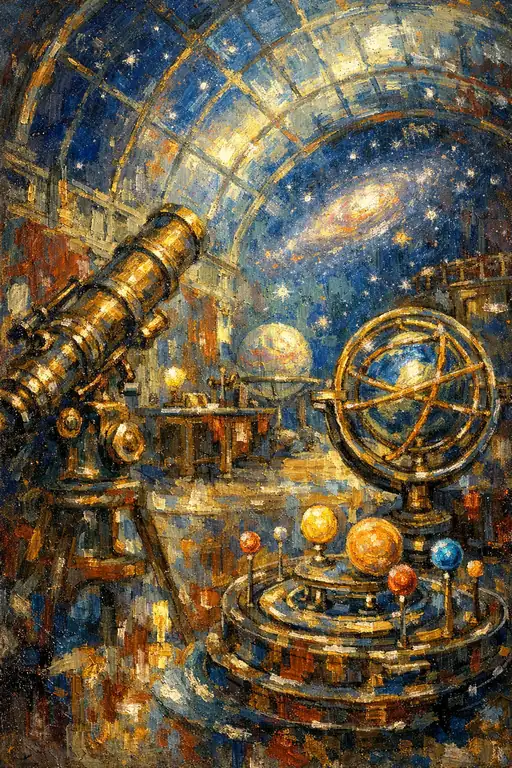 Whispers of the Cosmos
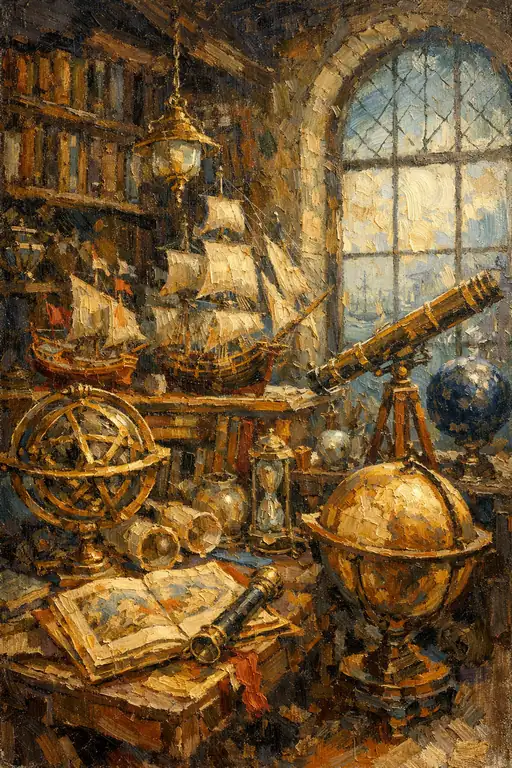 Journeys Charted in Stardust
 The Alchemist's Golden Dream
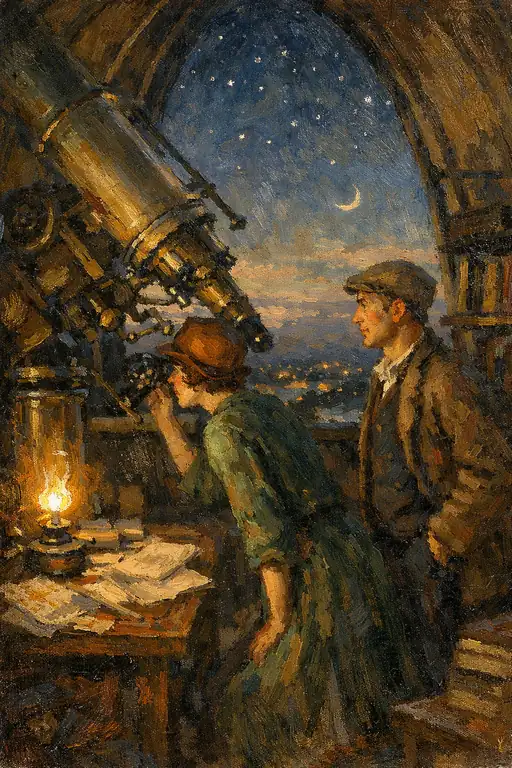 Curiosity Written in the Stars
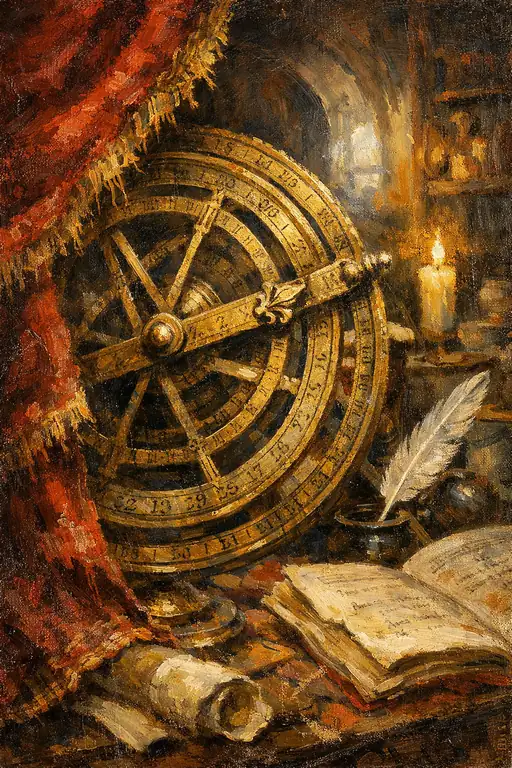 Echoes of Eternity in a Solitary Flame