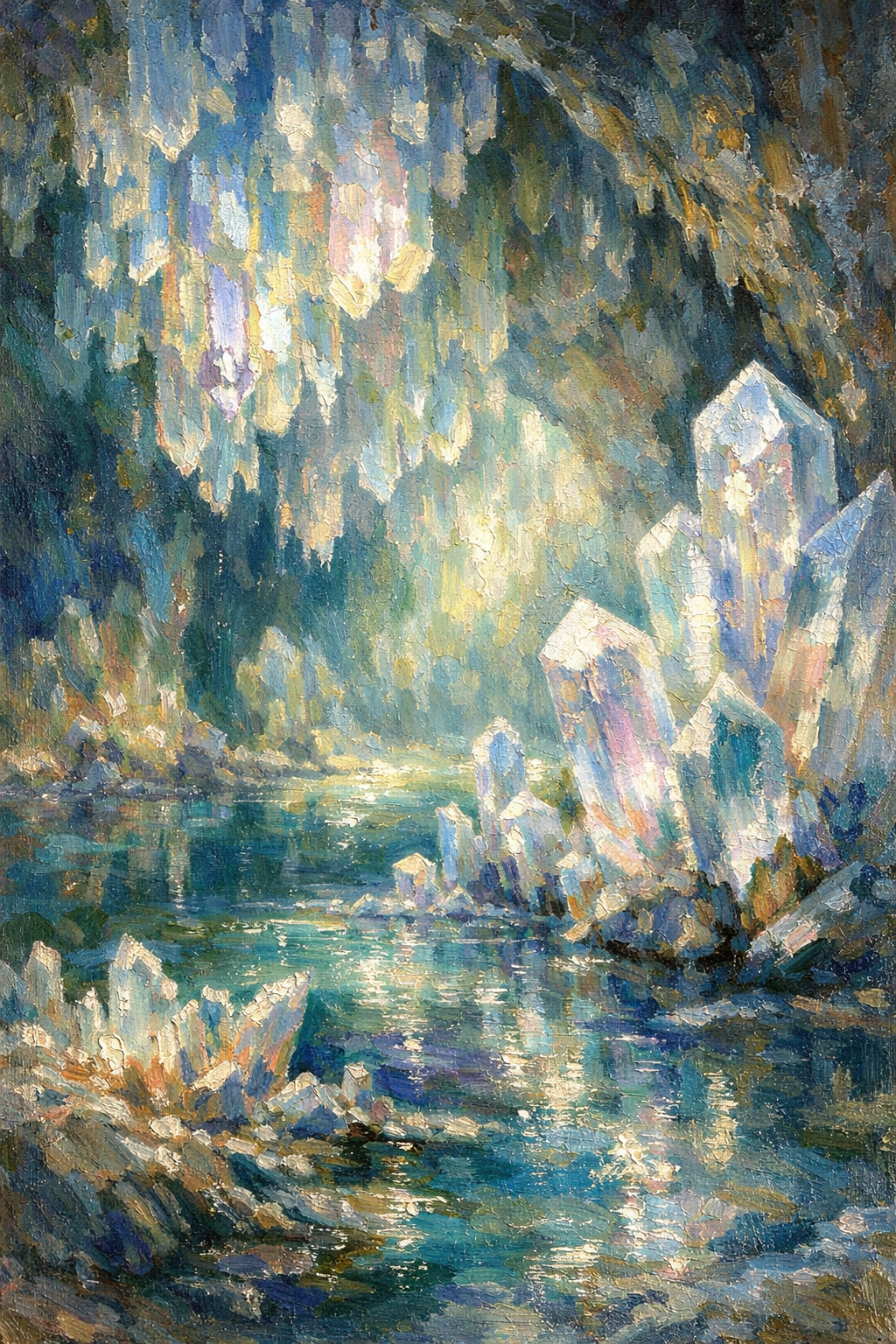
The Iridescent Cavern
Critique
1. Introduction This vertical oil painting depicts a subterranean cavern filled with luminous crystal formations and a serene underground pool. The artist captures a hidden, ethereal world where geological structures appear to emit their own light, reflecting off the dark, still waters below. The composition leads the eye through a shimmering environment that balances the cold hardness of minerals with the fluid softness of light and water. It is a work that invites the viewer into a space of quiet wonder and mystery. 2. Description On the right side of the canvas, several large, hexagonal crystals rise from the shadows, their surfaces catching a pale, golden glow. Stalactite-like formations hang from the cave ceiling, rendered in a series of vertical, rectangular brushstrokes that mimic the structure of dripping minerals. The center of the painting features a body of water that mirrors the light from above, creating a mosaic of turquoise, blue, and white reflections. Smaller crystal clusters are scattered in the lower left, grounding the scene in a sense of immense scale. 3. Analysis The painting is characterized by a distinctive technique involving short, deliberate brushstrokes that create a mosaic-like effect. This method is particularly effective in representing the faceted surfaces of the crystals and the fractured quality of light within the cavern. The color palette is dominated by cool tones of teal, sapphire, and violet, punctuated by warm highlights of cream and pale yellow. These color choices define the depth of the cave while emphasizing the translucent and refractive properties of the crystalline subjects. 4. Interpretation and Evaluation The work explores the theme of hidden beauty found within the depths of the earth, suggesting a spiritual or magical dimension to the natural world. By focusing on the interplay of light and reflection, the artist transforms a potentially dark and oppressive space into one of transcendent radiance. The technical execution is highly successful; the heavy texture of the paint adds a physical dimension that complements the geological theme. The composition is well-balanced, utilizing the verticality to enhance the sense of being enclosed within a majestic, secret cathedral. 5. Conclusion While the subject matter leans toward the fantastical, the grounded use of color and light makes the scene feel remarkably tangible. The interaction between the sharp edges of the crystals and the soft, glowing atmosphere creates a compelling visual tension. The painting effectively captures the awe-inspiring power of the natural world窶冱 unseen corners. Ultimately, it leaves the viewer with a sense of peace and a renewed appreciation for the extraordinary light that can be found even in the deepest darkness.
Same Subcategory
 Rhapsody of the Scattered Rainbow
 Venetian Serenade Under the Starlit Canopy
Similar Artworks
 Slumber of the Sapphire Grotto
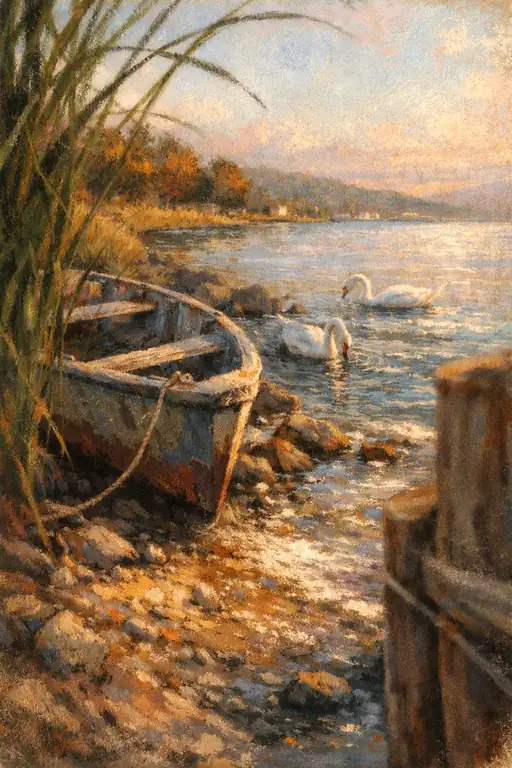 Moonlit Melody on Silent Waters
 The Crystal Heart of the Enchanted Woods
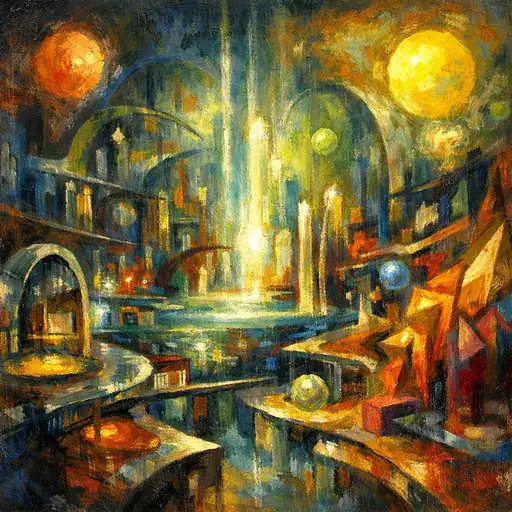 Cascade of Celestial Geometry
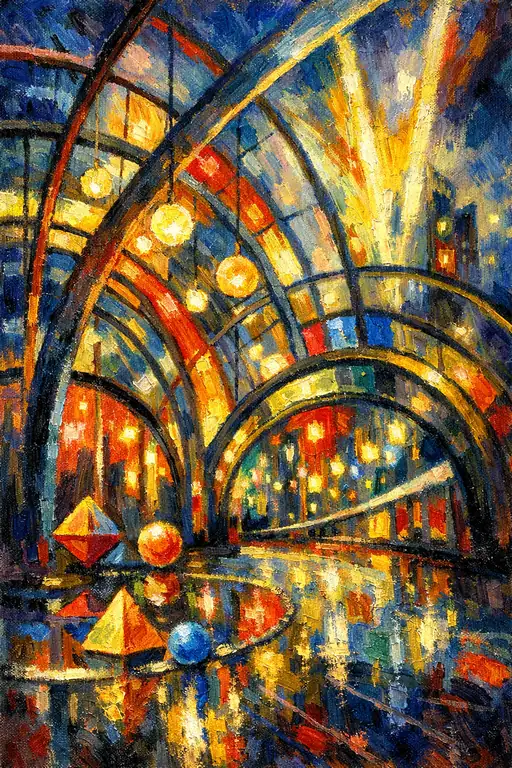 Illuminated Echoes of a Geometric Dream
 Guardian of the Glowing Egg
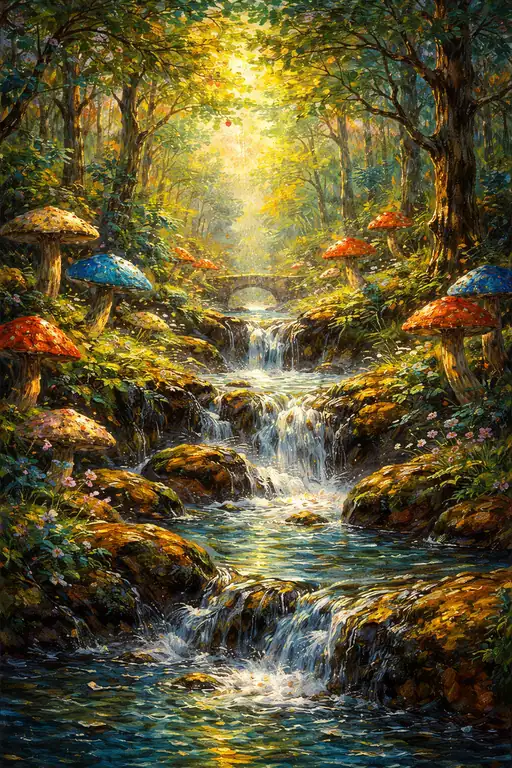 Beneath the Enchanted Canopy
 Prism of the Starry Metropolis
 Echoes of Eternity in the Golden Orrery
 Glimmers of a Silver Soul in the Amber Vanity