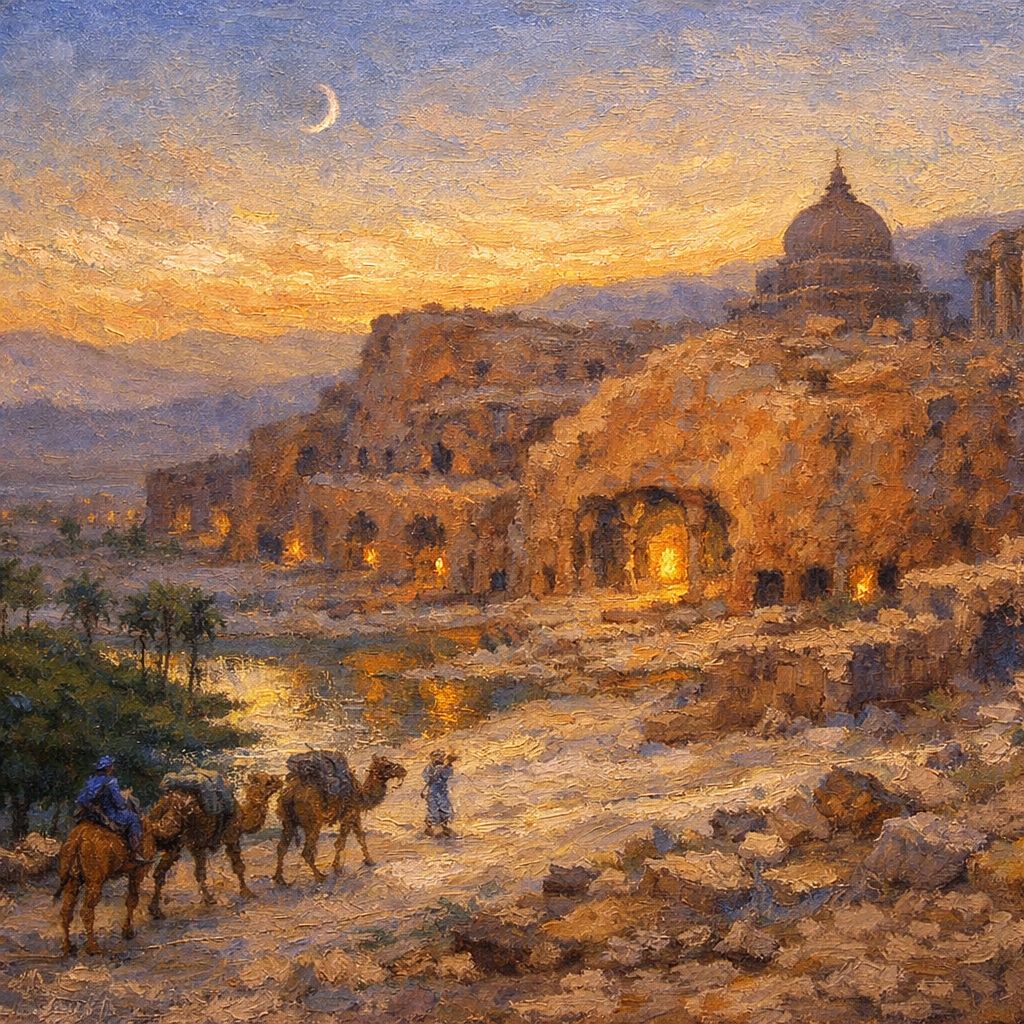
Golden Sands of Antiquity
Critique
1. Introduction This oil painting presents a twilight desert landscape featuring ancient rock-cut architecture and a small caravan of travelers. The scene is illuminated by a low-hanging sun, casting long, golden light across the textured terrain. A slender crescent moon hangs in the pale sky, marking the transition from day to evening. The composition effectively bridges the gap between historical grandeur and the quiet rhythm of a nomadic journey through the arid wilderness. 2. Description In the foreground, two riders on camels and a walking figure navigate a rocky path, their forms cast in deep blue and purple shadows. The middle ground is dominated by massive, sand-colored structures carved directly into the cliffs, reminiscent of ancient Petra. Glowing embers or lamplight are visible within the dark arched openings, suggesting life within the ruins. Above the buildings, the sky transitions from a fiery orange near the horizon to a cool lavender and light blue at the zenith. 3. Analysis The artist employs a vigorous impasto technique, where thick, visible brushstrokes create a tactile quality across the entire canvas. This texture is particularly effective in depicting the rugged rock faces and the shimmering surface of the small pools of water in the valley. The color palette is centered on a high-contrast scheme of warm ochre and gold against cool violets and blues. This use of light not only defines the forms but also establishes a nostalgic and atmospheric mood. 4. Interpretation and Evaluation The work explores themes of endurance and the passage of time within an unforgiving environment. By juxtaposing the monumental ruins with the small, moving figures, the piece emphasizes the scale of history relative to individual human life. The technical execution is exceptional, as the heavy texture mimics the physical materiality of stone and sand. The balance between the radiant sunset and the encroaching night creates a powerful sense of silence and spiritual reverence. 5. Conclusion While the scene initially appears as a standard orientalist landscape, the expressive brushwork elevates it to a more profound exploration of light and atmosphere. The interaction between the natural environment and the ancient human structures creates a compelling narrative of survival and beauty. Ultimately, the painting leaves the viewer with a lasting impression of the desert窶冱 quiet majesty and the timelessness of the journey within it.
Same Subcategory
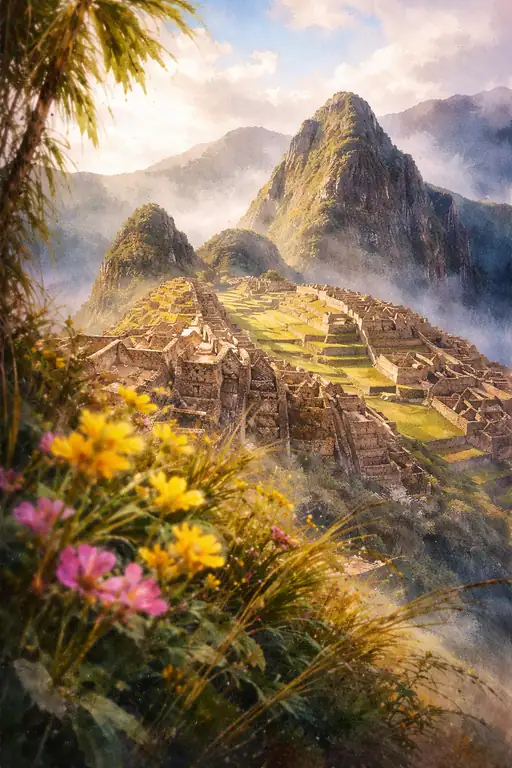 Crown of the Highland Whispers
Similar Artworks
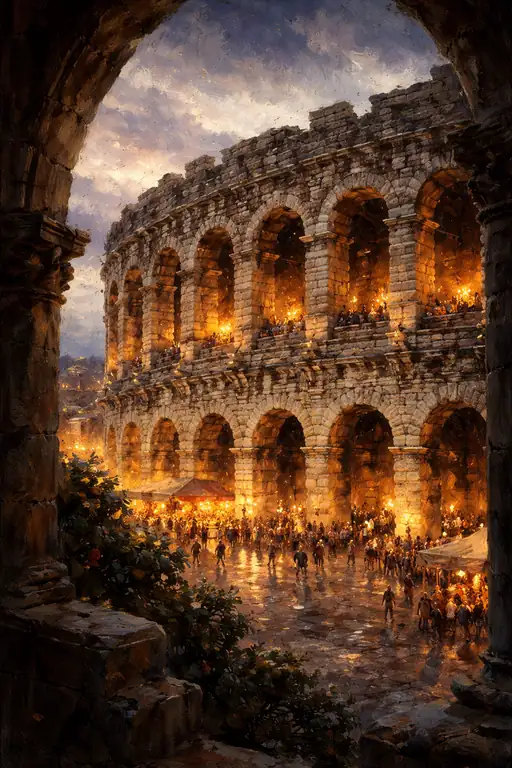 Festive Night at the Colosseum
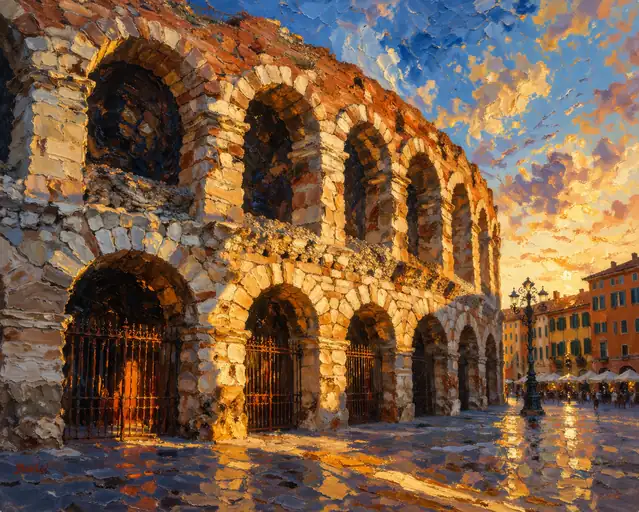 Verona's Arena in Flames
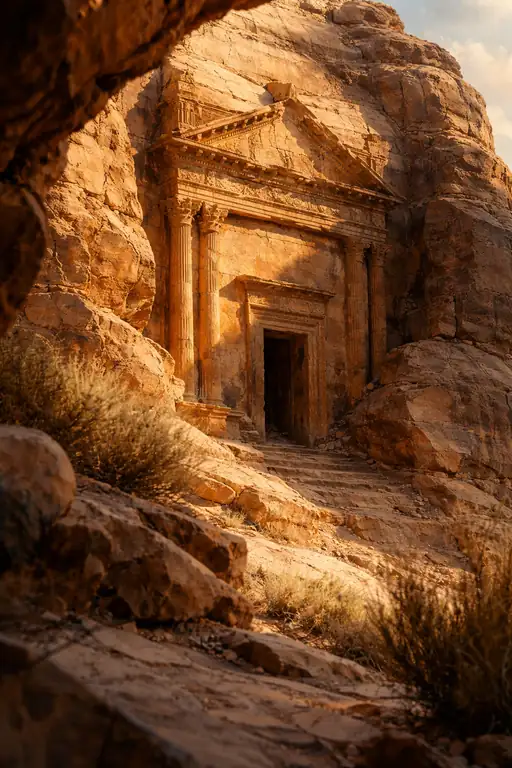 Golden Glory of the Forgotten
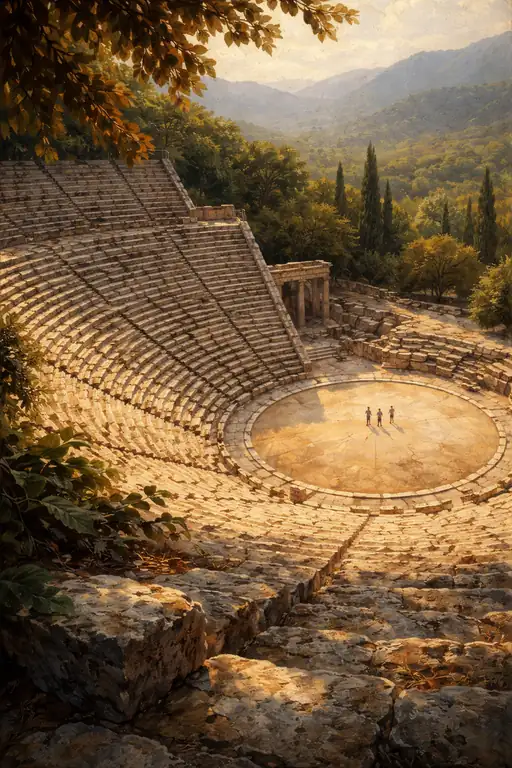 Echoes of the Past in Golden Light
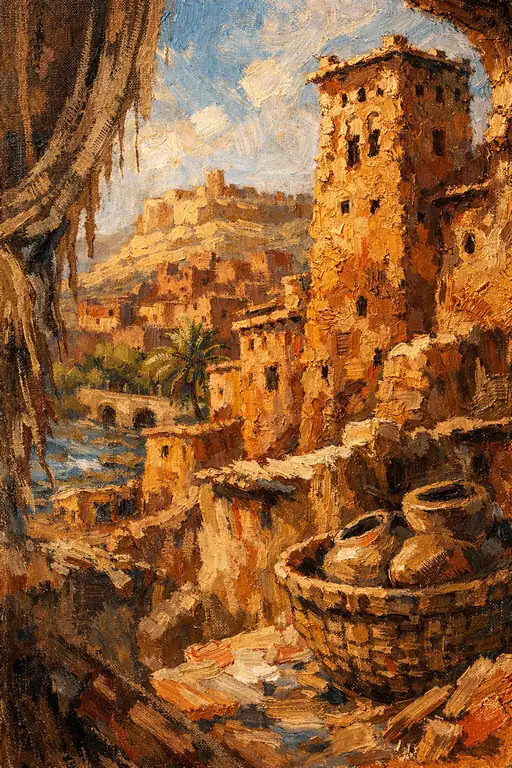 Timeless Sands, Silent Stone
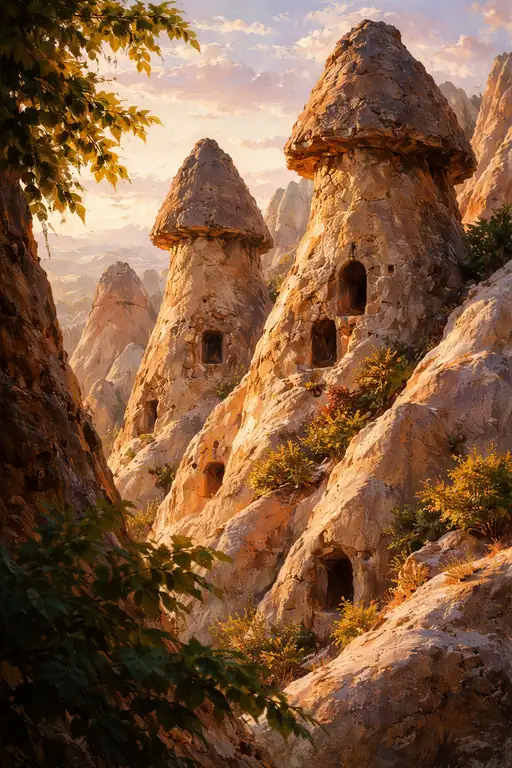 The Dwellings of Stone and Time
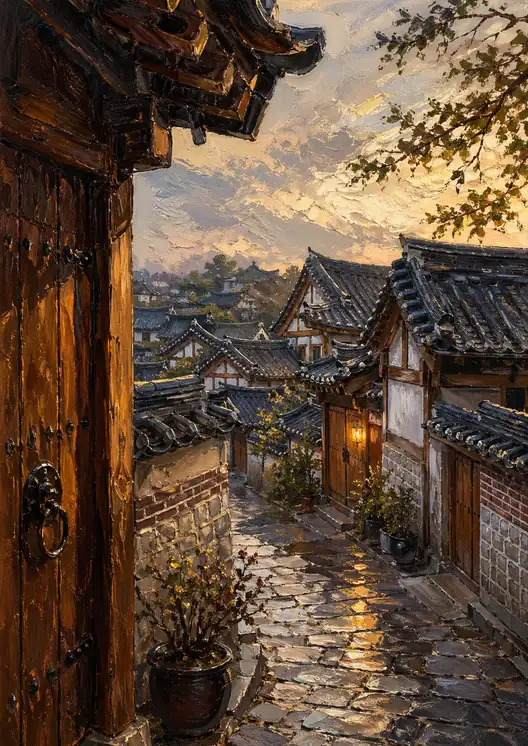 Nostalgic Glow of the Old Village
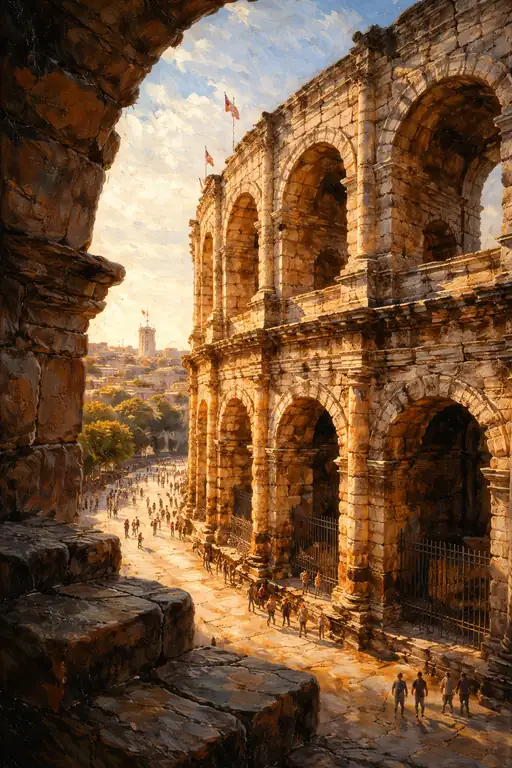 Echoes of Empire at Sunset
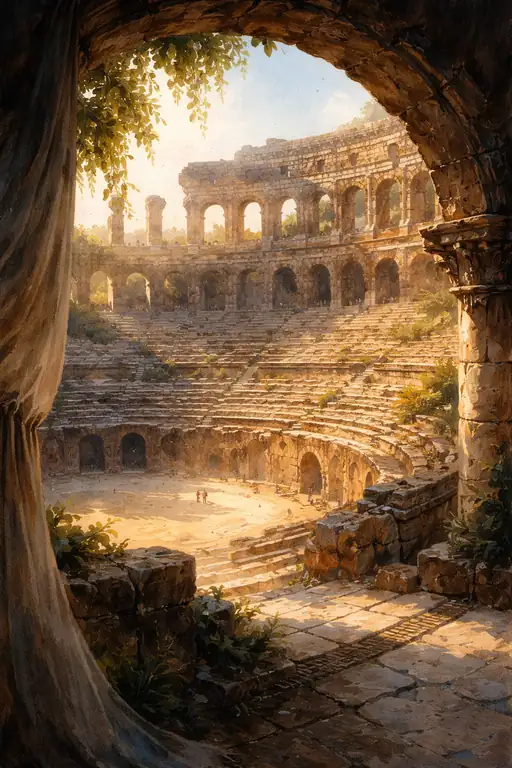 A Glimpse of Past Glories
 Solitary Descent into the Glowing Mist