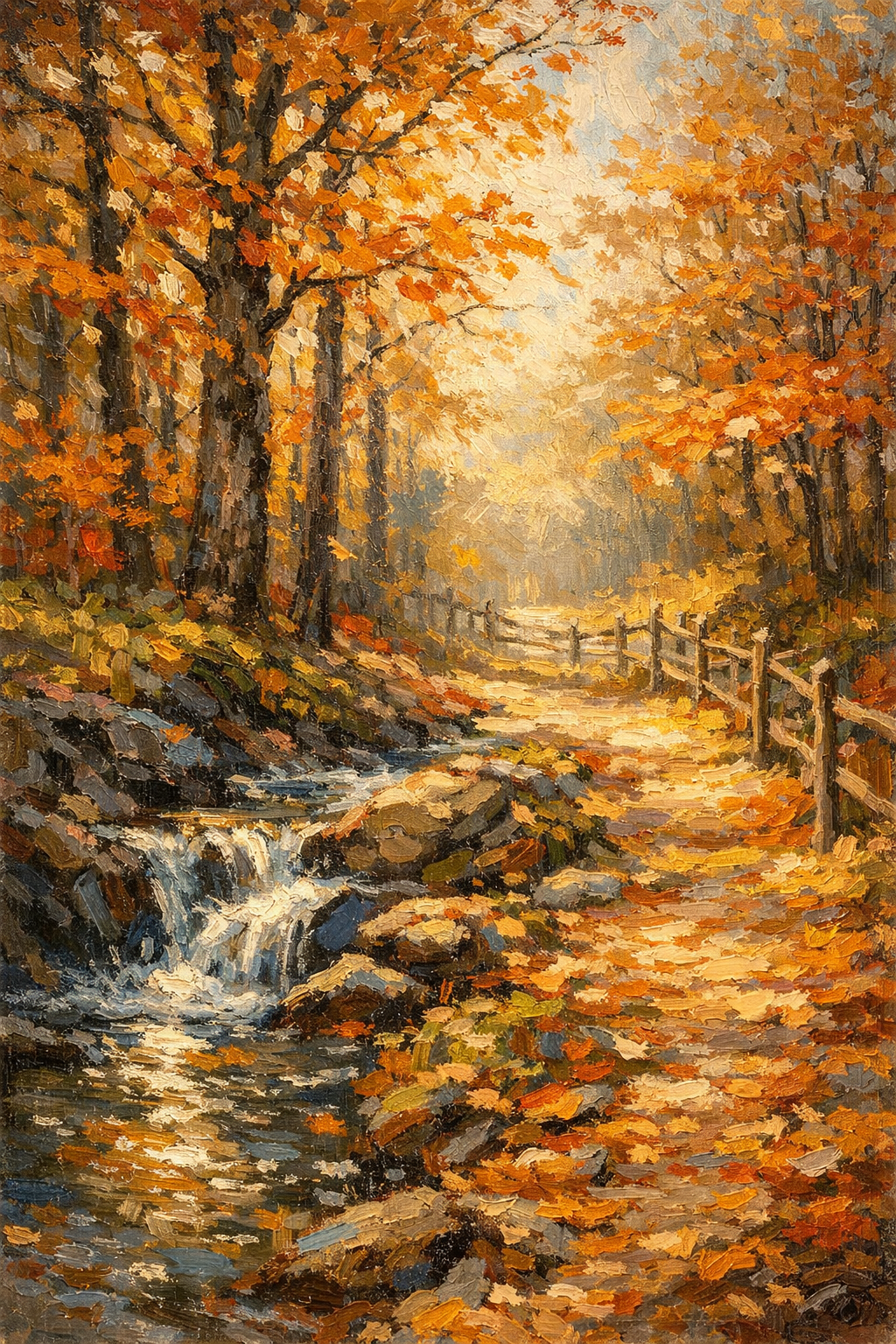
Dance of Colors in the Wind
Critique
1. Introduction This painting presents a luminous autumn landscape, capturing the essence of a forest path at the height of the season. The vertical composition draws the viewer's eye along a leaf-strewn trail toward a glowing, sunlit opening in the distance. It utilizes a rich, warm palette to evoke the nostalgic beauty of the changing foliage. The work is a masterclass in using light to create a sense of tranquil immersion. 2. Description The scene features a winding path covered in a thick carpet of orange and golden leaves. To the left, a small, rocky stream flows toward the foreground, its surface catching brilliant reflections of the overhead light. A rustic wooden fence follows the curve of the path on the right, providing a structural counterpoint to the organic forms of the trees. The canopy above is ablaze with fiery autumnal colors, contrasting with the dark trunks. 3. Analysis The artist employs a highly textured impasto technique, applying paint in short, rhythmic dabs that suggest the fluttering of leaves. The color scheme is dominated by ochre, burnt sienna, and brilliant yellow, with cool grey and blue tones in the water for balance. Light acts as the primary focal point, originating from the center background and radiating outward to unify the diverse elements. This central glow creates a powerful sense of atmospheric depth and warmth. 4. Interpretation and Evaluation The work successfully conveys the fleeting nature of autumn through its vibrant yet ephemeral lighting. Its strength lies in the effective portrayal of the stream's movement and the tactile quality of the forest floor. While the theme is traditional, the bold use of texture and light gives it a profound emotional resonance. The painting serves as a poignant reminder of the quiet majesty found in the natural world's transitions. 5. Conclusion Through the careful orchestration of warm tones and textured brushwork, the piece achieves a remarkable level of atmospheric presence. The initial impression of a golden forest deepens into a nuanced study of light's interaction with the changing environment. It stands as a compelling example of how traditional landscape painting can still evoke deep sensory engagement. The artist's control over the complex interplay of light and shadow is truly commendable.
Same Subcategory
 Hunter's Footprints Melting into the Autumn Wind
Similar Artworks
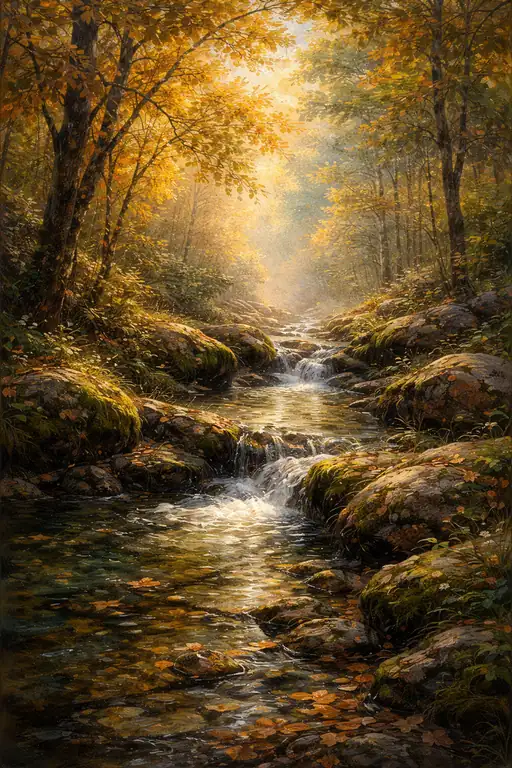 Song of the Hidden River
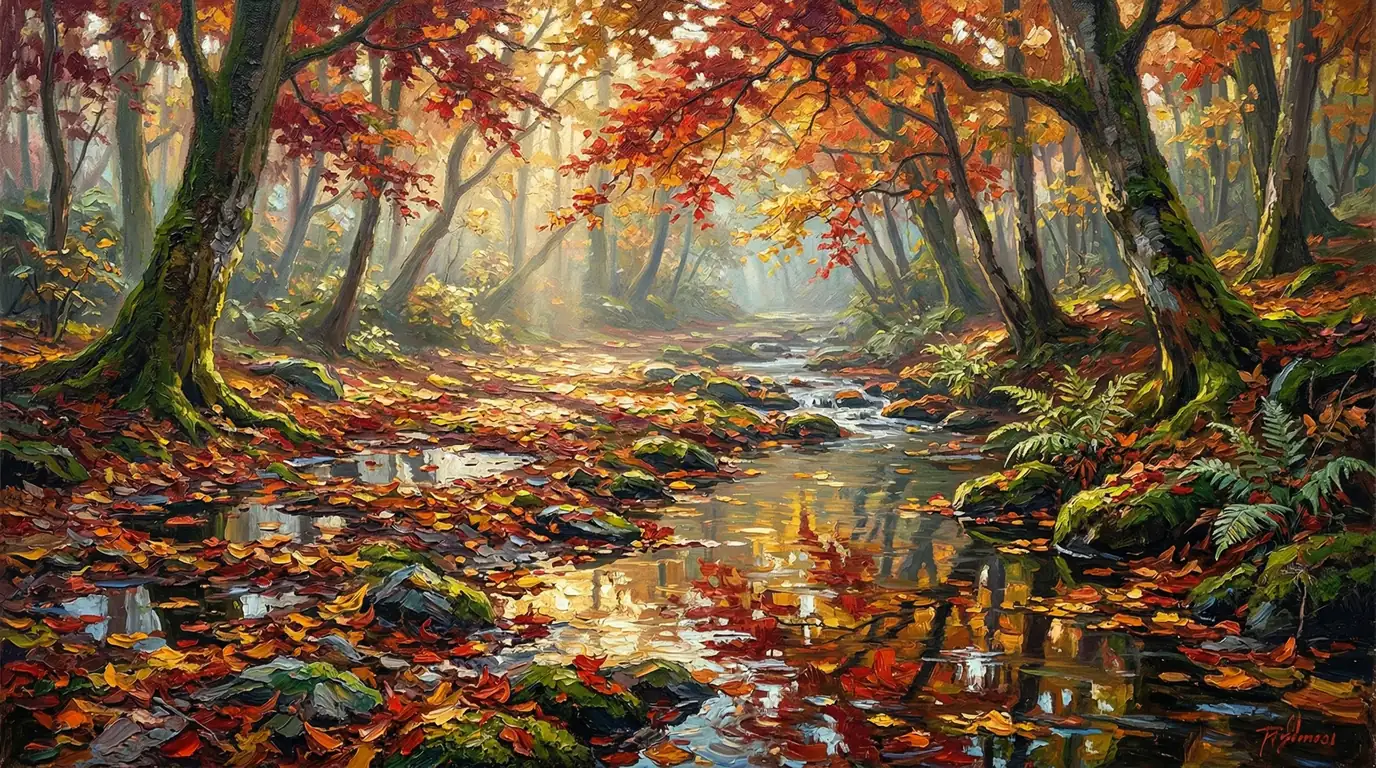 Eternal Glow of the Silent Woods
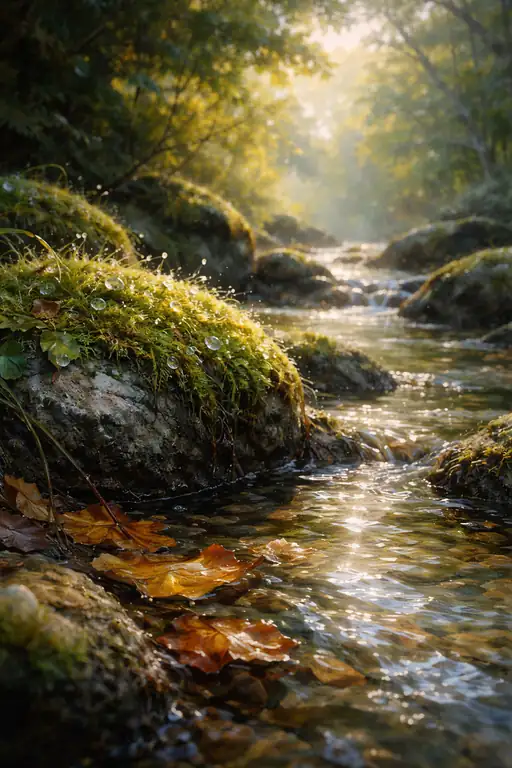 Autumn's Golden Breath over the Stream
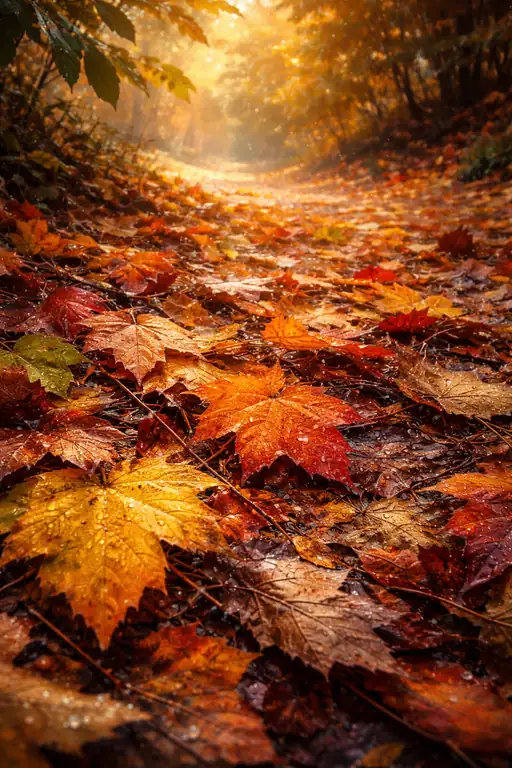 Path of the Fallen Fire
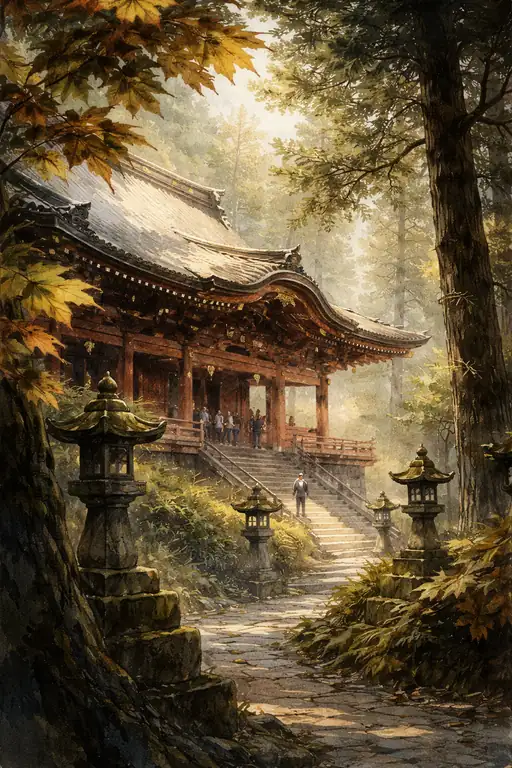 Spiritual Tranquility on the Autumnal Stone Path
 Sanctuary in the Mist: The Macaques' Warm Refuge
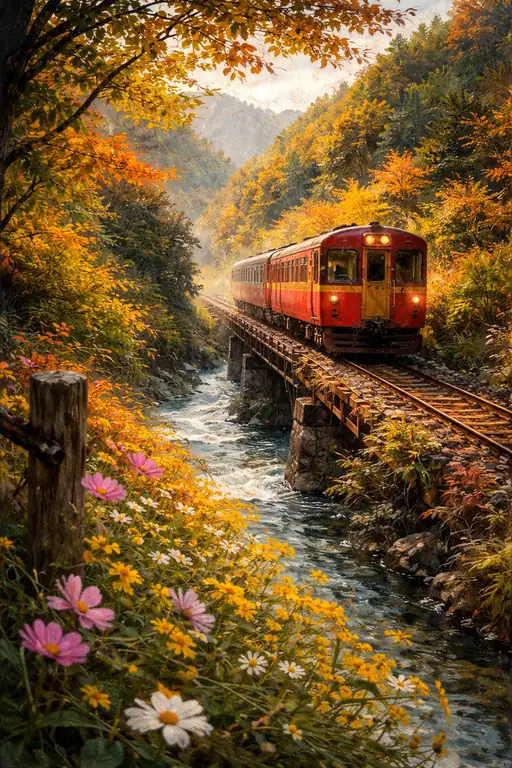 The Crimson Journey Through Autumn Echoes
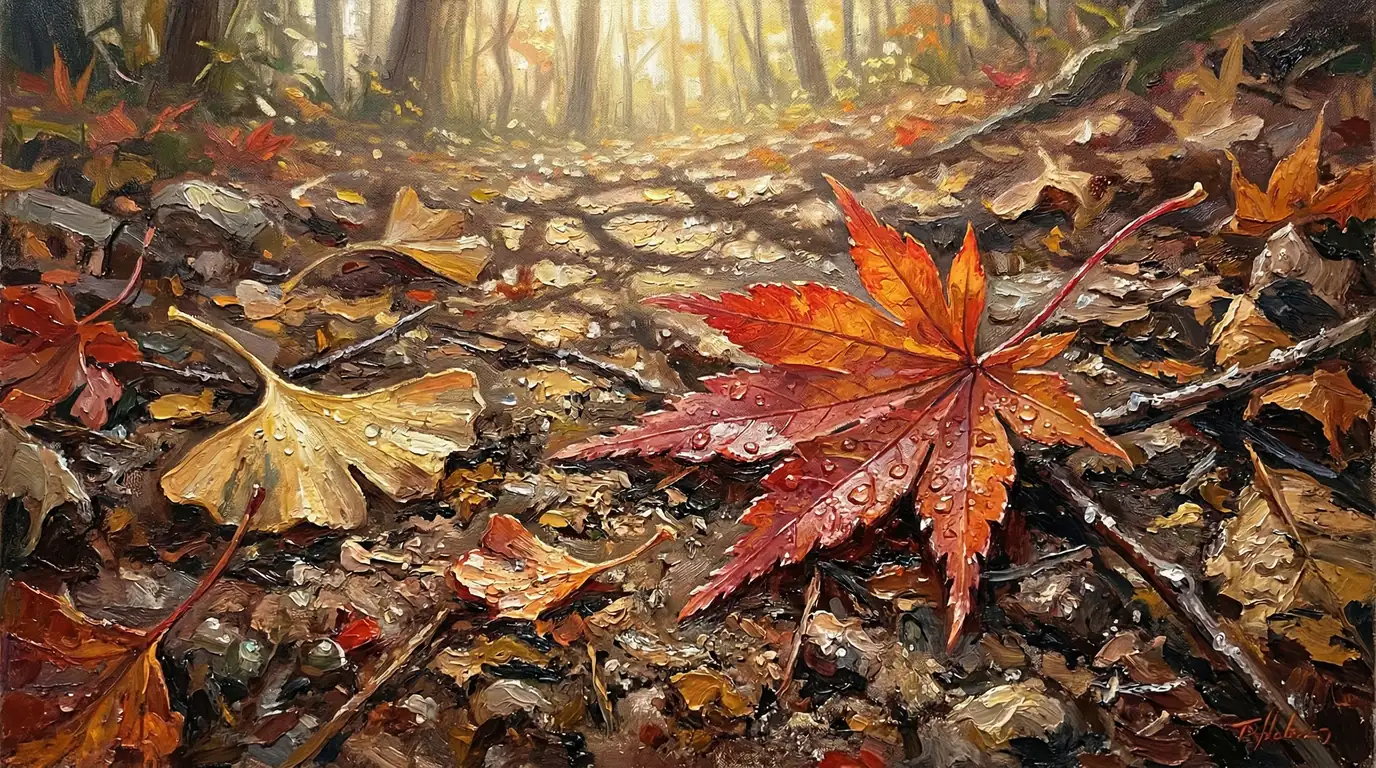 Dance of the Scattered Gold
 Whispers of the Emerald Canopy
 Autumn Pathway to the Peaks