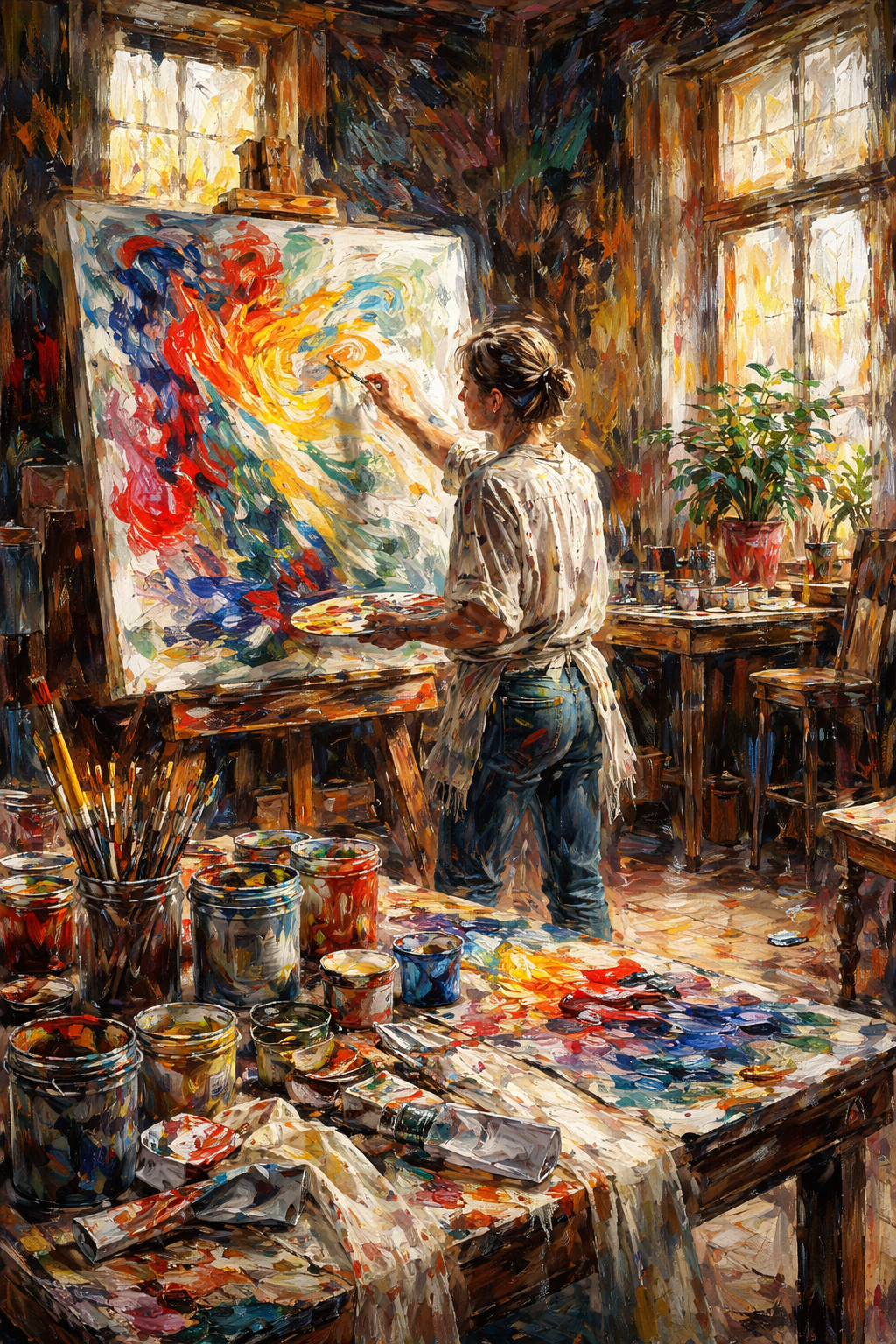
The Muse's Quiet Reflection
Critique
1. Introduction This oil painting captures an artist at work within a sunlit studio, offering a meta-commentary on the creative process. The central figure is a woman seen from behind, deeply engaged in applying vibrant colors to a large canvas on an easel. The overall style is impressionistic, characterized by expressive brushwork and a rich, warm light that permeates the entire workspace. 2. Description The composition is layered, with a foreground table cluttered with paint jars, brushes, and tubes of pigment. In the middle ground, the artist stands before her work, which features a swirling vortex of primary and secondary colors. Two windows in the background allow bright sunlight to stream in, illuminating the room and casting soft shadows. The studio itself is filled with artistic tools, including a palette, a chair, and a potted plant by the window. 3. Analysis The artist uses a complex arrangement of space to draw the viewer into the scene, moving from the detailed foreground to the central act of painting. The color palette is exceptionally diverse, reflecting the array of pigments on the table and the explosive energy on the canvas. The light is handled with great sensitivity, as it hits the artist's clothing and the various surfaces in the room, creating a sense of three-dimensional volume through color modulation. 4. Interpretation and Evaluation The work celebrates the physical and mental dedication required for artistic creation. The contrast between the organized chaos of the studio and the focused energy of the painting-within-a-painting highlights the internal world of the creator. The technical skill in rendering the different textures—from the metallic jars to the cloth of the artist's apron—is remarkable. It successfully communicates the joy and intensity found in the solitary act of making art. 5. Conclusion While initially appearing as a descriptive genre scene of a studio, the painting reveals itself as a profound reflection on inspiration and labor. It bridges the gap between the mundane reality of the tools and the transcendent nature of the finished work. The piece ultimately leaves the viewer with a deep appreciation for the environment that fosters artistic vision and the tangible results of that process.
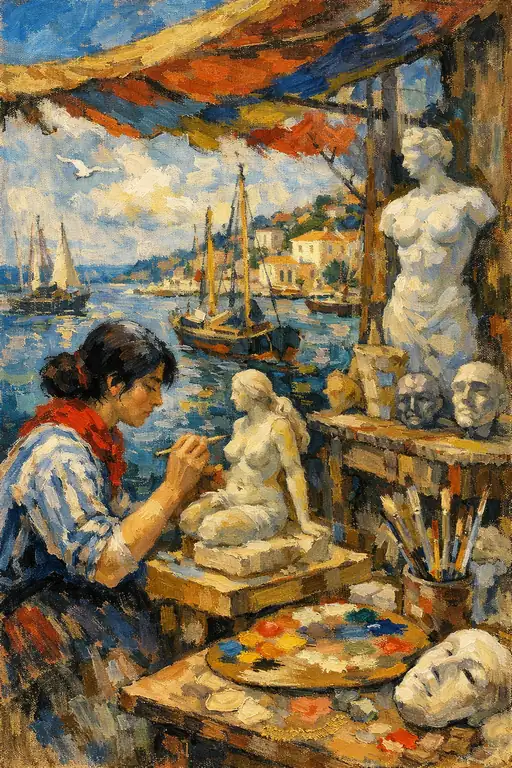 Inspiration on the Sunlit Coast
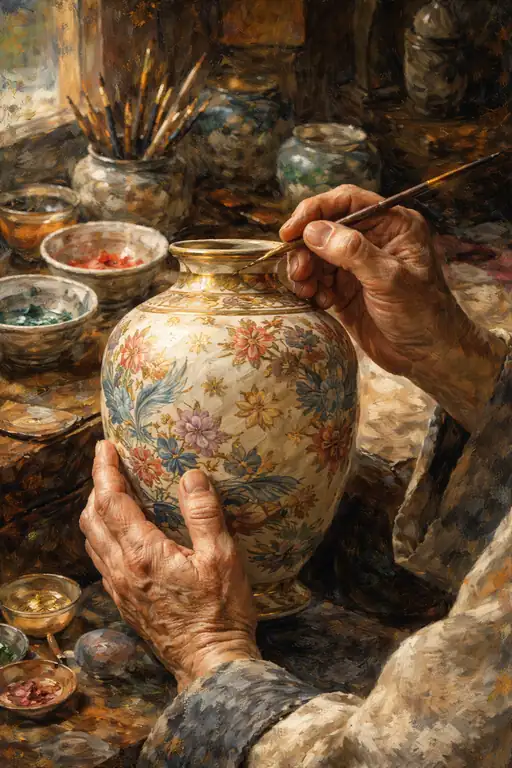 Wisdom in the Clay
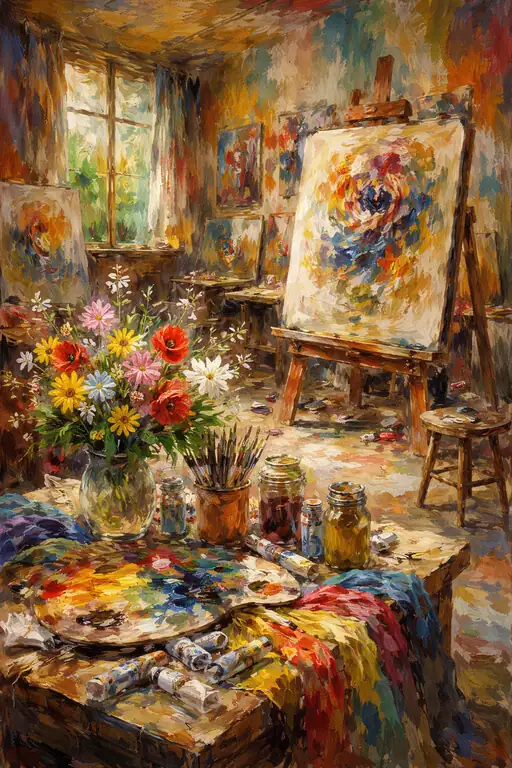 Where Masterpieces are Born
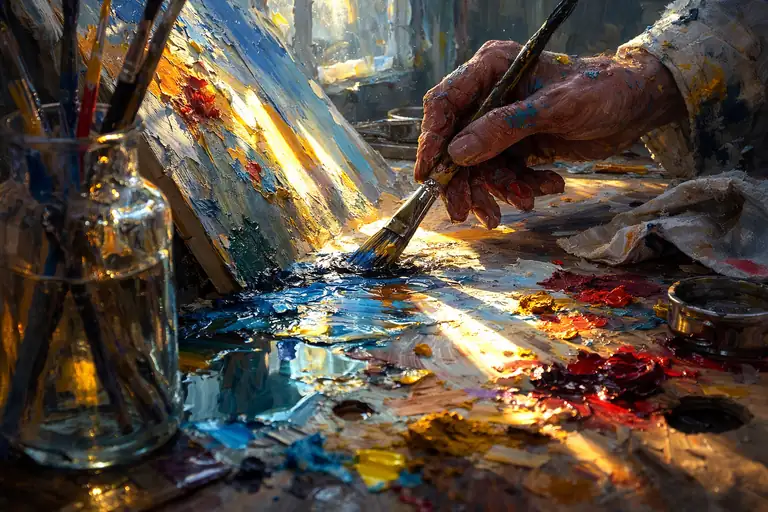 The Genesis of Passionate Hues
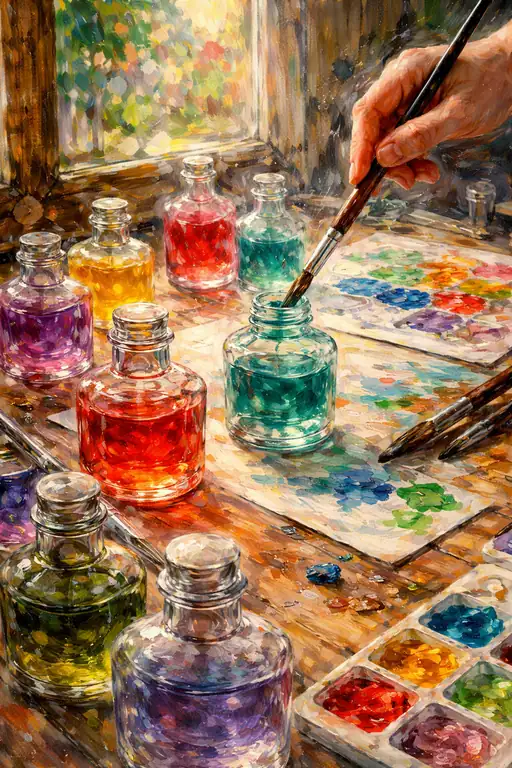 The Magic Flowing From My Fingertips
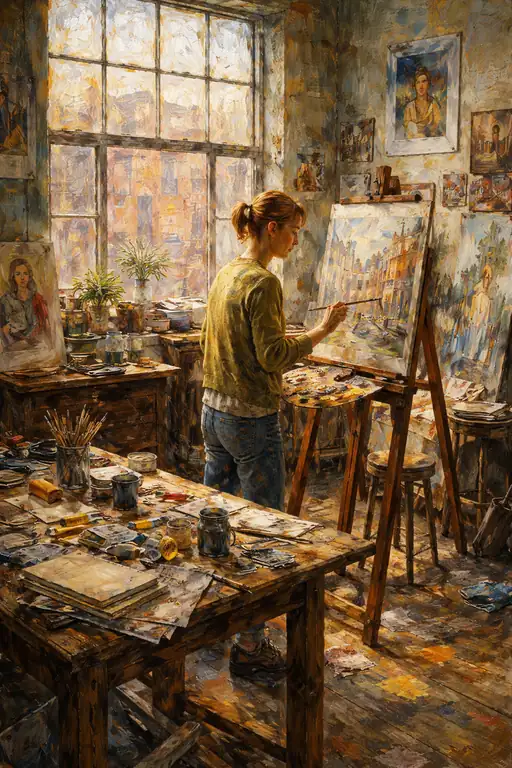 Whispers of the Canvas
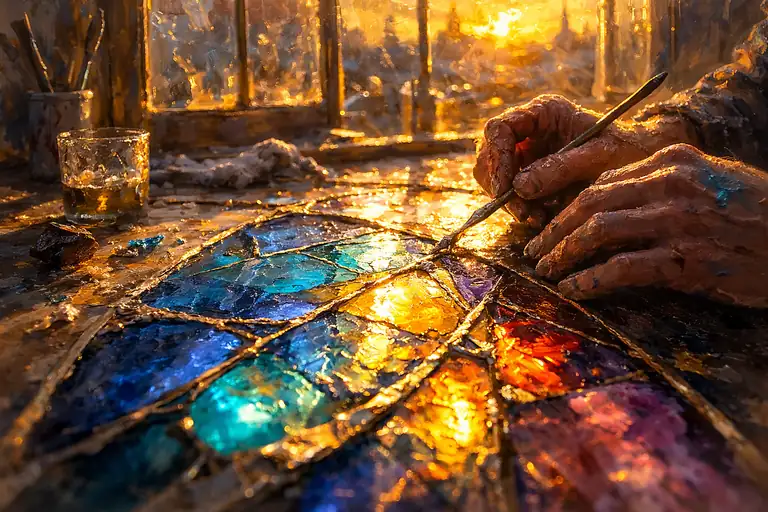 Hands of the Golden Hour
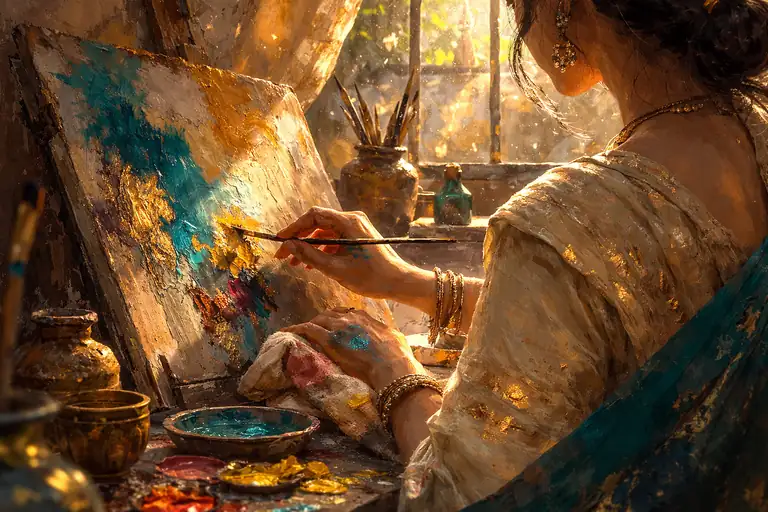 Sunlit Inspiration
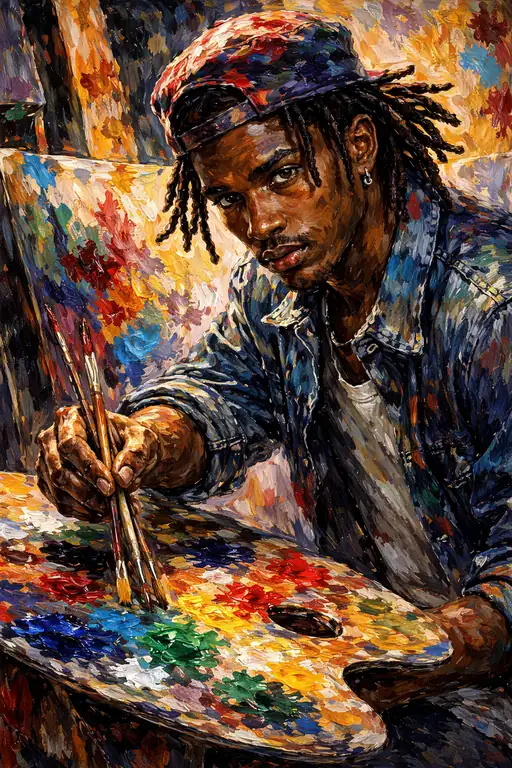 Soul Spilled Onto the Canvas
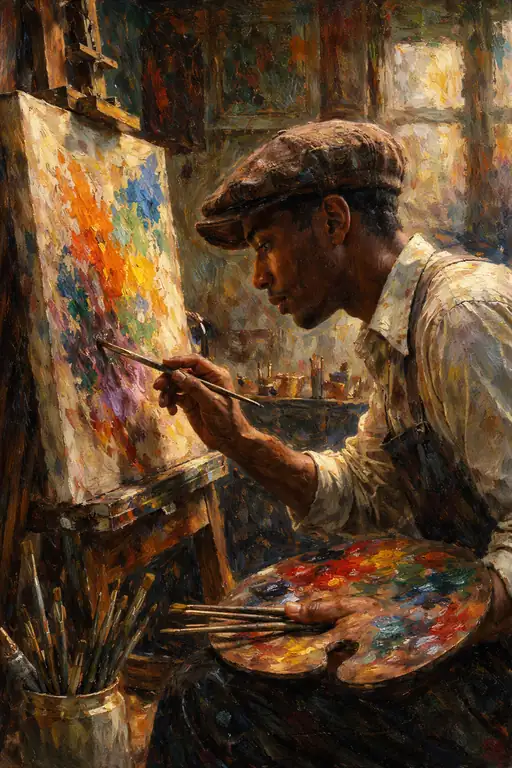 The Creator's Solitude
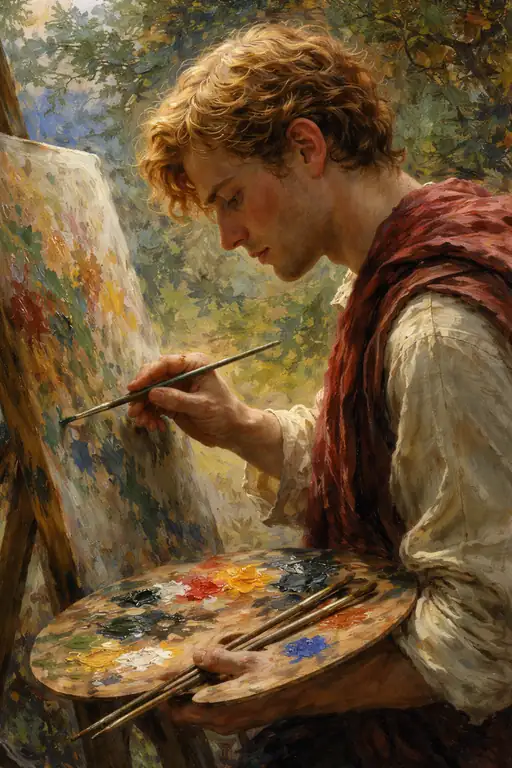 Capturing the Sun
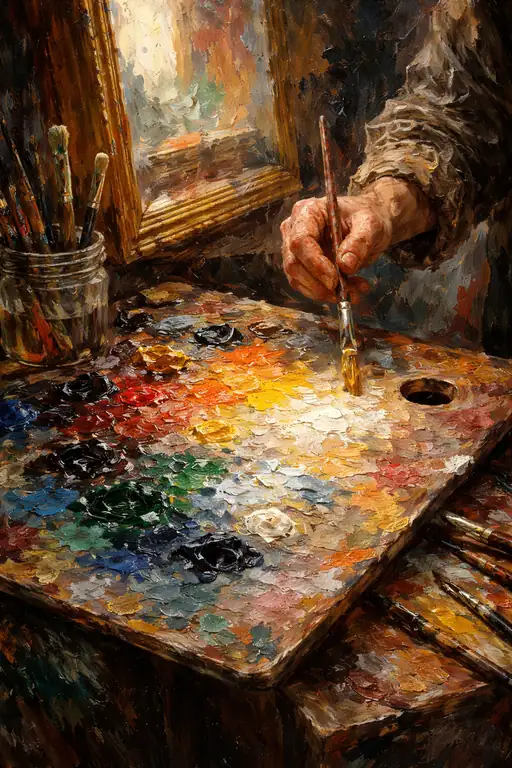 The Intense Genesis of Art