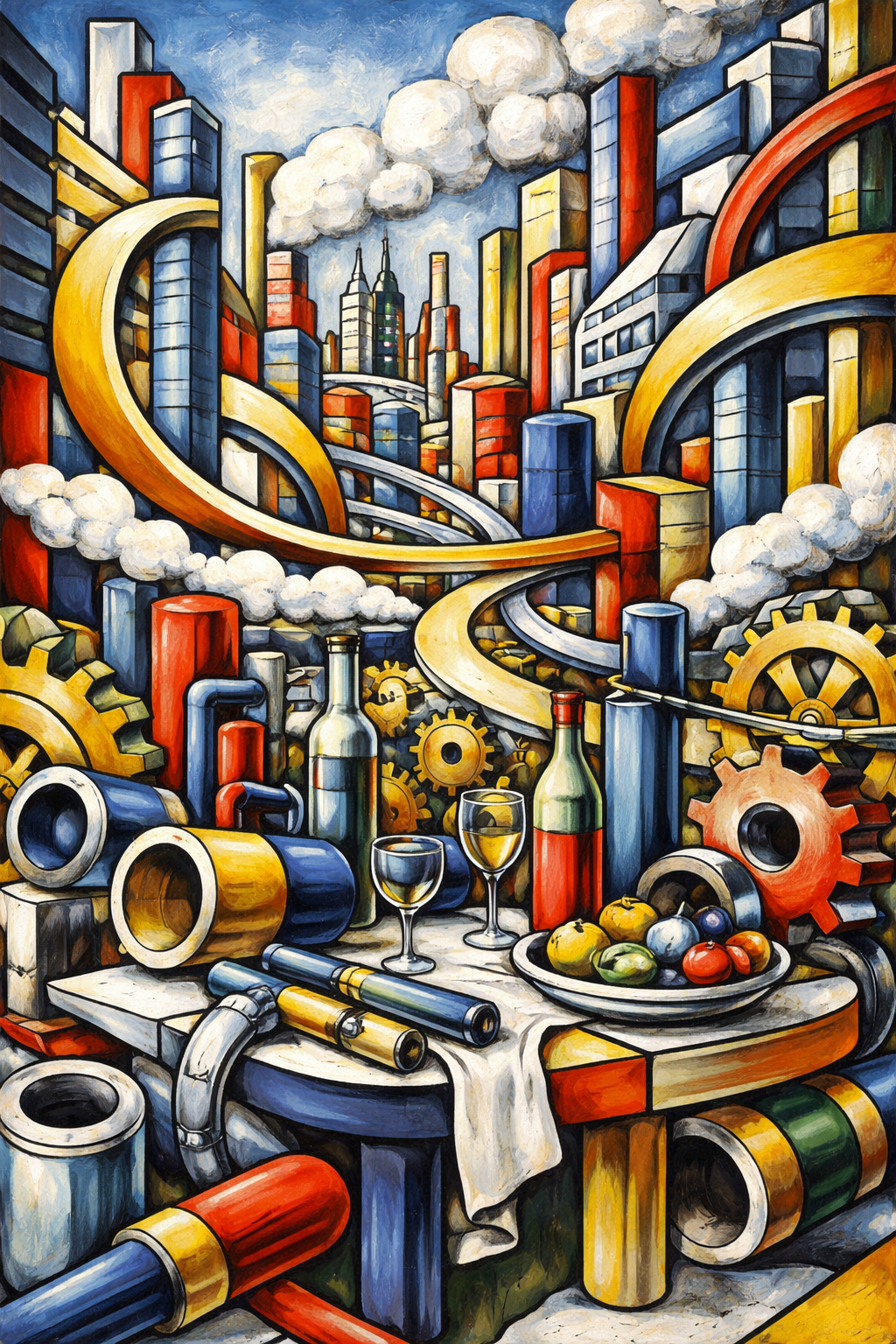
The Chaos Geometric
Critique
1. Introduction This ambitious artwork presents a surreal fusion of a still life and a sprawling, industrial cityscape. The composition utilizes a bold style combining geometric abstraction with figurative elements. It invites the viewer to explore the connections between human consumption and the vast structures of modern society in a world where domesticity and industry coexist. 2. Description In the foreground, a table holds wine bottles, glasses, and fruit, interspersed with pipes and gears. The background features a metropolis of colorful skyscrapers, winding yellow highways, and massive rotating gears. Billowing clouds, resembling industrial steam, weave through the tall structures, all rendered in a vibrant palette of primary reds, blues, and yellows. 3. Analysis The composition is built on dynamic curves and rigid verticals that create a sense of perpetual motion. Large, swooping yellow paths act as visual conduits, leading the eye from the foreground still life into the complexity of the background. The artist employs strong black outlines and flat areas of color, reminiscent of Cubism, to unify these themes. 4. Interpretation and Evaluation This work successfully creates a visual metaphor for the interdependence of the private sphere and the industrial world. The artist demonstrates an ability to manage a high density of information without losing clarity. The juxtaposition of glassware with heavy gears is effective, challenging the viewer to reconsider the origins and costs of everyday luxuries depicted. 5. Conclusion Initially overwhelming in its complexity, the painting reveals a meticulous structural logic. The piece functions as a powerful commentary on the industrial nature of modern existence, where every pleasure is linked to a vast mechanical network. This fusion of styles and subjects marks the work as a distinctive and thought-provoking study of contemporary society.
Same Subcategory
Similar Artworks
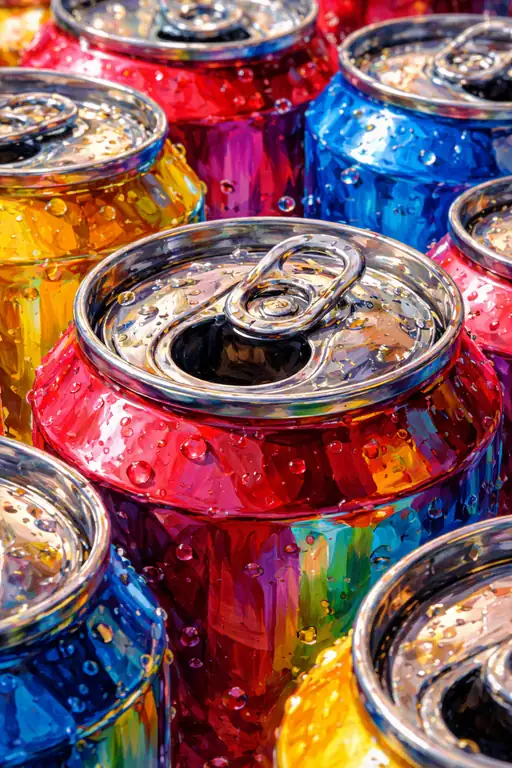 Echoes of a Vibrant Thirst
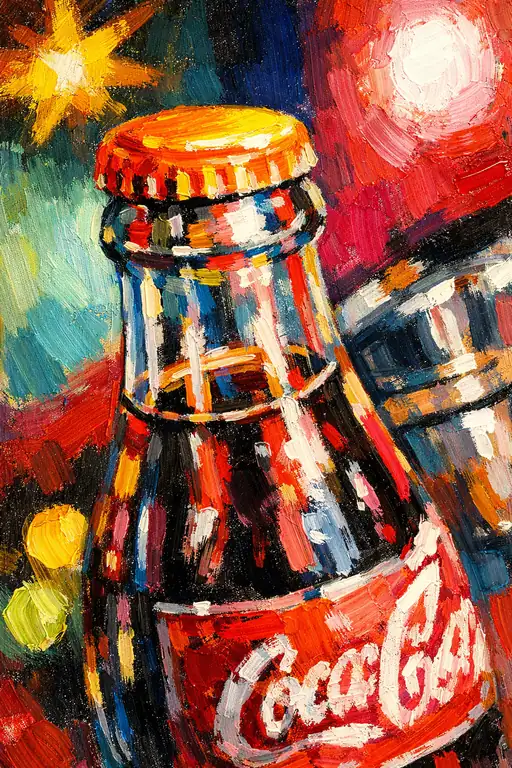 Fizzy Pulse of a Painted Era
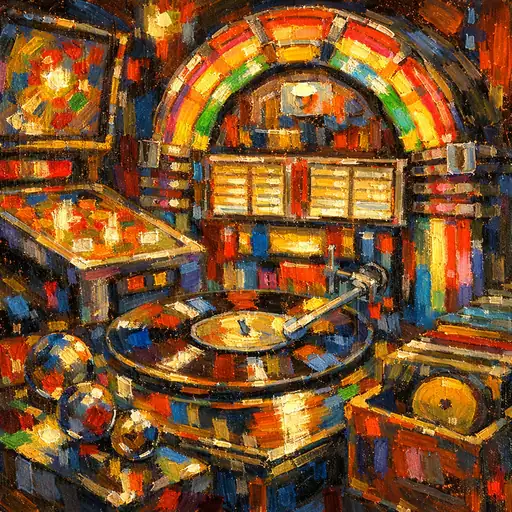 Neon Rhythms of Yesteryear
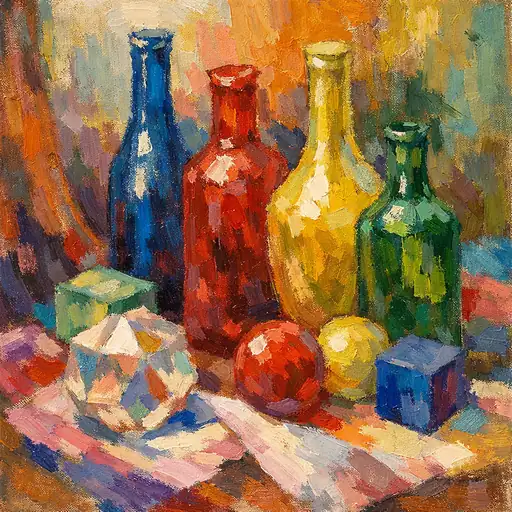 Symphony of Prismatic Forms in a Timeless Dimension
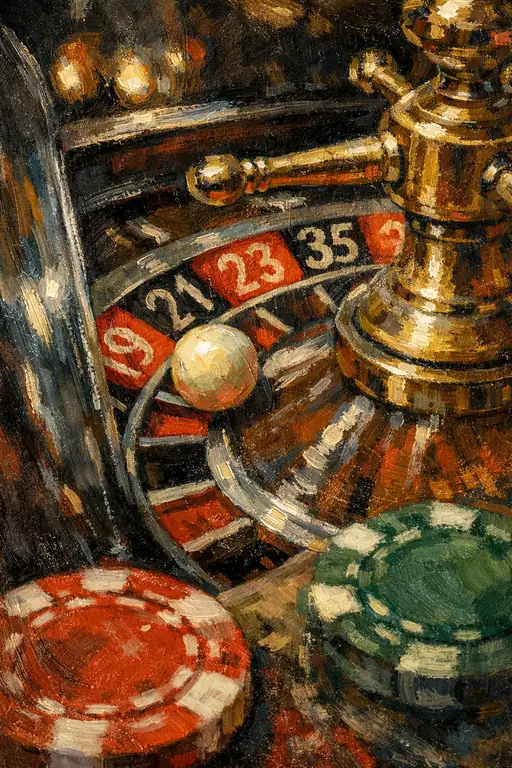 Spinning Fate in Crimson and Gold
 Geometry of the Soul's Prism
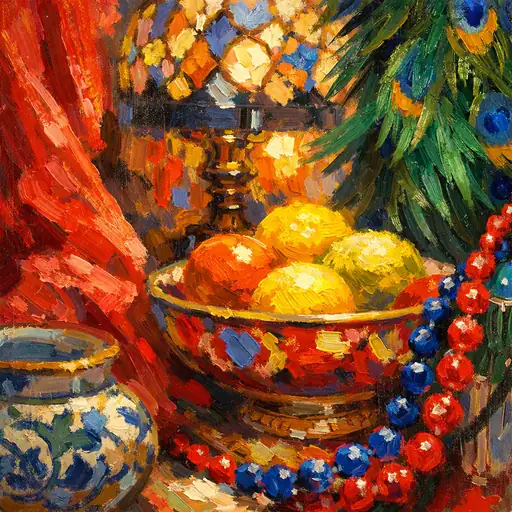 A Vibrant Ode to the Simple Things
 Shattered Reality: A Vibrant Dance of Cubes and Bottles
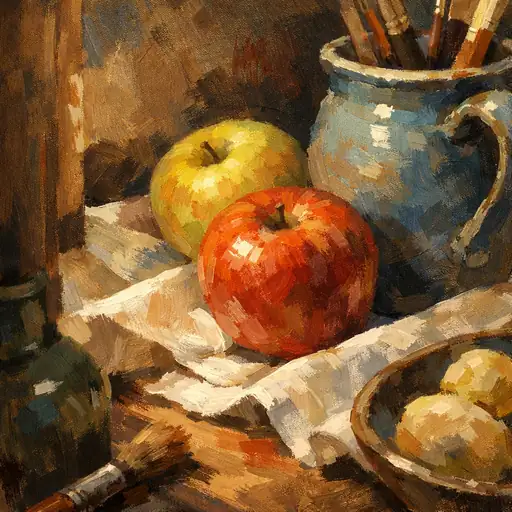 The Painter's Silent Reverie
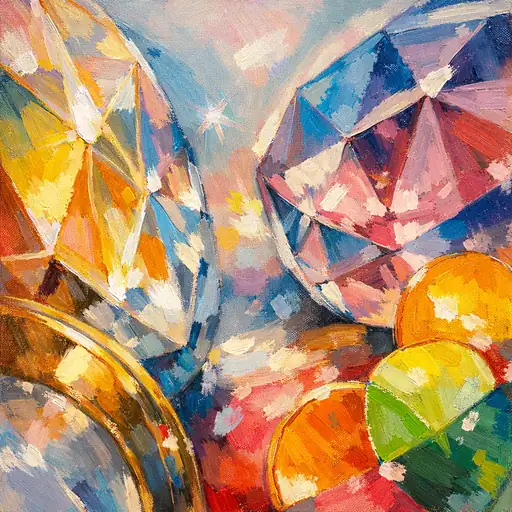 Geometric Citrus Geometry