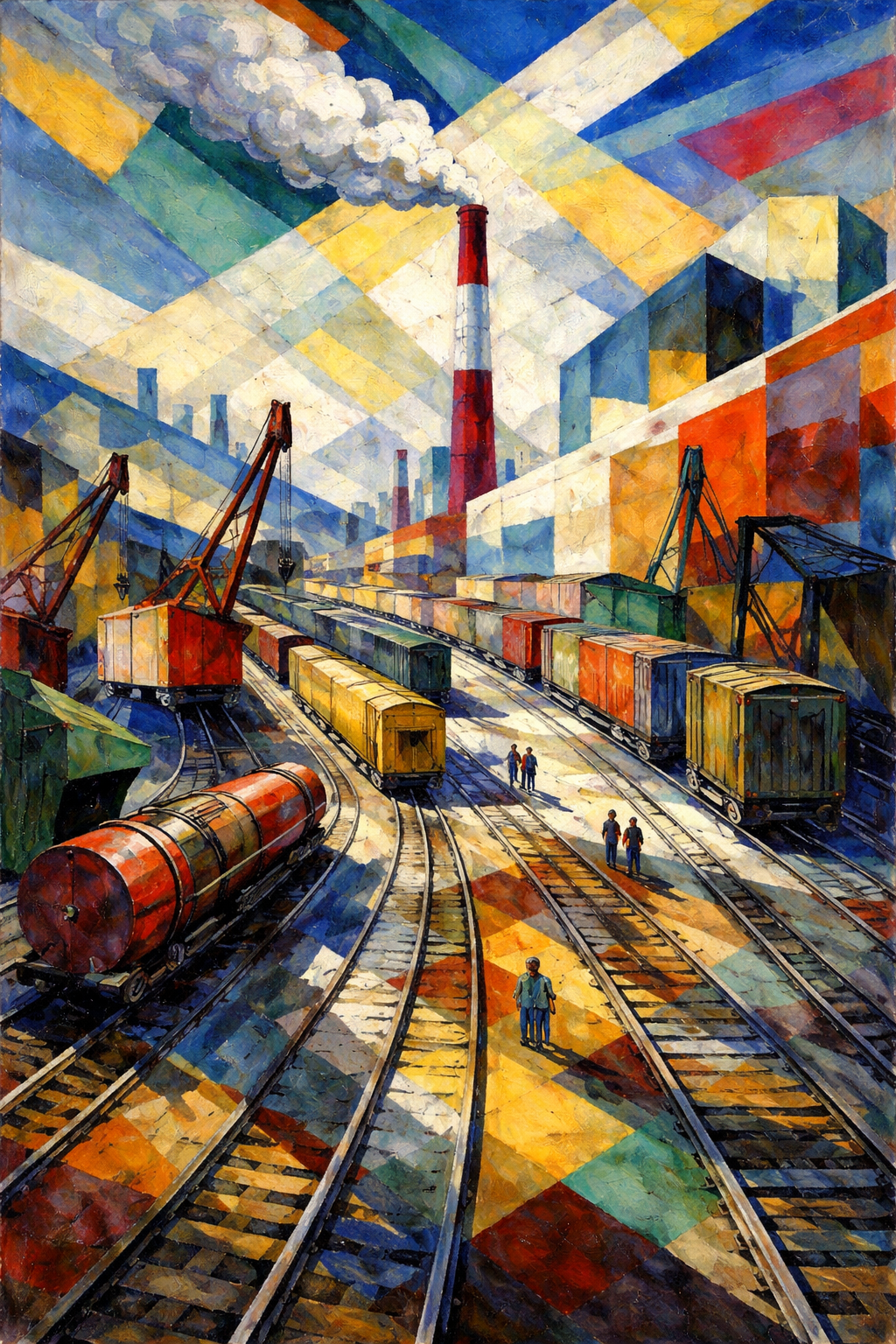
The Prismatic Pulse of Industry
Critique
1. Introduction The work is a striking oil painting that depicts a bustling industrial railyard through the lens of early 20th-century geometric abstraction. By employing a fragmented, cubist-inspired style, the composition captures the dynamic energy and complex machinery of modern industry. The vertical format emphasizes the towering height of the central chimney and the receding lines of the railway tracks, creating a sense of immense scale and forward momentum. 2. Description The foreground is dominated by a series of converging railway tracks upon which several freight cars and a large cylindrical tank car are positioned. A few small human figures are scattered throughout the yard, dwarfed by the massive cranes and industrial buildings that frame the scene. In the upper center, a tall red-and-white striped smokestack releases a plume of white smoke into a sky that is shattered into prismatic shards of blue, yellow, and white light. 3. Analysis The artist utilizes a vibrant, multifaceted color palette where bright yellows and oranges collide with deep blues and greens. The composition is defined by sharp, diagonal lines and overlapping geometric planes that create a rhythmic, fractured surface. This technique suggests the noise and motion inherent in an industrial environment, while the visible brushwork adds a layer of tactile texture to the various metallic and concrete surfaces depicted in the yard. 4. Interpretation and Evaluation This painting serves as a celebration of industrial progress and the machine age, translating a functional landscape into a complex visual symphony. The fragmentation of light and form reflects a fascination with speed and the modern urban experience, characteristic of Futurist aesthetics. The artist effectively balances the rigid geometry of the architecture with the organic movement of the smoke, demonstrating high technical skill in managing a densely packed and energetic composition. 5. Conclusion Through its inventive use of abstraction and its bold approach to color, the work successfully transforms a mundane industrial site into a compelling artistic statement. The interplay between the massive structures and the small workers highlights the scale of human achievement within the modern era. While the initial impression is one of overwhelming complexity, a closer examination reveals a carefully ordered structure that honors the power and dynamism of the industrial world.
Same Subcategory
Similar Artworks
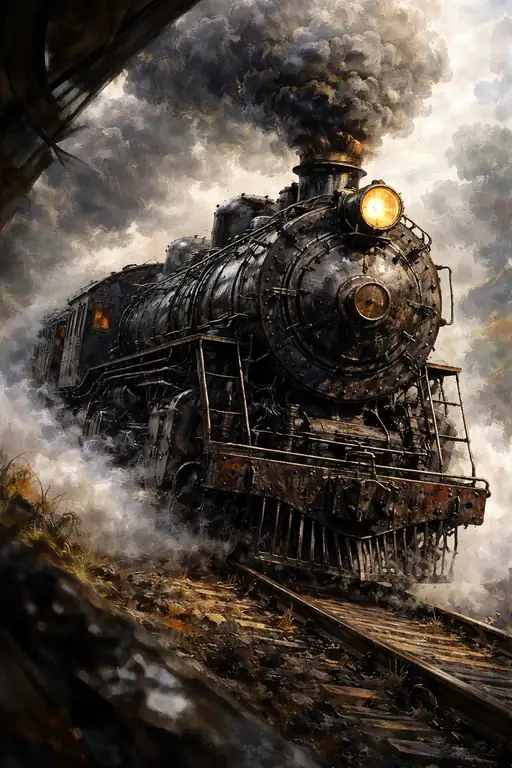 Breath of the Iron Behemoth
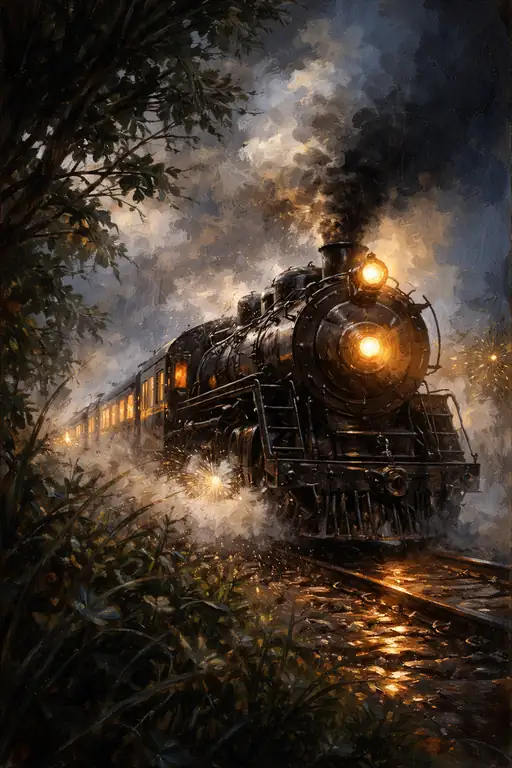 Midnight Momentum: Fire on Iron
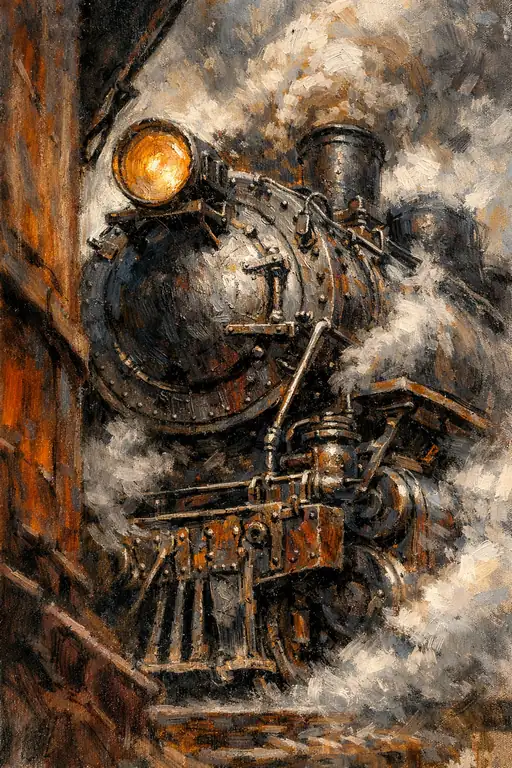 Iron Giant Pulsing with Steam
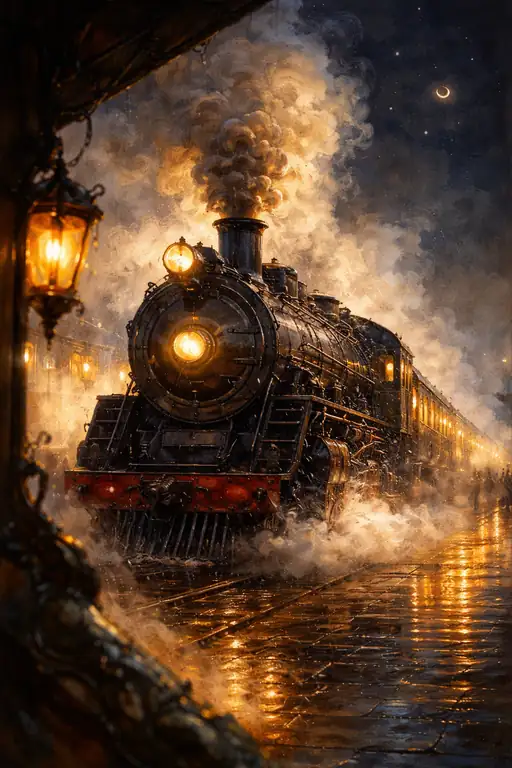 Slumbering Giant Beneath the Stars
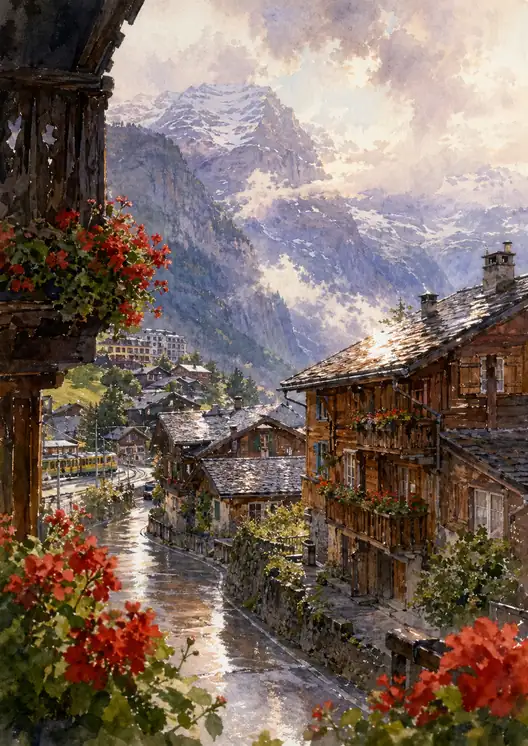 Mountain Train Journey Under Luminous Clouds
 The Crimson Breath of the Mountains
 Journey Through the Sacred Valley
 Neon Departure
 Mechanical Pulse
 Chrome Reflections of the Past