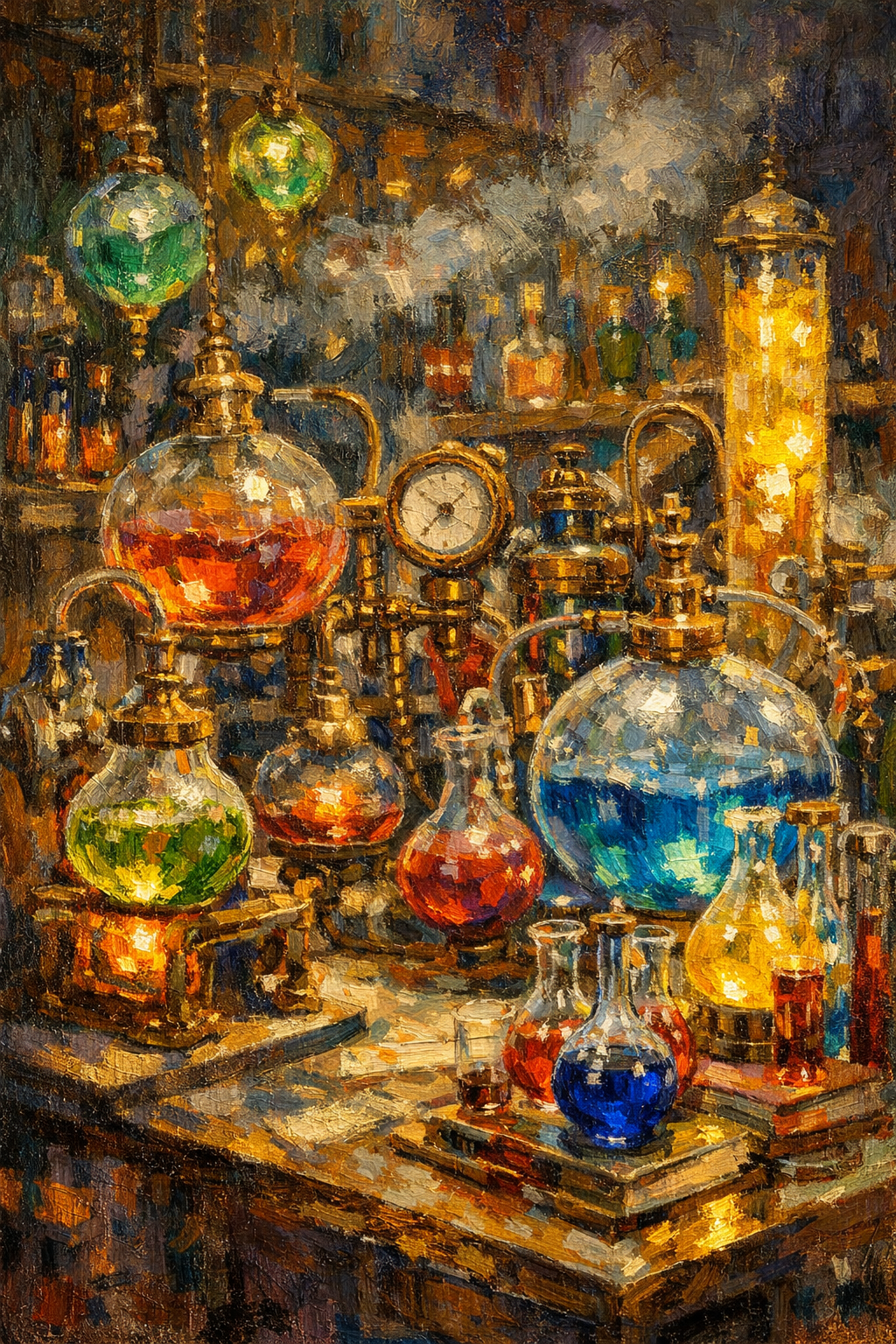
The Alchemist's Glowing Laboratory
Critique
1. Introduction This oil painting presents a dense and vibrant scene of a laboratory, filled with intricate glassware and glowing substances. The composition is packed with details, suggesting a space dedicated to scientific or mystical experimentation. The artwork immediately captures the viewer's attention through its intense use of light and a complex arrangement of objects that evoke a sense of wonder and intellectual pursuit. 2. Description The foreground and midground are dominated by numerous glass vessels of varying shapes and sizes, some containing brightly colored liquids such as sapphire blue, emerald green, and deep amber. A large spherical flask on the right glows with a brilliant blue light, while smaller retorts and test tubes are scattered across a wooden workbench. In the center, a brass pressure gauge with a circular dial is visible, connected to a system of metallic pipes. The background is filled with shelves containing more bottles and books, all rendered with thick, textured brushstrokes that create a sense of depth and atmospheric haze. 3. Analysis The artist utilizes a rich palette dominated by primary and secondary colors, which are heightened by the high-contrast lighting emanating from within the glass containers. The brushwork is vigorous and expressive, with visible impasto that adds a tactile quality to the surface of the painting. Light is the primary structural element, used to define the volumes of the glassware and to create a rhythmic flow throughout the busy composition. The perspective is slightly elevated, allowing for a comprehensive view of the laboratory's cluttered but organized interior. 4. Interpretation and Evaluation The painting successfully conveys the atmosphere of a dedicated workspace where the boundaries between science and alchemy seem to blur. The glowing liquids and the complexity of the apparatus suggest a process of transformation and the search for knowledge. From a technical standpoint, the handling of light and reflection on the glass surfaces is masterful, demonstrating a strong command of color theory and texture. The work's originality lies in its ability to transform a scientific setting into a visually arresting and almost magical environment through an expressive painting style. 5. Conclusion Upon closer inspection, the initial impression of chaotic clutter gives way to an appreciation for the intricate relationships between light, color, and form. The painting serves as a powerful testament to the beauty found in the pursuit of discovery and the tools of intellectual inquiry. It is a compelling work that invites the viewer to linger over its many details and reflect on the nature of experimentation.
Same Subcategory
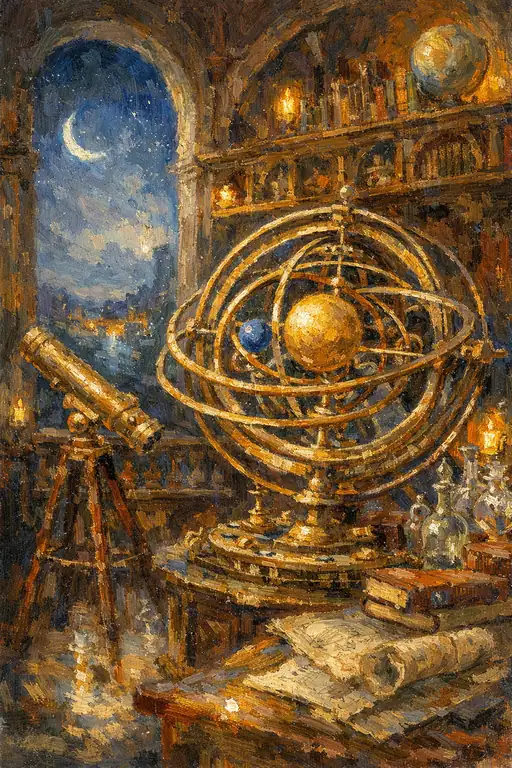 The Gaze Within the Geometry
Similar Artworks
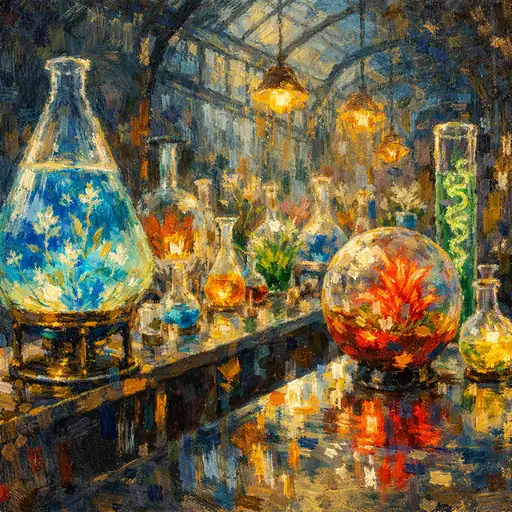 The Alchemist's Secret Sanctuary
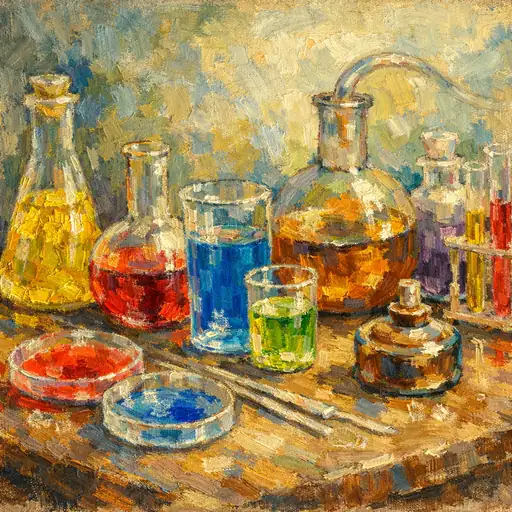 The Alchemist's Palette: Luminous Elixirs in Impasto
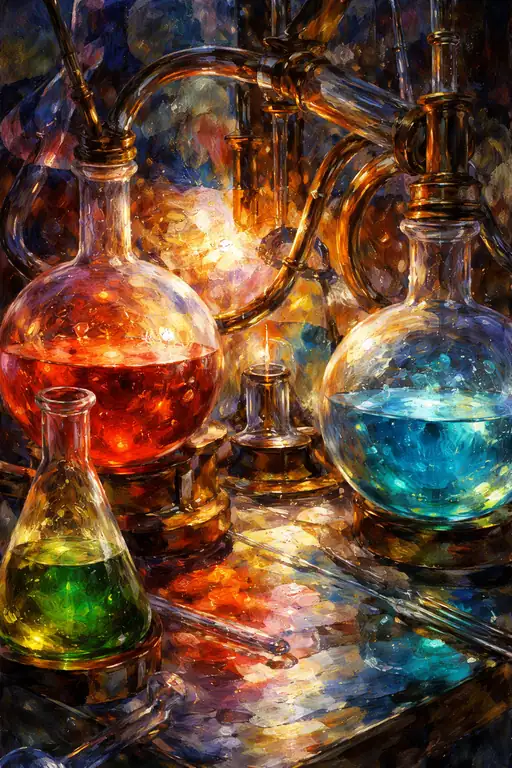 The Alchemist's Dream in Phials of Color
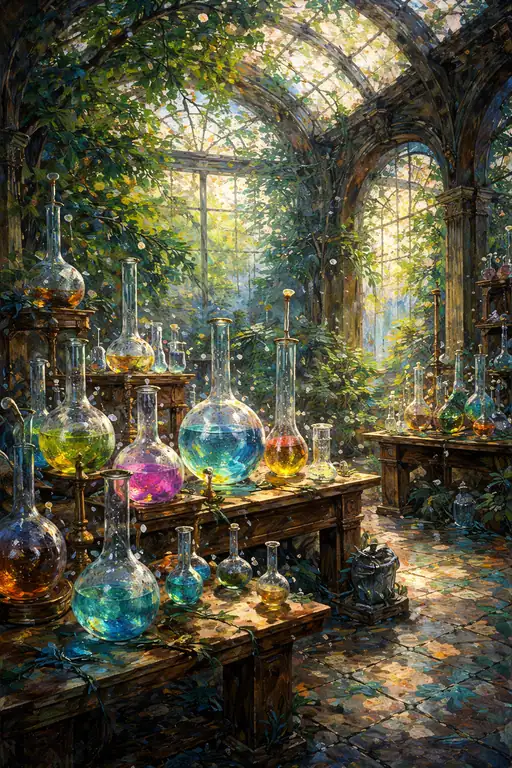 Sanctuary of the Emerald Elixir
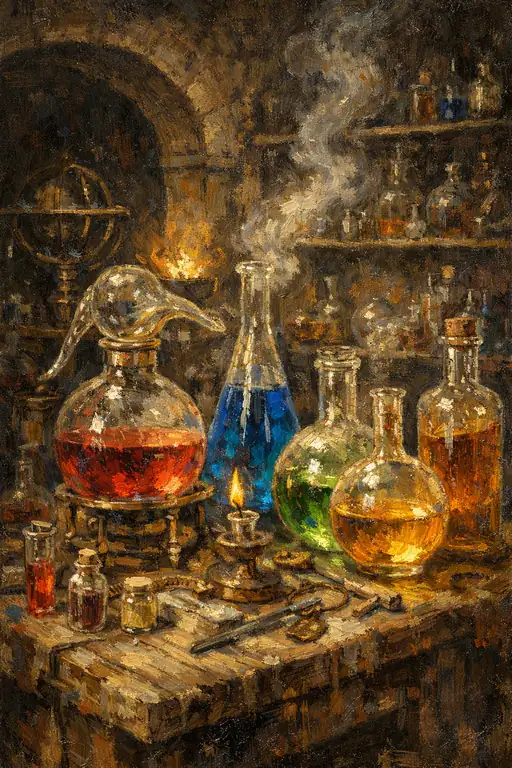 Elixir of the Forgotten Alchemist
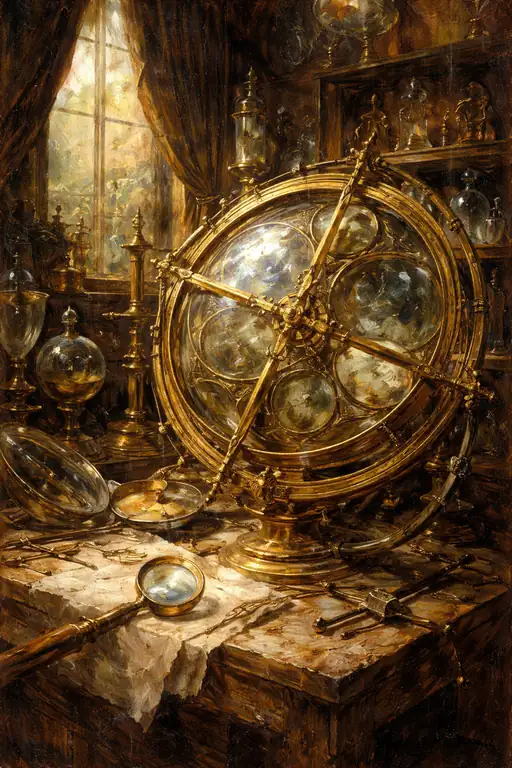 Gleaming Relics of the Astral Study
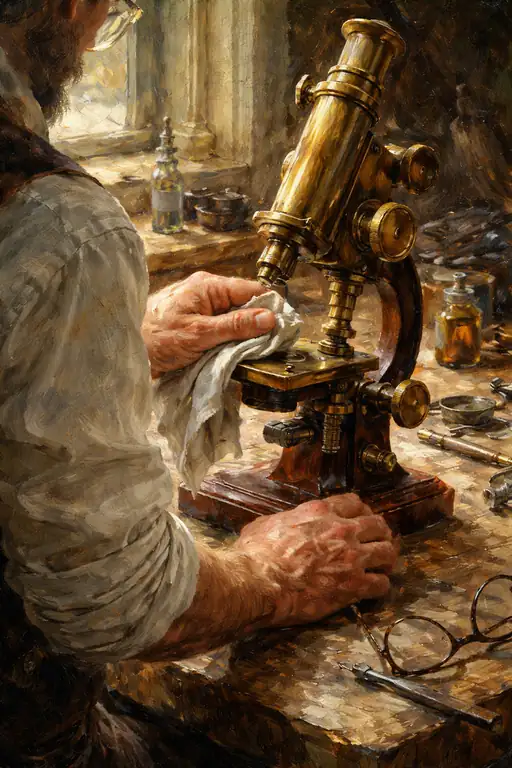 The Artisan's Focus
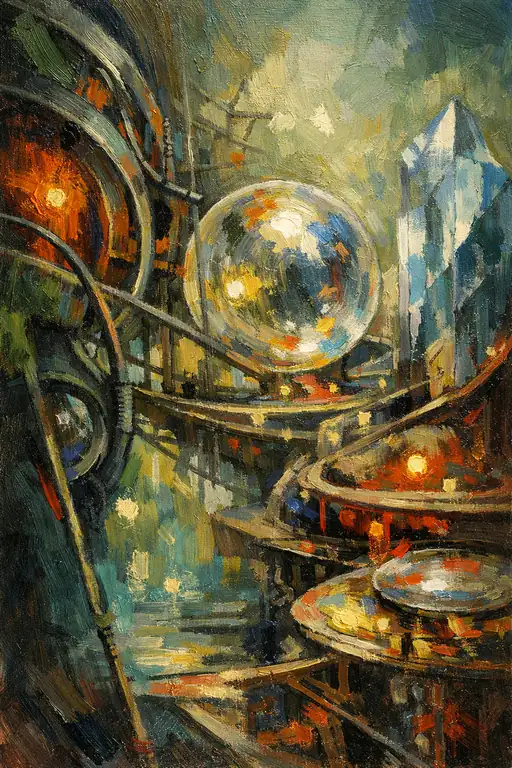 Symphony of the Crystal Spheres
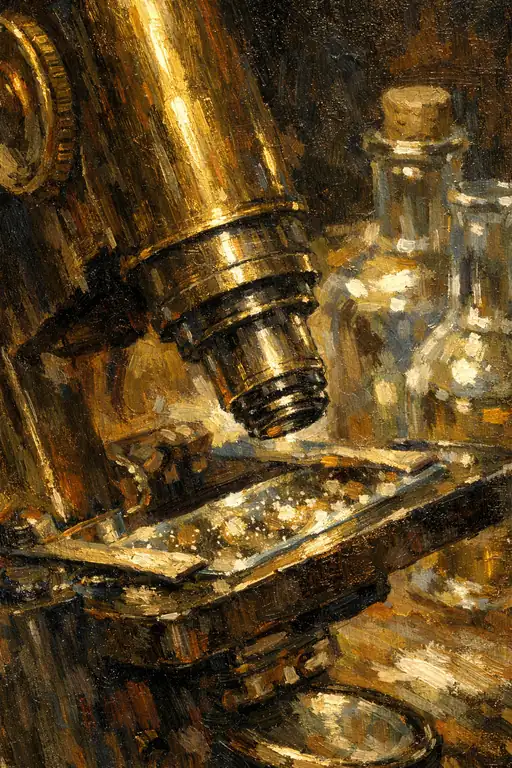 The Silent Light of Inquiry
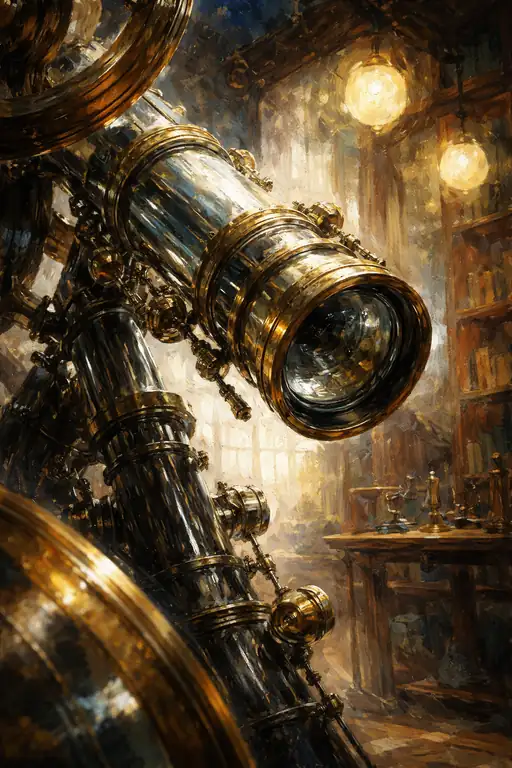 The Scholar's Cosmos