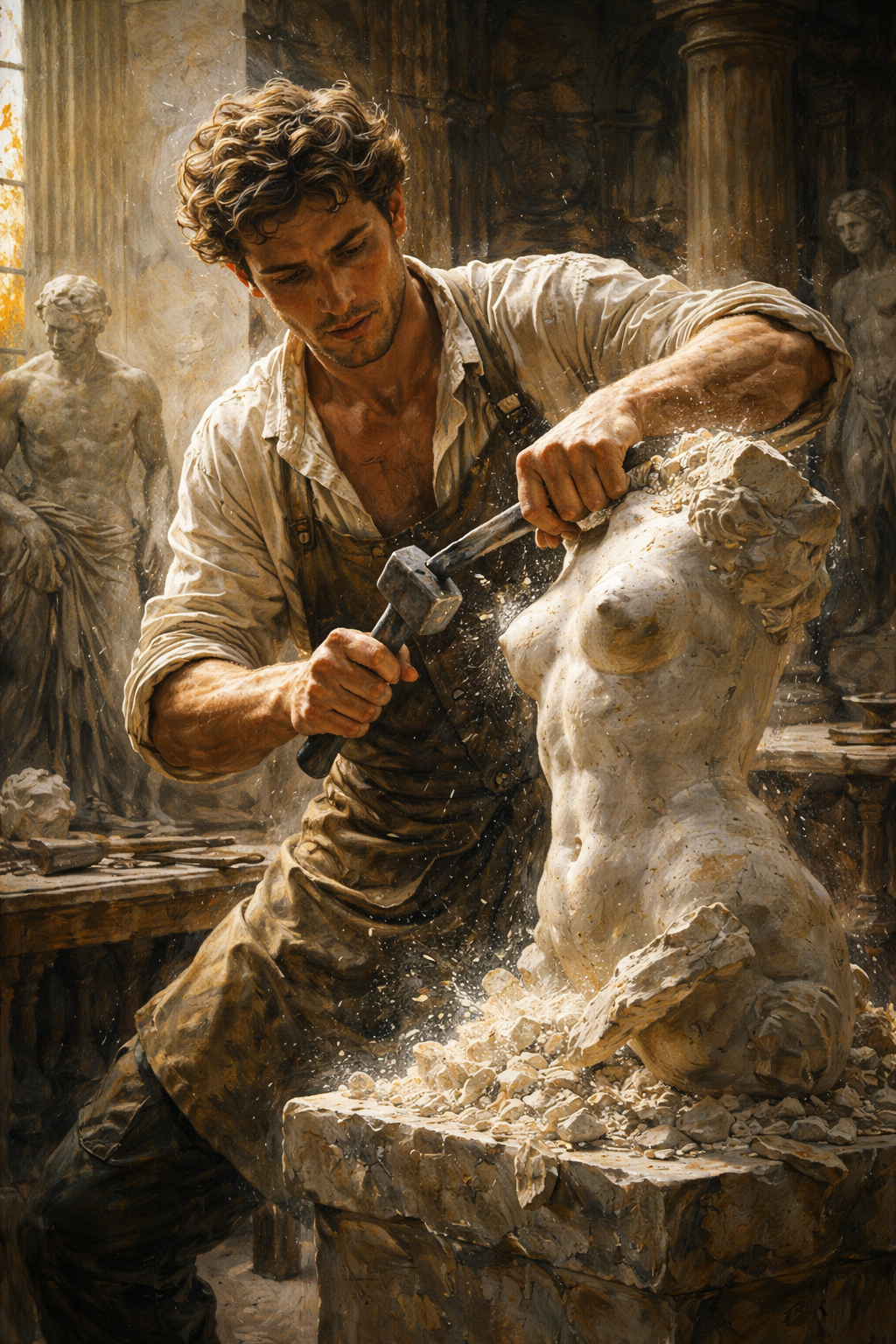
Awakening the Marble Soul
Critique
1. Introduction This powerful figurative painting depicts a sculptor in the midst of creating a marble masterpiece within a traditional studio. The work emphasizes the physical intensity and focused concentration required for classical stone carving. It serves as a tribute to the artistic process, capturing the raw energy and technical precision that define the sculptor's craft. 2. Description A young man with curly hair and a dusty apron leans over a stone block, striking a chisel with a heavy hammer. White stone chips and dust fly into the air as he carves the delicate form of a female torso. The background reveals a dimly lit workshop filled with other classical statues and architectural columns, suggesting a setting of professional mastery and historical continuity. 3. Analysis The artist uses a dramatic chiaroscuro lighting effect to highlight the muscular tension in the sculptor's arms and the rough texture of the unfinished stone. A neutral color palette of ochre, brown, and cream emphasizes the earthiness of the material and the grit of the workshop. The dynamic composition is centered on the point of impact, creating a sense of movement through the scattering debris. 4. Interpretation and Evaluation The painting successfully conveys the balance between brute force and delicate artistry inherent in the act of creation. The contrast between the sculptor’s rugged appearance and the emerging grace of the marble torso illustrates the transformative power of the artist. Its execution shows a profound understanding of human anatomy and the tactile qualities of various surfaces, from fabric to stone. 5. Conclusion This work provides a compelling window into the demanding world of classical sculpture, celebrating both the creator and the creation. By freezing a moment of high action and intense focus, it captures the very essence of artistic labor and dedication. The initial impact of the flying stone chips eventually gives way to an appreciation for the enduring strength and beauty of the finished form.
Same Subcategory
 Golden Threads of the Painted Garden
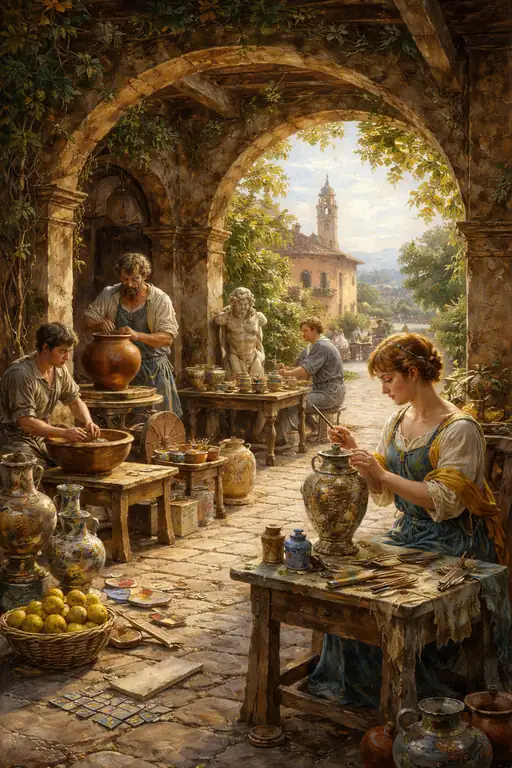 Sunlit Clay and the Artisan's Soul
Similar Artworks
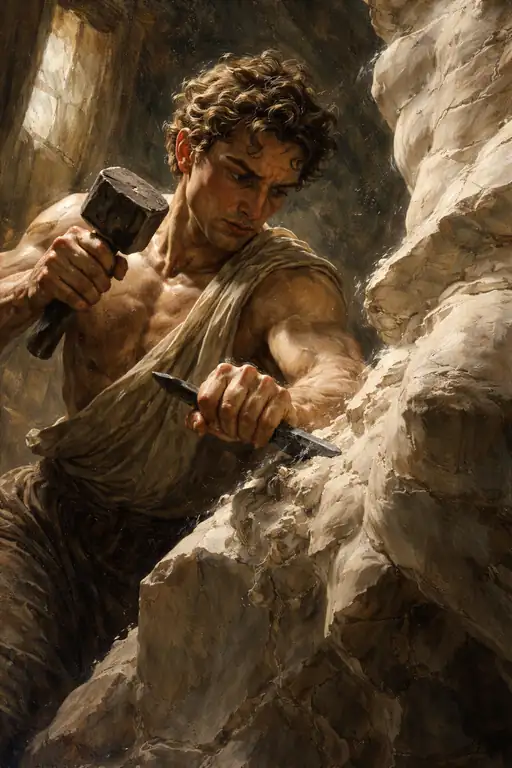 Awakening the Slumbering Stone
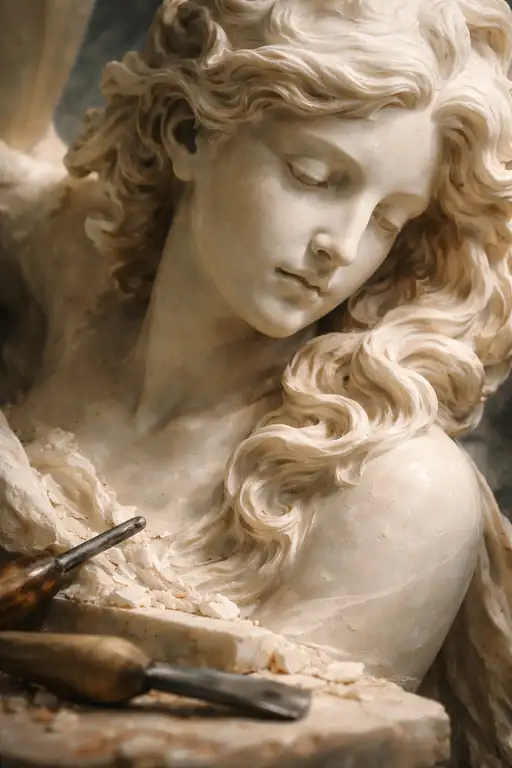 Goddess Awakening from Stone
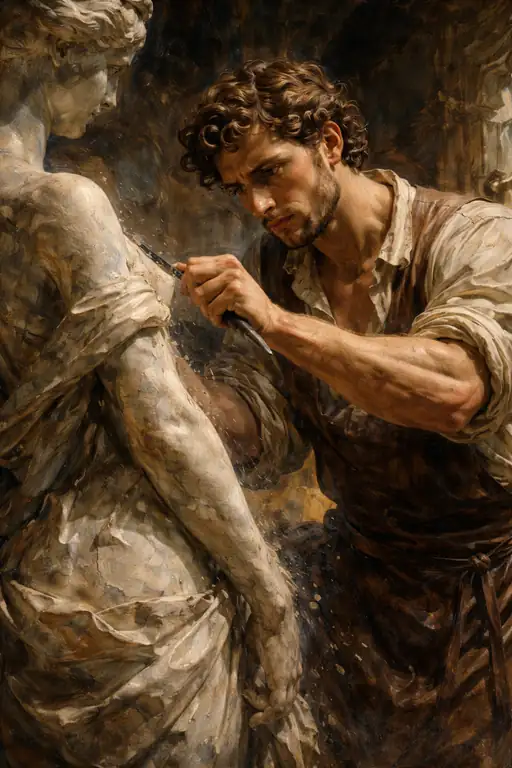 Pygmalion's Gaze
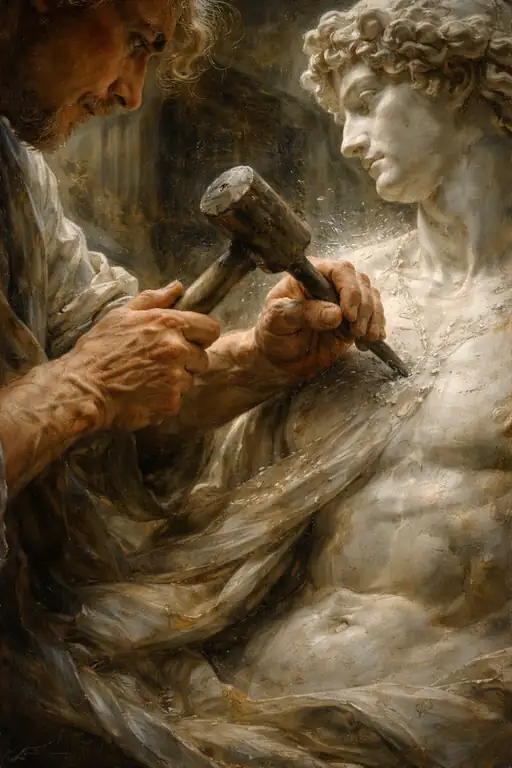 The Genesis of Form: Breathing Life into Marble
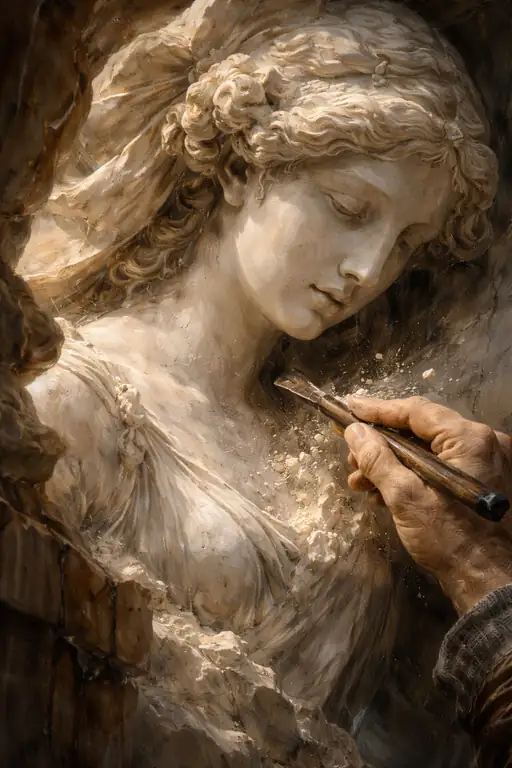 The Creator's Pulse
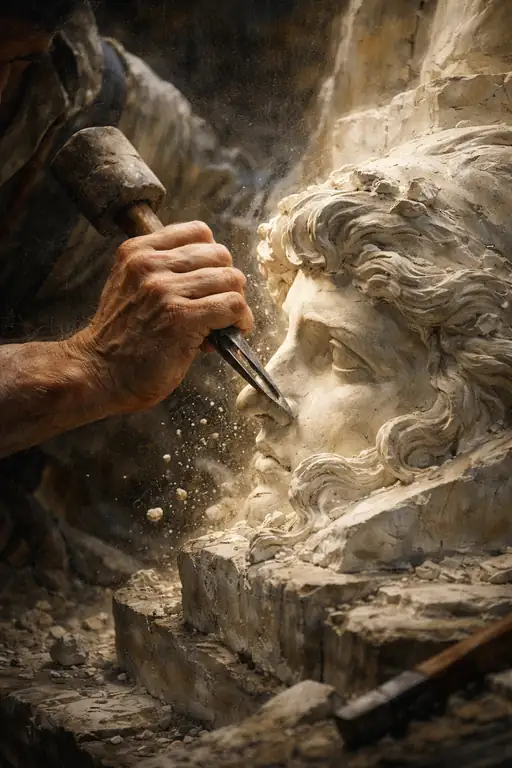 Awakening from Stone
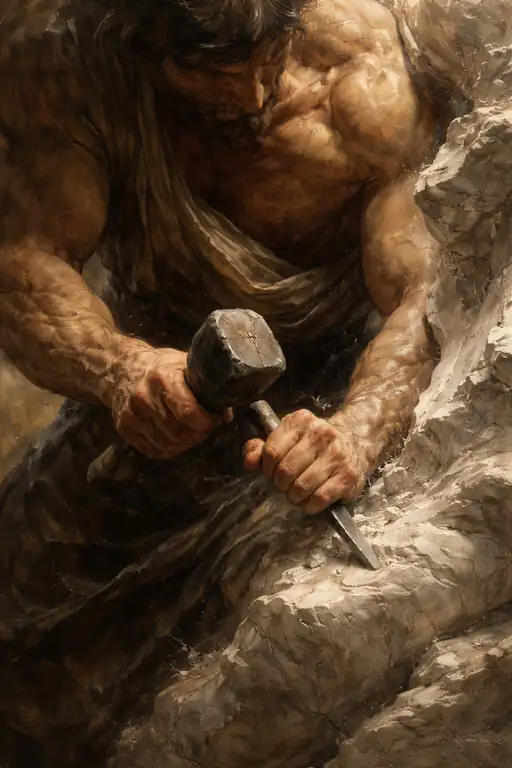 Breathing Life into Unyielding Stone
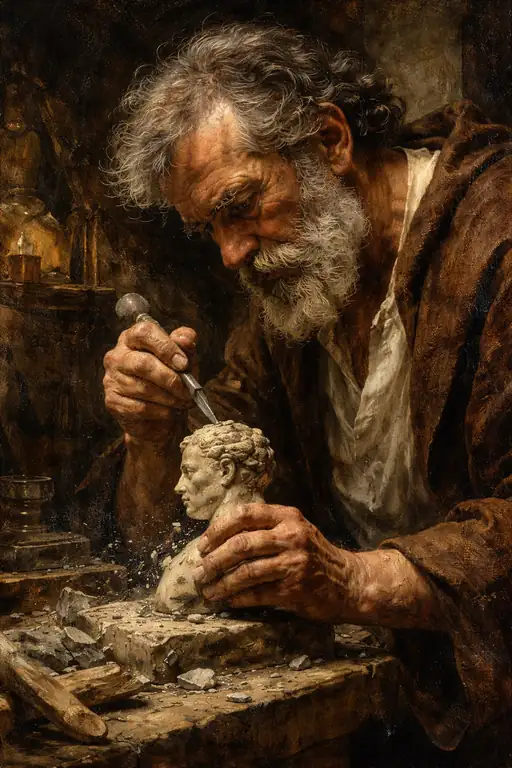 Breath from the Silent Stone
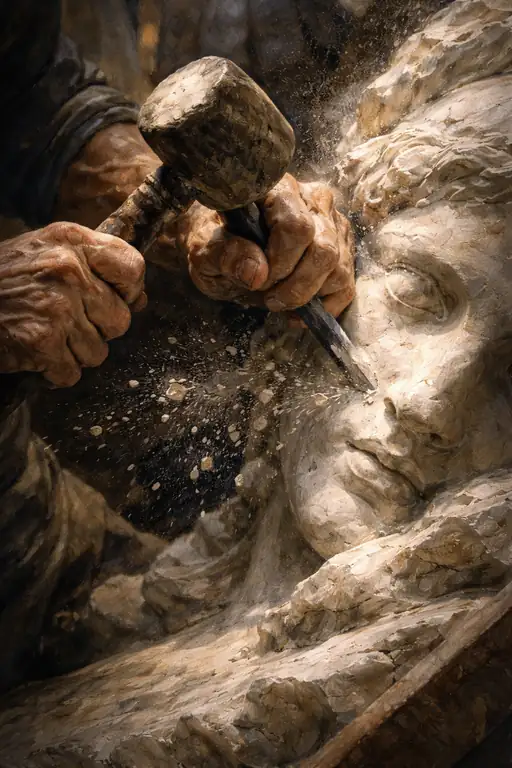 The Chisel's Climax: Birth from Stone
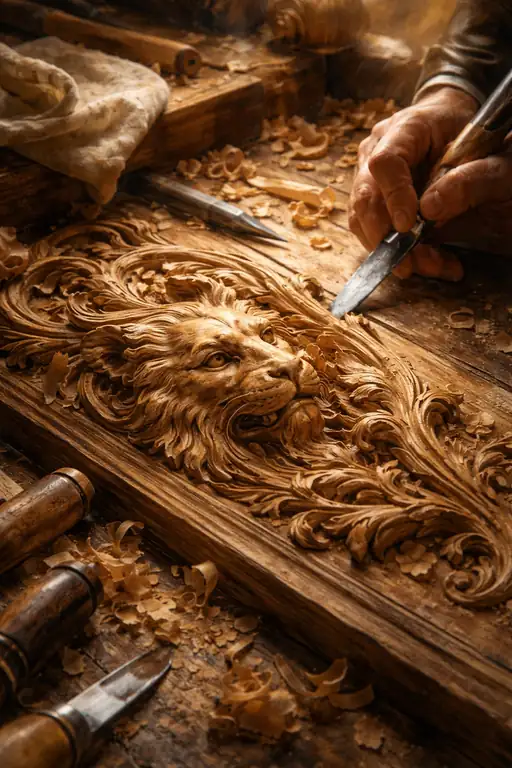 The Artisan's Devotion Etched in Wood