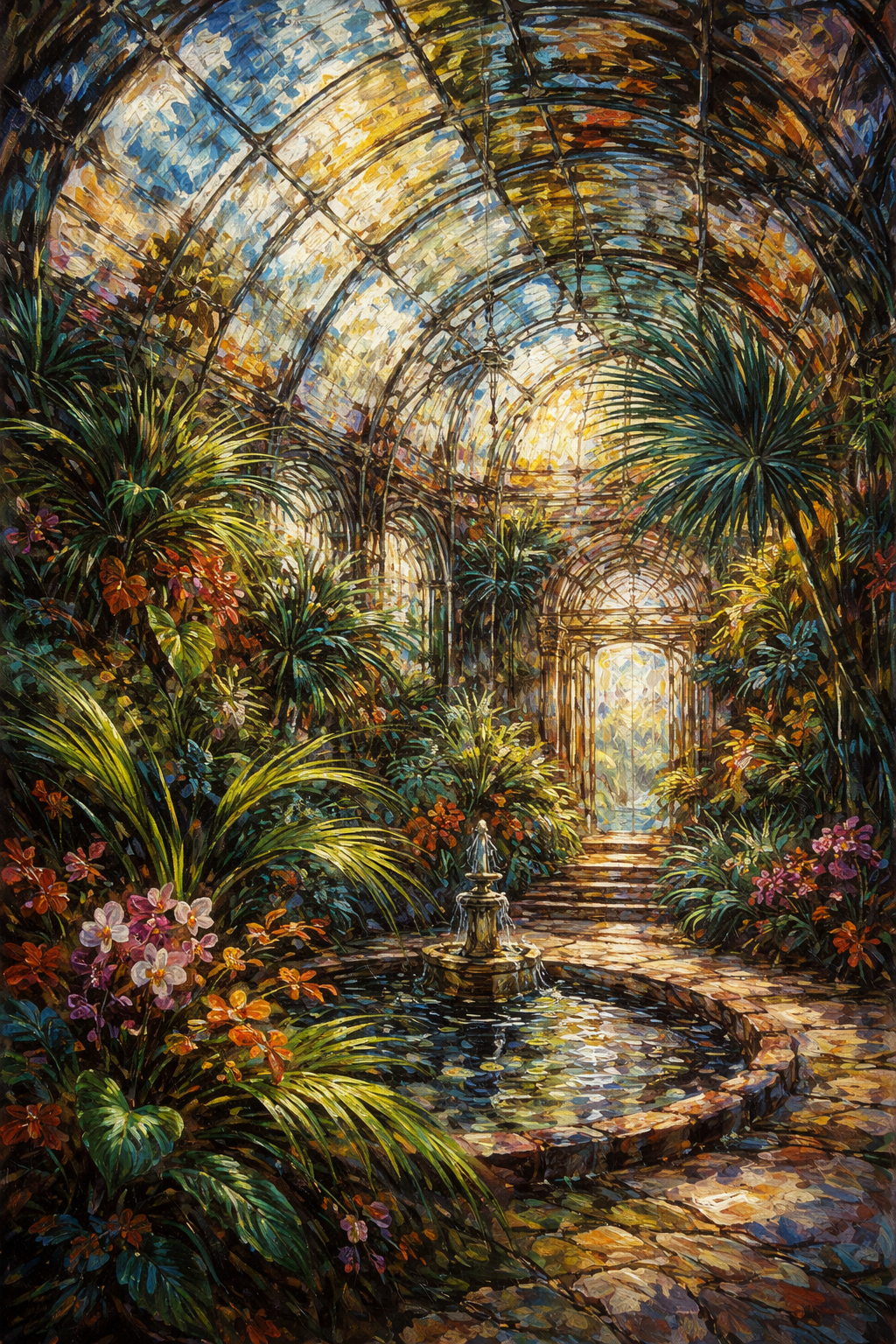
Beneath the Botanical Canopy
Critique
1. Introduction This oil painting presents a magnificent view inside a grand glass conservatory, featuring a central water fountain surrounded by lush botanical life. The scene is illuminated by brilliant sunlight filtering through an intricate vaulted glass ceiling, creating a vibrant atmosphere of growth and tranquility. The composition leads the viewer from the foreground fountain toward a distant doorway, inviting exploration into this verdant architectural space. 2. Description In the foreground, a small stone fountain sits within a circular pool, its water reflecting the multicolored light from above. Dense foliage, including various palms and colorful orchids in shades of pink and orange, frames the lower section of the canvas. The background is dominated by a complex iron and glass dome that arches over the interior, showing glimpses of a blue sky outside. A stone pathway curves around the water, leading to a sun-drenched exit at the far end of the hall. 3. Analysis The artist employs a dynamic, impressionistic brushstroke that emphasizes the texture of the plants and the reflective surfaces of the glass and water. The color palette is rich and warm, characterized by a sophisticated interplay of deep greens, earthy browns, and golden highlights that simulate the effect of scattered sunlight. The perspective is handled with precision, using the rhythmic structure of the dome's ribs to create a sense of vast interior depth. Light is the primary structural element, defining forms through high-contrast highlights and deep, cool shadows within the foliage. 4. Interpretation and Evaluation This work successfully captures a harmonious intersection between man-made structural elegance and the untamed vitality of nature. The conservatory serves as a sanctuary where the chaos of the jungle is contained within a rigid architectural frame, yet the light seems to dissolve these boundaries. The technical execution of the complex lighting is impressive, demonstrating a high level of skill in capturing the prismatic effects of light passing through glass. The choice of a high-ceilinged interior enhances the feeling of breathability and spiritual elevation, making the space feel more like a cathedral than a mere greenhouse. 5. Conclusion Ultimately, the painting is a powerful study of atmospheric light and botanical abundance within an architectural context. The initial impression of overwhelming detail gradually gives way to a deeper appreciation for the structured light that organizes the entire composition. This piece stands as a testament to the enduring beauty of classical conservatories and their role as bridges between the human and natural worlds.
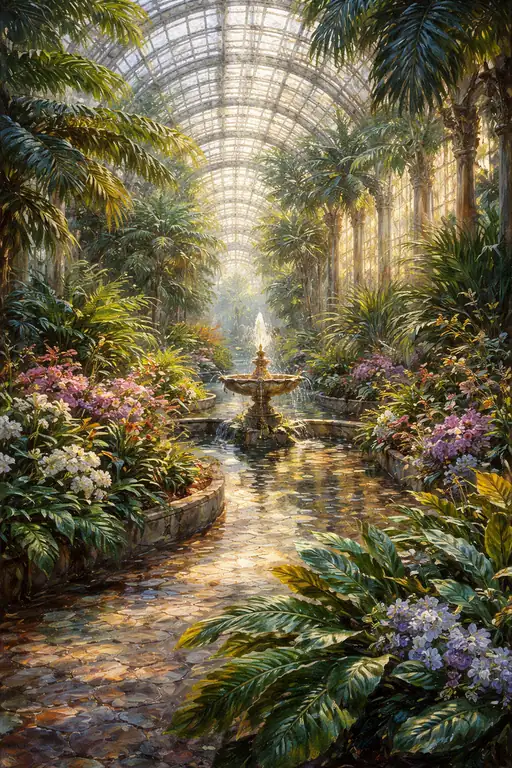 Tears of the Stone Fountain
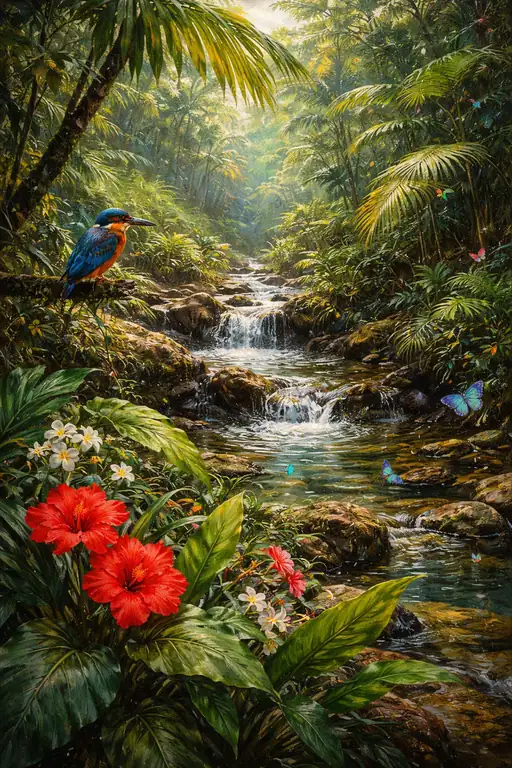 Breath of the Hidden Eden
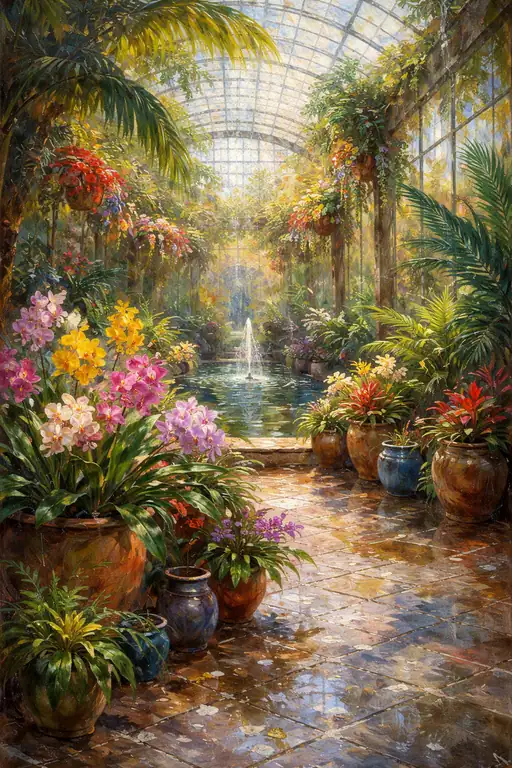 Sunlit Greenhouse
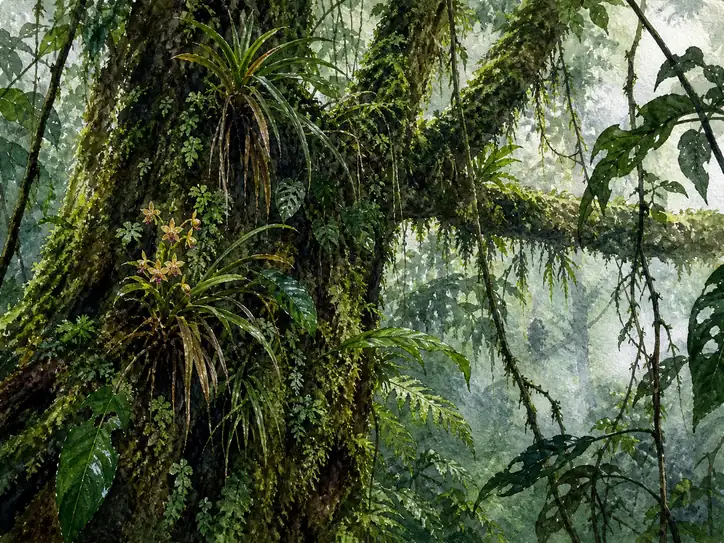 Heart of the Emerald Mist
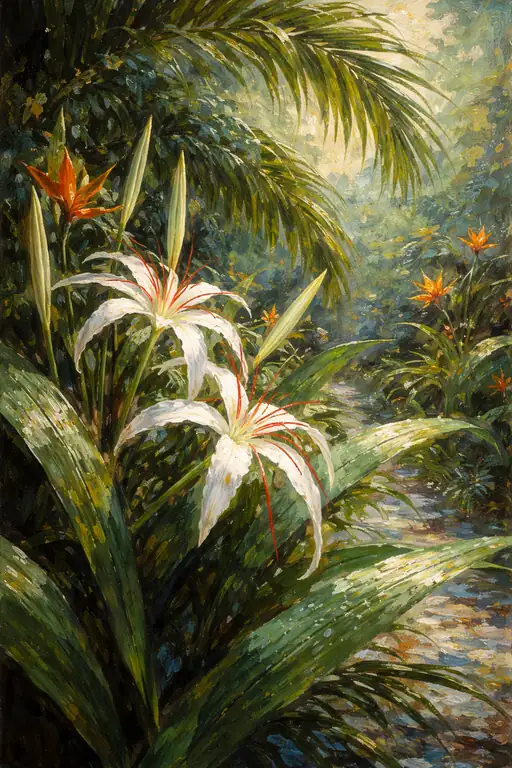 Whispering Light in the Hidden Jungle
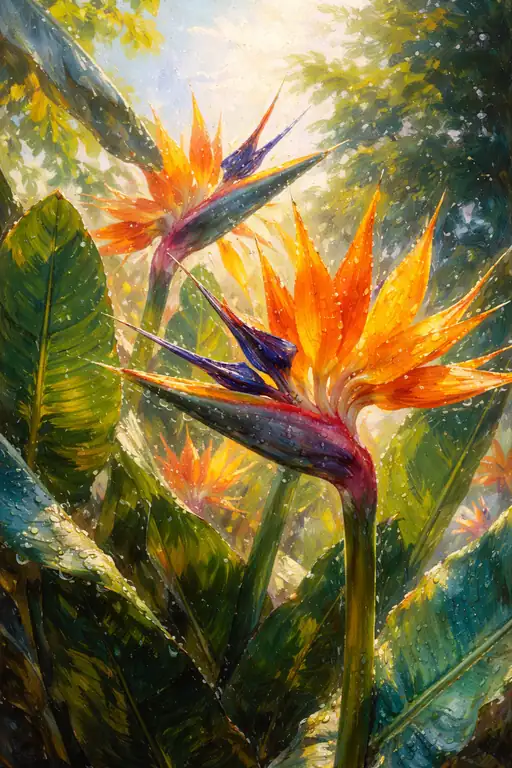 Wings of Golden Awakening
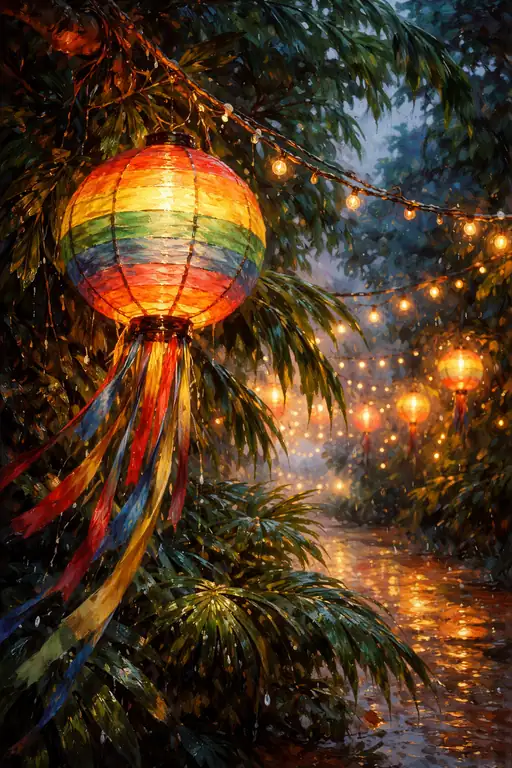 Whispers of the Neon Rain
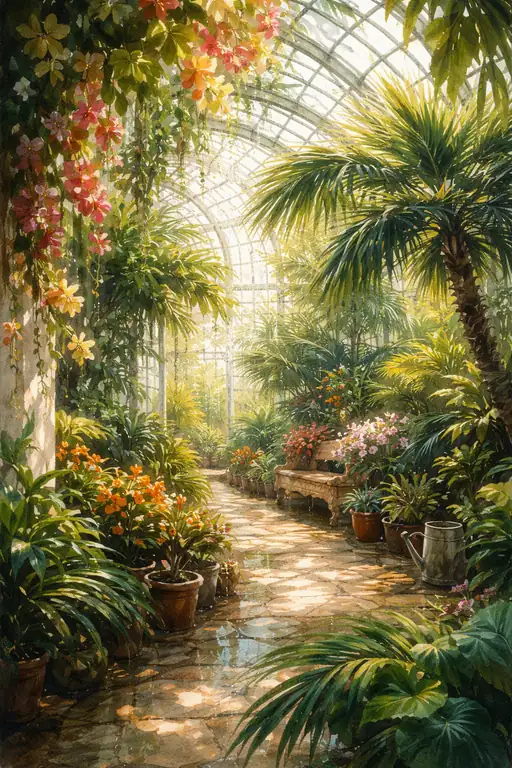 The Silent Hymn of the Sunlit Conservatory
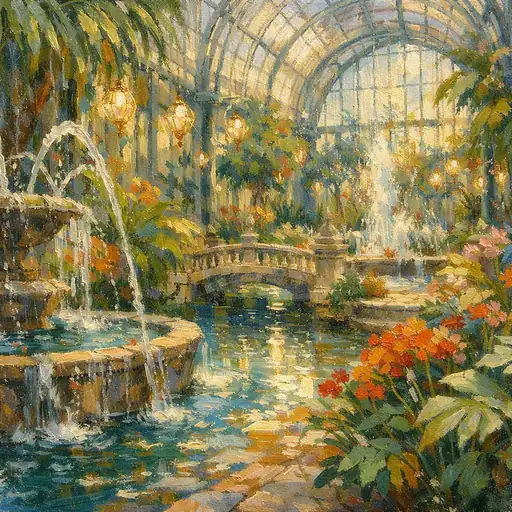 Sanctuary of the Glass Eden
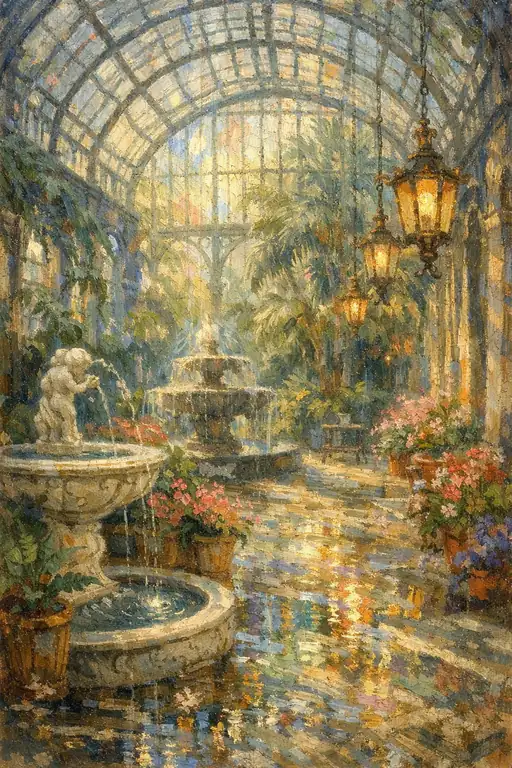 Crimson Carriage and the Rushing Wind