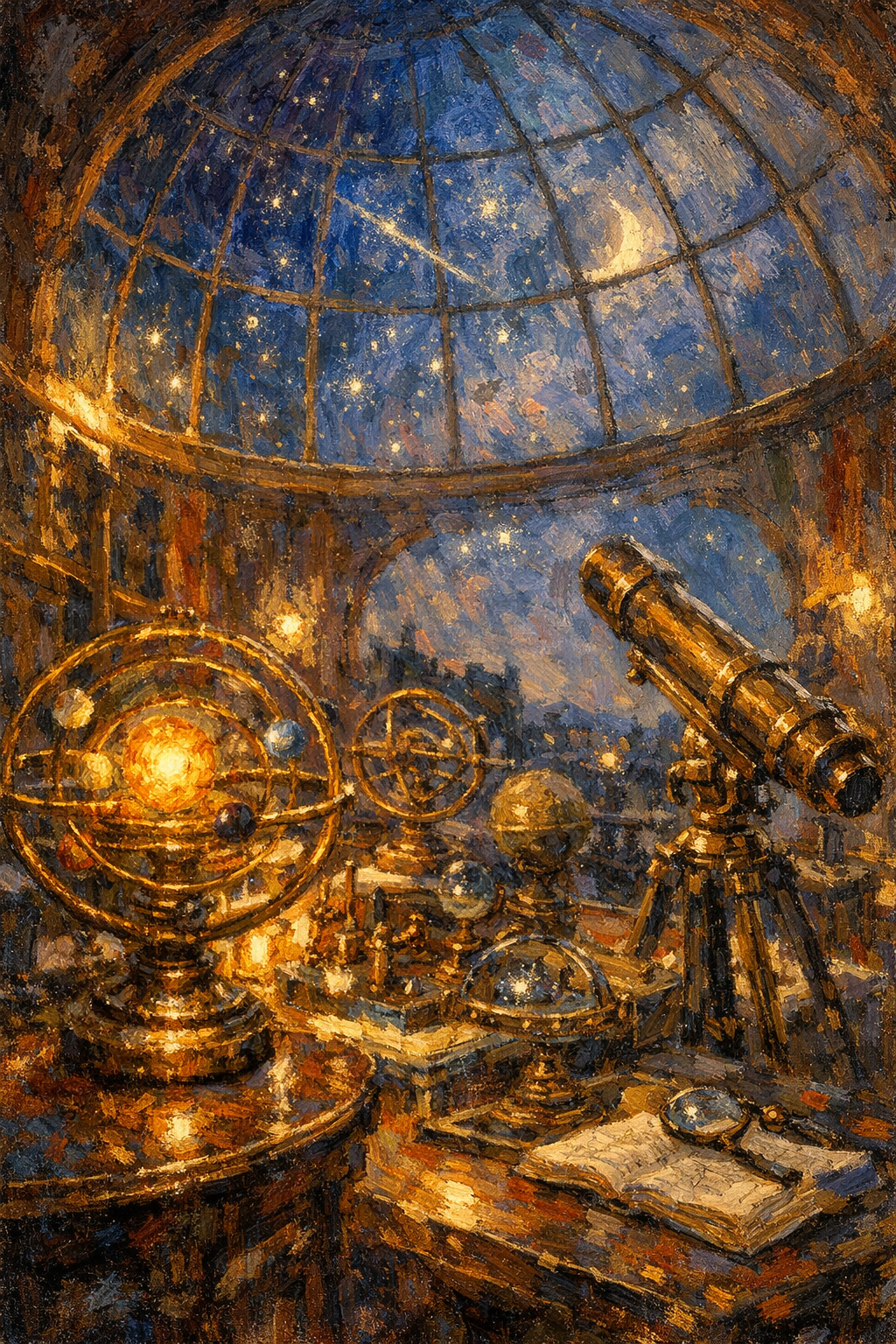
Where Mortals Meet the Celestial Sphere
Critique
1. Introduction This oil painting depicts a grand observatory interior, characterized by a vast glass dome that merges the scholarly workspace with the celestial sphere. The composition emphasizes the relationship between human-made instruments of measurement and the infinite scale of the universe. By placing the viewer amidst a collection of sophisticated astronomical tools, the artwork invites reflection on the history of cosmic exploration. It establishes an atmosphere of wonder, where the boundaries between the terrestrial laboratory and the distant stars seem to dissolve through the transparency of the dome. 2. Description The foreground is occupied by a highly detailed orrery on a circular table, its golden sun glowing intensely at the center of planetary orbits. To the right, a brass telescope rests on a sturdy wooden tripod, angled toward the night sky. In the background, smaller celestial globes and scientific apparatus are scattered across wooden benches. Above this scene, a magnificent vaulted glass ceiling reveals a deep indigo sky filled with shimmering stars, a faint streak of a comet, and a delicate crescent moon. The light source appears to be the internal glow of the instruments, illuminating the space with a warm, golden radiance. 3. Analysis The artist utilizes a dramatic color contrast between the fiery yellows and oranges of the instruments and the cool, atmospheric blues of the night sky. This binary color scheme creates a sense of equilibrium between the heat of intellectual discovery and the cold expanse of space. The brushwork is vigorous and thick, with short, rhythmic strokes that give the glass panels and metallic surfaces a shimmering, energetic quality. The use of linear perspective in the ceiling窶冱 framework effectively draws the viewer窶冱 gaze upward, emphasizing the verticality of the dome and the vastness it contains. 4. Interpretation and Evaluation The work successfully conveys the romanticism inherent in the study of astronomy. The choice to make the orrery窶冱 sun a primary light source suggests that human knowledge is a vital spark that illuminates our understanding of the dark universe. The technical execution is particularly impressive in the way it handles light reflection on curved surfaces, such as the glass globes and the metallic telescope. The composition is balanced and thoughtful, using the structural lines of the dome to frame the chaos of the laboratory, resulting in a cohesive and deeply evocative image. 5. Conclusion Through its vibrant interplay of light and shadow, the painting serves as a powerful testament to the human desire to map the stars. The initial focus on the complexity of the instruments gradually shifts to a profound appreciation for the cosmic vista viewed through the dome. The piece achieves a remarkable harmony between technical precision and emotional resonance, making it a significant contribution to the genre of scientific landscape. It ultimately leaves the viewer with a sense of awe at both the scale of the cosmos and the ingenuity of the tools used to explore it.
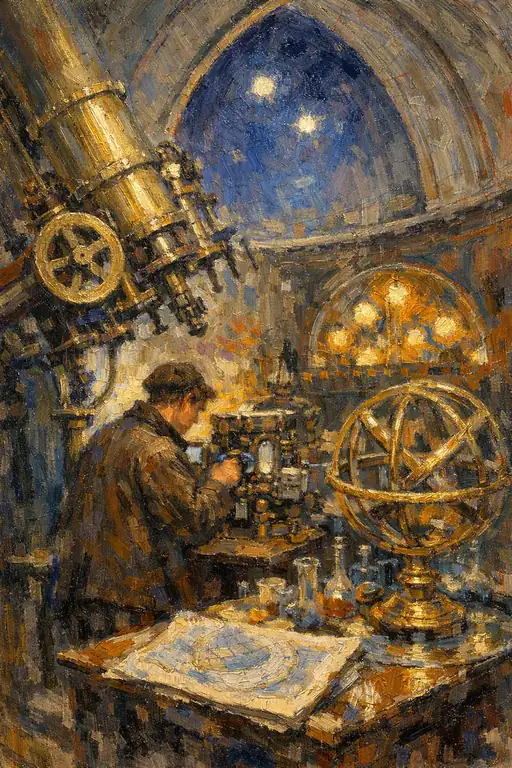 Conversations with the Infinite Night
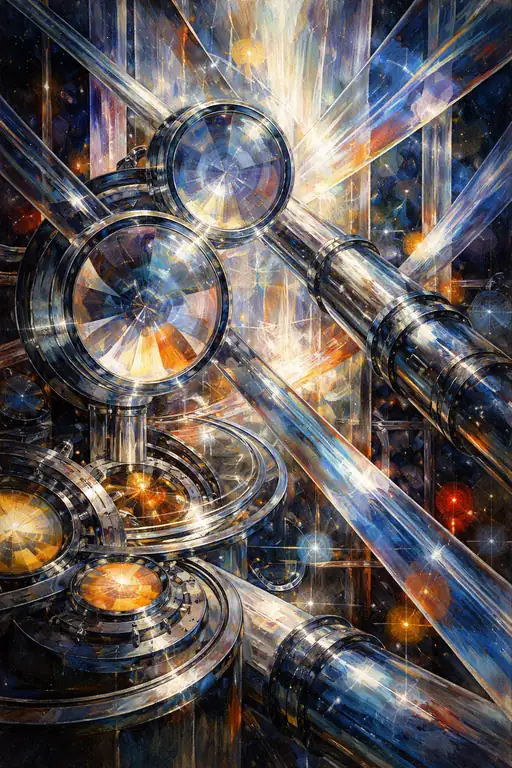 The Cosmic Instrument's Overture
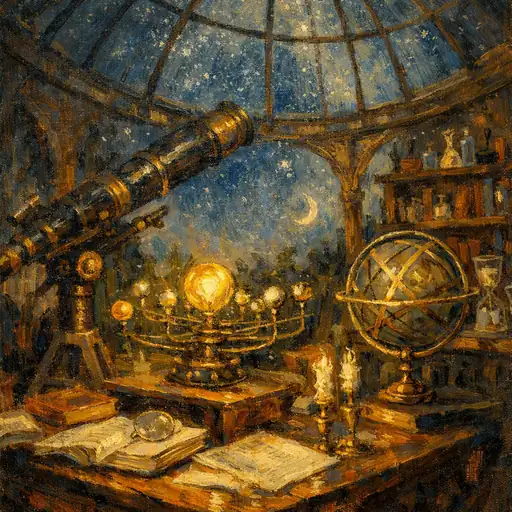 The Clockwork Heavens
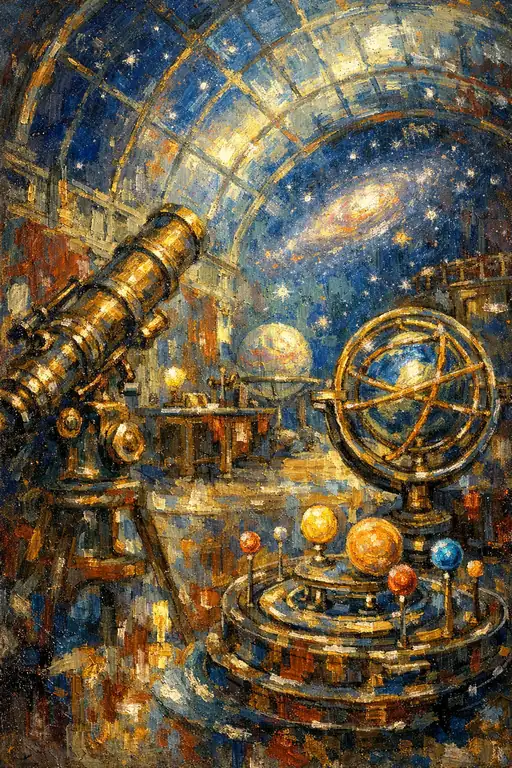 Whispers of the Cosmos
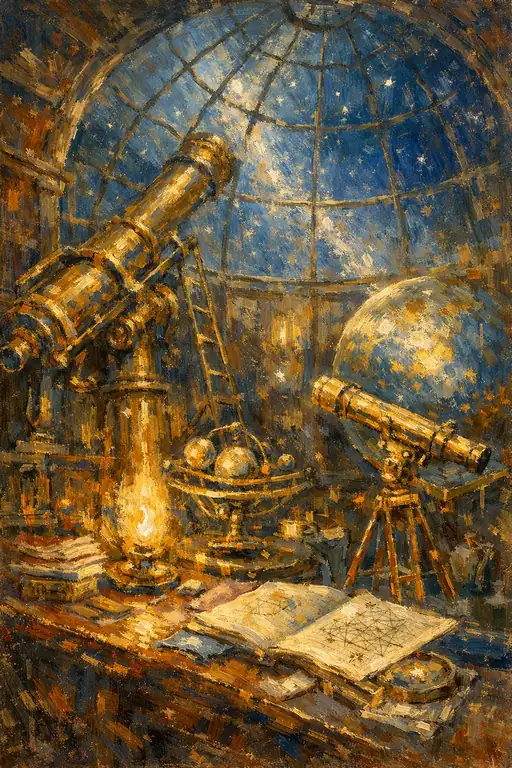 Stellar Nostalgia
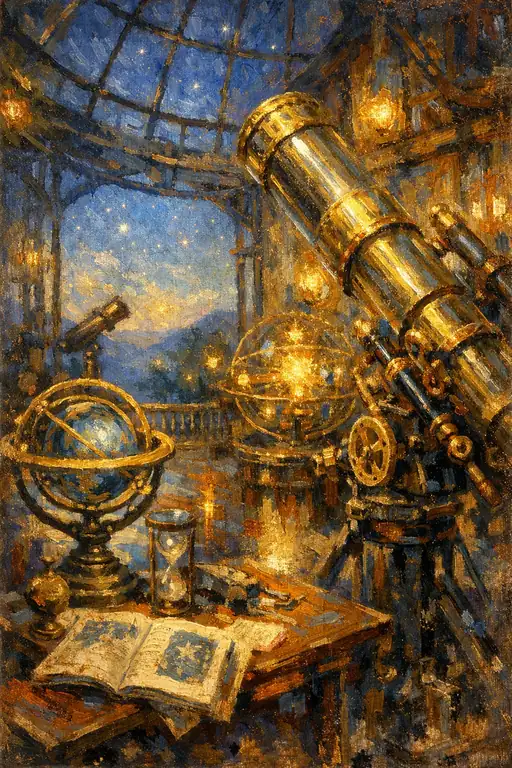 Navigating the Celestial Sphere
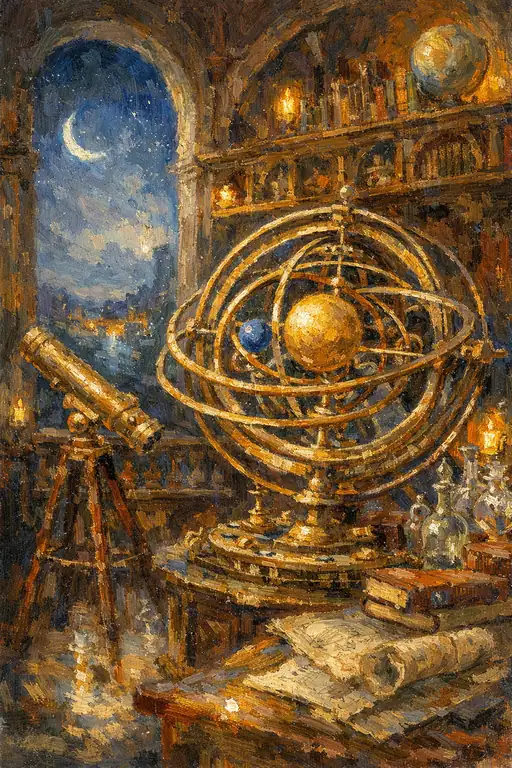 The Gaze Within the Geometry
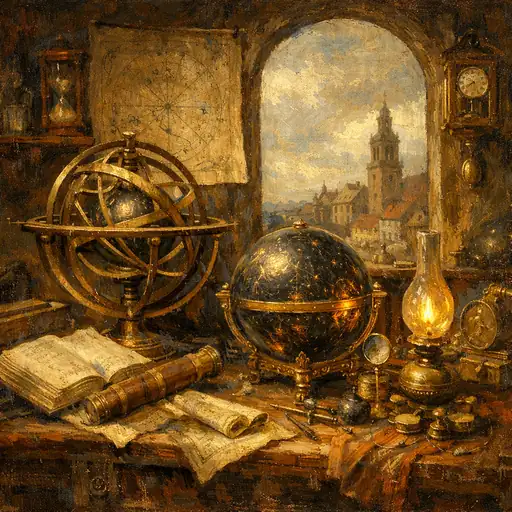 The Golden Sphere's Silent Promise
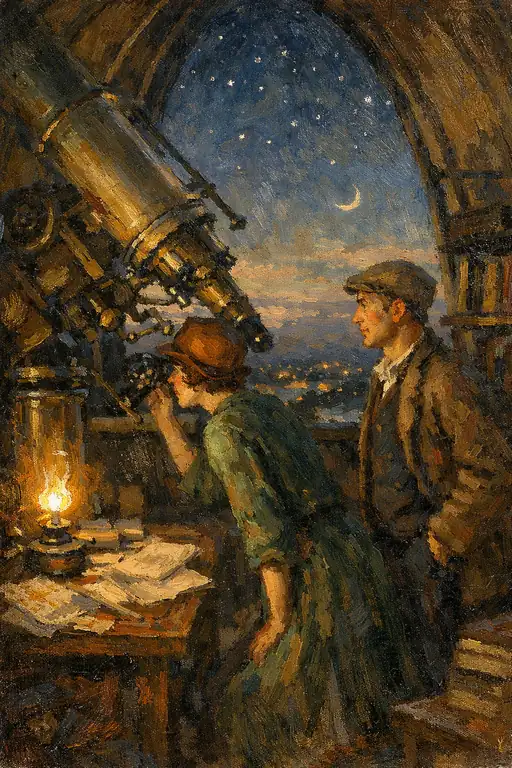 Curiosity Written in the Stars
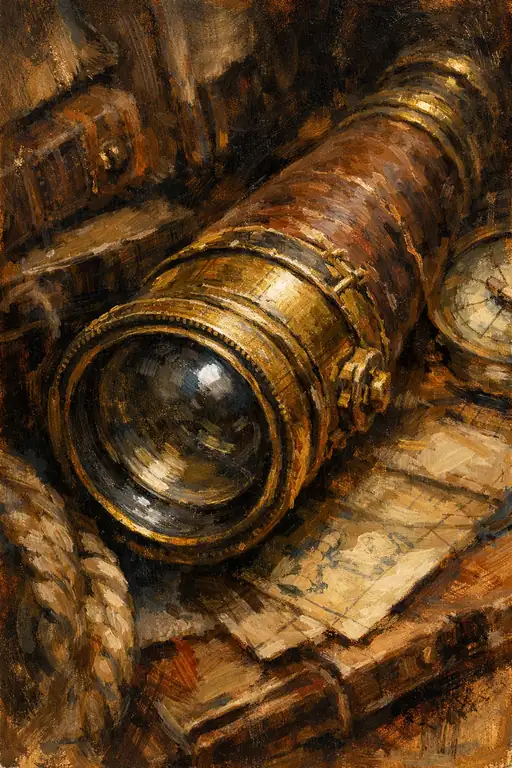 Echoes of the Uncharted Sea
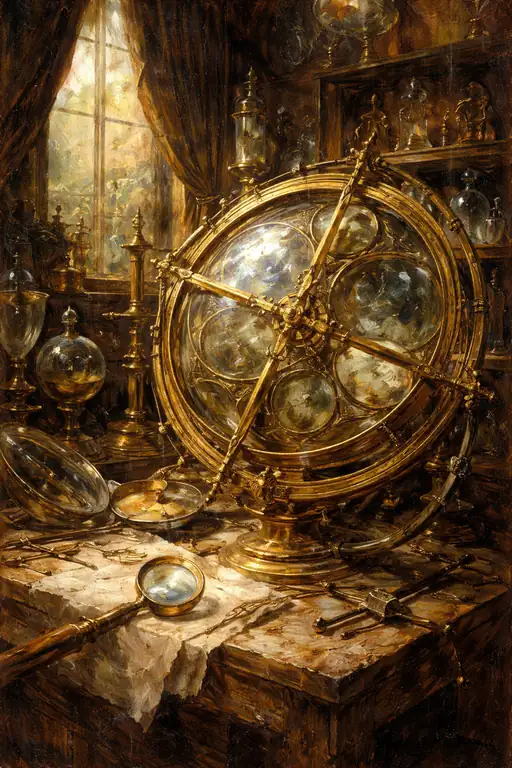 Gleaming Relics of the Astral Study