Conversations with the Infinite Night
Critique
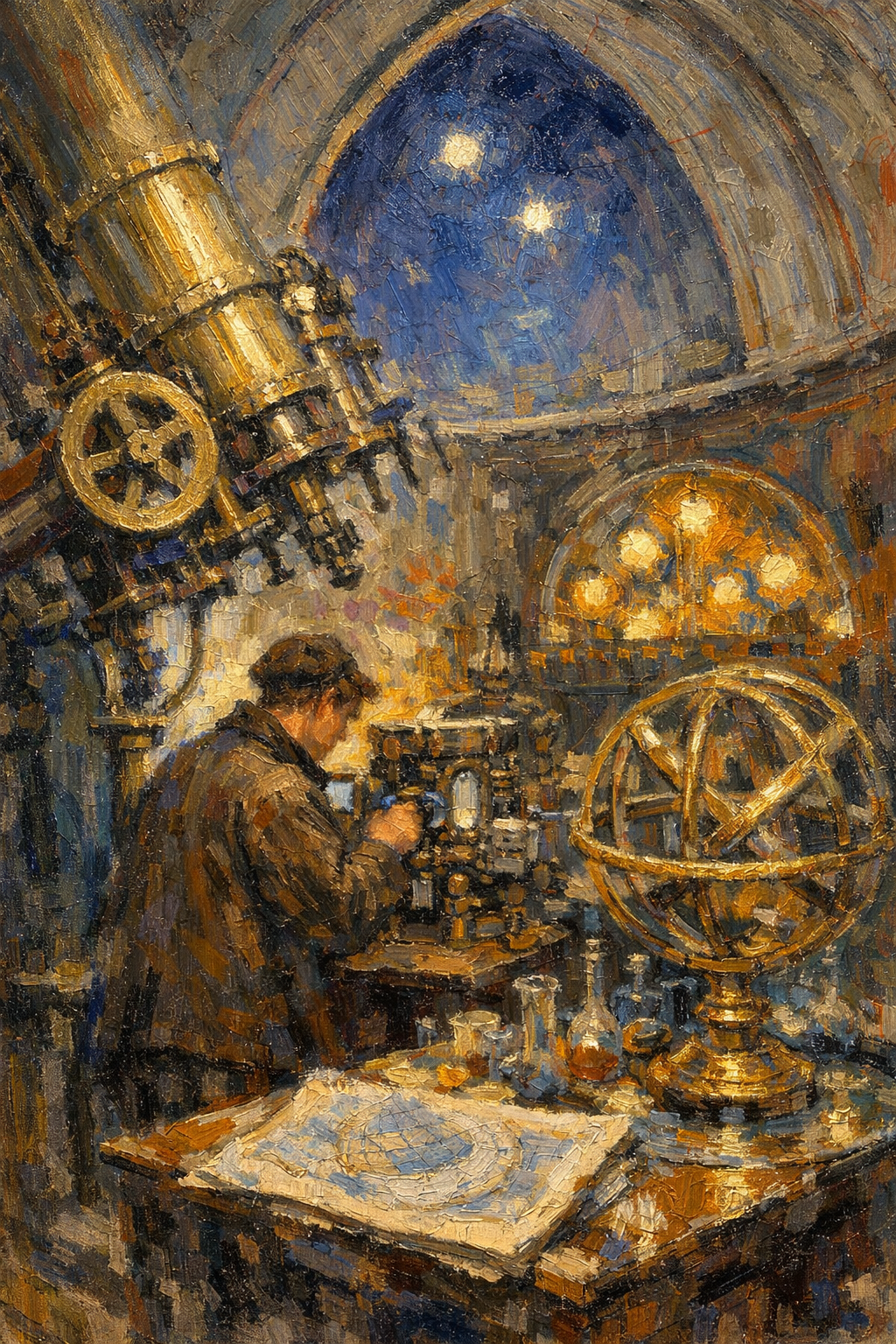
1. Introduction This oil painting presents a scholarly figure engaged in astronomical research within a richly detailed observatory. The composition captures a moment of quiet intellectual labor, surrounded by the specialized tools of celestial observation and measurement. The artwork immediately draws the viewer into a space where the pursuit of scientific knowledge intersects with the evocative atmosphere of a night-time laboratory. It establishes a narrative of dedication and the timeless human quest to understand the universe through meticulous study. 2. Description The canvas features a man in a brown coat and cap, positioned slightly left of the center and viewed from the side. He is hunched over a complex apparatus, likely a microscope or a secondary viewing device, on a cluttered wooden table. Above him, a massive golden telescope dominates the left foreground, its intricate gears and metallic tubes rendered with heavy impasto. To the right, a large armillary sphere sits prominently, its concentric rings gleaming under warm interior lighting. In the background, a high arched window reveals a deep blue night sky punctuated by bright, glowing stars. 3. Analysis The artist employs a vibrant palette dominated by ochre, burnt sienna, and brilliant gold, contrasted sharply against the cool ultramarine of the nocturnal sky. The lighting is particularly effective, appearing to emanate from the instruments themselves, casting warm highlights on the figure and the foreground table. The brushwork is expressive and rhythmic, with thick, visible strokes that provide a tactile quality to the metallic surfaces and the paper charts. The diagonal placement of the large telescope creates a strong sense of depth, leading the eye from the immediate foreground toward the distant window. 4. Interpretation and Evaluation The work effectively balances the weight of heavy scientific instruments with the ethereal beauty of the stars. The choice of a painterly, almost impressionistic style lends a sense of energy and life to what might otherwise be a static scene of academic study. The composition is highly successful in its use of light to emphasize the astronomer's focus, suggesting that the pursuit of science is a source of illumination. The technical execution of the impasto technique adds a modern vitality to the traditional subject matter, demonstrating a high degree of skill in texture and light management. 5. Conclusion Through its masterful blending of warm interior light and the vastness of the outer world, the painting offers a compelling portrait of scientific endeavor. The initial impression of a crowded laboratory evolves into an appreciation for the harmony between human intellect and the cosmos. The piece stands as a powerful tribute to the enduring nature of discovery and the tools that bridge the gap between Earth and the stars. It successfully captures both the physical reality of the observatory and the aspirational spirit of the astronomer.
 The Clockwork Heavens
 Where Mortals Meet the Celestial Sphere
 Navigating the Celestial Sphere
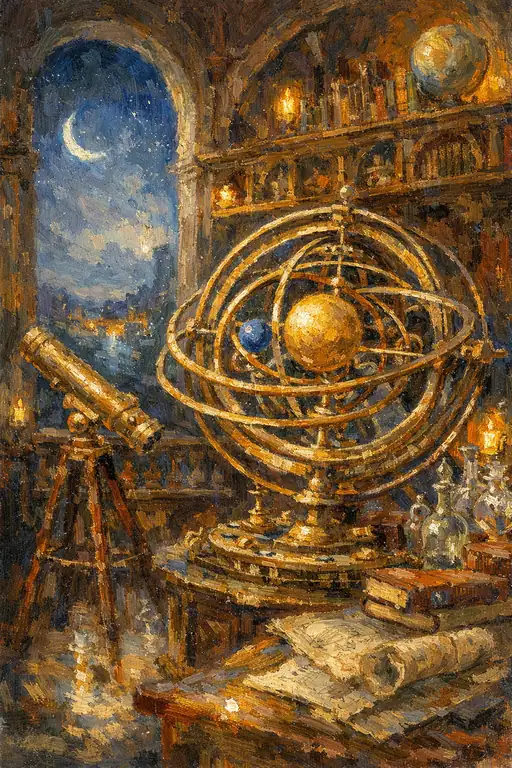 The Gaze Within the Geometry
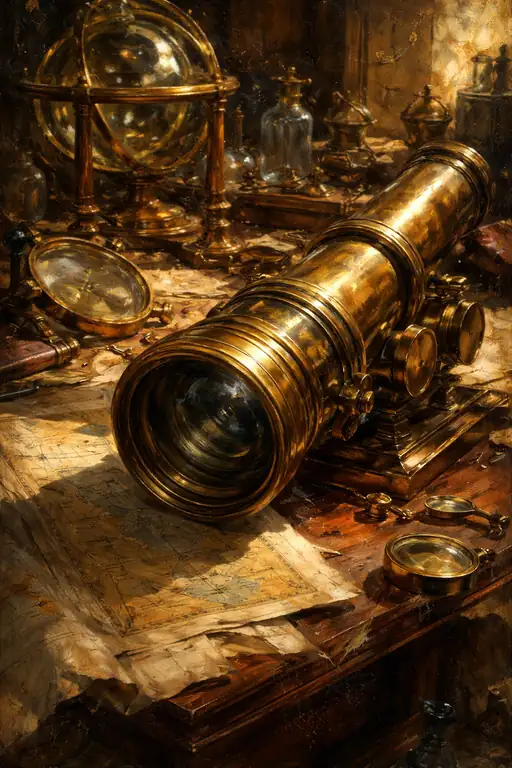 Whispers of the Cosmos in Brass
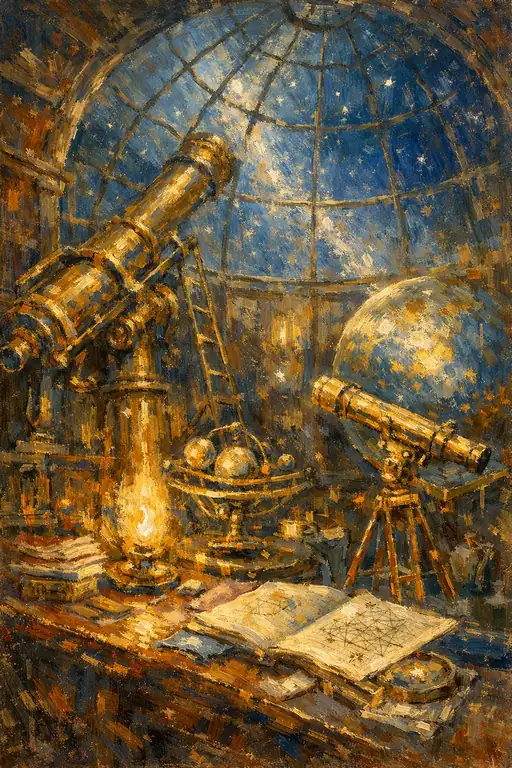 Stellar Nostalgia
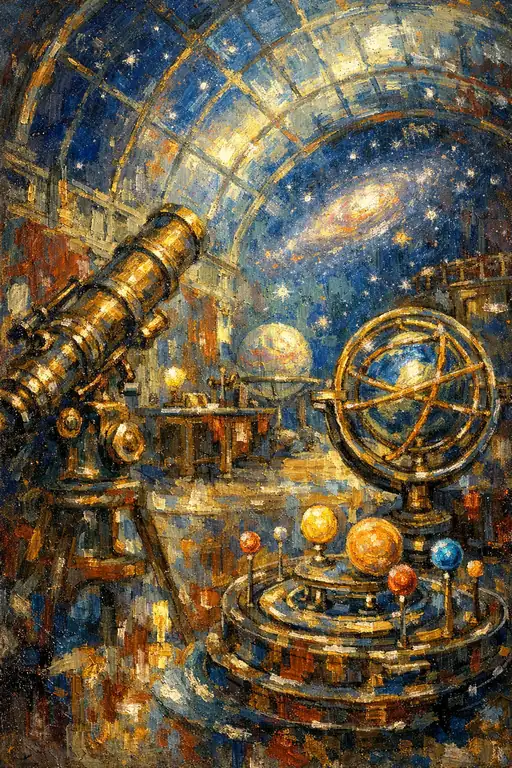 Whispers of the Cosmos
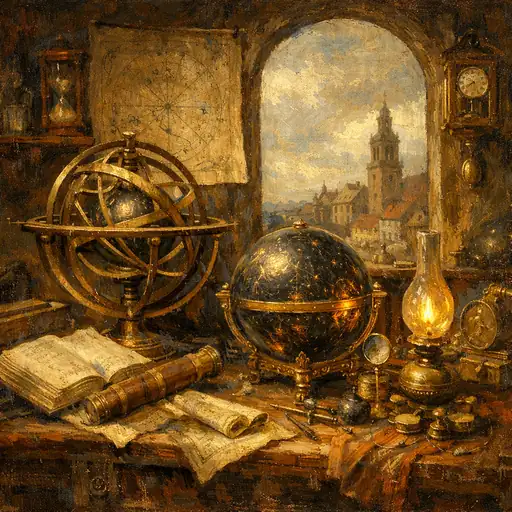 The Golden Sphere's Silent Promise
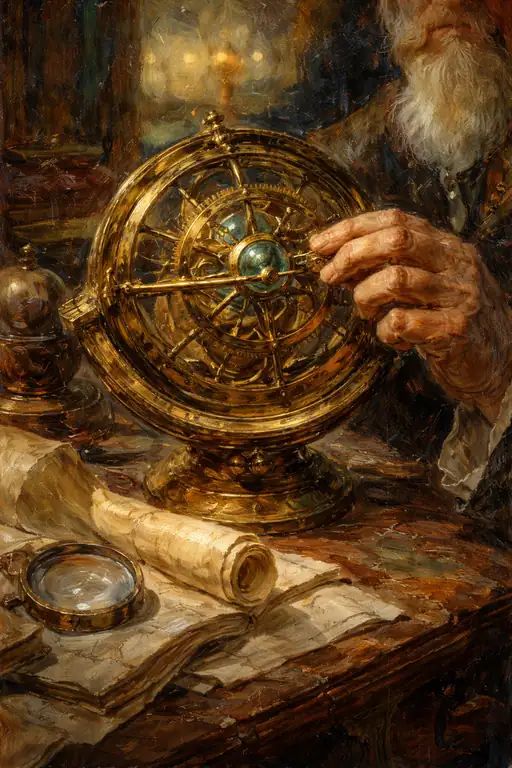 Touching the Infinite
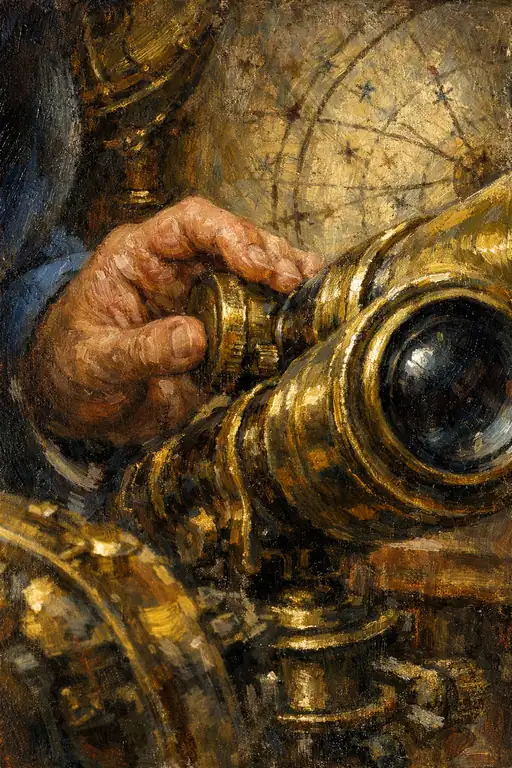 Guiding the Heavens: The Touch of Discovery