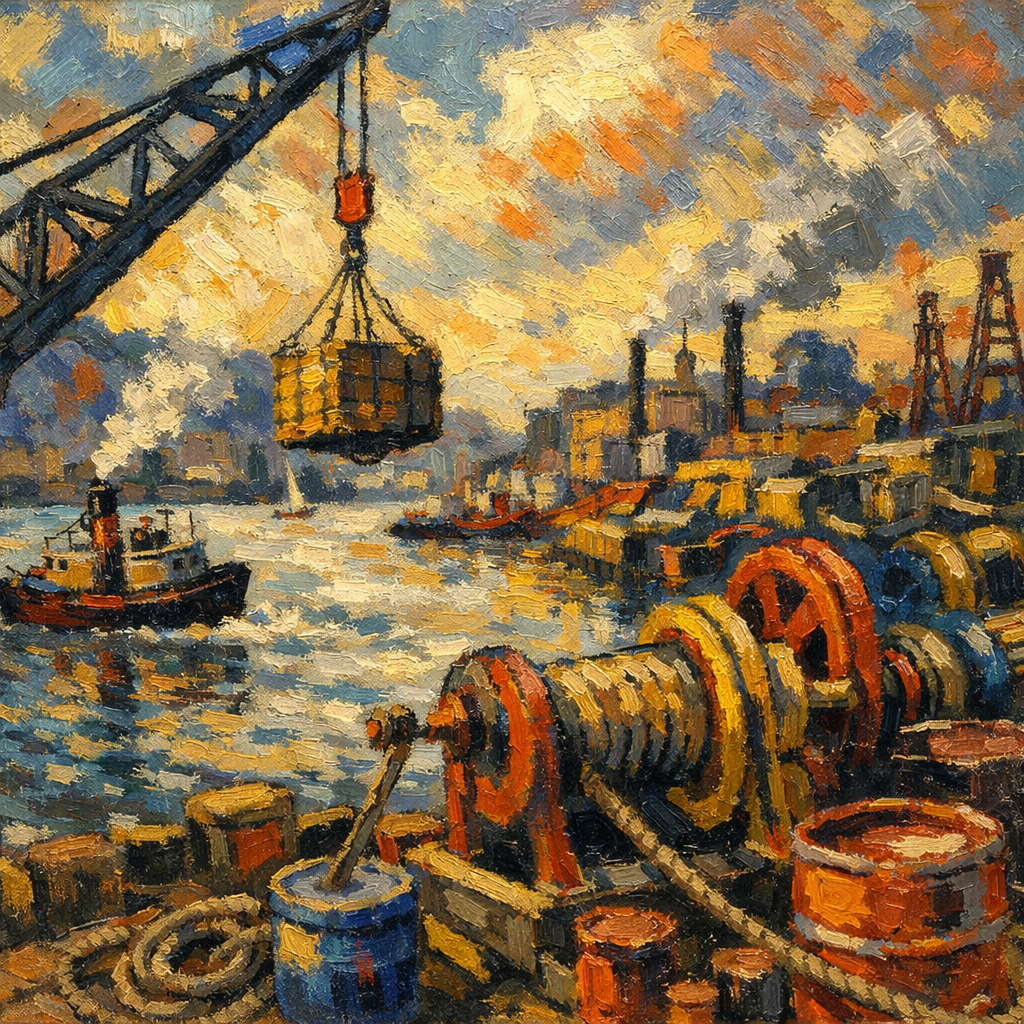
Iron Giants in the Twilight
Critique
1. Introduction This vibrant oil painting captures the raw energy and industrial dynamism of a bustling commercial port at dusk. The composition is centered on the mechanical operations of the harbor, featuring heavy machinery, shipping vessels, and factory silhouettes. It serves as a powerful tribute to the era of industrial expansion, transforming a functional landscape into a dramatic interplay of light, shadow, and textured form. 2. Description In the upper left, a large steel crane suspends a heavy crate over the water, where a tugboat with a smoking funnel navigates the currents. The foreground is filled with detailed industrial equipment, including massive winches with thick ropes and several rusted barrels. In the background, the skyline is dominated by factory buildings and tall chimneys emitting plumes of smoke against a sky filled with golden and blue clouds. 3. Analysis The artist employs a vigorous impasto technique, using thick, rhythmic brushstrokes to emphasize the weight and metallic texture of the machinery. The color palette is high in contrast, utilizing fiery oranges and yellows to represent both the setting sun and the artificial glow of industry against deep blues and earthy ochres. This bold use of color and texture creates a tactile quality that mirrors the gritty reality of the port environment. 4. Interpretation and Evaluation The work interprets the industrial landscape not as a site of desolation, but as a testament to human ingenuity and labor. The focus on winches and cranes highlights the complexity of maritime logistics, while the expressive sky adds a layer of grandeur to the scene. The technical mastery of light and the deliberate distortion of forms through thick paint effectively convey the heat and noise of a working harbor. 5. Conclusion Initially perceived as a dense collection of mechanical forms, the painting eventually reveals a structured celebration of industrial life. The harmony between the smoky atmosphere and the brilliant sunset creates a unique aesthetic that elevates the mundane aspects of commerce. It remains a compelling example of industrial impressionism that successfully captures the spirit of a transformative economic age.
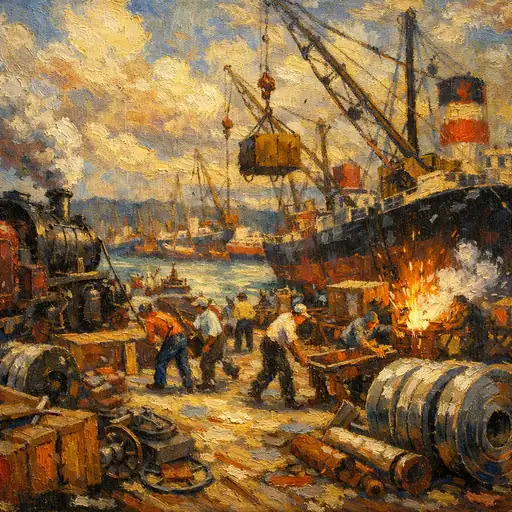 Symphony of Iron and Steam
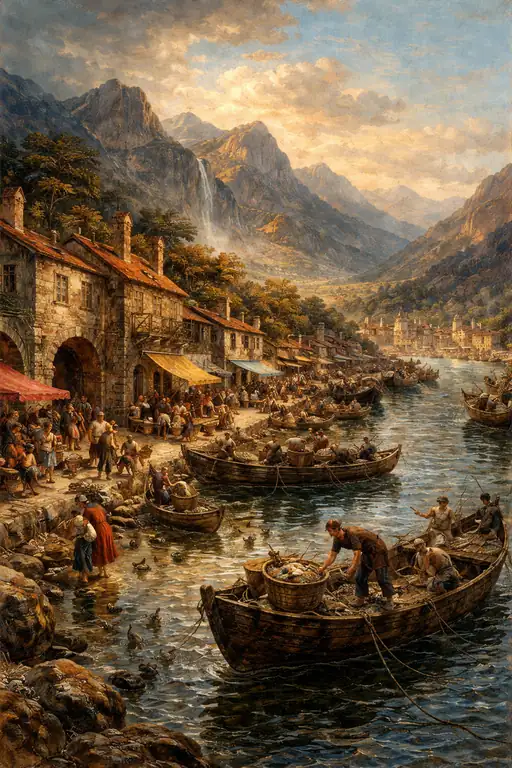 Majesty of the Harbor Peaks
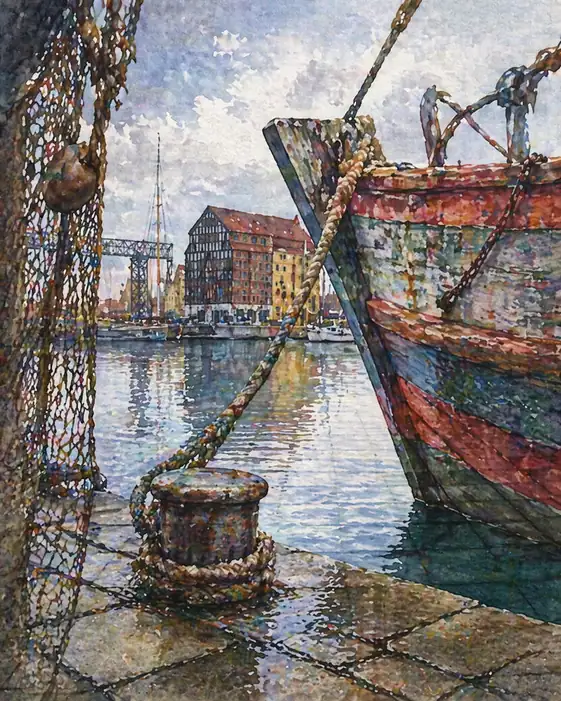 Tethered to the Past
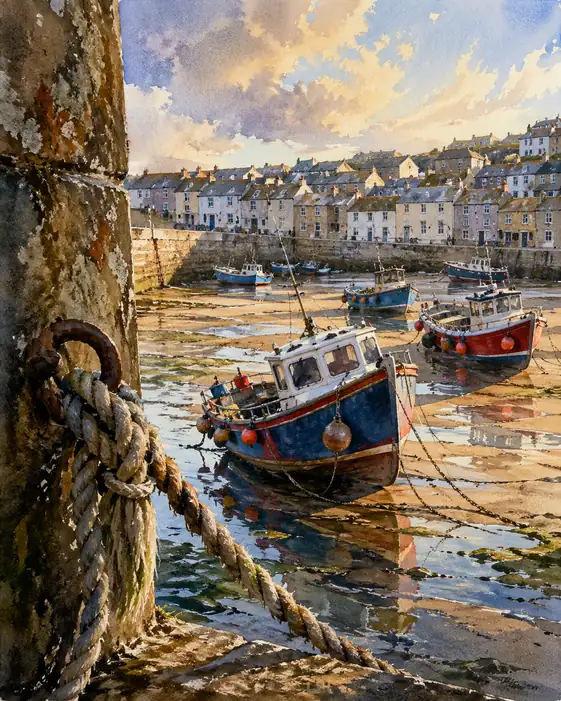 The Restless Fleet at Low Tide
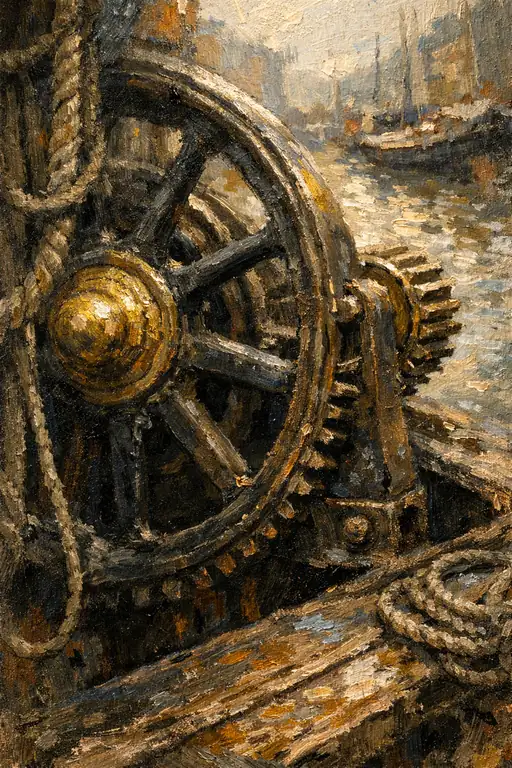 The Rusting Heartbeat of the Harbor
 Slumber of the Working Tides
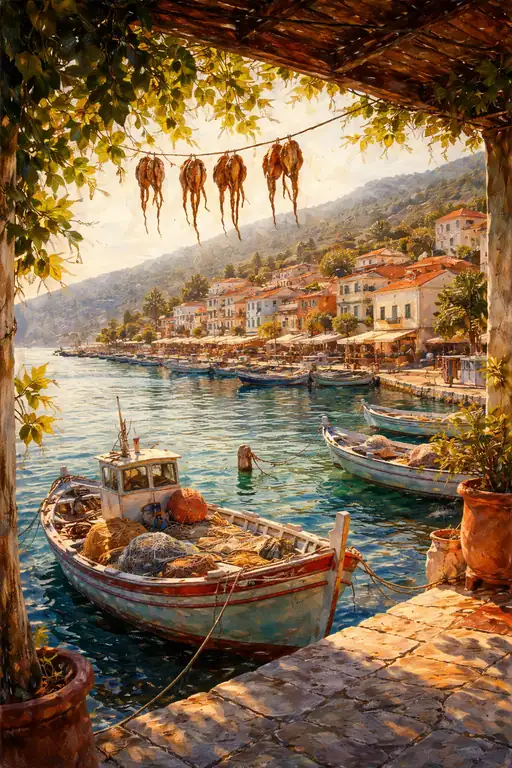 The Catch of the Day
 Tears from the Sea's Embrace
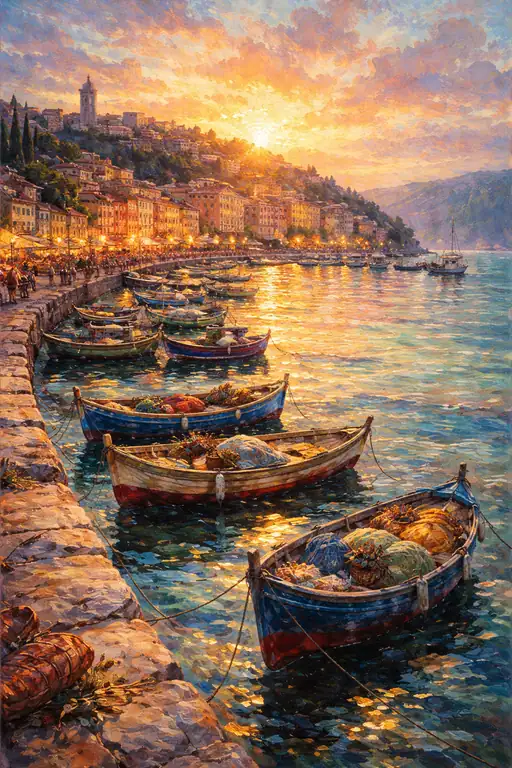 Golden Embrace of the Evening Tide
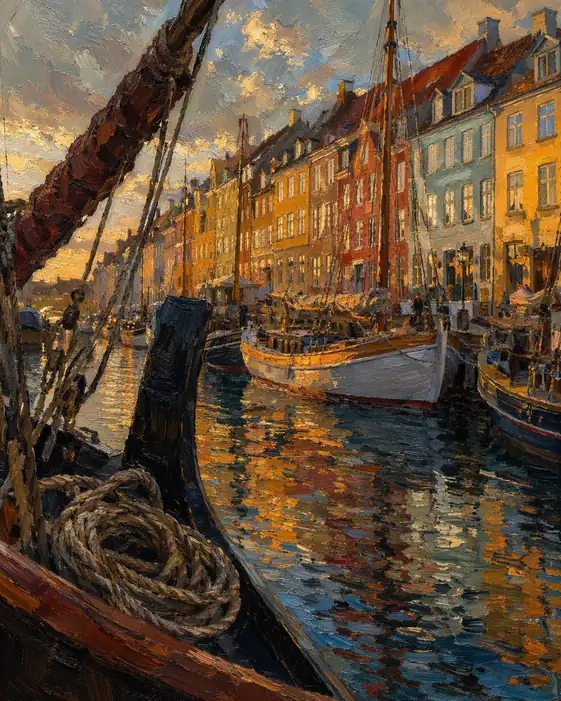 The Golden Mooring