Symphony of Iron and Steam
Critique
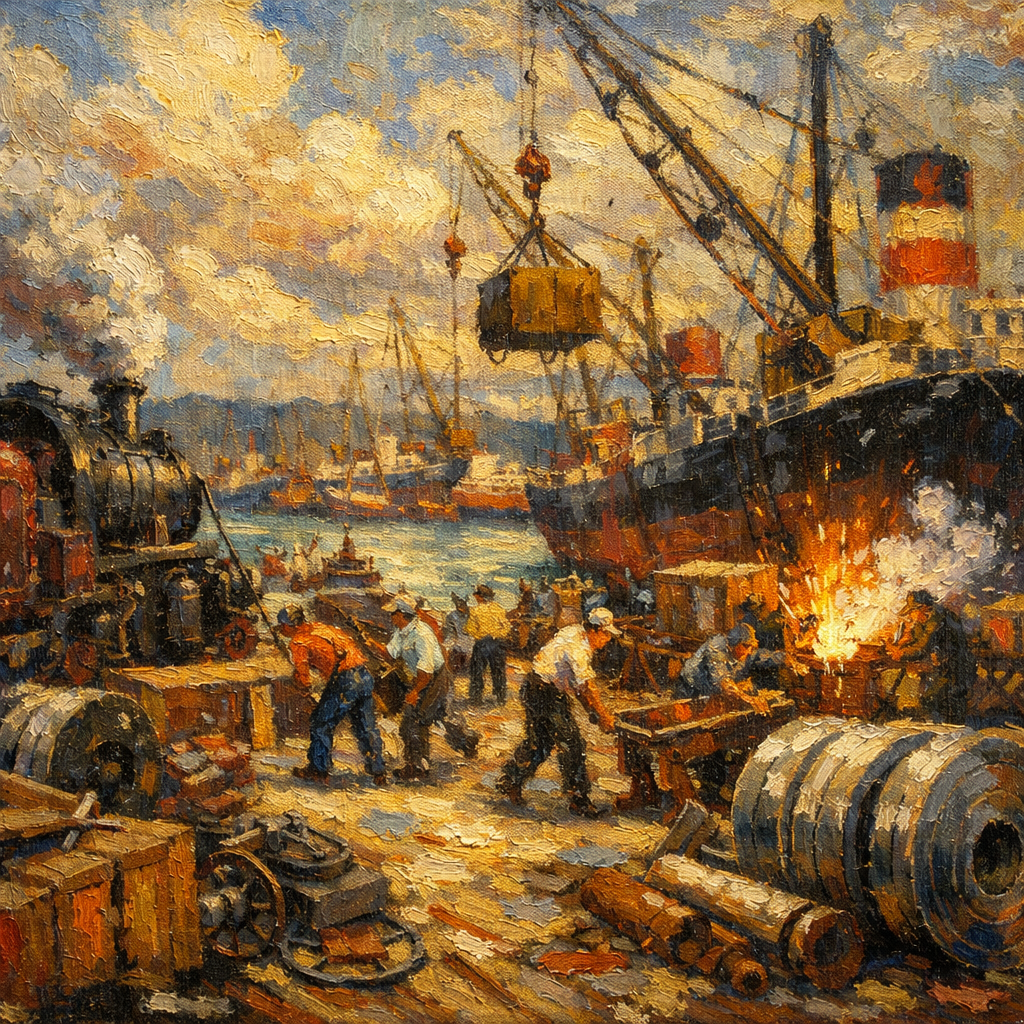
1. Introduction This square oil painting presents a dynamic and bustling scene of an industrial dockyard at the height of its activity. The work captures the raw energy and monumental scale of modern labor, focusing on the intersection of heavy machinery, maritime transport, and human effort. Through its vigorous brushwork and dramatic lighting, the composition elevates the industrial landscape into a subject of profound artistic exploration, celebrating the power and complexity of the industrial age. 2. Description The foreground is filled with various industrial components, including large metal coils and wooden crates. Several workers in sturdy attire are engaged in labor, with one group focused on a bright, sparking furnace or welding task that emits a brilliant orange glow. To the left, a steam locomotive releases a plume of white smoke, while the right side is dominated by a massive cargo ship equipped with towering cranes. The background reveals a harbor filled with other vessels under a sky of dramatic, sunlit clouds. 3. Analysis The artist employs an impressionistic, impasto technique, using thick layers of paint to create a tactile sense of grit and industrial texture. The color palette is characterized by warm, earthy tones of ochre and sienna, punctuated by the intense orange of the sparks and the cool blues of the water and sky. The composition is complex and multi-layered, with the vertical lines of the cranes and the horizontal bulk of the ships creating a sturdy, structural grid that organizes the chaotic energy of the scene. 4. Interpretation and Evaluation The painting can be interpreted as a heroic depiction of the industrial proletariat and the mechanical marvels of the early 20th century. The intense light from the furnace acts as a symbolic heart of the dockyard, representing the transformative power of industry. The technical execution is remarkable for its ability to convey movement and atmosphere through broken color and broad strokes. The artist successfully balances the massive forms of the ships and locomotive with the smaller, yet essential, presence of the working individuals, highlighting the human element within the machine. 5. Conclusion Upon initial viewing, the scene may appear chaotic, but further study reveals a masterfully structured narrative of productivity and strength. The synergy between the rhythmic labor of the workers and the rhythmic forms of the industrial equipment creates a powerful visual harmony. This work stands as a compelling testament to the industrial spirit, effectively capturing both the physical weight of the environment and the vibrant energy of a functioning society in motion.
 Indomitable Pulse Carved into the Raging Sea
 Iron Giants in the Twilight
 The Rusting Heartbeat of the Harbor
 The Catch of the Day
 Slumber of the Working Tides
 The Restless Fleet at Low Tide
 Tethered to the Past
 Tears from the Sea's Embrace
 The Mariner's Resolve Against the Tempest
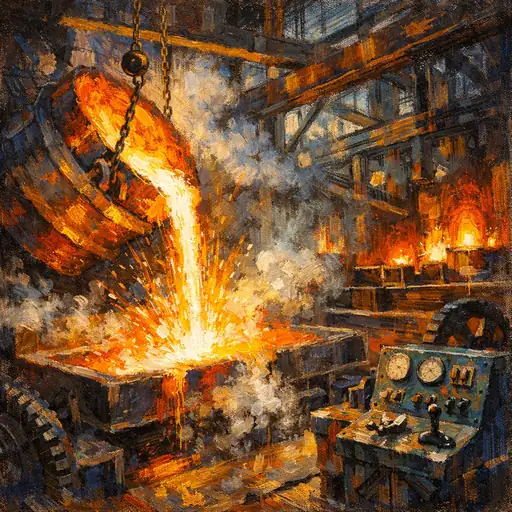 Tears of Molten Gold
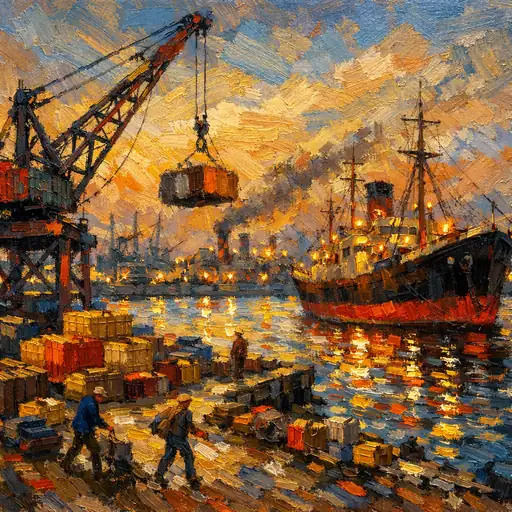 Golden Symphony of Maritime Titans