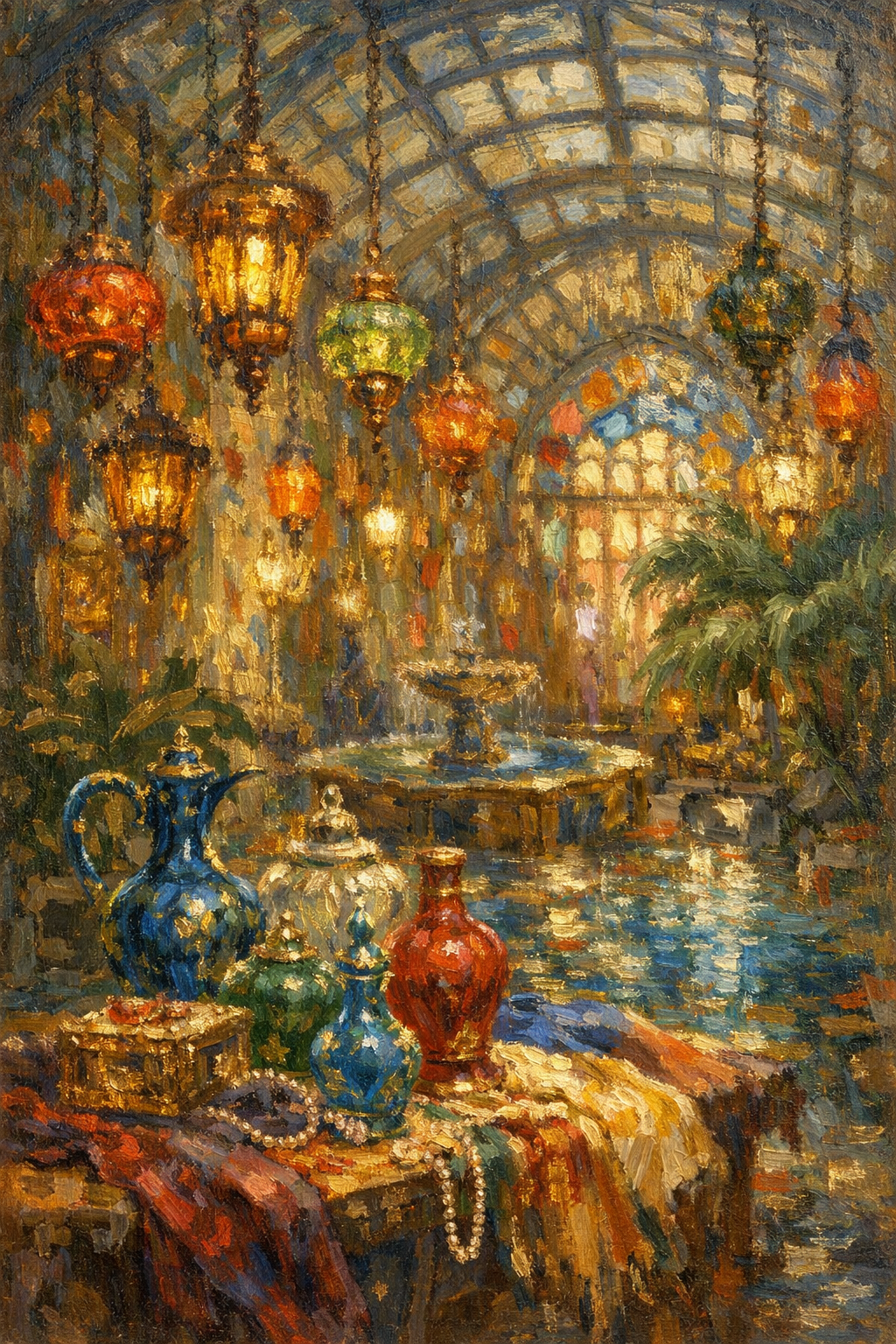
Echoes of the Amber Bazaar
Critique
1. Introduction This oil painting presents a richly decorated interior scene, likely inspired by Orientalist themes. The composition centers on an opulent courtyard or lounge, characterized by a complex interplay of light and texture. The work employs a vibrant palette and thick impasto to create a sense of tactile luxury and atmospheric depth within a glass-domed architectural setting. 2. Description The upper half of the canvas is dominated by numerous ornate hanging lanterns in shades of orange, amber, and emerald green, suspended from a vaulted glass ceiling. In the middle ground, a tiered stone fountain reflects the surrounding glow, while lush palm fronds frame the right side of the composition. The foreground features a low table draped with patterned textiles, supporting several decorative vessels including a prominent blue ewer, a red vase, and a scattered pearl necklace. 3. Analysis The artist utilizes a heavy impasto technique, where visible brushstrokes and thick layers of paint define the forms rather than precise outlines. The lighting is the most significant formal element, executed through brilliant flecks of white and yellow that simulate shimmering reflections on the water and metallic surfaces. The color temperature is predominantly warm, though the cool blues of the foreground ewer and the fountain water provide a necessary structural contrast. 4. Interpretation and Evaluation The work successfully captures an exoticized atmosphere of quietude and luxury, evoking a sense of timelessness. The technical execution of the light demonstrates a high level of skill in managing high-contrast values within a busy composition. While the subject matter leans toward traditional decorative themes, the energetic application of paint lends the scene a modern, impressionistic vitality that prevents it from feeling merely illustrative. 5. Conclusion Initially perceived as a dense collection of objects, the painting reveals itself as a sophisticated study of light and material texture upon closer inspection. The integration of architectural complexity with intimate still-life elements creates a cohesive and immersive environment. This piece stands as a compelling example of how traditional motifs can be revitalized through a bold, texture-oriented approach to oil painting.
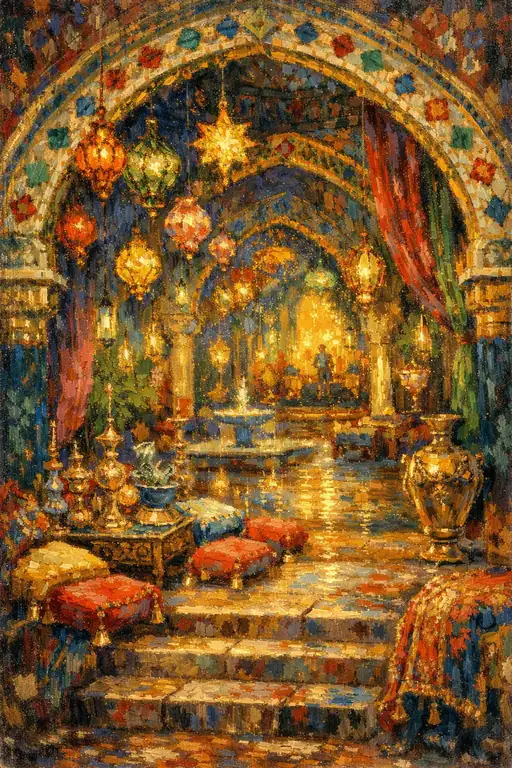 Echoes of the Starlit Palace
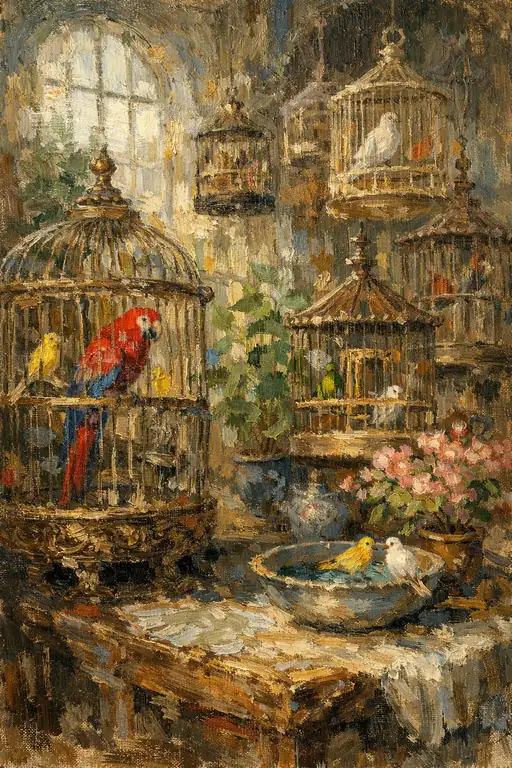 A Symphony of Colors in the Sunlit Aviary
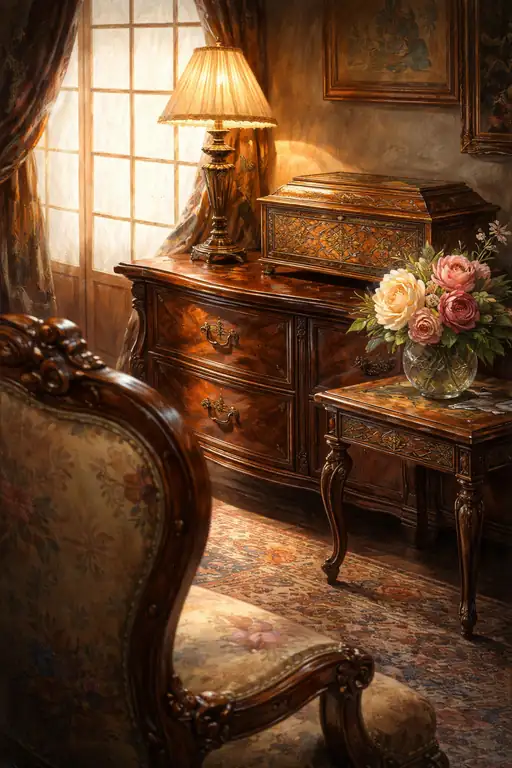 Elegance in the Shadows
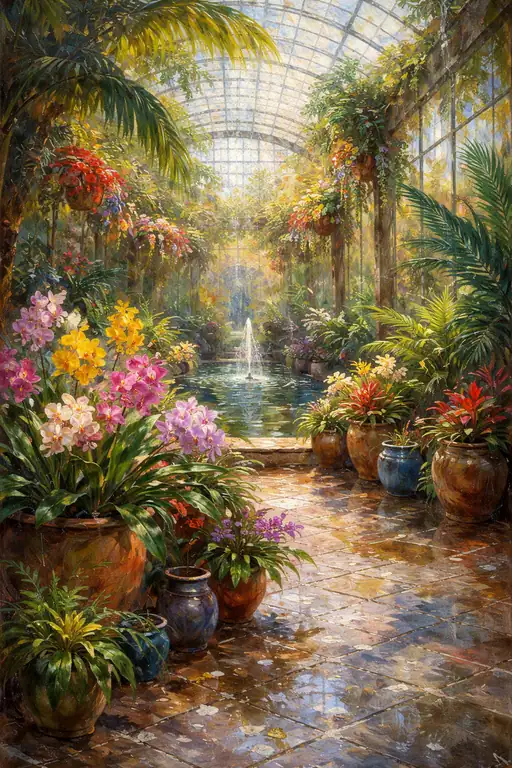 Sunlit Greenhouse
 Fierce Hearth Fire
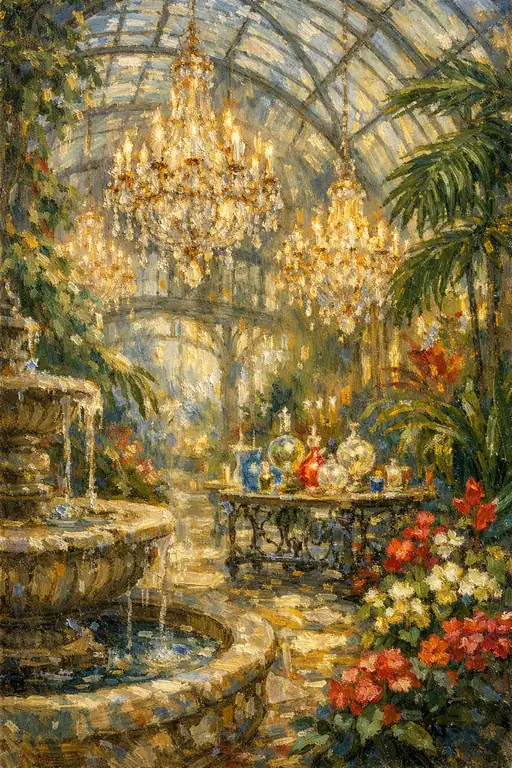 The Sunlit Sanctuary of Glass and Green
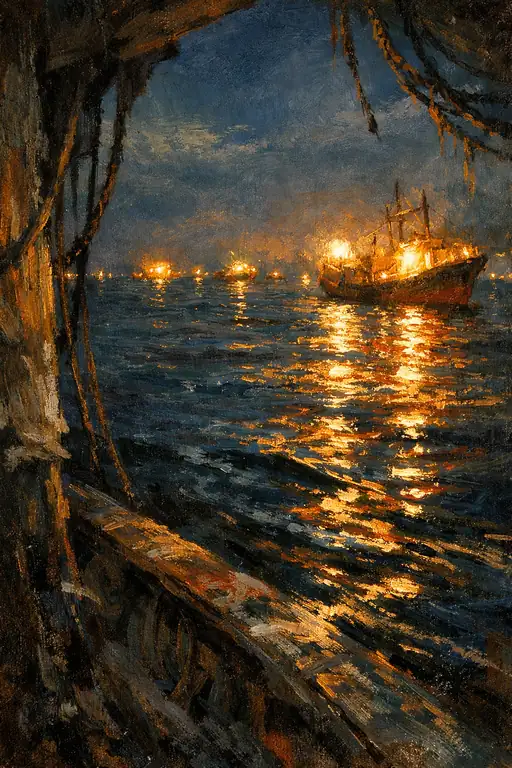 Melodies of the Evening
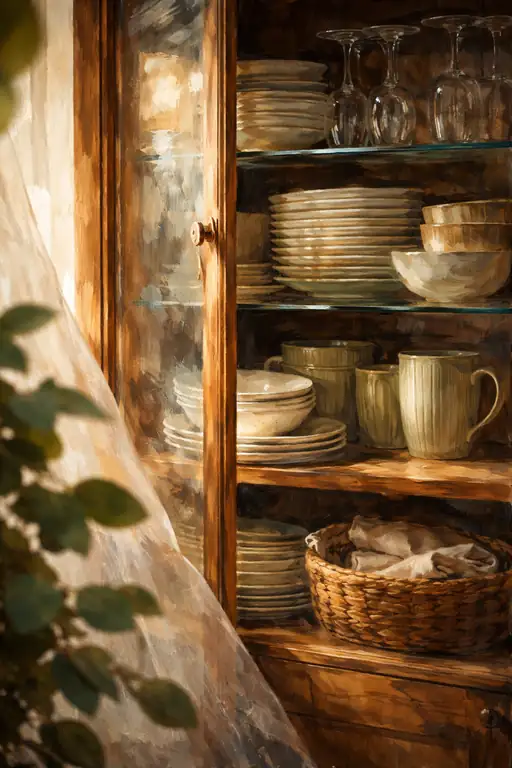 Warmth in the Quiet Cabin
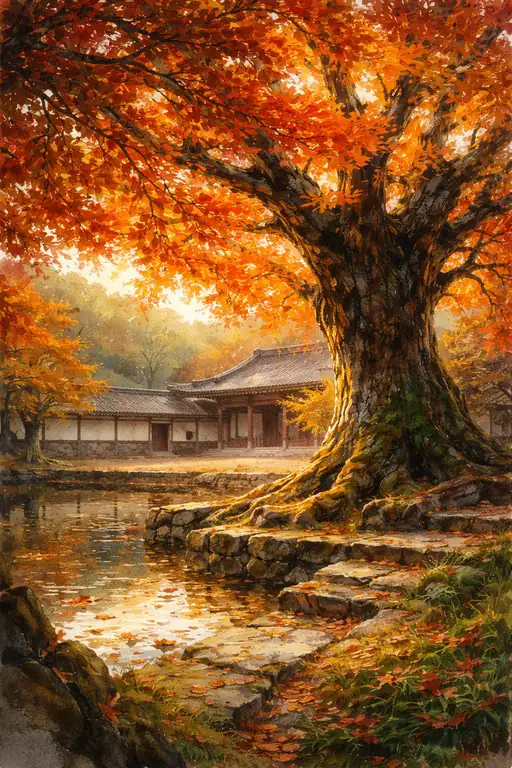 Winter's Tranquil Embrace
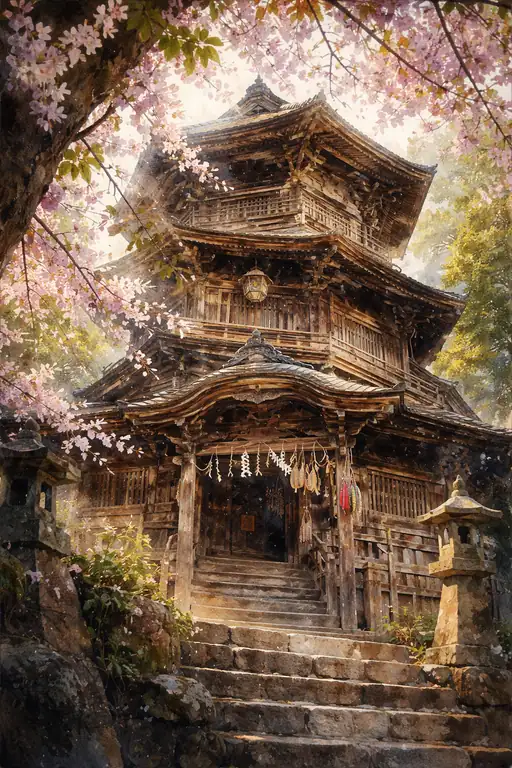 A Treasured Hearth in the Sunlit Study