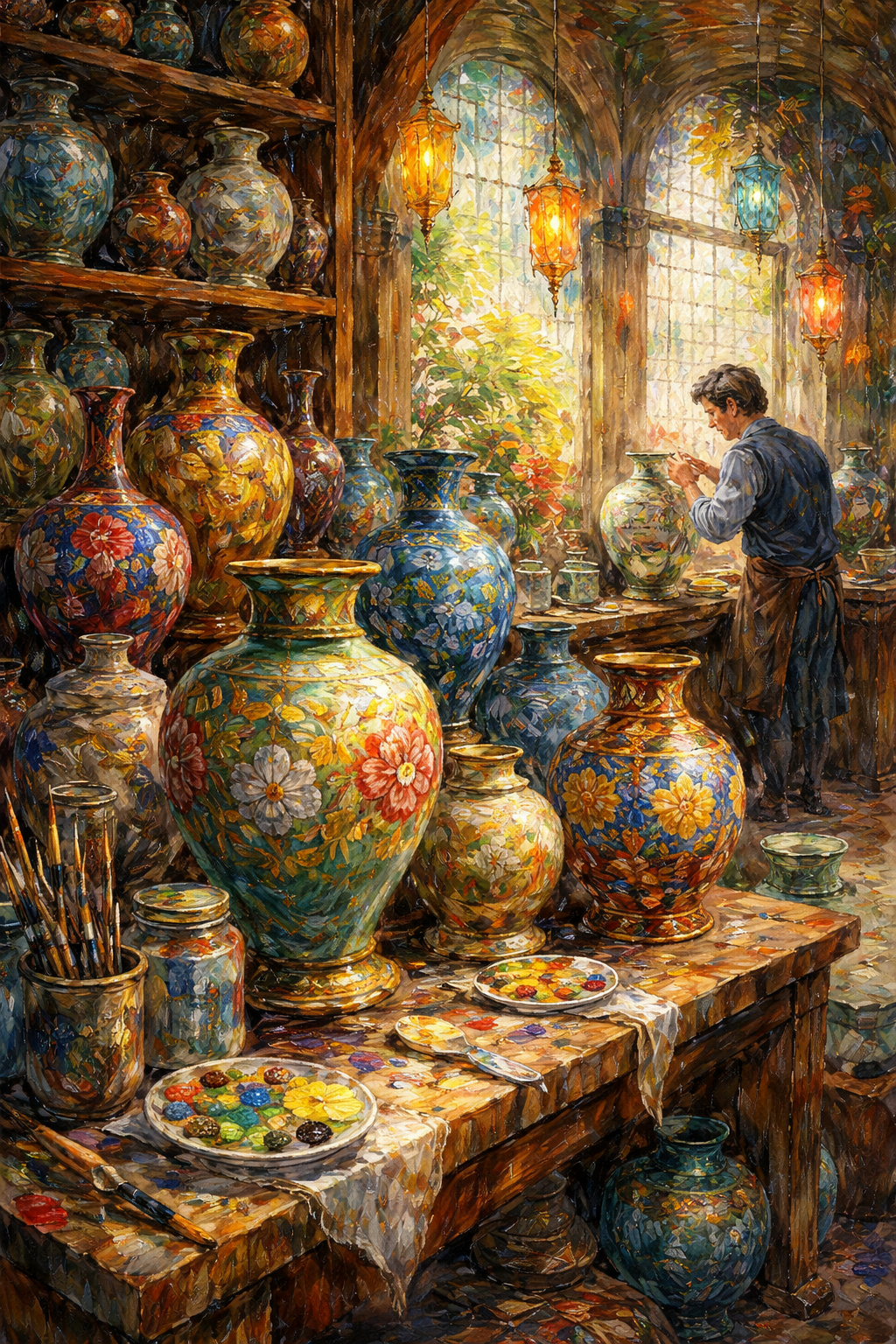
Symphony of the Sunlit Kiln
Critique
1. Introduction This oil painting presents a richly detailed and atmospheric scene within a master craftsman's workshop. The composition celebrates the intersection of artistic labor and the vibrant beauty of finished porcelain works, set in a sun-drenched atelier. By contrasting the focused, quiet activity of the artisan with the exuberant colors and patterns of the vases, the artist highlights the dedication required to produce such intricate art. This piece serves as a tribute to the enduring tradition of hand-painted ceramics and the serene environment that fosters such creativity. 2. Description The foreground is densely packed with a variety of large, ornately decorated vases, featuring floral motifs in shades of turquoise, gold, and crimson. On a wooden workbench, an assortment of brushes and colorful palettes are arranged, indicating a space of active production. In the background, an artisan in a dark apron stands by a large arched window, meticulously painting a new vessel. The room is illuminated by the natural light filtering through the panes and the warm glow of hanging lanterns, which cast soft reflections on the glazed surfaces of the pottery. 3. Analysis The artist employs a complex and high-contrast color palette, where the vivid primary colors of the vases stand out against the warm, earthy tones of the workshop. The lighting is masterfully layered, combining bright exterior sunlight with the localized, amber glow of the interior lanterns to create a sense of depth and volume. Brushwork is particularly expressive in the foreground, with visible strokes that mimic the texture of the paint on the palettes and the intricate patterns on the ceramics. The use of multiple focal points窶杯he artisan and the various prominent vases窶把reates a dynamic and engaging visual narrative. 4. Interpretation and Evaluation This work effectively captures the essence of artistic devotion and the satisfaction of craftsmanship. The sheer number of vases suggests a lifetime of skill and productivity, while the individual artisan窶冱 focus provides a human element to the vast array of objects. Technically, the artist's ability to render complex reflections on rounded surfaces is remarkable, enhancing the realism of the scene. Although the composition is nearly overwhelming in its detail, the structured placement of the workbench and the framing effect of the windows help to organize the visual information into a cohesive whole. 5. Conclusion In conclusion, the painting is a vibrant and evocative celebration of the decorative arts and the environment in which they are created. The initial impression of a cluttered, colorful space transforms into an appreciation for the meticulous order and disciplined effort inherent in the artisan's craft. The work stands as a technically proficient and emotionally engaging portrayal of the beauty found in dedicated labor. Ultimately, it invites the viewer to appreciate not only the final artistic product but also the quiet, light-filled moments of its creation.
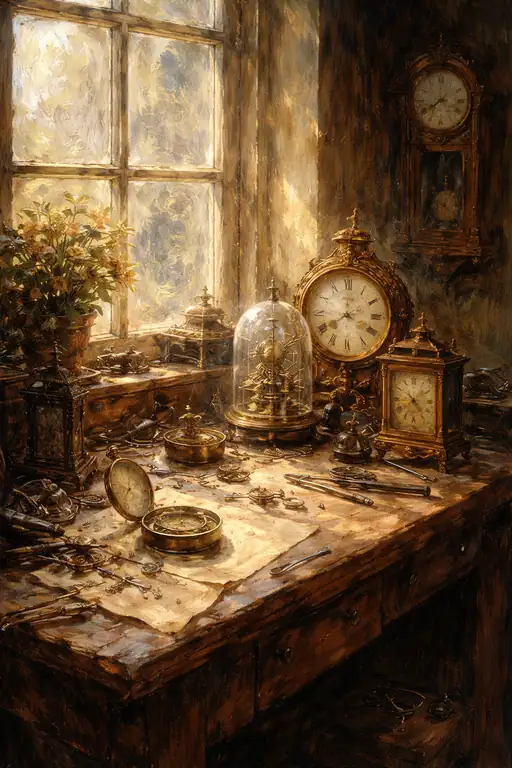 The Clockmaker's Sunlit Workshop
 Sparks of the Forge's Heart
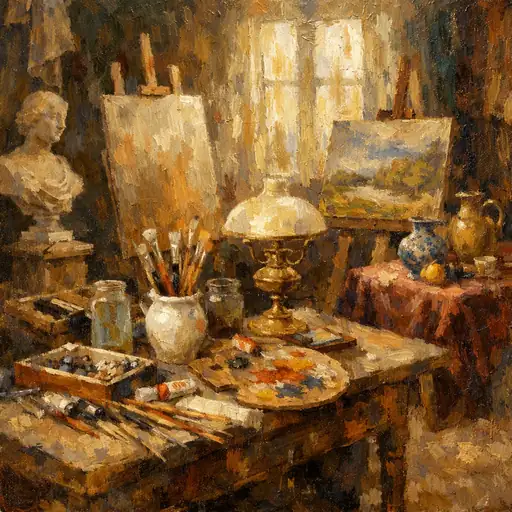 Echoes of Creation
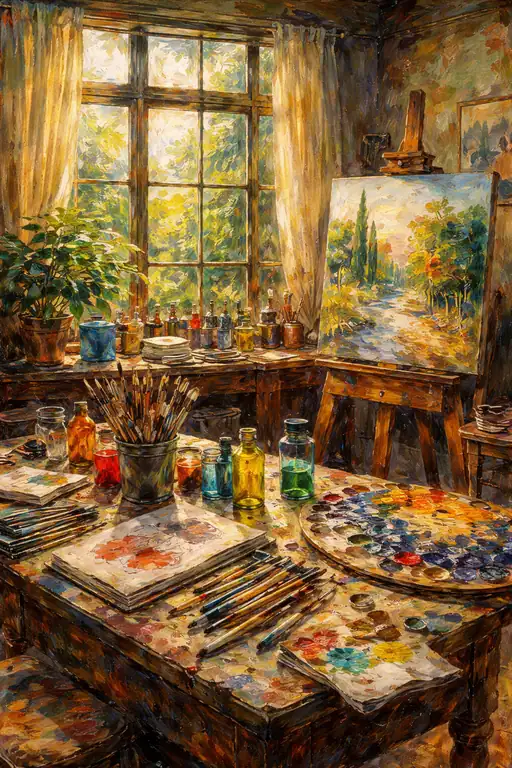 Golden Dust in the Creator's Haven
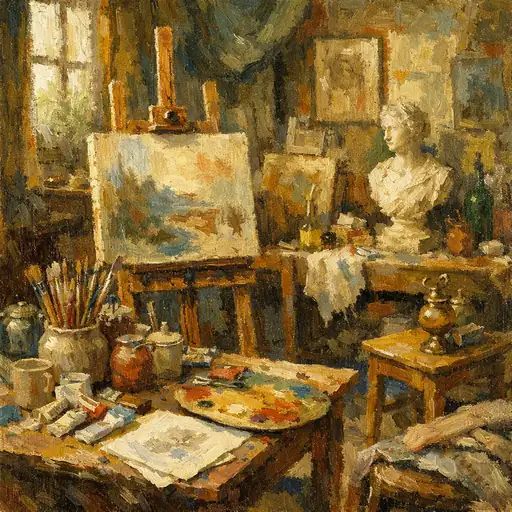 Harmony Within the Artistic Chaos
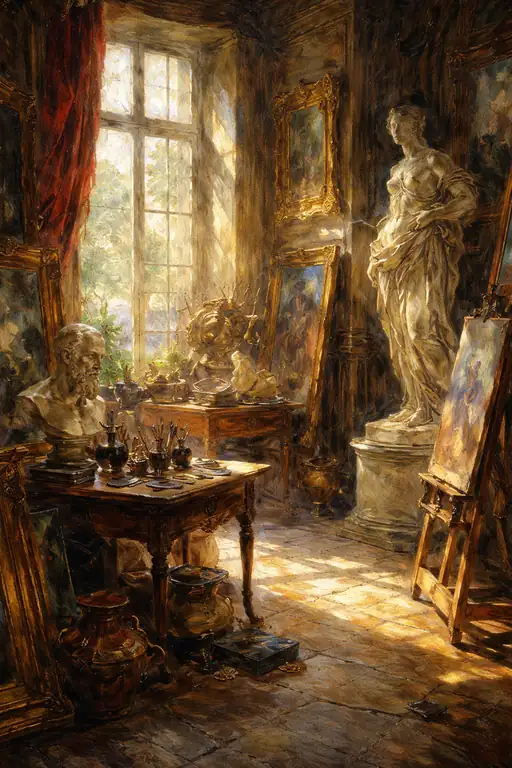 Light upon the Classical Studio
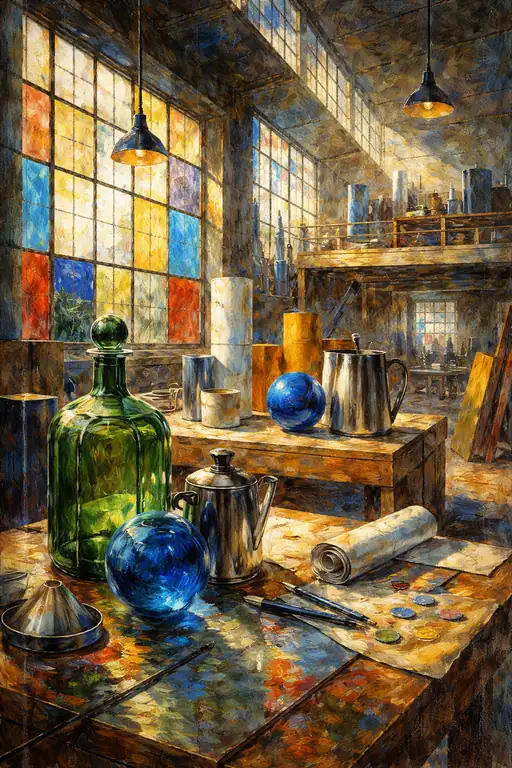 Whispers of the Sunlit Canvas
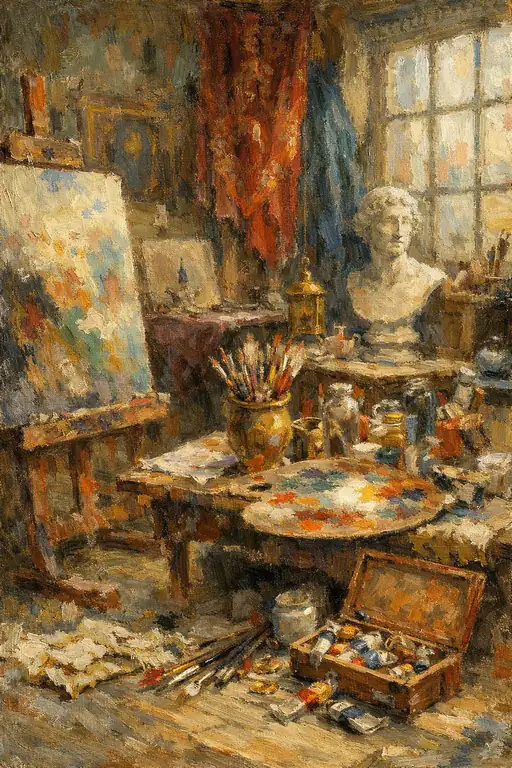 The Silent Dialogue of Creation
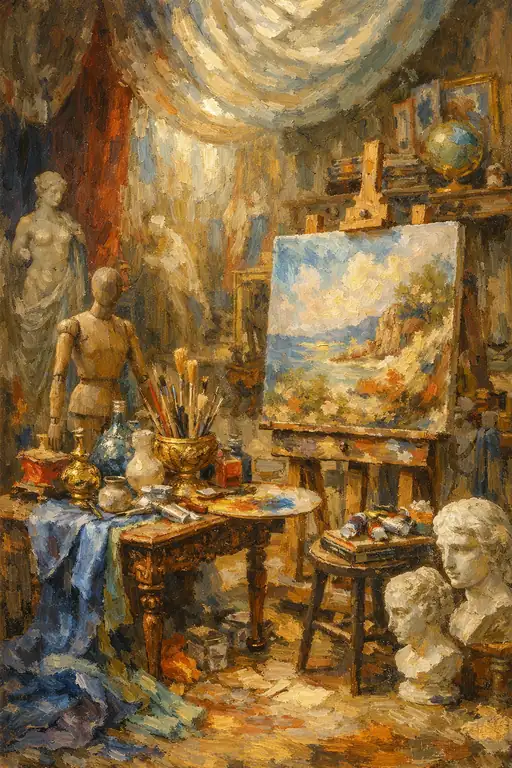 A Symphony of Scattered Dreams
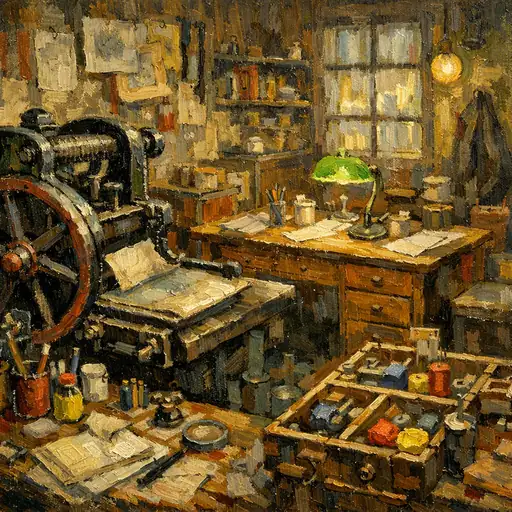 Echoes of Forgotten Letters
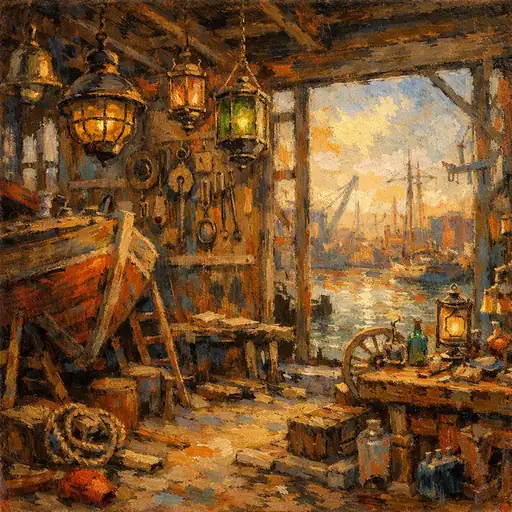 Vessel of the Golden Twilight
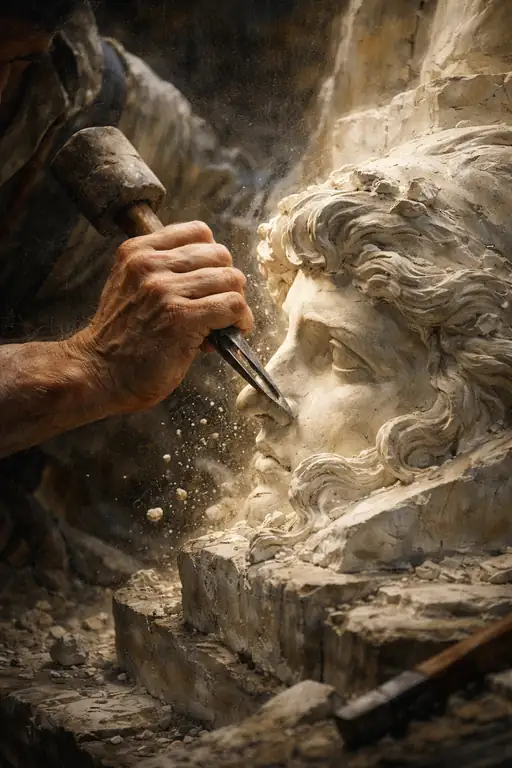 Awakening from Stone