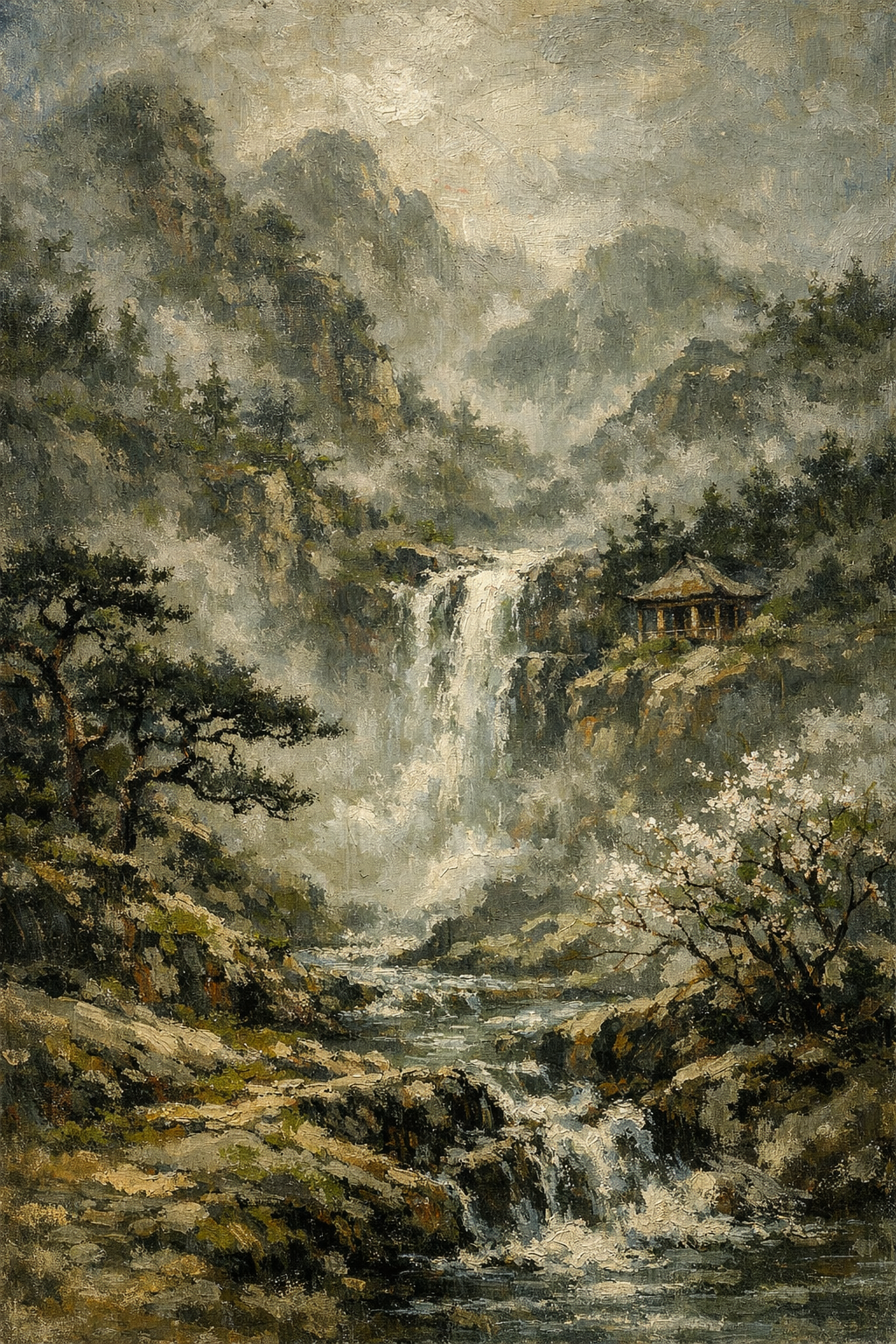
Spring Illusion Blooming in the Mystic Peaks
Critique
1. Introduction This oil painting depicts a harmonious scene of nature and architecture, featuring a waterfall cascading through a misty mountain pass. The inclusion of a small pavilion and blossoming trees adds a poetic dimension to the rugged landscape. The work effectively balances the grand scale of the mountains with intimate details of the flora and human-made structures. 2. Description In the lower section, a narrow stream winds through dark rocks, its movement captured in flickers of white paint. To the right, a tree covered in delicate white blossoms stands in contrast to the darker evergreen foliage. The center is dominated by a prominent waterfall that falls from a hidden ledge. Perched on a cliff just beside the falls is a modest, traditional-style pavilion with a sloping roof. The background rises into towering, fog-covered peaks under a grey, overcast sky. 3. Analysis The artist employs a vertical orientation to accentuate the steepness of the terrain and the verticality of the waterfall. A monochromatic tendency in the palette is punctuated by the bright white of the blossoms and the rushing water, creating focal points that lead the eye through the composition. The brushwork is vigorous and textured, particularly in the rendering of the rocky cliffs and the misty atmosphere, which suggests a moist, cool climate. 4. Interpretation and Evaluation The painting suggests a theme of reclusive contemplation within the vastness of nature. The pavilion serves as a silent observer, bridging the gap between the viewer and the wild landscape. The contrast between the enduring stone of the mountains and the ephemeral beauty of the spring blossoms provides a rich interpretive layer. The technical execution of the atmospheric effects is excellent, providing a convincing sense of depth and mystery. 5. Conclusion By integrating elements of landscape and architecture, the artist has created a scene that feels both grand and inviting. The work captures a specific mood of quietude and natural rhythm, sustained by a cohesive color scheme and expressive technique. The initial perception of a wild, uninhabited region shifts toward an understanding of the landscape as a place for spiritual or intellectual refuge.
Same Subcategory
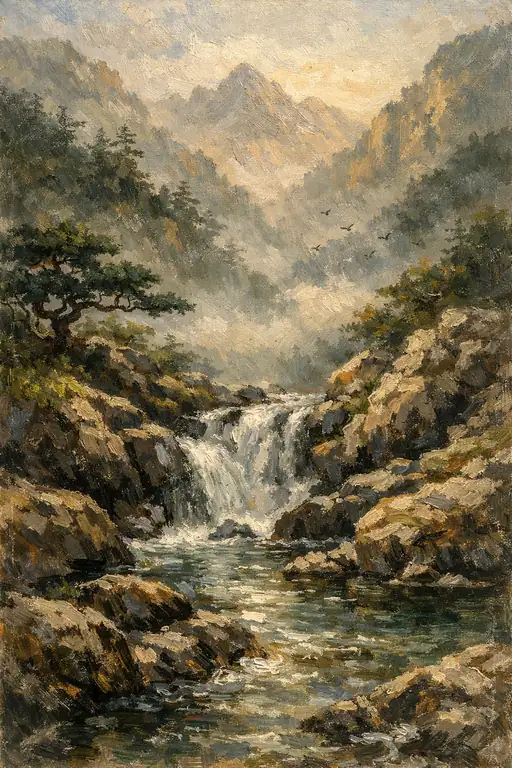 A Timeless Melody of the Cascading Falls
Similar Artworks
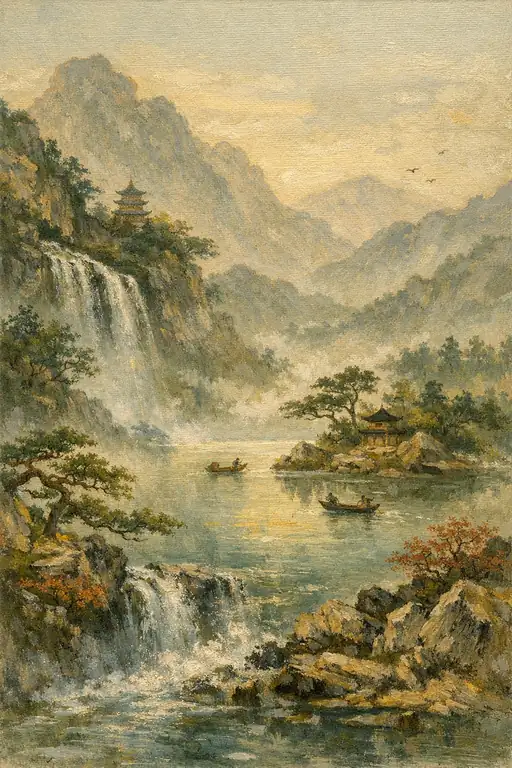 Eternal Silence Drifting on the Misty Water
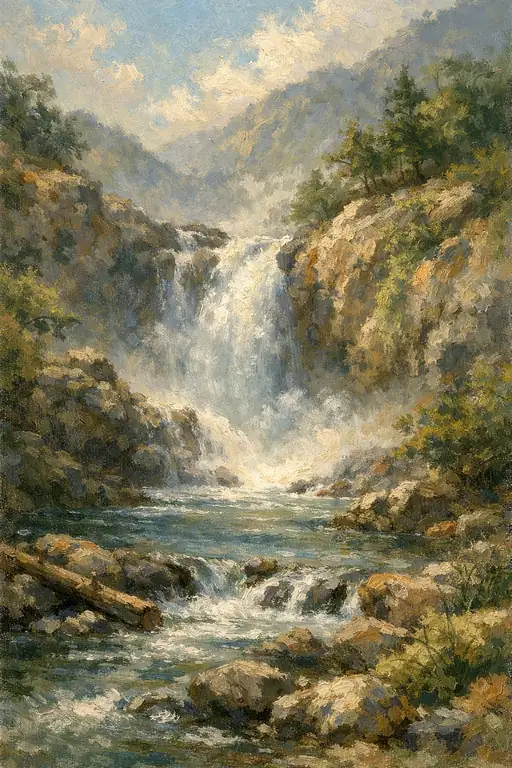 Roar of the Untamed Earth and the Piercing Spray
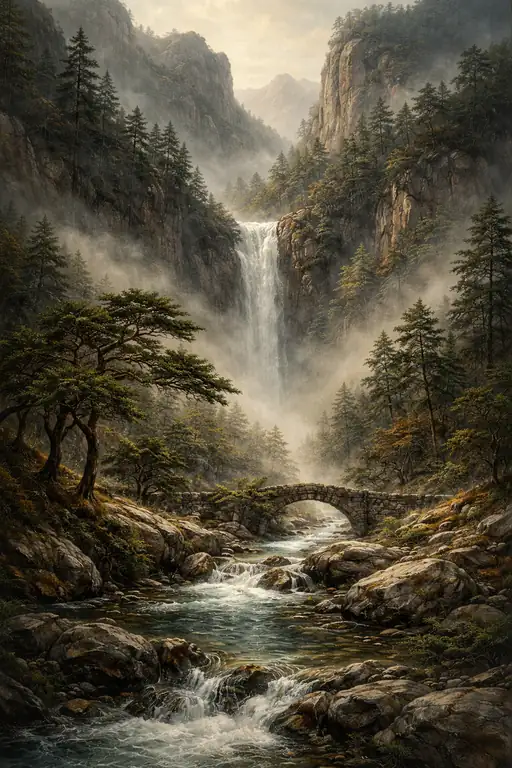 The Roar of Nature's Majestic Heart
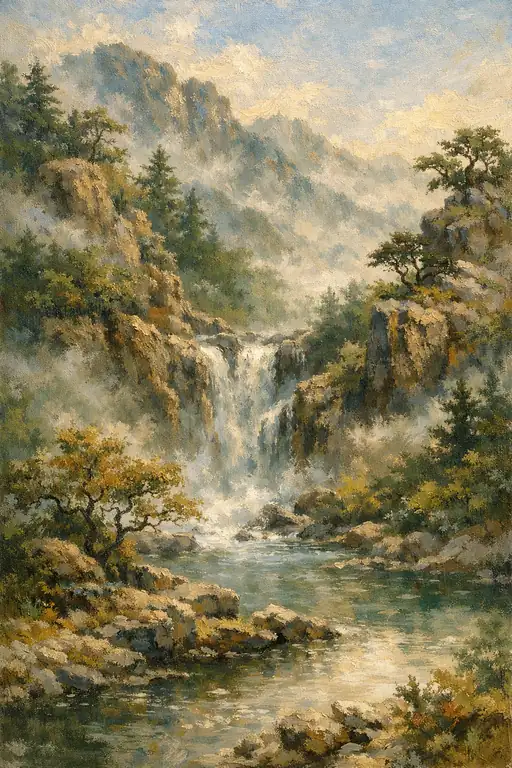 Bathed in the Light of the Crystal Pool
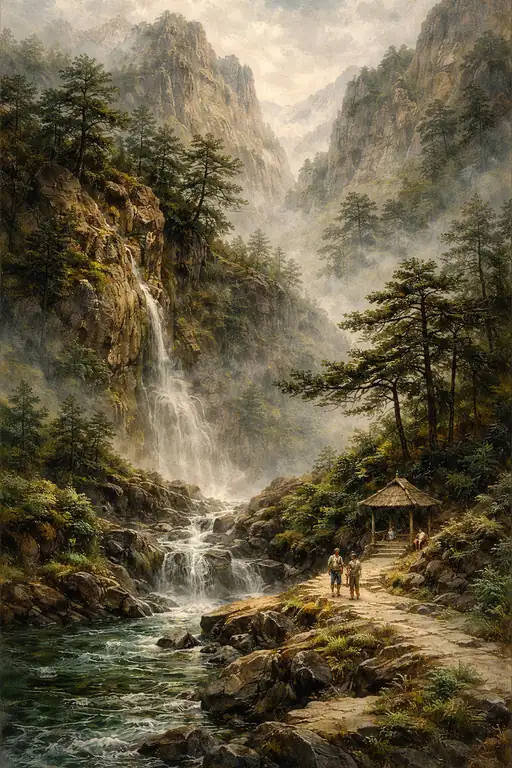 Echoes of the Sacred Falls
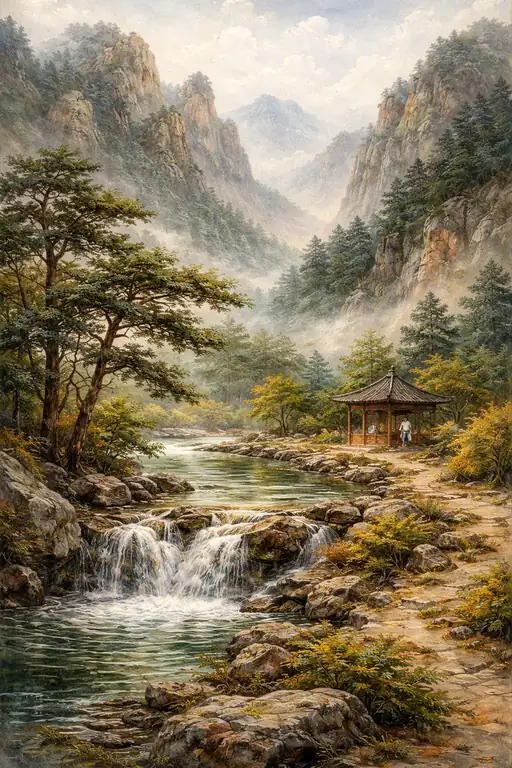 Pavilion by the Waterfall in a Misty Mountain Valley
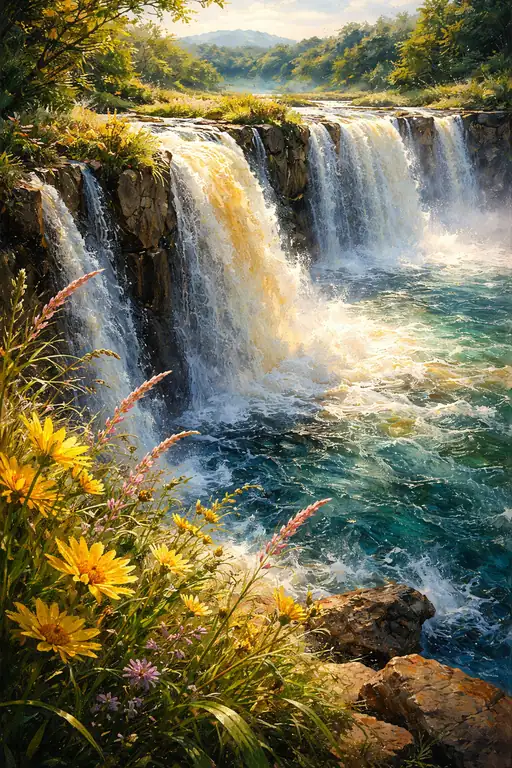 Vibrant Cascade of the Highland Spring
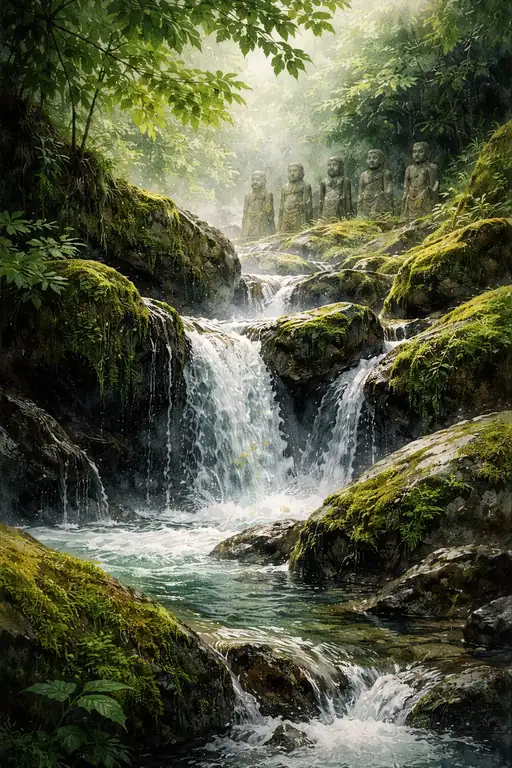 Sacred Whisper of the Forest Stream
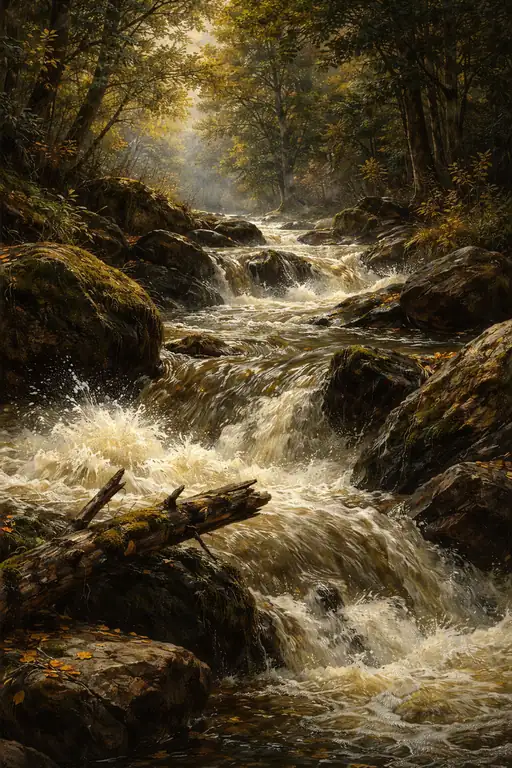 The Fierce Yet Silent Pulse Deep Within the Forest
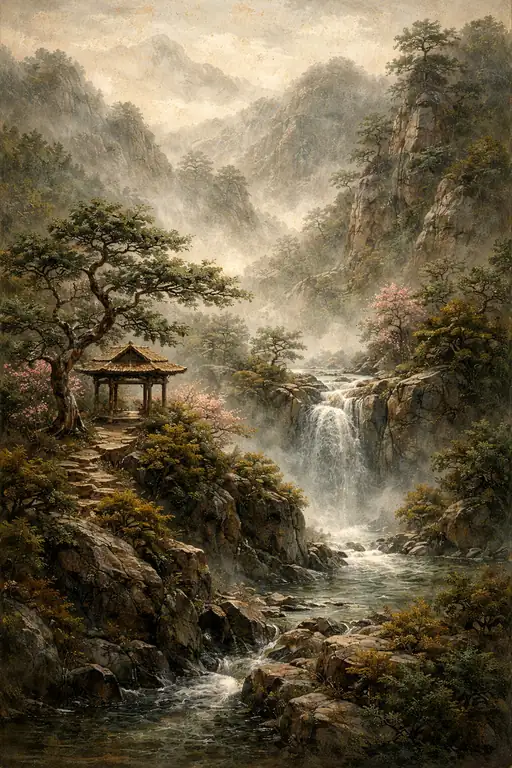 Shadows Dancing in the Twilight Earth