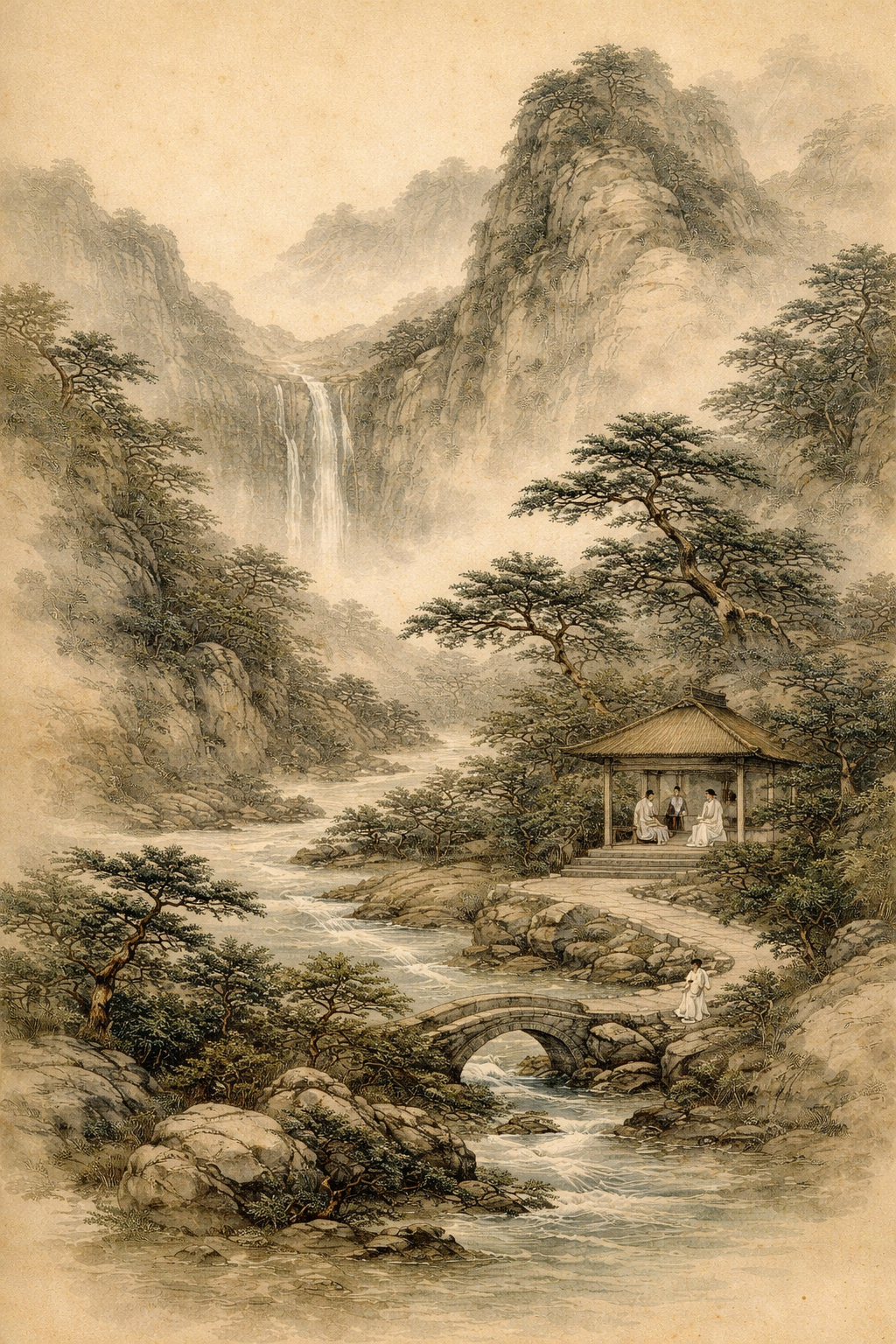
Beyond the Sea of Clouds, the Waterfall's Millennium Solitude — The Ultimate Retreat Dreamt by Sages
Critique
1. Introduction This work is a masterful depiction of a classical Chinese mountain-and-water landscape, following the venerable Shanshui tradition. It portrays a tranquil retreat where scholars gather in a pavilion amidst towering peaks and a cascading waterfall. The painting captures the essence of a scholarly life in harmony with nature, emphasizing a sense of timelessness and intellectual solitude. 2. Description The composition is dominated by a majestic waterfall that descends from high, mist-shrouded mountains in the background. In the middle ground, a simple wooden pavilion sits on a rocky bank, housing three figures in traditional robes who appear to be engaged in a quiet discussion. A winding stone path leads from a small arch bridge in the foreground toward the pavilion. Twisted pine trees and rugged rock formations are scattered throughout the scene, while a turbulent stream flows under the bridge. 3. Analysis The artist utilizes a restrained, near-monochromatic palette of sepia and grey tones, which evokes the quality of ancient ink-wash scrolls. The line work is delicate yet firm, defining the intricate textures of the pine needles and the craggy surfaces of the rocks. Space is used effectively, with the mist acting as a structural element that separates the different planes of the landscape. The vertical orientation of the piece emphasizes the height and grandeur of the natural world compared to the small human structures. 4. Interpretation and Evaluation The painting functions as a visual representation of the Taoist ideal of retreating from the world to find enlightenment in nature. The technical execution is exceptional, particularly in the way the artist balances detailed rendering with suggestive, atmospheric passages. By placing the scholars within such a vast environment, the work highlights the insignificance of man relative to the eternal cycles of the earth. It is a profound meditation on peace and philosophical reflection. 5. Conclusion What initially appears as a conventional exercise in traditional style reveals itself to be a sophisticated exploration of light and spatial depth. This piece demonstrates a deep understanding of classical aesthetics while maintaining a clarity of vision. It stands as an evocative tribute to the enduring power of the landscape as a source of spiritual inspiration.
Same Subcategory
Similar Artworks
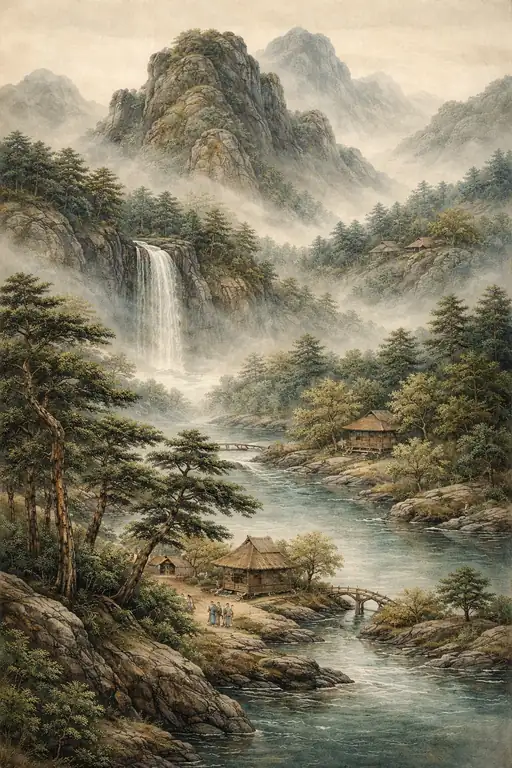 Embraced by the Grandeur of Time
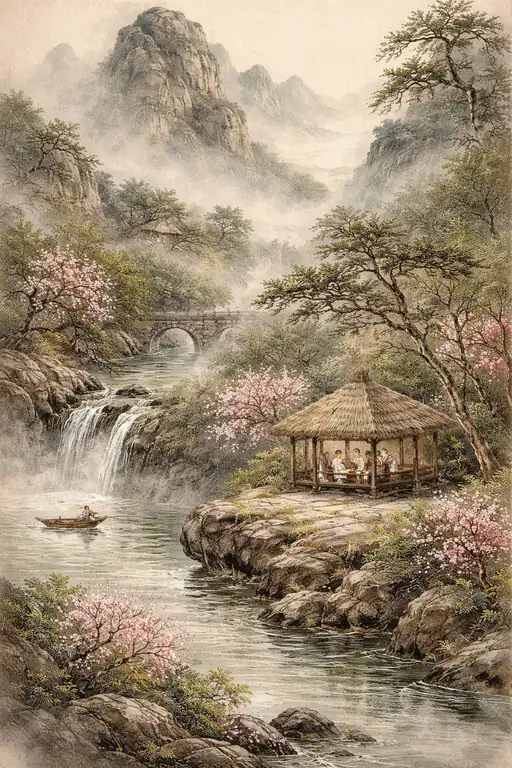 Spring Resonance in the Mountain Mist
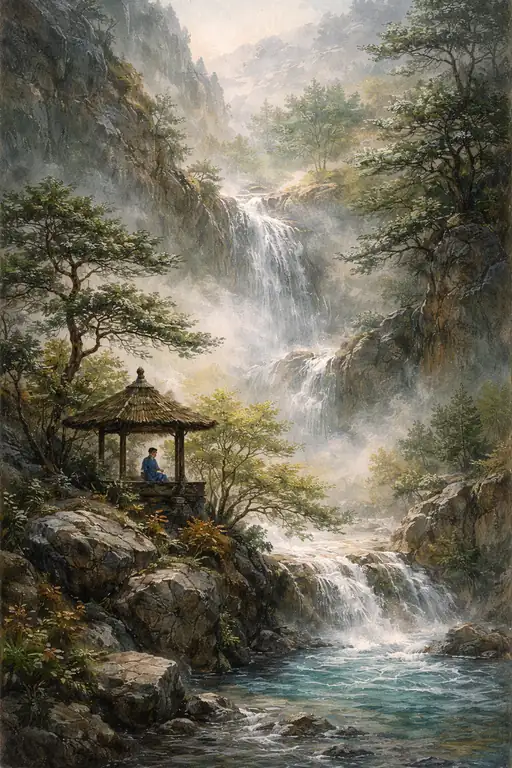 Whispers of the Eternal Mist
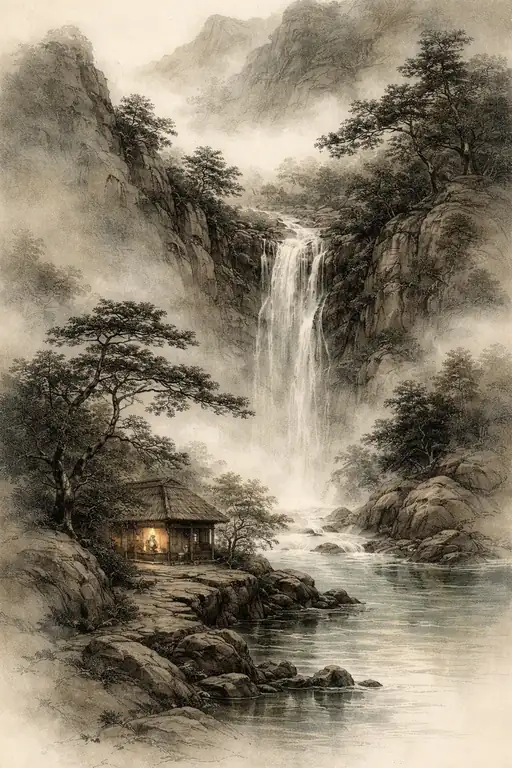 Whispers of the Misty Mountain Retreat
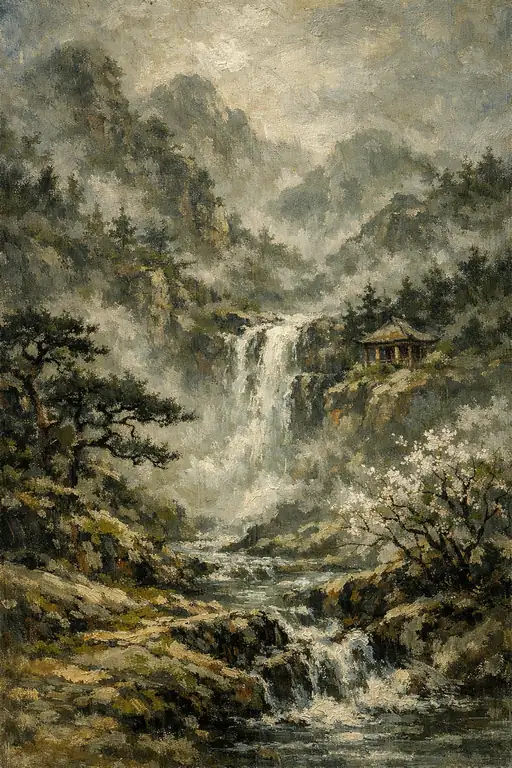 Spring Illusion Blooming in the Mystic Peaks
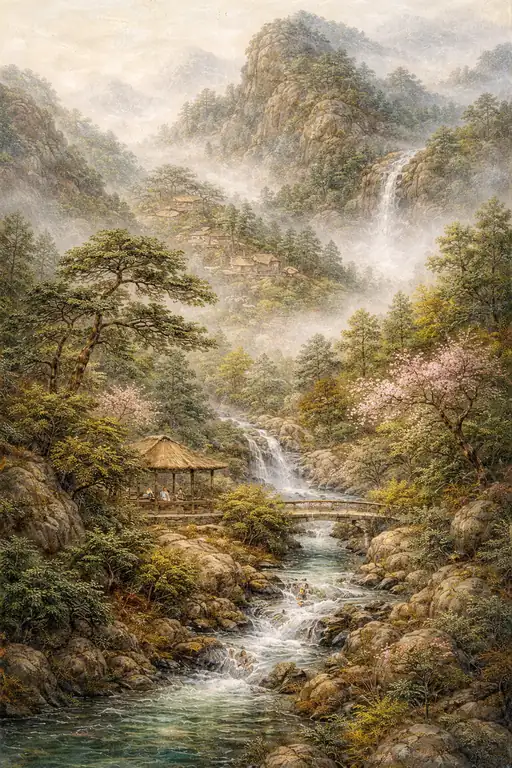 Spring Mountain Stream with a Gazebo
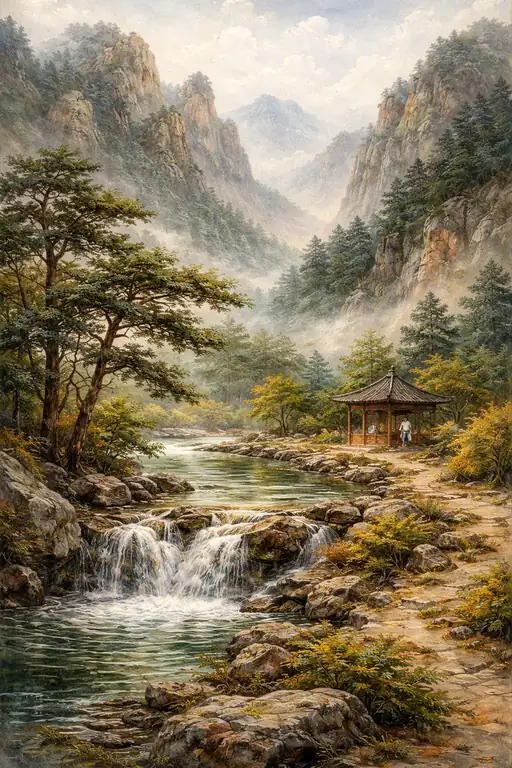 Pavilion by the Waterfall in a Misty Mountain Valley
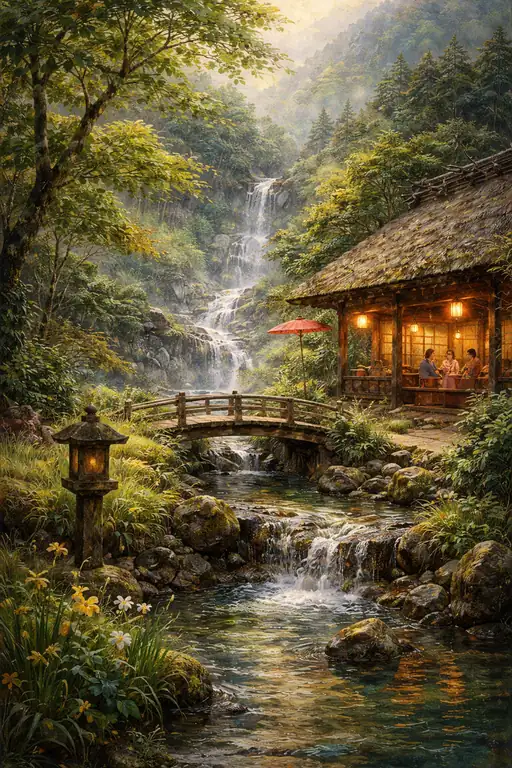 Whispers of the Waterfall
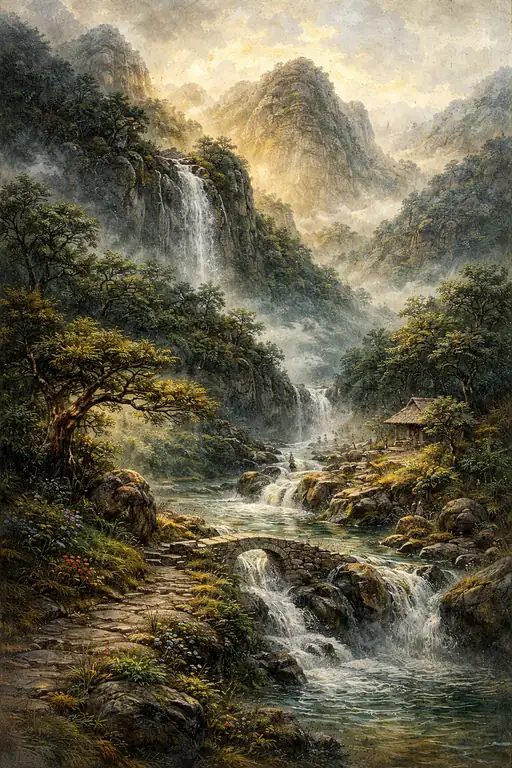 Embrace of the Wild Valleys
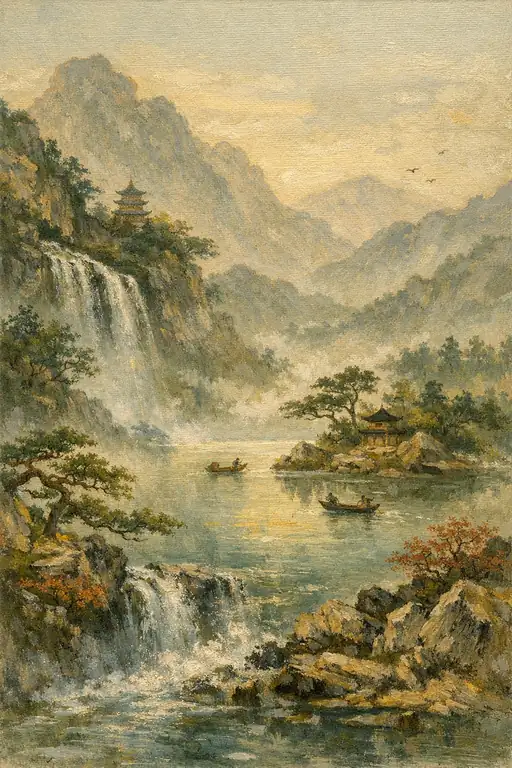 Eternal Silence Drifting on the Misty Water