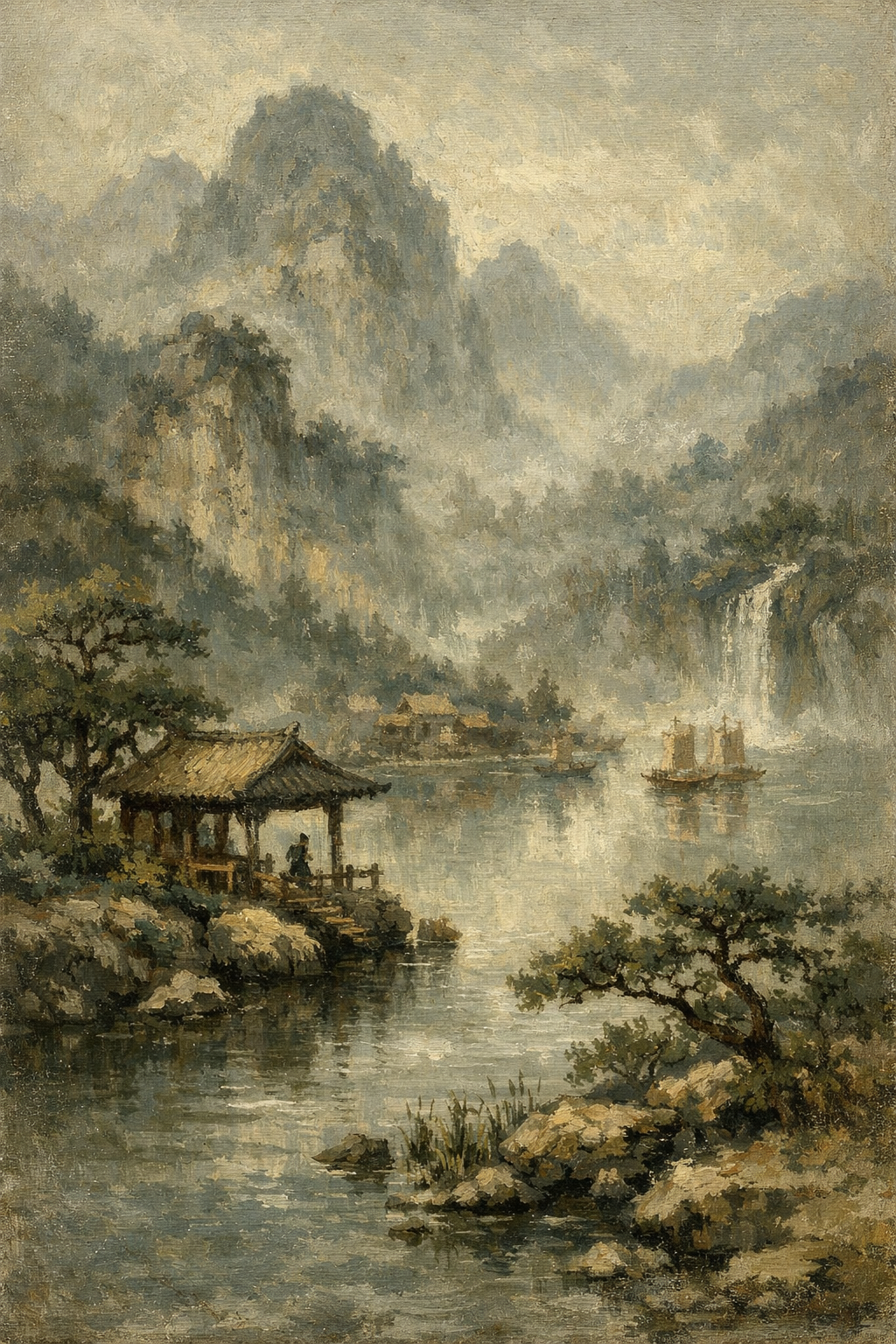
Heartbeat of the Ancient Crag
Critique
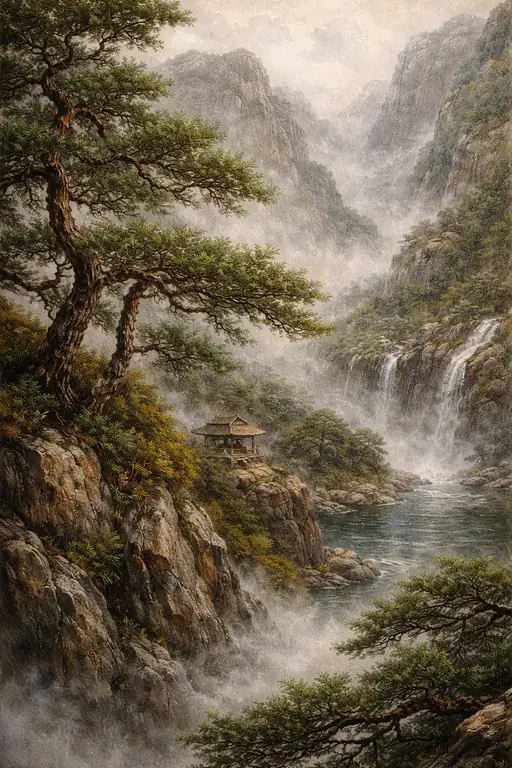
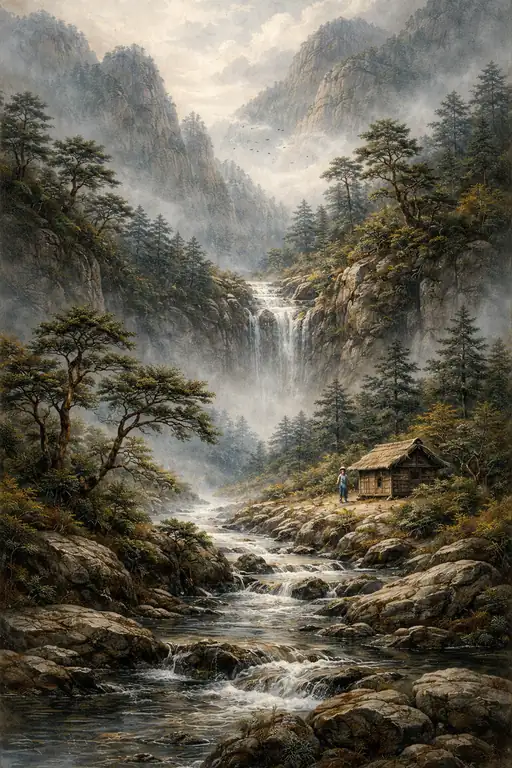
1. Introduction The artwork is a landscape painting that synthesizes classical Eastern iconography with the expressive qualities of Western oil traditions. This vertical composition presents a serene mountain scene, inviting the viewer into a space that feels both ancient and tactile. The atmosphere is one of profound tranquility, achieved through a careful balance of form and texture. 2. Description A traditional wooden pavilion sits on a rocky outcropping in the foreground, housing a solitary figure. The middle ground is dominated by a lake where small sailing vessels glide near a distant waterfall. The background features towering, mist-shrouded peaks that dissolve into a pale sky. The color palette is restricted to muted earth tones, soft ochres, and cool grays. 3. Analysis The artist employs a vigorous impasto technique, with thick brushstrokes that lend a physical presence to the rocks. This tactile approach contrasts with the atmospheric perspective in the background, where mountains are rendered with softer layers. The vertical orientation guides the eye upward, while the play of light on the water reflects a Western concern for illumination. 4. Interpretation and Evaluation The work represents a successful cross-cultural dialogue, blending the stillness of landscape themes with the material richness of oil. The execution of the waterfall and the reflections on the lake surface demonstrate technical proficiency. The composition is well-balanced, managing to convey a sense of immense scale within a confined frame without feeling overcrowded. 5. Conclusion The painting offers a modern take on timeless themes of nature and solitude through its unique stylistic fusion. The initial impression of a simple landscape deepens into an appreciation for the complex layerings of paint and the marriage of disparate ideologies. It stands as a compelling example of how traditional subjects can be revitalized through contemporary techniques.
Same Subcategory
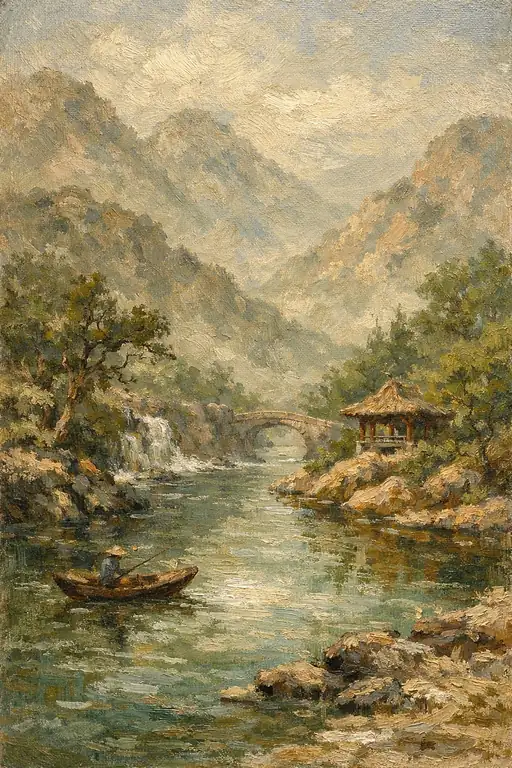 Echoes Through the Forgotten Mountains
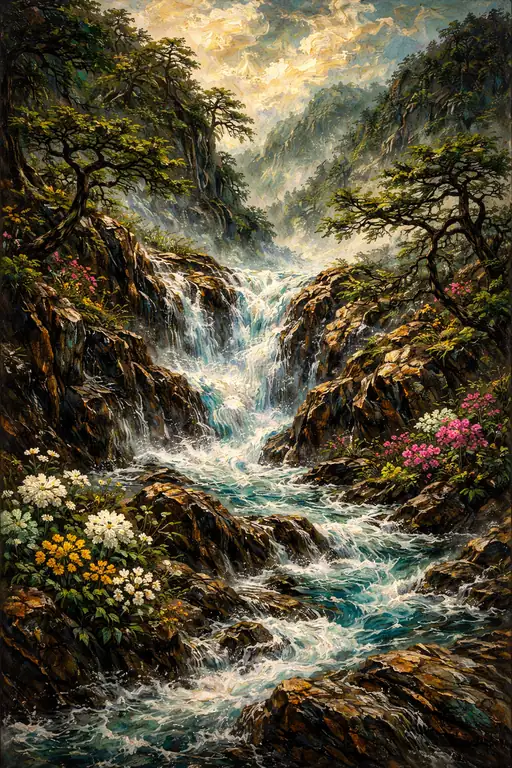 Roar of the Untamed Valley
Similar Artworks
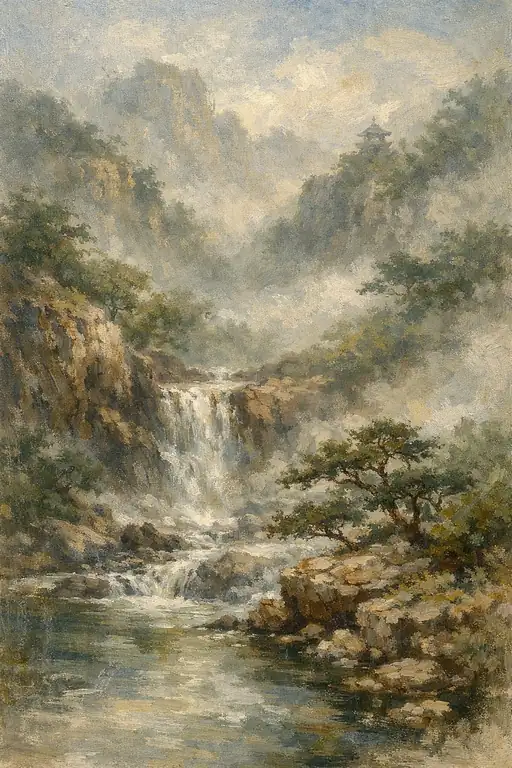 The Hidden Pagoda in the Mist
 Thunderous Majesty in the Secluded Canyon
 Roar of the Shadowed Gorge
 Mist over the Eternal Peaks
 The Gilded Protector
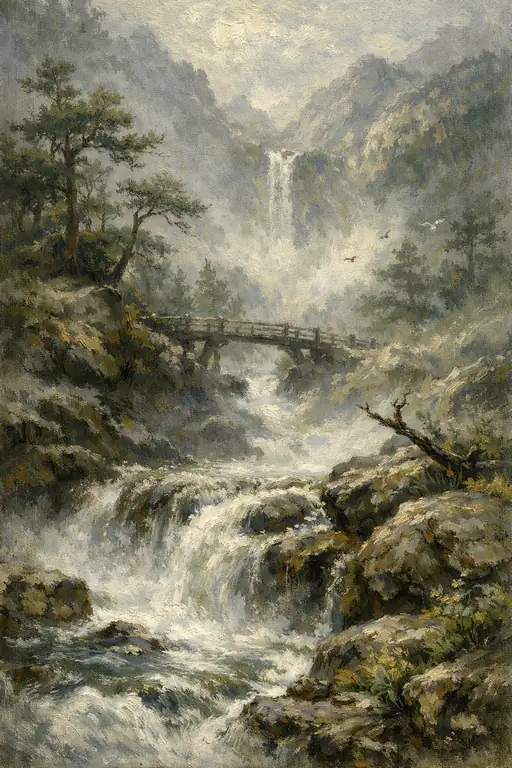 Mist Over the Roaring Falls
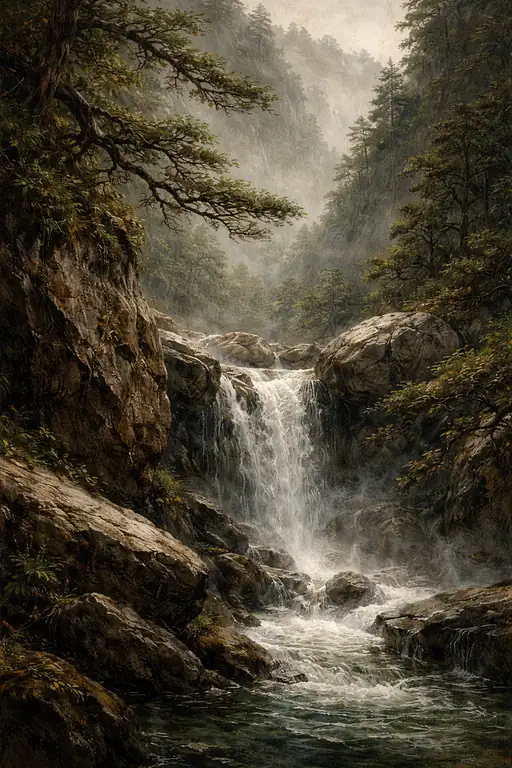 The Roar of Eternity Amidst Timeless Stones
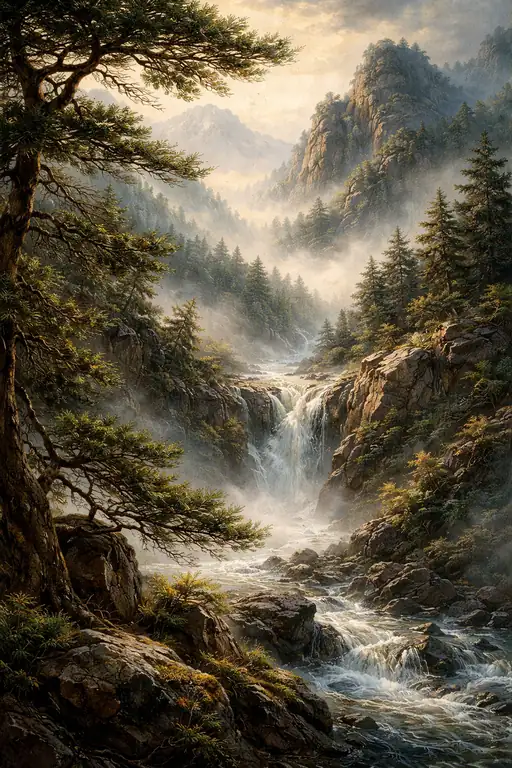 First Light Crowning the Majestic Peaks
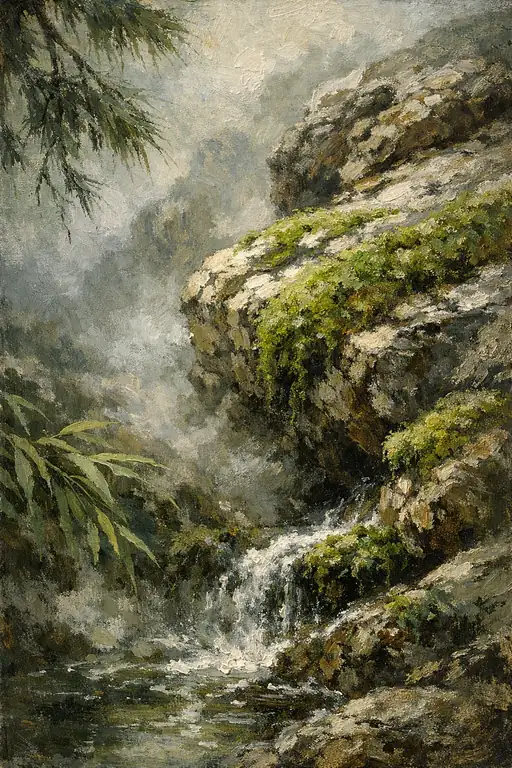 Tears of the Rugged Cliff
 The Hermit's Symphony of Mist