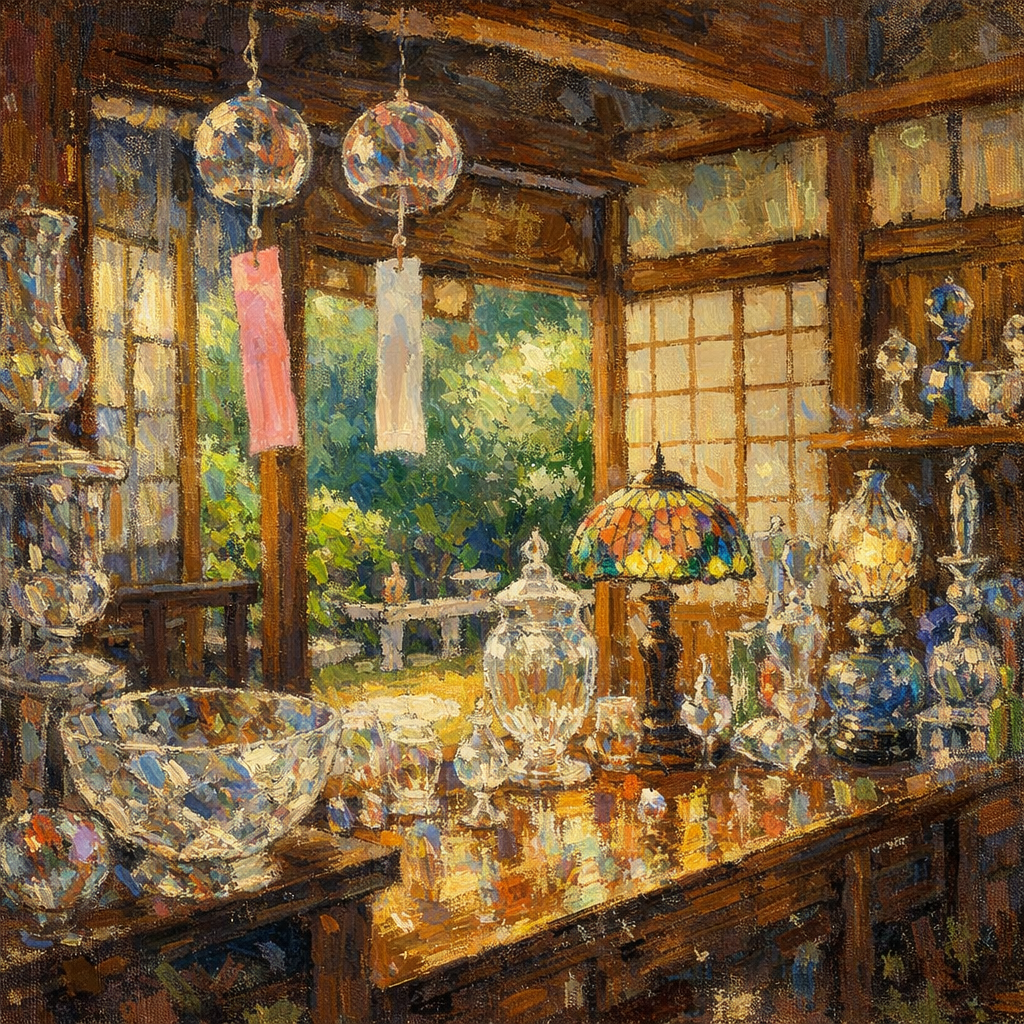
Light of Nostalgia
Critique
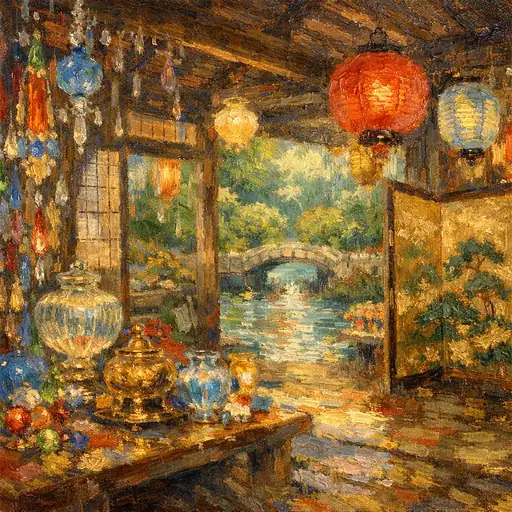
1. Introduction The painting presents a nostalgic and luminous interior scene, capturing a collection of delicate glassware and lamps within a traditional Japanese setting. The composition is centered on a wooden table laden with various glass vessels and a vibrant stained-glass lamp, which serve as conduits for light. In the background, two glass wind chimes hang from the eaves, overlooking a sun-drenched garden visible through an open doorway. The overall atmosphere is one of serene quietude, bathed in the warm, fragmented light of a late afternoon. 2. Description The foreground is dominated by the intricate textures and reflections of the glassware, ranging from large faceted bowls to slender vases. A Tiffany-style lamp with a multicolored shade provides a warm glow that contrasts with the cooler, natural light entering from the garden. To the left and right, traditional architectural elements like shoji screens and dark wooden pillars frame the scene. The garden beyond is rendered as a lush blur of greens and yellows, suggesting a vibrant outdoor environment that contrasts with the still, protected interior. 3. Analysis Technically, the artist excels in depicting the complex interplay of light, transparency, and reflection. Short, rhythmic brushstrokes are used to represent the shimmering surfaces of the glass and the dappled light hitting the table. The color palette is rich and varied, utilizing deep browns for the wood, brilliant blues and ambers for the glass, and vibrant greens for the garden. The composition uses the interior architecture to create a series of nested frames, guiding the viewer窶冱 eye from the immediate objects to the distant natural landscape. 4. Interpretation and Evaluation This work can be interpreted as an exploration of the beauty found in the intersection of traditional culture and refined craftsmanship. The glassware and wind chimes symbolize a delicate, transient beauty that is harmonized with the enduring structure of the Japanese house. The artist successfully captures a sense of "mono no aware," or the bittersweet realization of the ephemeral nature of all things. The execution is masterful, particularly in how it manages to make a cluttered space feel balanced and infused with a spiritual light. 5. Conclusion By skillfully blending interior still life with an outdoor landscape, the painting creates a multifaceted sensory experience. My perspective shifted from observing the individual glass objects to appreciating the unified atmosphere created by the pervasive, dancing light. The work stands as a testament to the artist窶冱 ability to find extraordinary beauty in domestic tranquility. Ultimately, it is a technically sophisticated and emotionally evocative composition that celebrates the quiet harmony between the man-made and the natural worlds.
Same Subcategory
Similar Artworks
 Melancholy Beyond the Hearth
 Crimson Canopy of Memories
 Window to the Whimsical Wind
 Sunlight Through the Open Window
 Tranquil Bloom in the Sun's Embrace
 Illuminations of a Timeless Craft
 Echoes of Amber Light: A Poetic Reverie Beneath the Cafe Lanterns
 Radiance in the Glasshouse
 Whispers of Spring Lilacs
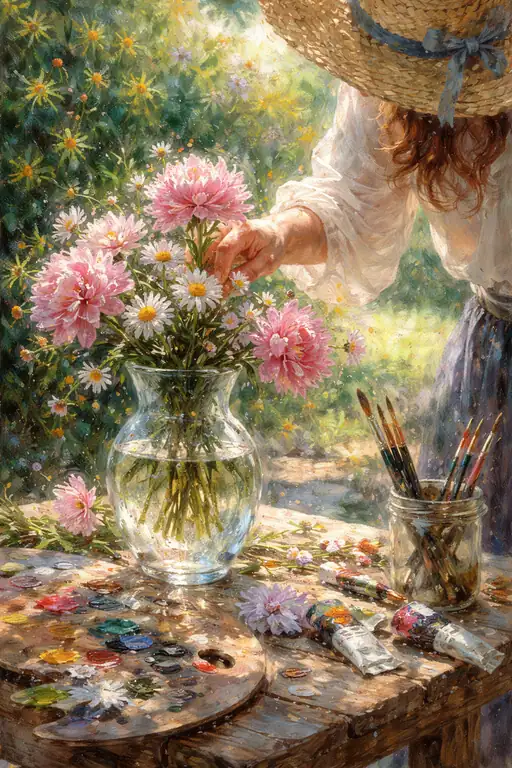 Symphony of the Sunlit Studio