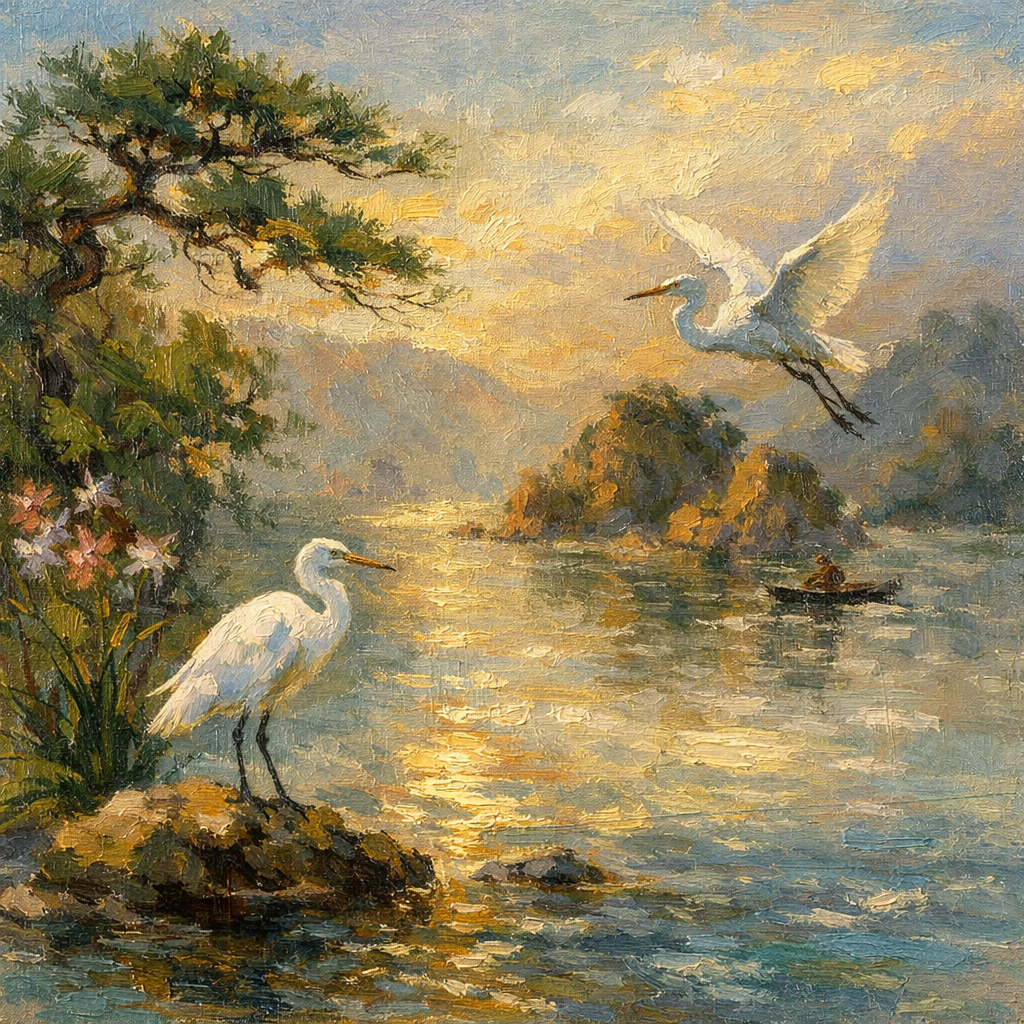
To the Golden Sky
Critique
1. Introduction This impressionistic oil painting captures a radiant coastal landscape during the golden hour, featuring the elegant presence of white cranes. The composition balances a grounded bird on the left with another in mid-flight, set against shimmering water and distant hills. The work is defined by its vibrant palette and expressive, textured brushwork that conveys a sense of vitality. 2. Description In the foreground, a white crane stands on a mossy rock, while to the right, a second crane is depicted with wings extended in flight. A small boat with a solitary figure navigates the sparkling water near several rocky islands. The background shows hazy, sun-drenched hills under a sky filled with thick clouds of gold and pale blue. 3. Analysis The artist utilizes a vigorous impasto technique, where heavy layers of paint create a tactile surface mimicking the movement of clouds and flickering water reflections. The composition follows a dynamic diagonal, connecting the two cranes and leading the eye across the bay. Warm yellows are effectively grounded by the cool greens of the coastal foliage. 4. Interpretation and Evaluation The painting explores the theme of freedom and the natural cycle of the day. The juxtaposition of stationary and flying cranes suggests a narrative of transition within the landscape. Technically, the work is successful in translating light into a physical substance, resulting in a scene that feels both energetic and harmonious. 5. Conclusion This work is a celebration of light, successfully employing impressionistic techniques to create a vivid sensory experience. The impact of the brilliant golden sky reveals a carefully structured interaction between the subjects and their environment. It stands as an evocative example of how texture can represent the sublime energy of the coast.
Same Subcategory
 A Silent Promise by the Fading Horizon
Similar Artworks
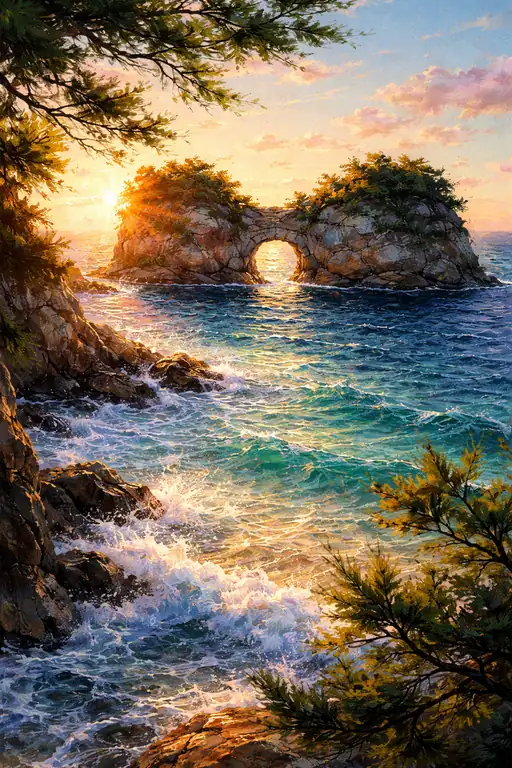 The Golden Embrace of the Arch
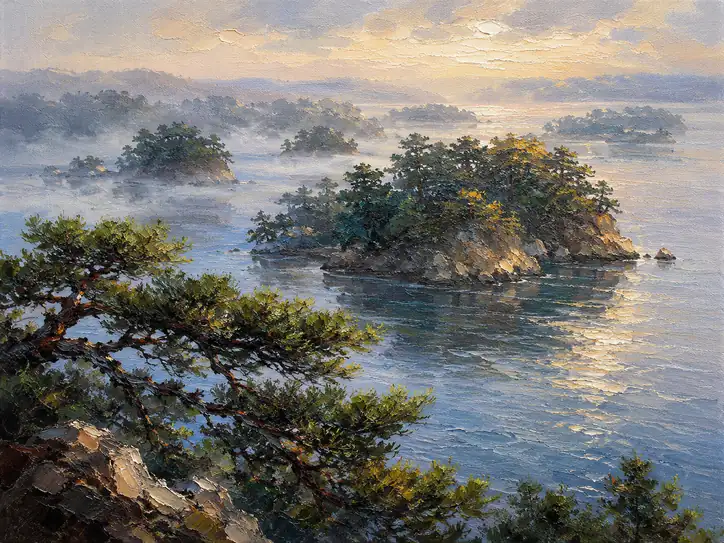 Where the Golden Light Rests
 Dusk's Golden Reflection
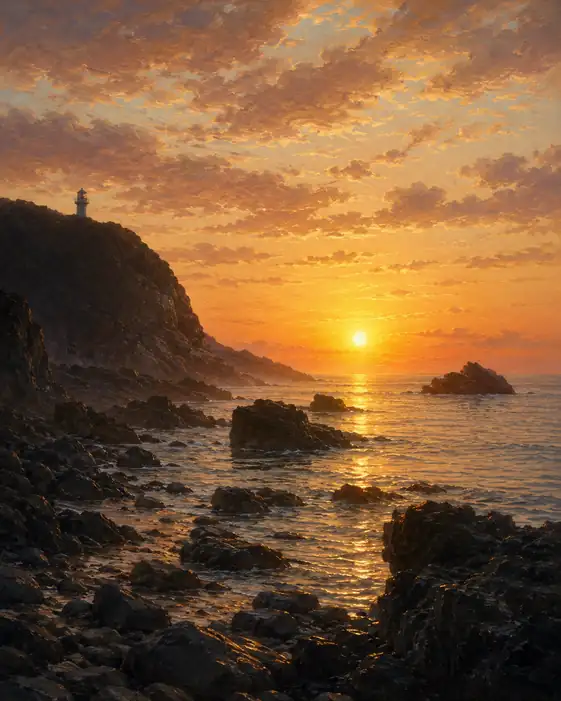 Cape Lighthouse Bathed in the Golden Horizon Sunset
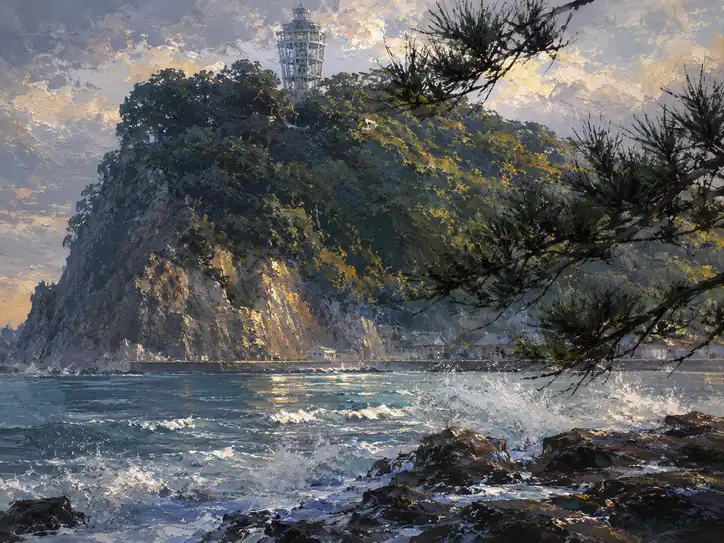 Light Amidst the Roaring Waves
 Breath of the Primordial Earth
 Nostalgia on the Sea Breeze
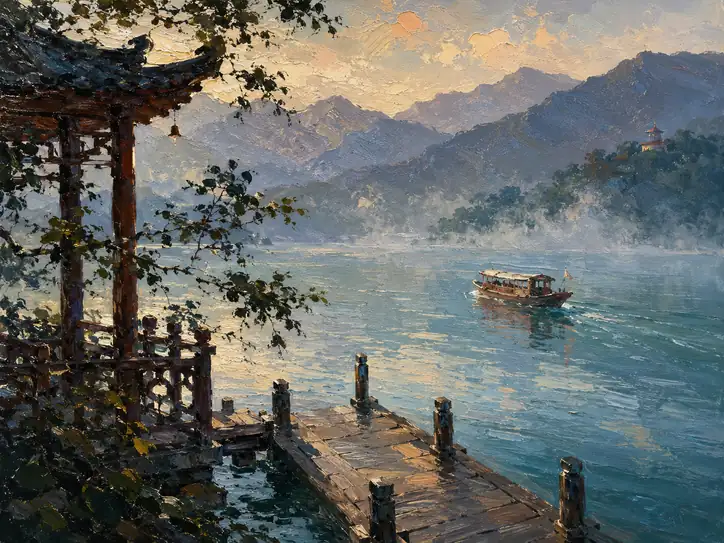 Awakening of the Silent Lake
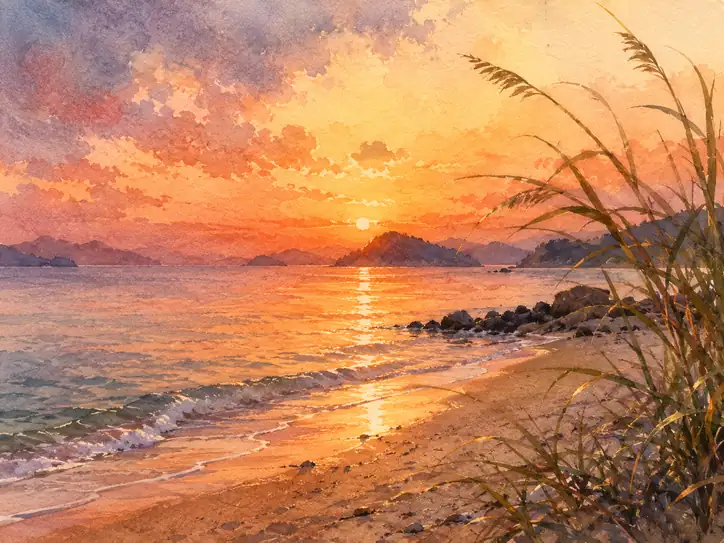 The Horizon's Burning Farewell
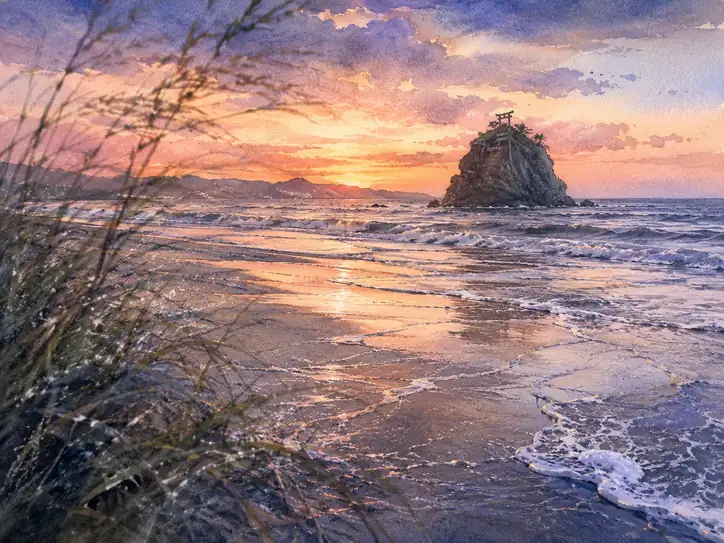 Sanctuary of the Setting Sun