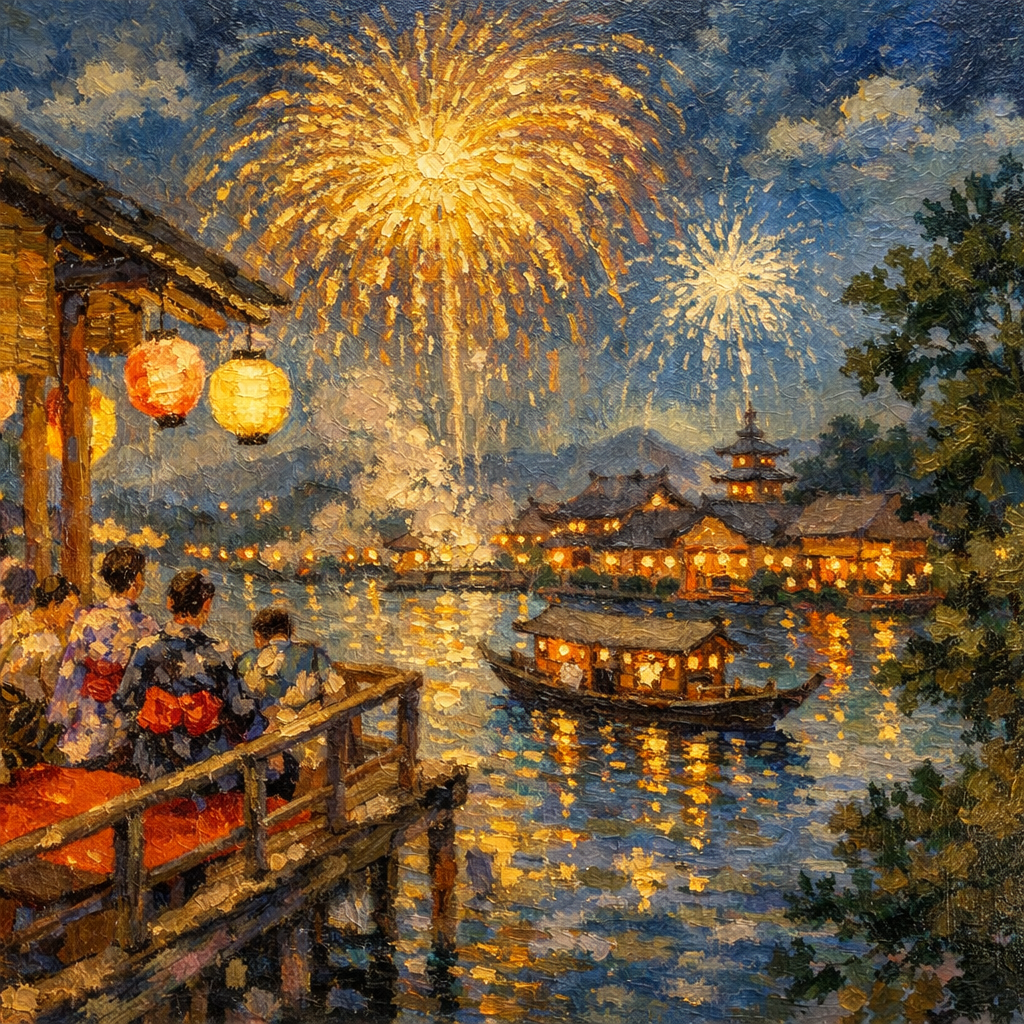
Tears of Fire Falling on the Midnight River
Critique
1. Introduction This oil painting presents a breathtaking scene of grand fireworks illuminating the night sky above a traditional Japanese waterside town. The work captures the essence of a summer festival through powerful brushstrokes and a vivid color palette. In the lower left, figures dressed in kimonos observe the spectacle from a wooden balcony, grounding the viewer in the festive moment. The piece succeeds in freezing the ephemeral beauty of fireworks into a permanent, textured artistic form. 2. Description A massive explosion of golden light dominates the upper sky, with individual sparks rendered as thick dabs of paint that suggest downward motion. Below the celestial display, a series of traditional lit buildings and a pagoda line the shore, their reflections shimmering across the river's surface. A lit leisure boat, or yakatabune, glides through the water, casting a warm glow on the dark ripples. The foreground figures, depicted in varied blue and purple garments, lean against the railing in a state of shared wonder. 3. Analysis The most striking technical element is the heavy impasto technique, which creates a rich, physical texture across the canvas. By raising the paint, the artist gives the fireworks a three-dimensional quality that seems to radiate energy directly from the surface. The use of complementary colors窶播eep midnight blue against brilliant yellow窶把reates a dramatic visual impact and heightens the sense of nocturnal celebration. The diagonal lines of the terrace provide a strong compositional base that balances the vertical ascent of the light displays. 4. Interpretation and Evaluation This work goes beyond simple representation to evoke the sensory experience of a festival, including the imagined sound and heat of the fireworks. The artist demonstrates originality by applying a bold, expressionistic style to a quintessential Japanese subject, resulting in a unique fusion of tradition and modernity. The technical skill is particularly evident in the treatment of light reflections on the water, which appear broken and rhythmic. This depiction effectively conveys the lively and transient spirit of the event. 5. Conclusion In summary, the painting is a masterful portrayal of the intersection between light, architecture, and human emotion during a grand celebration. While the initial impression is one of overwhelming brightness, a closer look reveals the intimate narratives embedded in the silhouettes and distant townscape. The successful integration of physical materiality and ethereal light phenomena demonstrates a high level of artistic maturity. The piece ultimately serves as a vibrant reminder of the enduring power of cultural shared experiences.
Same Subcategory
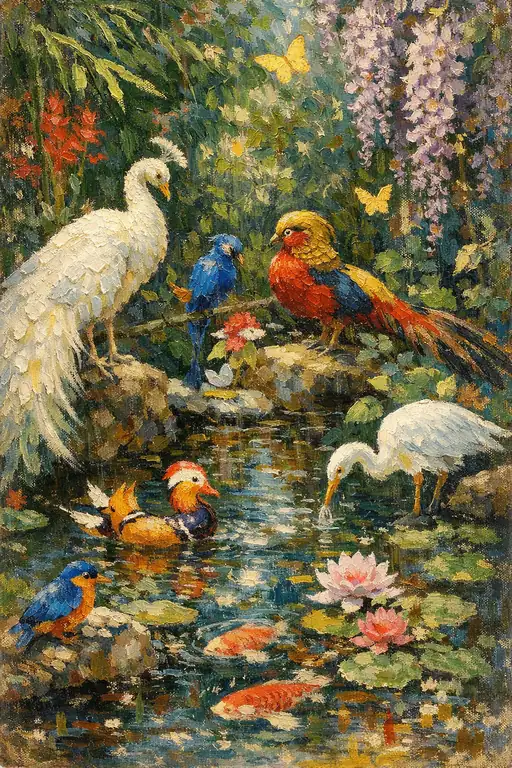 Serenade of the White Peacock in the Forgotten Eden
Similar Artworks
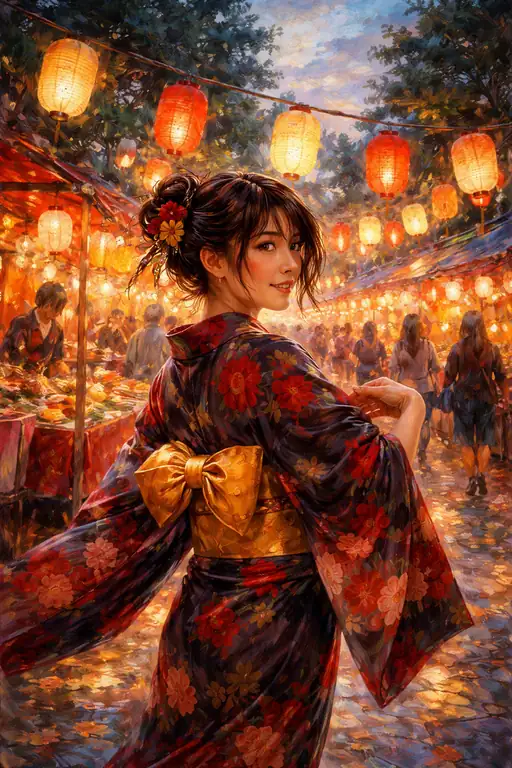 Golden Reverie of the Summer Festival: A Radiant Smile Beneath the Glowing Lanterns
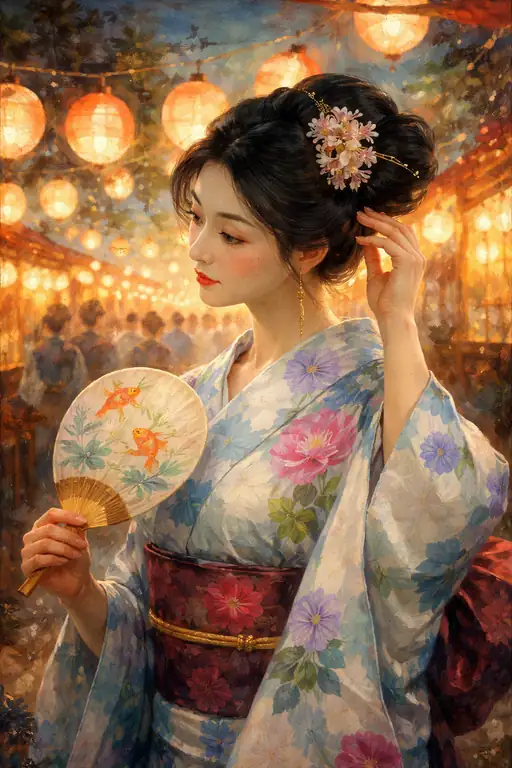 Silent Grace and the Golden Glow of the Summer Festival
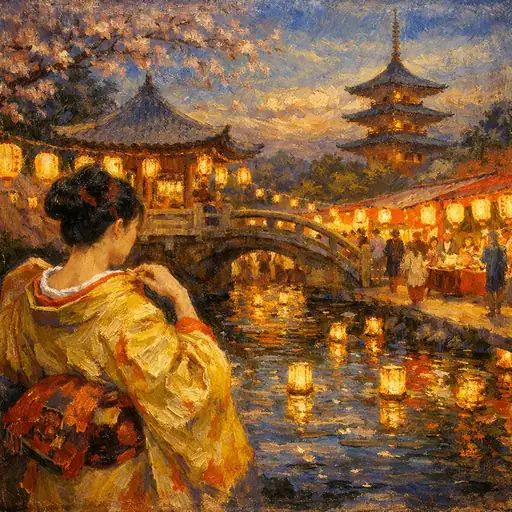 Golden Reverie Beneath the Spring Lanterns
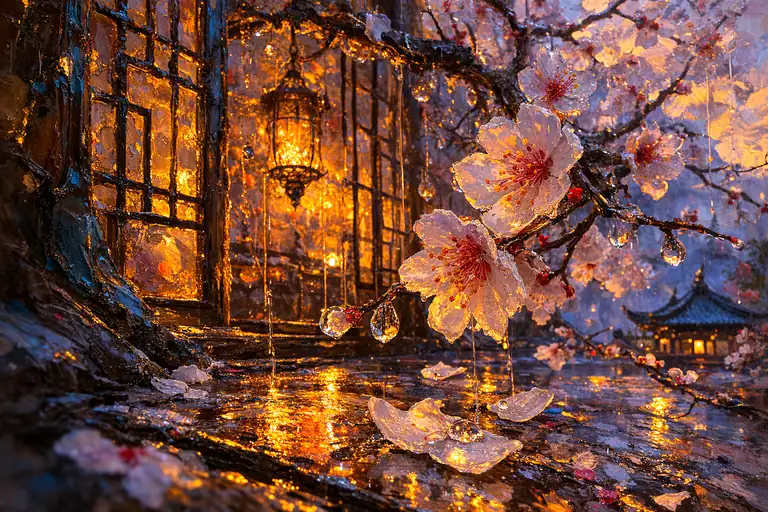 Lament of the Golden Rain
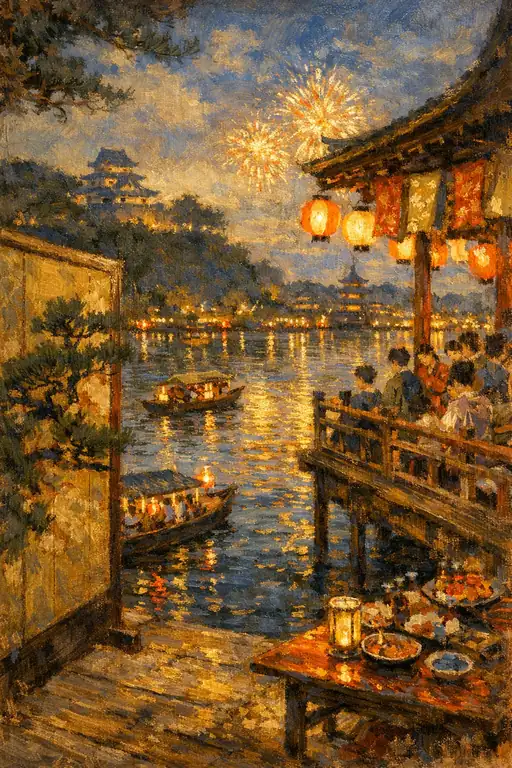 Symphony of Embers and Midnight Echoes
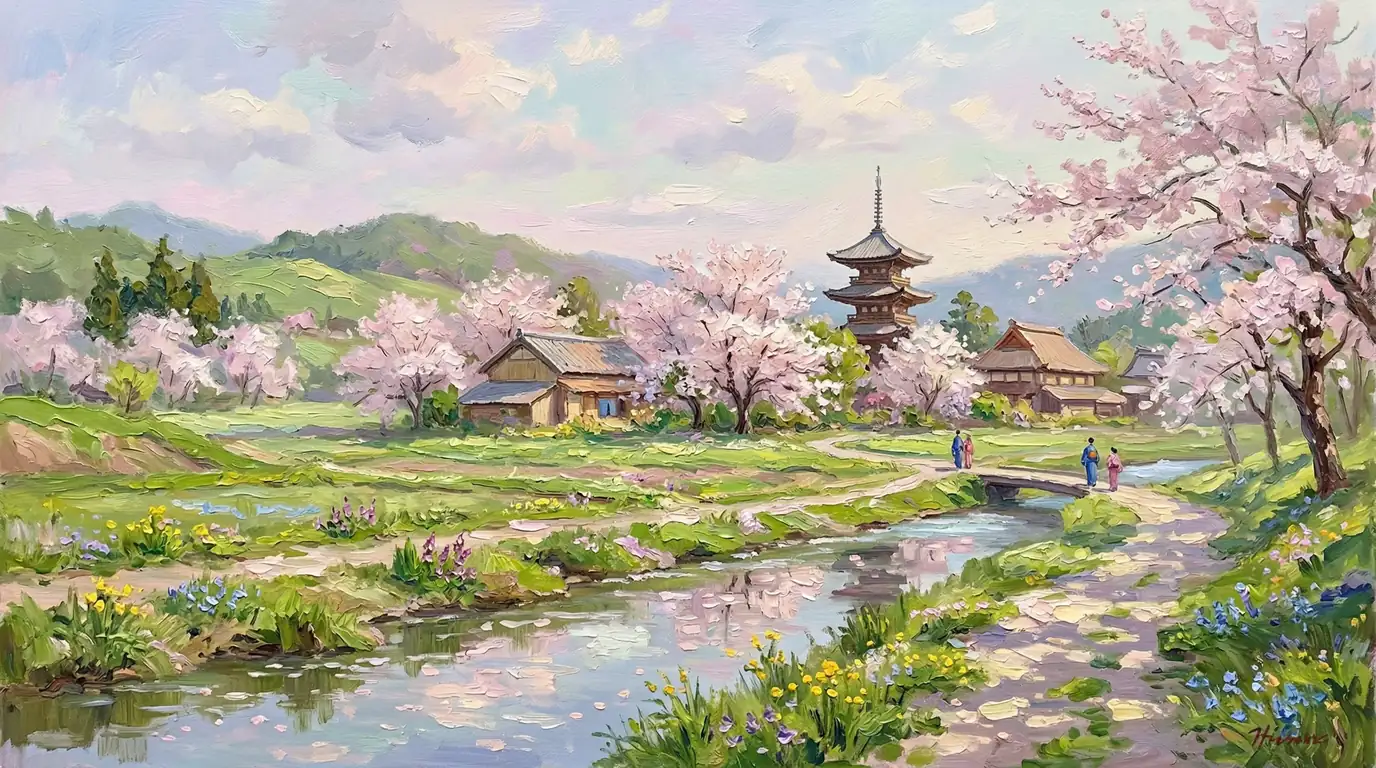 A Symphony of Petals and Prayer
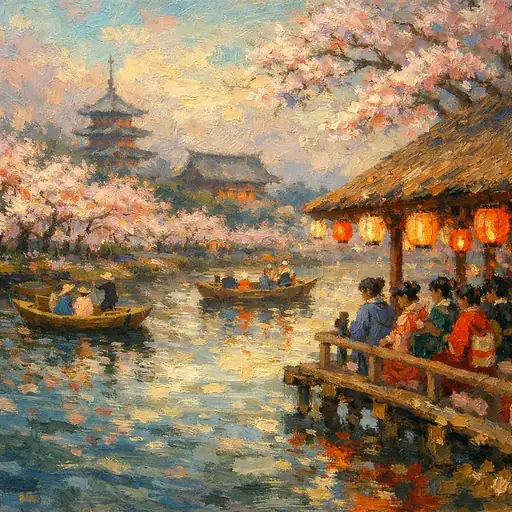 Lanterns and Cherry Blossoms: A Spring Evening Boat Ride in Kyoto
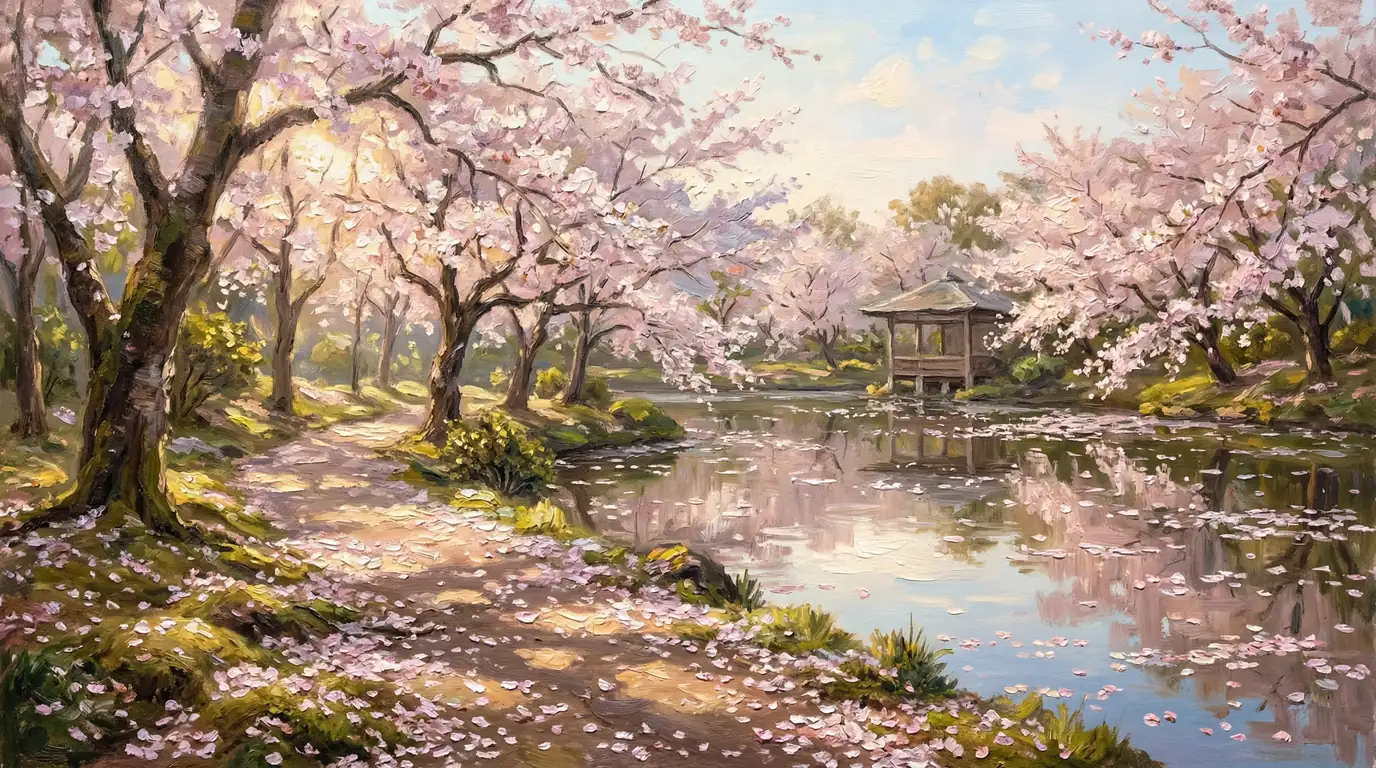 Petals on the Peaceful Pond
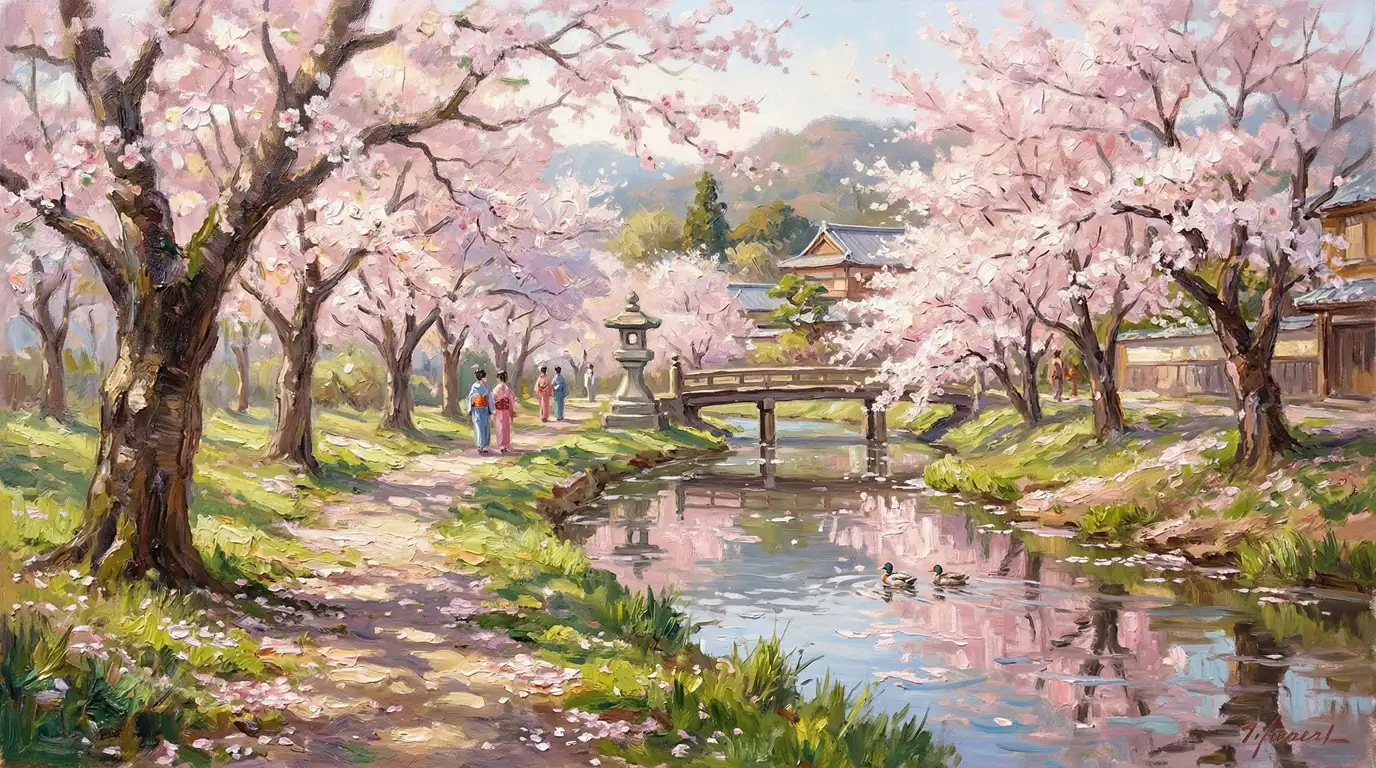 Cherry Blossoms along the Canal
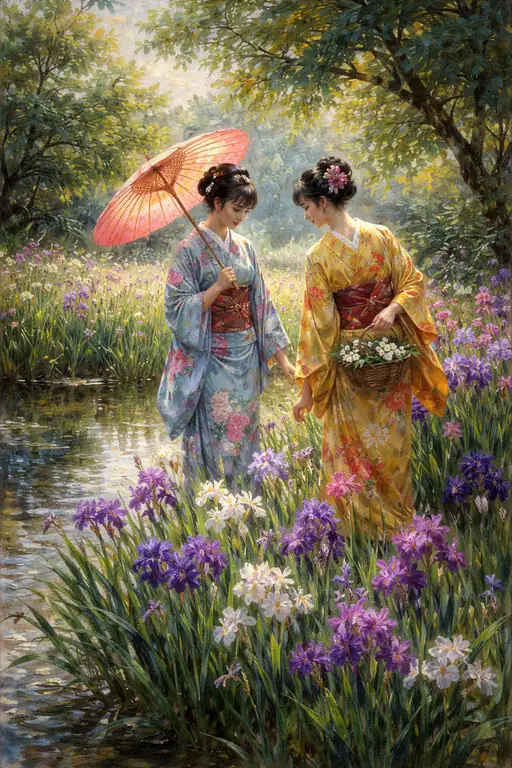 Echoes of Traditions Past