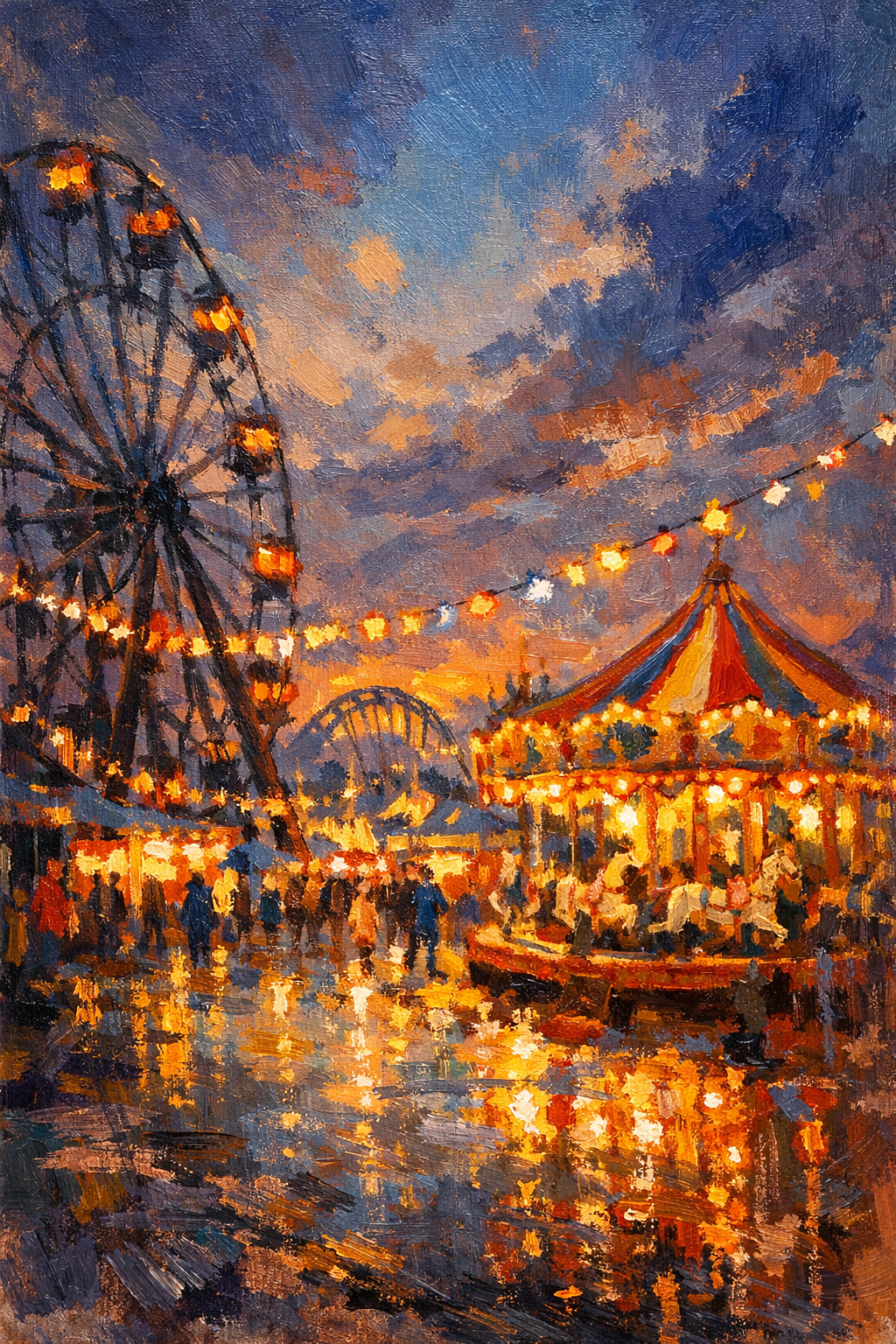
Echoes of a Gilded Twilight
Critique
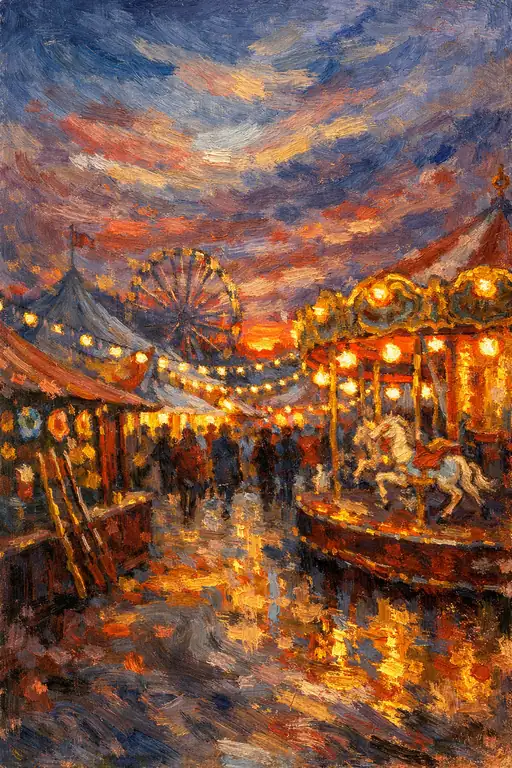
1. Introduction The artwork presents a vibrant evening scene at a carnival, capturing a nostalgic and lively atmosphere. This piece utilizes an impressionistic approach to depict a popular leisure environment filled with light and motion. It serves as a visual exploration of how artificial illumination interacts with the natural transition of twilight in a bustling public space. 2. Description In the foreground, a wet ground reflects the brilliant golden lights of a carousel and surrounding stalls. Numerous figures are rendered as loosely defined shapes, suggesting a dense crowd moving through the fairground. To the left, a large Ferris wheel towers over the scene, while a brightly lit carousel with a striped canopy occupies the mid-ground on the right. The sky transitions from a deep, textured blue to a warm, glowing orange near the horizon. 3. Analysis The composition is balanced by the verticality of the Ferris wheel and the circular mass of the carousel, creating a sense of structural stability amidst chaotic movement. A heavy impasto technique is employed throughout, with thick, visible brushstrokes that emphasize the physical texture of the paint. The color palette relies on the high contrast between complementary hues of deep ultramarine and fiery orange, which directs the eye toward the sources of light. 4. Interpretation and Evaluation This painting successfully evokes the sensory experience of a night at the fair through its energetic execution and brilliant use of color. The artist窶冱 ability to suggest form and light without precise detail demonstrates a strong command of atmospheric perspective and expressive brushwork. The work celebrates the ephemeral beauty of shared public joy, transforming a common scene into a glowing spectacle of light and shadow. 5. Conclusion While the initial impression is one of overwhelming brightness, a closer study reveals a carefully structured harmony of color and form. The piece effectively captures the essence of a fleeting moment through its bold technical choices. It remains a compelling example of how traditional subjects can be revitalized through a modern, textured application of classical impressionist principles.
Same Subcategory
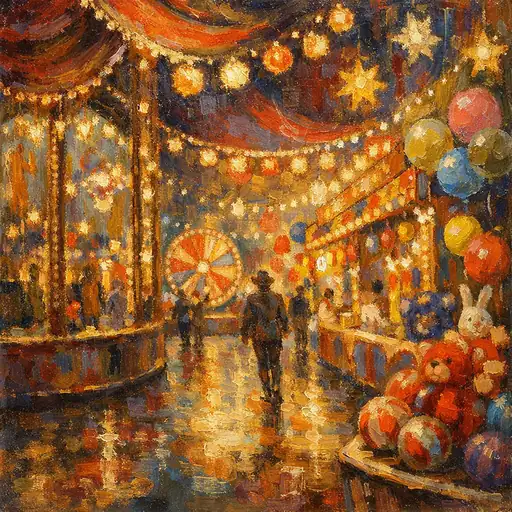 Midnight Carnival of Forgotten Dreams
Similar Artworks
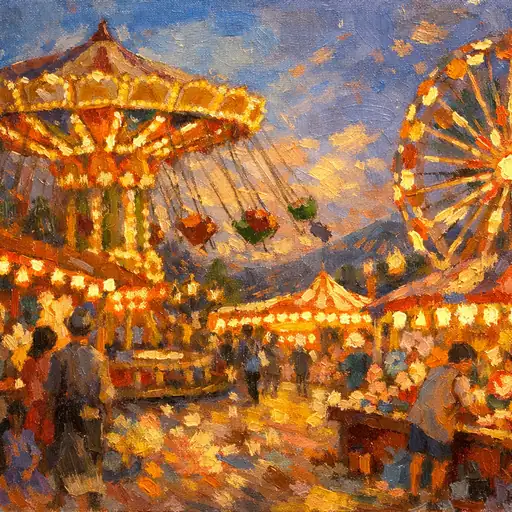 Golden Whirl of the Evening Fair
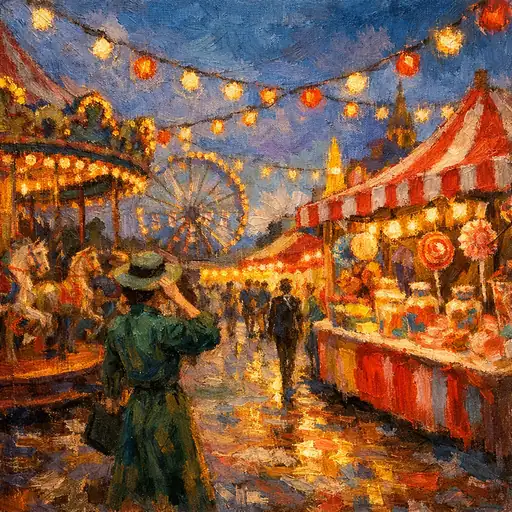 Nostalgia Under the Carnival Lanterns
 Golden Echoes of a Twilight Carnival
 A Golden Spin Through the Velvet Night
 Nostalgic Echoes in the Neon Rain
 Nightfall at the Carnival
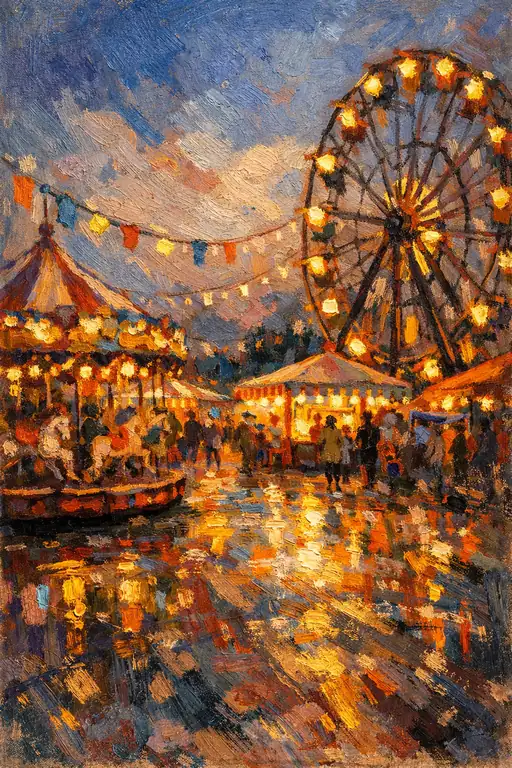 Illuminated Reverie: Golden Echoes of the Midnight Carnival
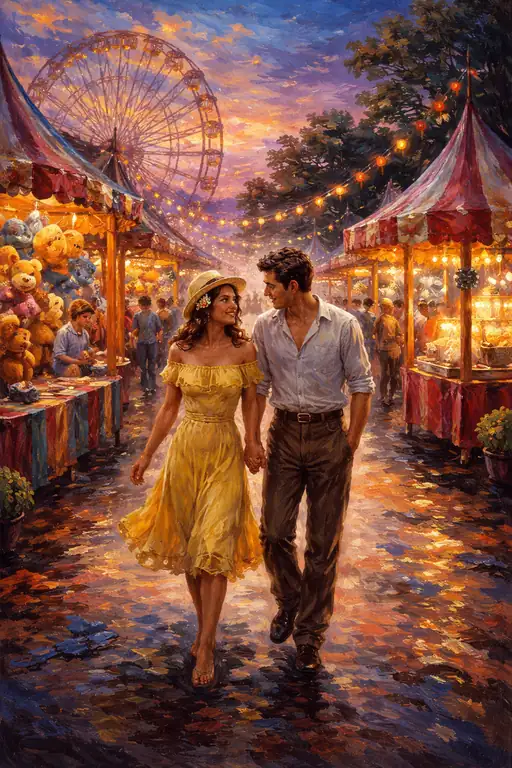 Whispers in the Carnival Dusk
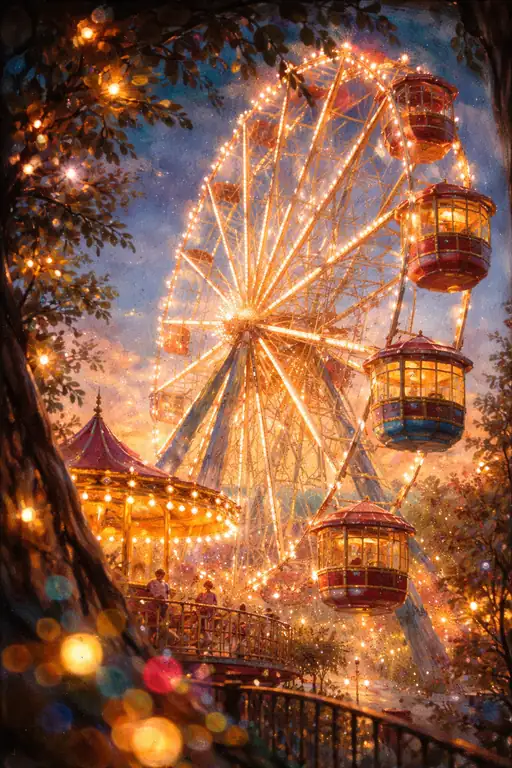 Twilight Radiance: The Ferris Glow
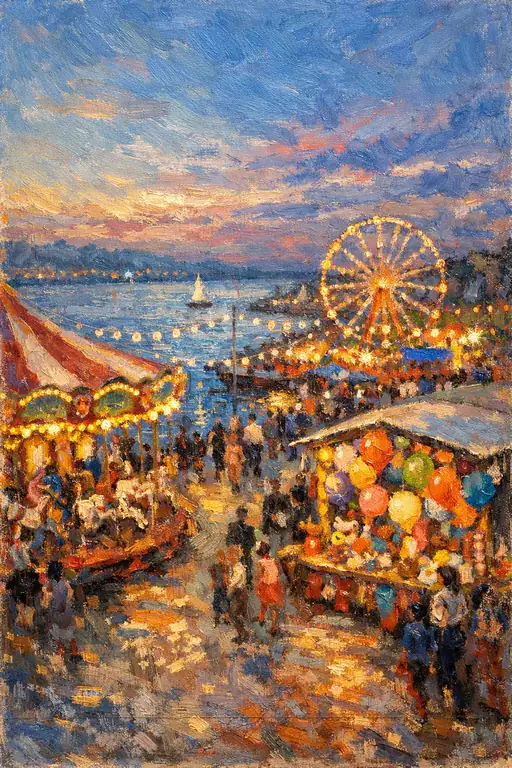 Golden Magic of the Fading Horizon