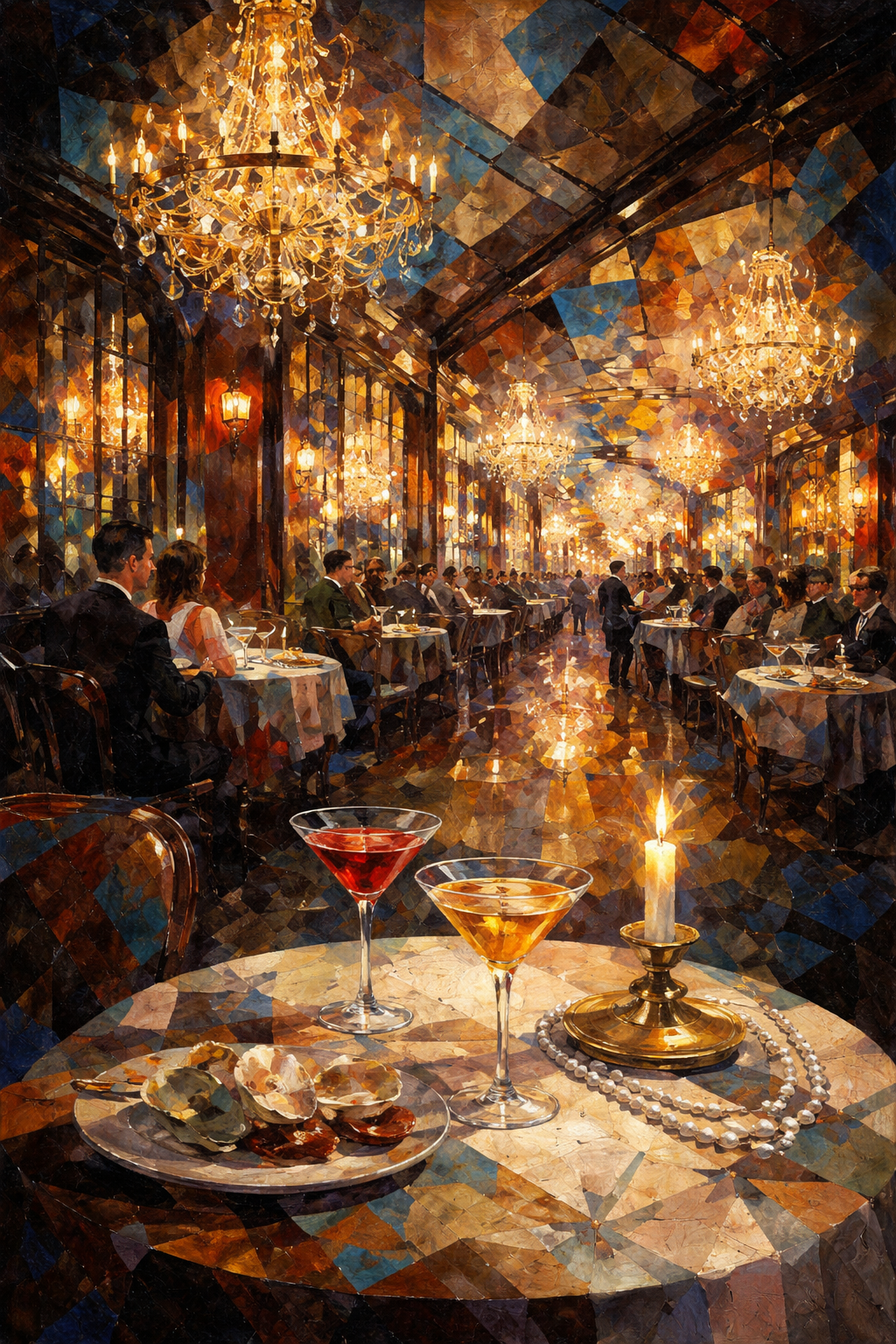
Whispers of Gold in the Mosaic Ballroom
Critique
1. Introduction This artwork is a monochrome painting that fills the entire canvas with a uniform white color. It belongs to the category of minimalist art, where all figurative elements have been removed to explore the essence of the medium itself. By presenting a surface devoid of any discernible brushstrokes or textures, the piece challenges the traditional definition of a painting. It serves as an radical experiment in visual perception, inviting the viewer to contemplate the nature of light and the concept of a blank slate. 2. Description The canvas is covered in a consistent, high-key white pigment that shows no variation in tone or saturation. There are no lines, shapes, or shadows to provide a sense of depth or perspective. The surface appears perfectly flat and smooth, suggesting a high degree of technical control in achieving such uniformity. Even upon close inspection, the physical presence of the paint is minimized, leaving only the pure optical experience of the color white. The boundaries of the work are defined solely by its physical dimensions, with no internal framing. 3. Analysis The primary formal element of this work is the total absence of contrast. Without any interaction between colors or values, the viewer's gaze is not directed to any specific focal point, resulting in a decentered visual experience. The use of white, which theoretically contains all colors of the visible spectrum, creates a state of optical saturation that feels both empty and full. The lack of texture or visible mark-making removes the trace of the artist's hand, emphasizing the conceptual nature of the work over the process of its physical creation. 4. Interpretation and Evaluation This painting can be interpreted as a representation of absolute light or an infinite void. It demands a high level of engagement from the observer, who must find meaning in the absence of traditional imagery. The work evaluates the limits of representation and the power of color to evoke emotional and intellectual responses on its own. While its radical simplicity might be seen as provocative, it demonstrates a profound understanding of the relationship between the canvas and the space it occupies. The piece succeeds in creating a meditative atmosphere that encourages introspection. 5. Conclusion Initial impressions of a blank surface evolve into a complex meditation on the possibilities of art as one spends time with this work. It stands as a testament to the idea that even the most reduced form can carry significant weight. By stripping away everything but the purest expression of color, the artist opens up a dialogue about the fundamental components of visual art. The work remains an uncompromising statement on the purity of vision. It ultimately proves that emptiness can be as expressive and meaningful as the most detailed representation.
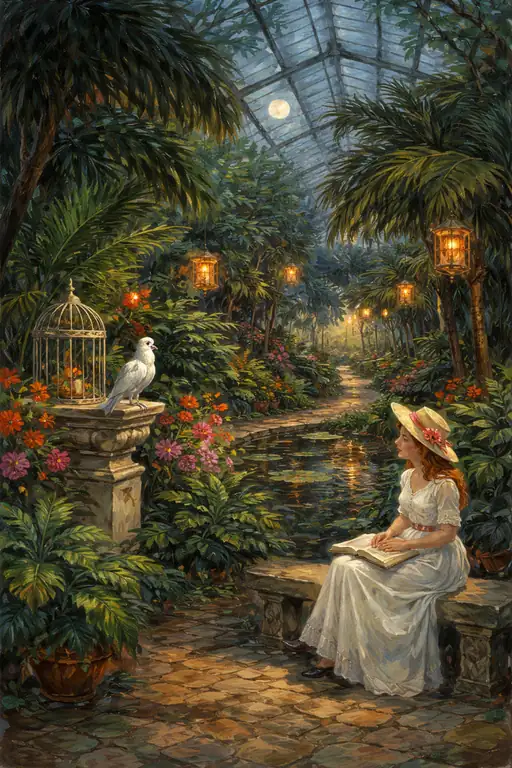 Woman Reading in a Moonlit Greenhouse
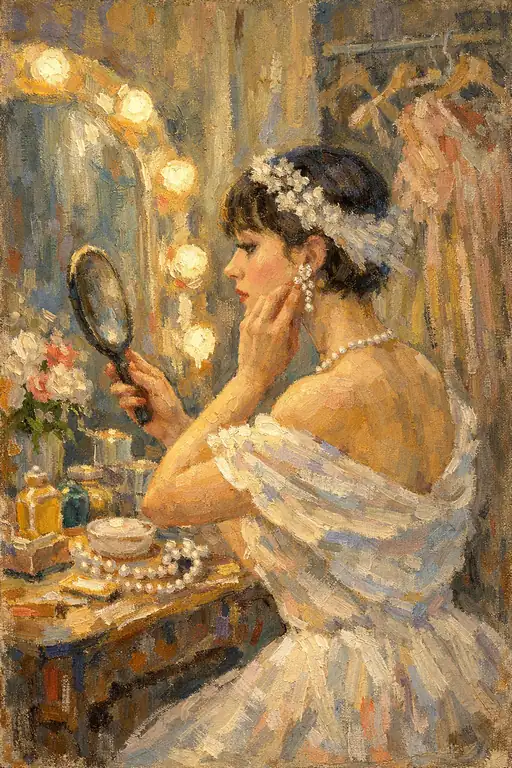 The Golden Prelude: A Dancer's Intimate Reflection Before the Stage
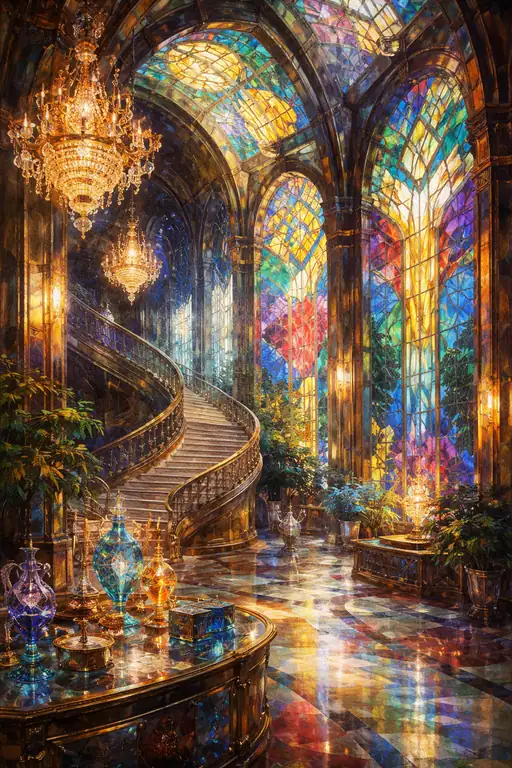 Luminous Secrets of the Grand Palace
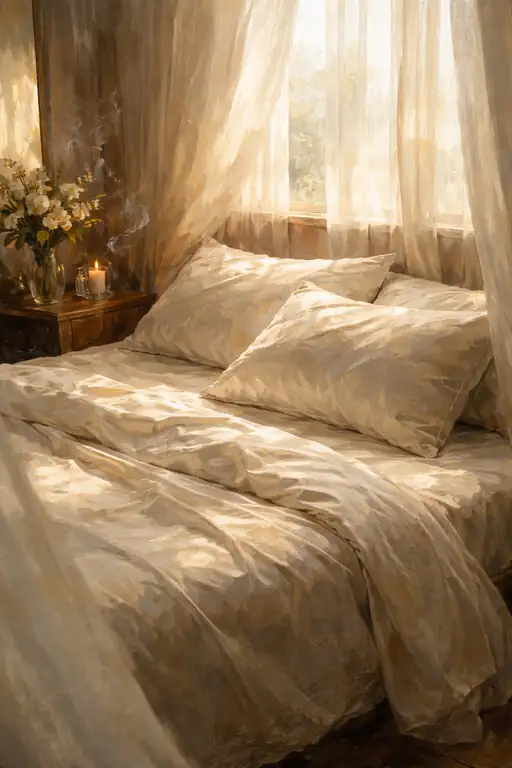 Golden Hour Sanctuary
 Morning Grace in the Bedroom
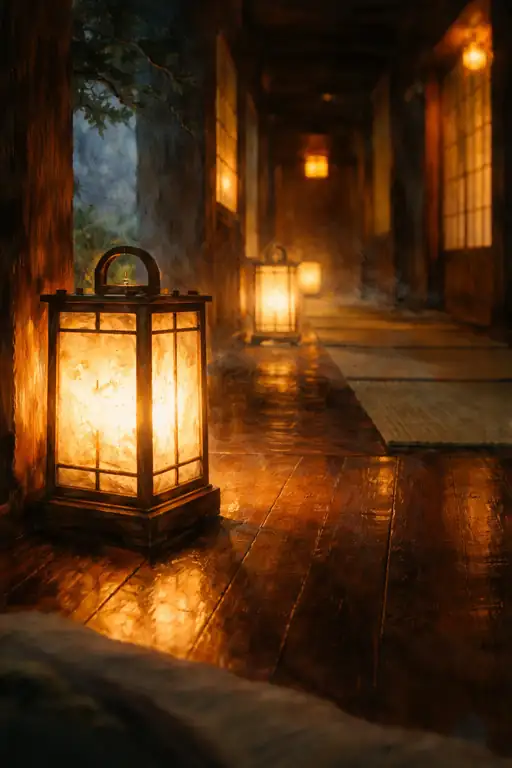 Glow of Antiquity
 Sanctuary of Morning Light
 Morning Soliloquy
 Winter's Warm Refuge
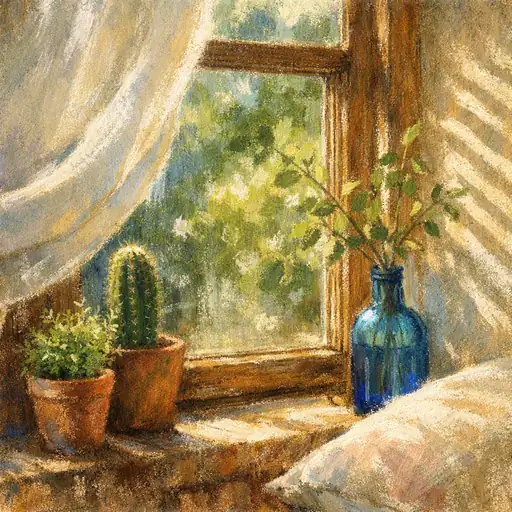 Blue Bottle by the Window
 Whispers of the Stone Corridor