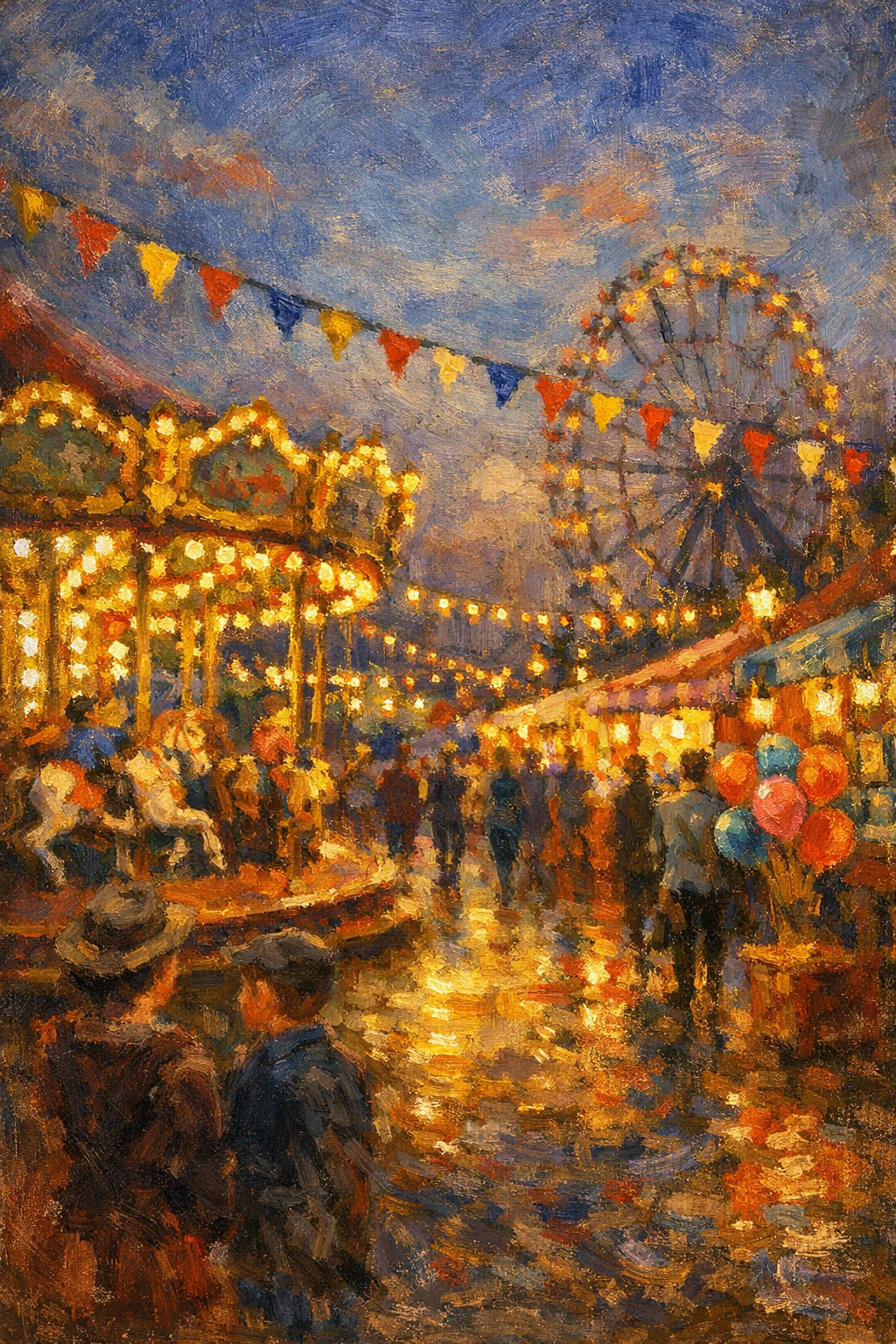
Nostalgic Echoes in the Neon Rain
Critique
1. Introduction This vibrant oil painting depicts the bustling atmosphere of a nighttime carnival, centered on a luminous carousel and a distant Ferris wheel. The artist employs a post-impressionistic style, utilizing thick, textured brushstrokes to convey the chaotic yet festive energy of the scene. By focusing on the interplay between artificial lights and the encroaching darkness of evening, the work creates a sensory experience that resonates with themes of celebration and nostalgia. This introduction serves to frame the painting as a dynamic exploration of urban leisure, where color and light coalesce to transform a temporary fairground into a dreamlike spectacle. 2. Description The composition is anchored on the left by a brilliantly lit carousel, its golden lights casting a powerful glow across the cobblestone ground. To the right, a large Ferris wheel rises into a deep blue, twilight sky, while colorful bunting stretches across the upper frame. The foreground features several figures, including two individuals in the lower left, who observe the crowd of people moving between market stalls. The ground appears damp, reflecting the myriad of lights in streaks of gold, orange, and red, while a cluster of colorful balloons adds a whimsical touch to the mid-ground. 3. Analysis The artist utilizes a high-contrast palette, pitting the warm, saturated yellows and oranges of the fairground lights against the cool, dark blues of the nocturnal sky. Light is used not only as a subject but as a structural tool, with the reflections on the ground creating a sense of rhythm and leading the viewer's eye through the crowded space. The heavy impasto technique adds a physical dimension to the painting, making the lights feel tangible and the atmosphere thick with excitement. The balance between the massive structures of the rides and the small, indistinct figures highlights the overwhelming scale of the festive environment. 4. Interpretation and Evaluation This work can be interpreted as a celebration of the ephemeral beauty found in communal gatherings and the transformative power of light in an urban setting. The technical execution of the reflections is particularly noteworthy, demonstrating a sophisticated understanding of how light interacts with wet surfaces to create a kaleidoscope of color. The artist successfully captures the cacophony of the carnival without sacrificing compositional clarity, maintaining a cohesive narrative of wonder and joy. While the theme is popular, the bold application of paint and the intense color saturation provide a visceral quality that elevates the scene beyond simple illustration. 5. Conclusion In summary, this nighttime carnival scene is a masterful achievement in capturing the essence of light, motion, and public festivity. The harmonious arrangement of the glowing rides and the moving crowd creates a lively and engaging visual story for the viewer. While the initial impact is driven by the brilliance of the colors, a deeper analysis reveals a carefully orchestrated balance of tonal values and textures. The painting stands as a powerful observation of the sensory richness inherent in shared human experiences, offering a timeless depiction of the magic that emerges under the cover of night.
Same Subcategory
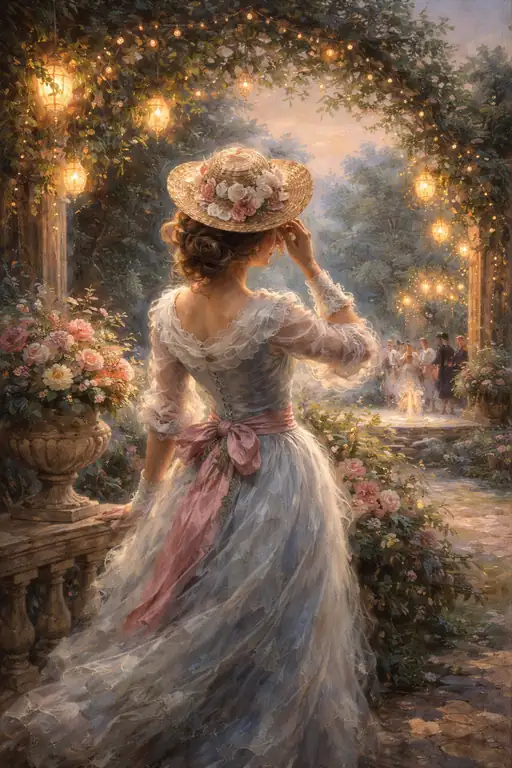 A Silent Invitation to the Twilight Dance
Similar Artworks
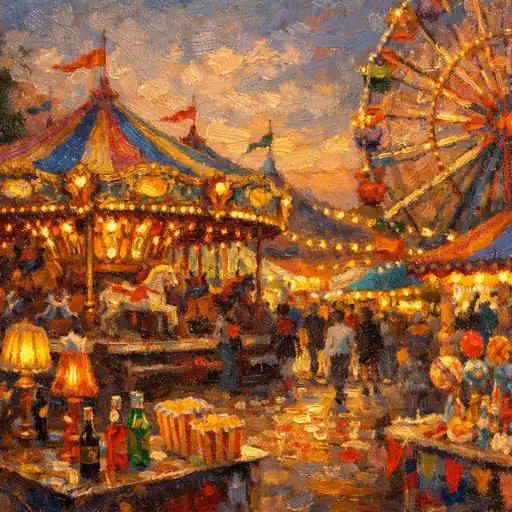 Nightfall at the Carnival
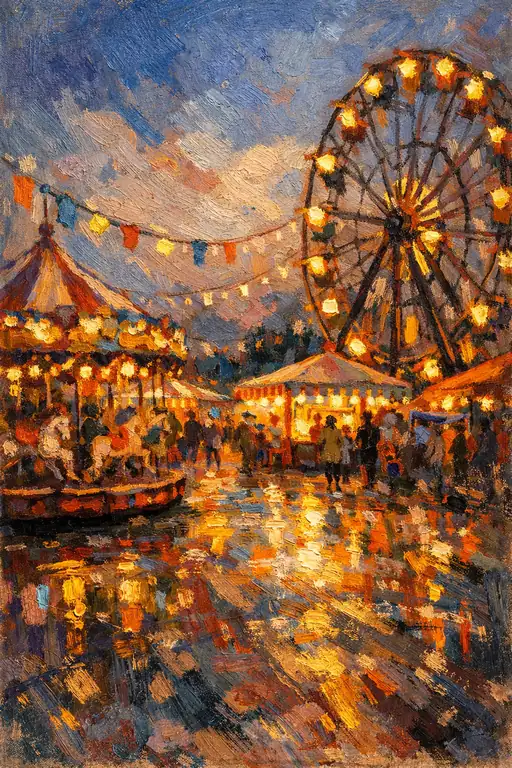 Illuminated Reverie: Golden Echoes of the Midnight Carnival
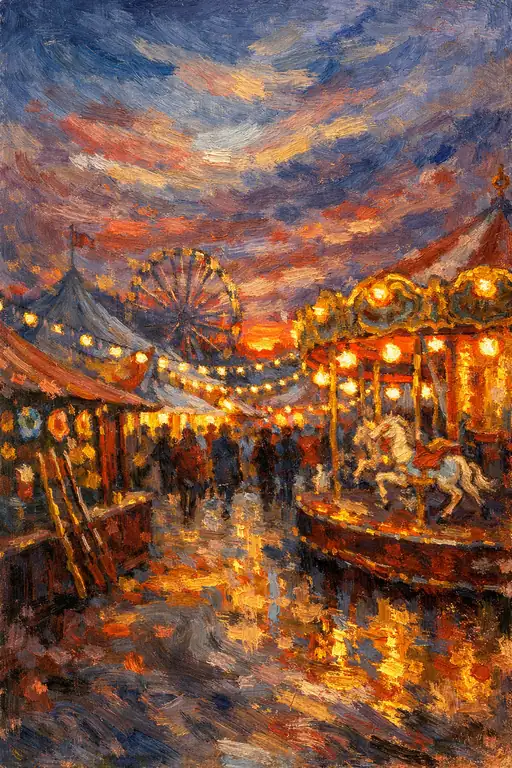 Golden Echoes of a Twilight Carnival
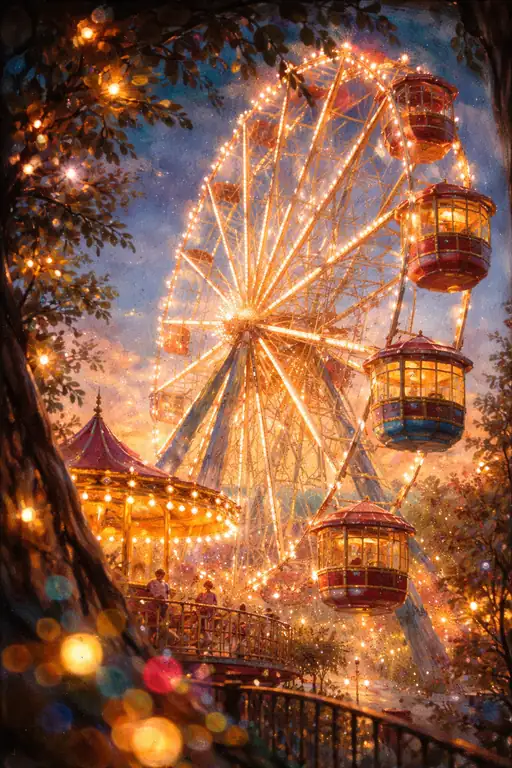 Twilight Radiance: The Ferris Glow
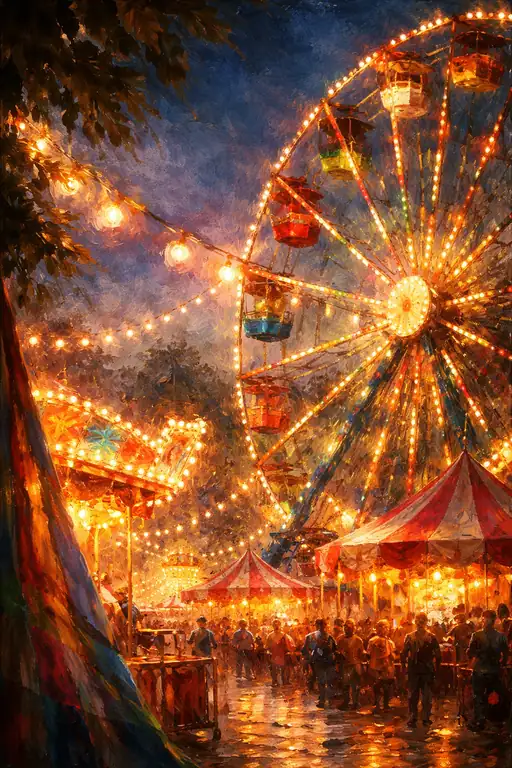 A Joyous Escape into the Illuminated Sky
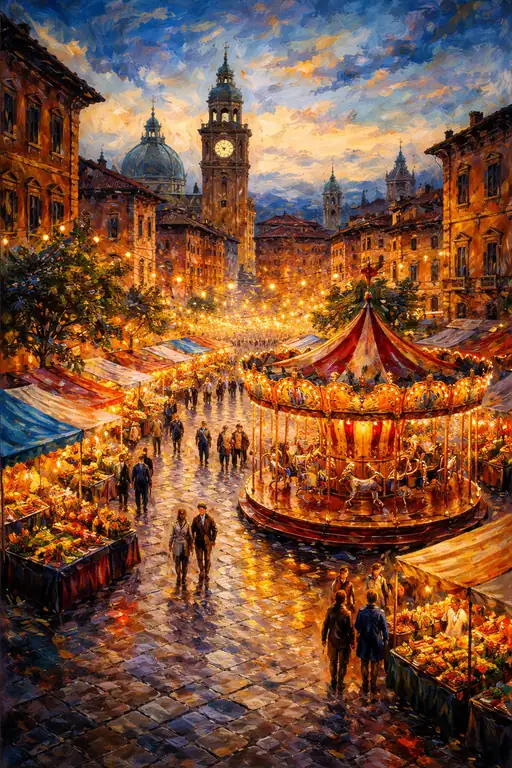 The Night of Joy, Spinning Golden Memories
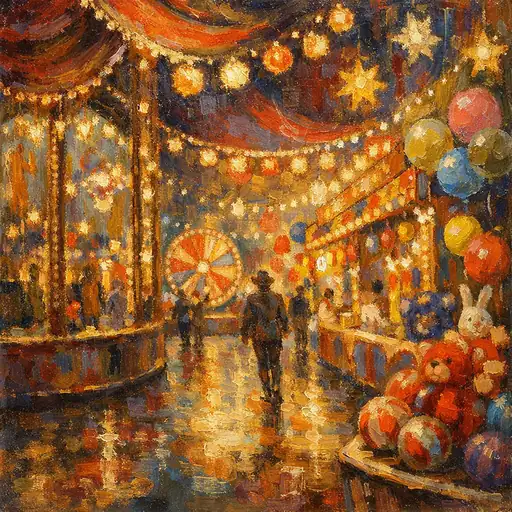 Midnight Carnival of Forgotten Dreams
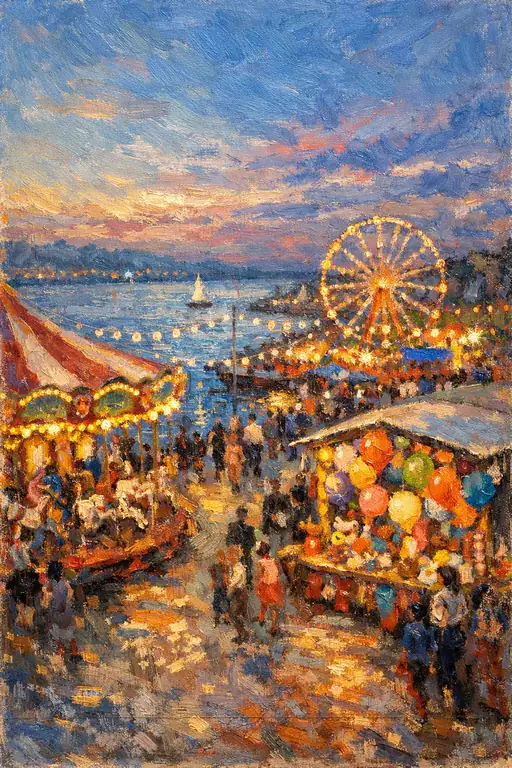 Golden Magic of the Fading Horizon
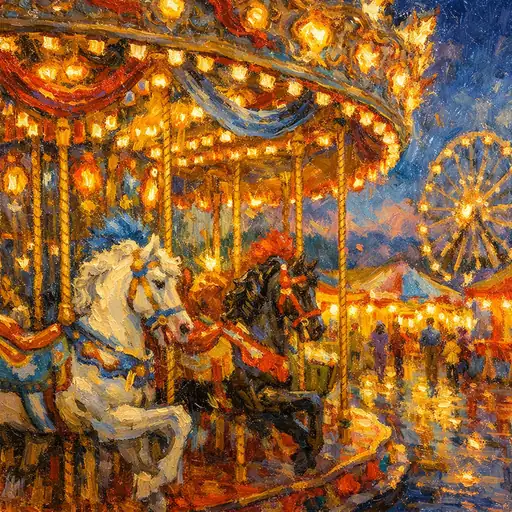 Whirling Dreams of the Starlit Carnival
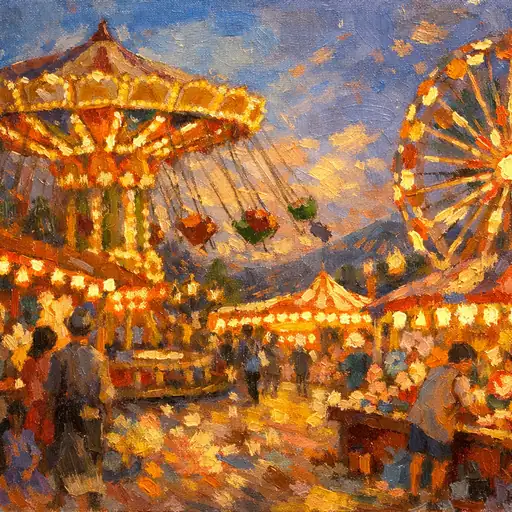 Golden Whirl of the Evening Fair