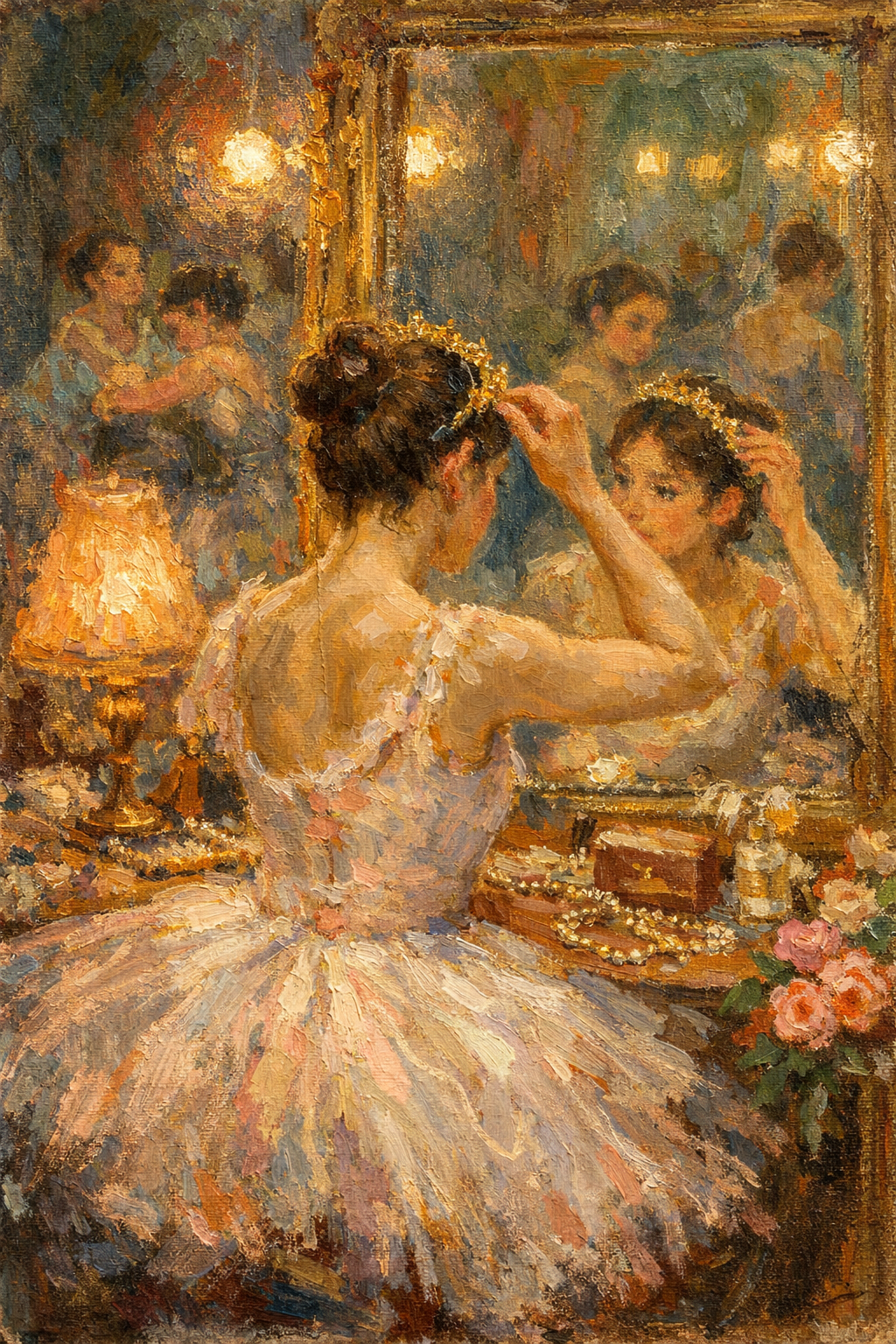
The Quiet Weight of Grace Before the Curtain
Critique
1. Introduction This oil painting captures a poignant backstage moment as a ballerina prepares for a performance, focusing on her reflection in a dressing room mirror. The work employs a robust Impasto technique, characterized by thick, energetic brushstrokes that convey both the physical texture of the scene and the underlying emotional tension. By choosing a viewpoint from behind the subject, the artist creates an intimate atmosphere that invites the viewer into the private world of the theater. This introduction establishes the piece as a study of discipline and aesthetic transformation, where the dancer transitions from a private individual to a public icon of grace. 2. Description The composition is centered on the back of a ballerina wearing a voluminous white and lavender tutu, which occupies the lower third of the canvas. She is reaching up with both hands to adjust a golden tiara atop her dark hair, while her face is visible in the ornate mirror before her. The dressing table is cluttered with various theatrical accoutrements, including a string of pearls, a small jewelry box, and a vase of pink roses. To the left, a glowing table lamp casts a warm, orange light that illuminates the textures of her costume and the surrounding space, while the background suggests a dimly lit, bustling dressing room. 3. Analysis The artist utilizes a complex palette of warm and cool tones, contrasting the orange glow of the lamp with the cool blues and violets reflected in the mirror. Light is the primary structural element, used to define the ruffled layers of the tutu through heavy applications of white paint that create literal physical depth on the canvas. The composition relies on the interplay between the physical subject and her reflected image, creating a dual perspective that enhances the narrative depth. Rhythmic brushwork is particularly evident in the background and the costume, contributing to a sense of vibrant energy despite the subject窶冱 stationary pose. 4. Interpretation and Evaluation The painting can be interpreted as an exploration of the duality between the laborious preparation of the artist and the effortless beauty of the final performance. The technical execution of the tutu is highly commendable, demonstrating a mastery of the Impasto method to evoke a sense of weight and movement. The artist's ability to capture the specific quality of backstage light, which is both harsh and romantic, adds a layer of authenticity to the work. While the subject is a familiar trope in art history, the bold use of texture and the focused, introspective gaze of the dancer provide a fresh and compelling evaluation of the theme. 5. Conclusion In conclusion, this depiction of a ballerina is a powerful testament to the beauty found in the quiet moments of artistic preparation. The harmonious balance between the thick textures of the paint and the delicate nature of the subject creates a compelling visual contrast. While the initial impression focuses on the brilliance of the costume, further engagement reveals a sophisticated understanding of light and a deep empathy for the subject. The work stands as a significant contribution to the genre of theatrical painting, offering a timeless observation of the dedication and grace inherent in the world of dance.
 Echoes of Eternity on the Tranquil Lake
 A Sun-Kissed Stroll Through Time
 Golden Sighs of the Drowning City
 The River's Golden Pulse
 Luminous Urban Tapestry
 Luminous City Rain
 Riverside Metropolis Gleaming
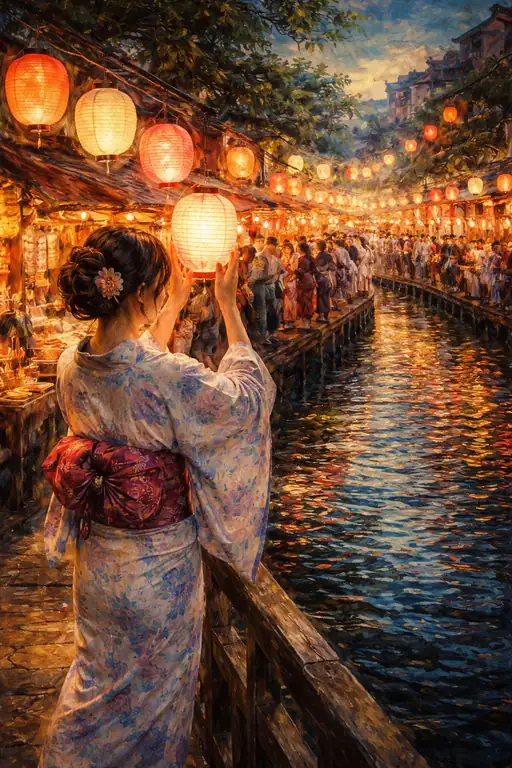 Golden Reflections of a Summer's Eve
 Reflections of Two Eras
 Golden Rhapsody on the Dark Danube
 Twilight's Embrace on the Adriatic