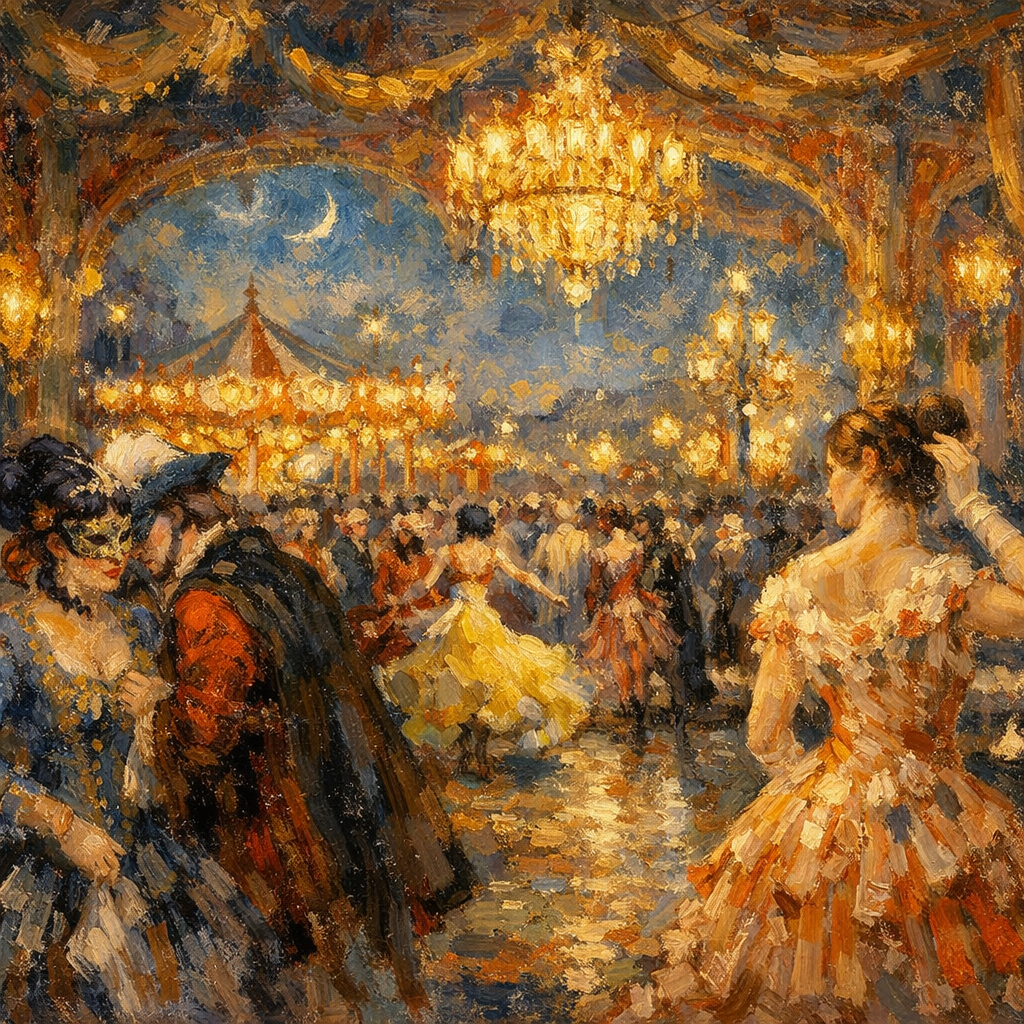
Echoes of the Golden Masquerade
Critique
1. Introduction This oil painting depicts a grand masquerade ball taking place within a lavishly decorated, open-air pavilion. The artwork captures a moment of collective celebration, utilizing a rich palette of warm golds and cool indigos to establish a theatrical atmosphere. It effectively portrays the opulence and anonymity of a high-society festive gathering at night. 2. Description The foreground features several figures in elaborate costumes, including a woman in a patterned orange and white gown on the right and a masked couple on the left. Centered above the crowd is a massive, glowing chandelier that hangs from a baroque architectural arch. In the distant background, a brightly lit carousel is visible, while a thin crescent moon hangs in the deep blue sky framed by the archway. 3. Analysis The artist employs an impasto technique, where thick layers of paint create a textured surface that catches and reflects light physically. The composition is balanced by the heavy architectural elements at the top and the densely packed crowd in the lower half. A rhythmic repetition of circular shapes, from the chandelier to the carousel, creates a sense of continuous motion and festive energy throughout the scene. 4. Interpretation and Evaluation The use of masks and period costumes suggests a narrative of social performance and the liberation found in anonymity. The technical rendering of light is particularly noteworthy, as the artist manages to convey the blinding brilliance of the chandelier against the vastness of the night. The energetic brushwork adds a layer of vitality to the scene, making the static image feel dynamic and bustling with life. 5. Conclusion This work masterfully combines architectural grandeur with the intimate details of a social event to create a captivating visual experience. The interplay between the artificial brilliance of the ball and the natural light of the moon adds a sophisticated layer to the composition. My initial focus on the central light source soon expanded to an appreciation for the complex interactions among the diverse figures.
Same Subcategory
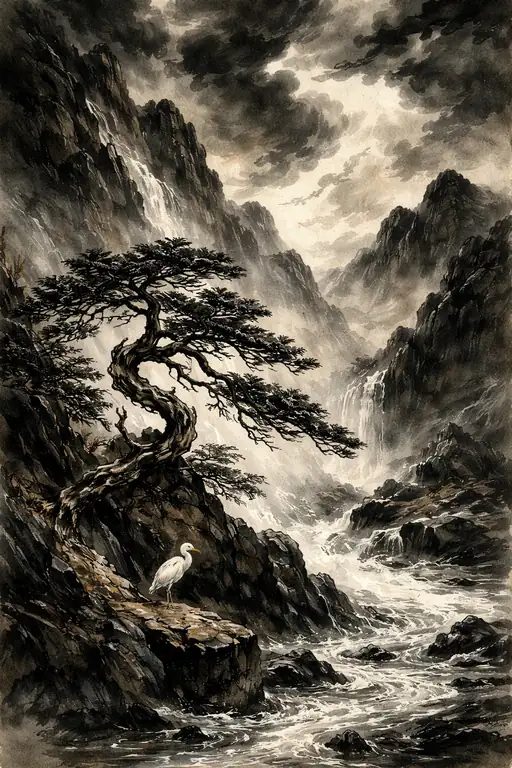 Mystic Peaks and Flight
Similar Artworks
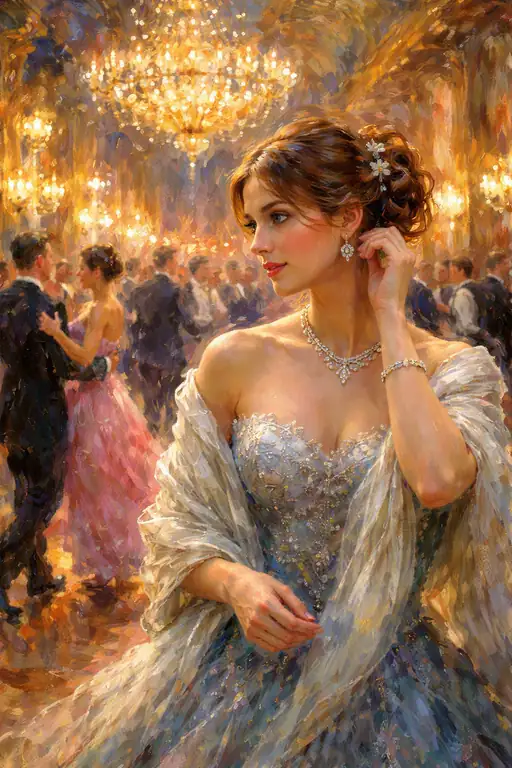 A Solitary Thought Amidst the Golden Waltz
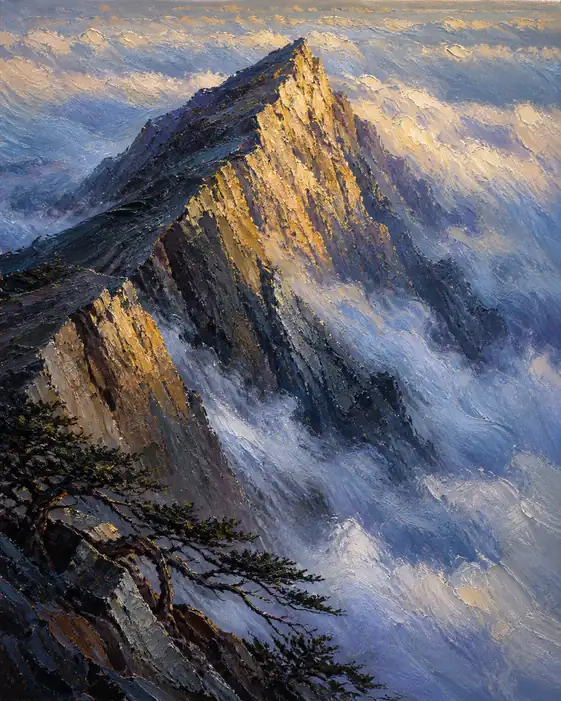 Sovereign of the Sea of Clouds
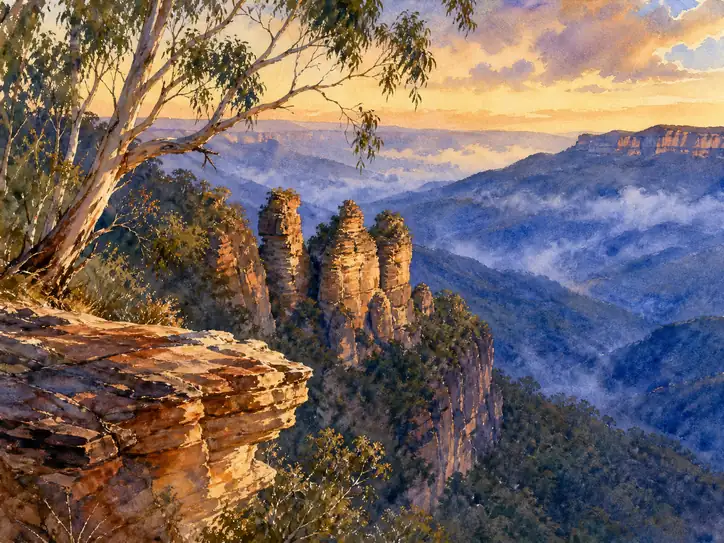 Sisters in the Blue Mist
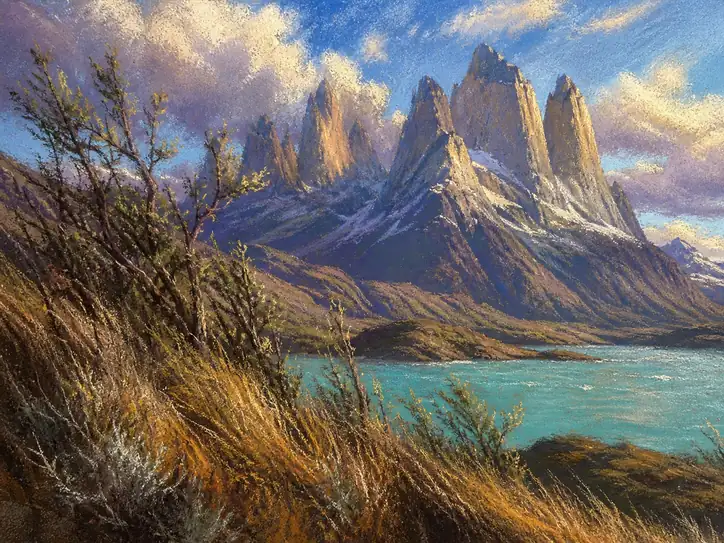 Azure Symphony of the Granite Peaks
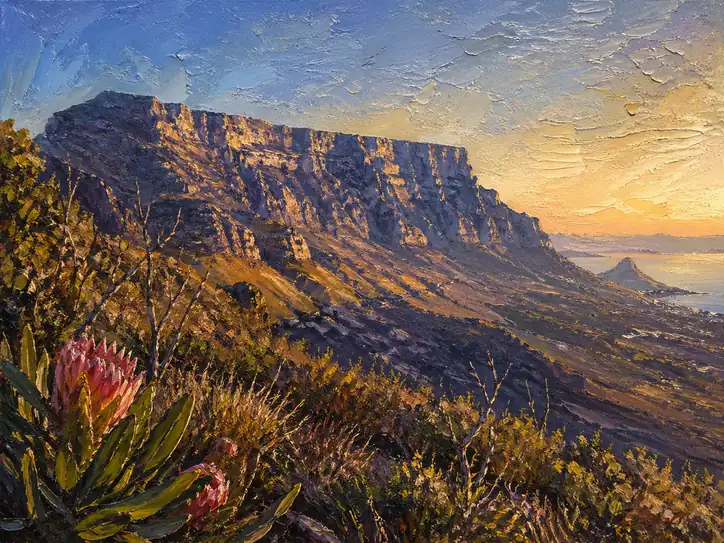 Glow of the Sentinel: Table Mountain and the Protea's Bloom
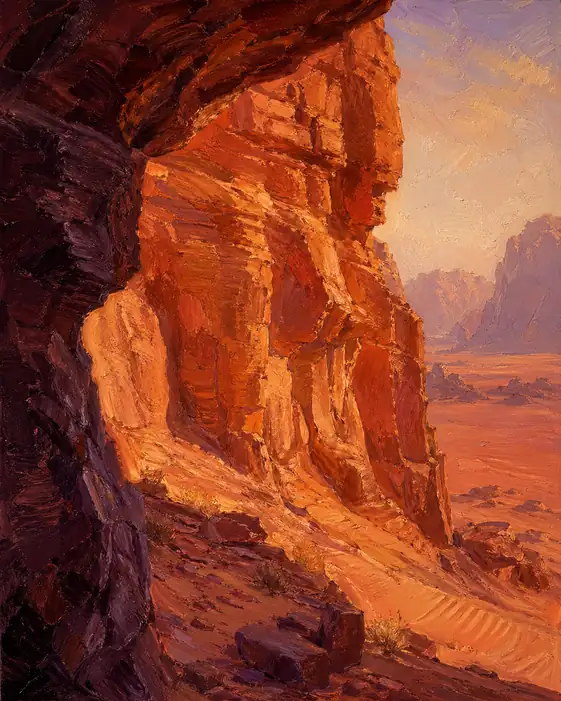 Soliloquy of the Desert: A Dialogue in Light and Shadow
 Cathedral of the Deep Earth
 Breath of the Rugged Highland Stone
 Golden Glow in the Stone Cathedral
 The Enduring Watch Over the Valley