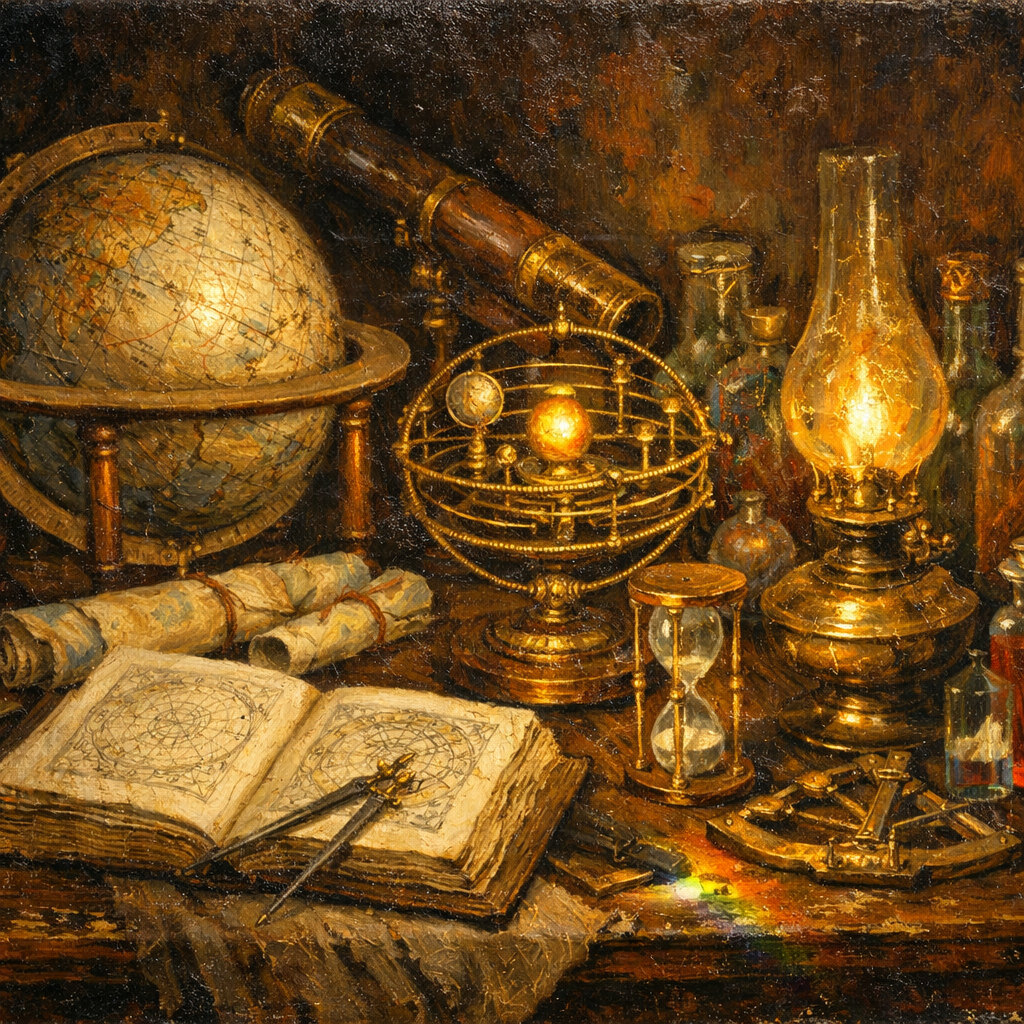
Whispers of the Infinite
Critique
1. Introduction This sophisticated still life painting evokes the intellectual atmosphere of the Age of Discovery. It features historical scientific instruments, including a globe and an armillary sphere, arranged in a studious setting. The work serves as a visual tribute to the human pursuit of knowledge and the exploration of the cosmos. 2. Description An aged globe sits in the background, while a golden armillary sphere occupies the center near an open book of diagrams. A glowing oil lamp casts a warm light over an hourglass and a sextant, illuminating the details of metal and parchment. Rolled maps and various glass vials further enrich the scholarly scene. 3. Analysis The artist masterfully uses chiaroscuro to create depth, with the lamp serving as the primary light source. There is remarkable attention to texture, from the tactile quality of weathered paper to the polished sheen of brass. The composition is carefully balanced, guiding the eye through various artifacts of scientific inquiry. 4. Interpretation and Evaluation The painting successfully captures the profound curiosity inherent in scientific history. The juxtaposition of the hourglass and celestial models symbolizes the human effort to understand the infinite within a finite lifespan. Technically, the precise rendering of complex forms and atmospheric lighting reflect a high level of artistic mastery and intellectual depth. 5. Conclusion While the initial impression is one of meticulous detail, the painting ultimately conveys a powerful sense of wonder. It connects the viewer to the great thinkers who looked toward the stars. This piece is a compelling study of light and history, preserving the spirit of enlightenment for a modern audience.
Same Subcategory
Similar Artworks
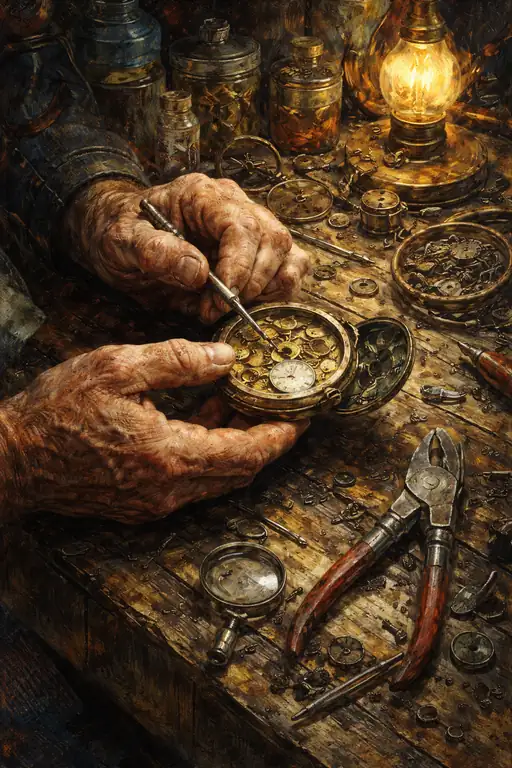 The Watchmaker's Infinite Patience
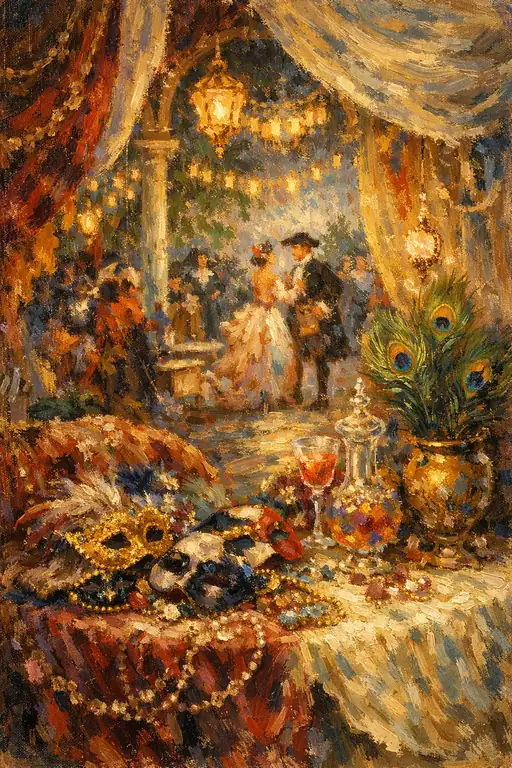 Whispers of the Gilded Masquerade
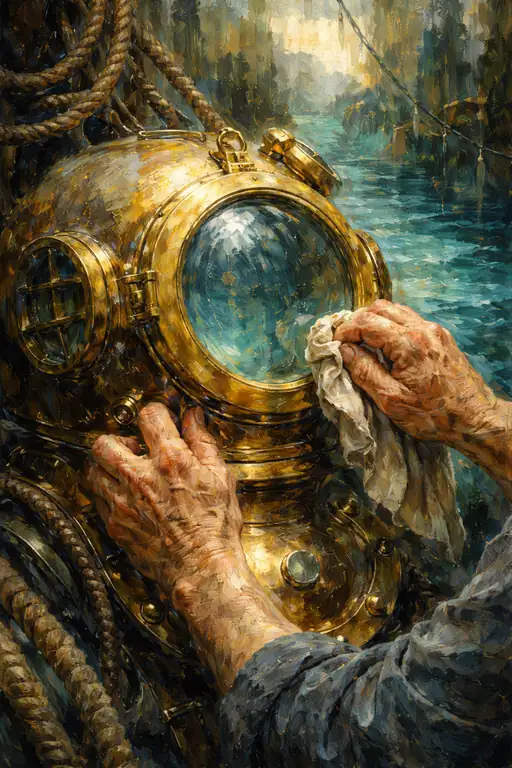 Echoes of the Abyss: Reviving the Ocean's Relic
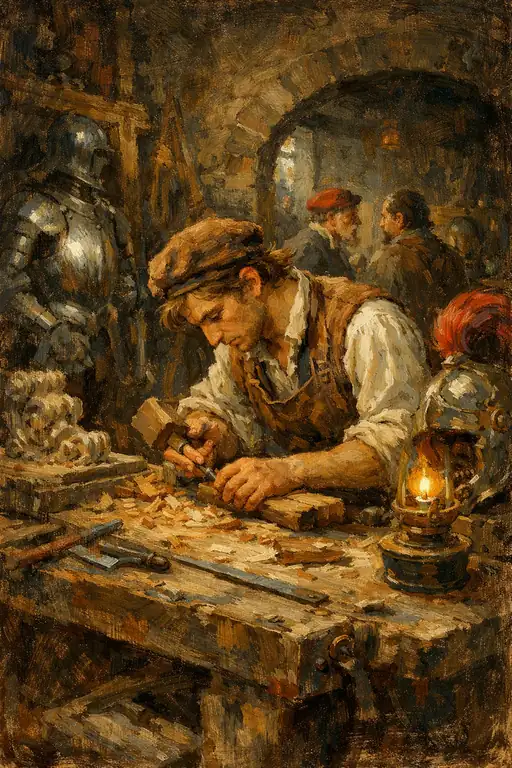 The Artisan's Light
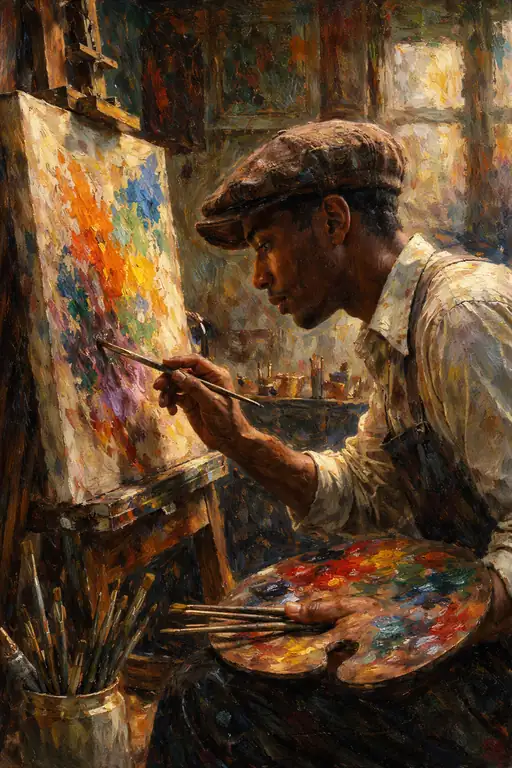 The Creator's Solitude
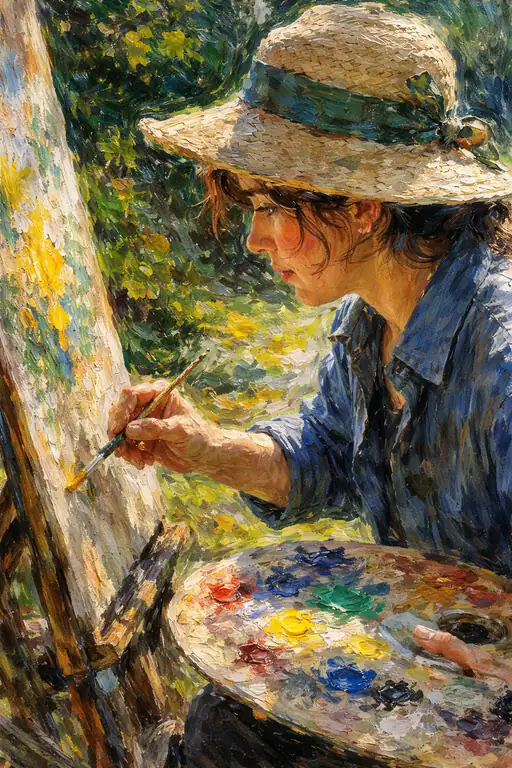 The Canvas of Light and Soul
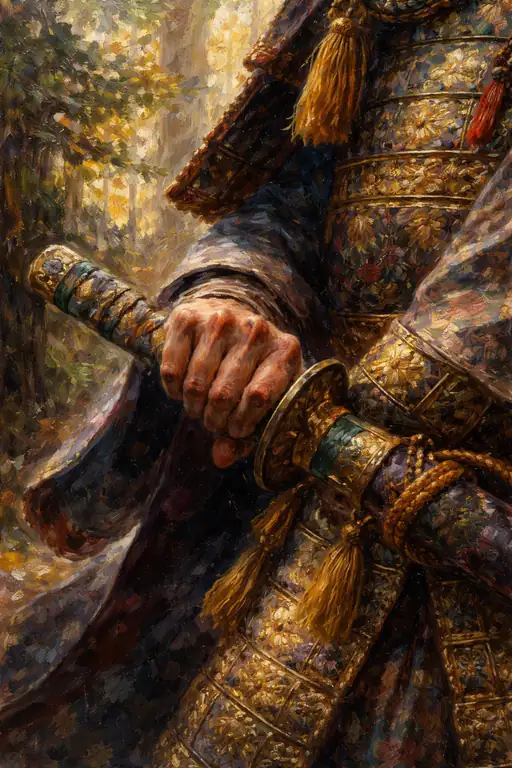 The Final Resolve: Grasping the Soul of the Blade
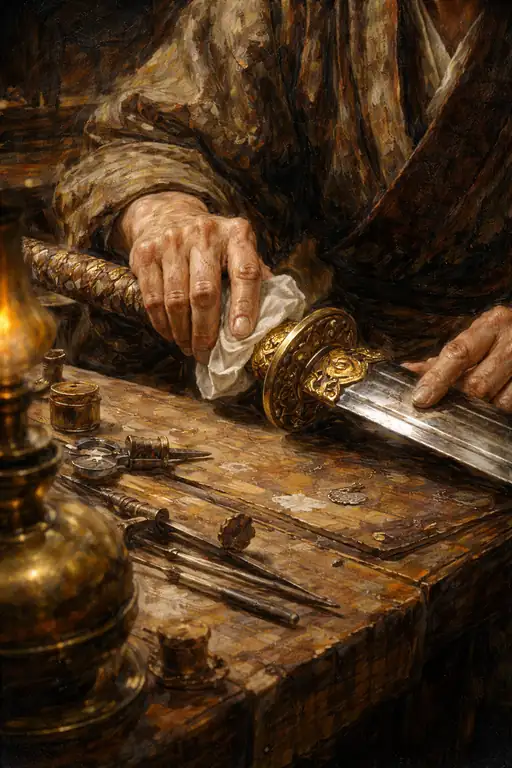 The Swordsmith's Soul Bathed in Warm Light
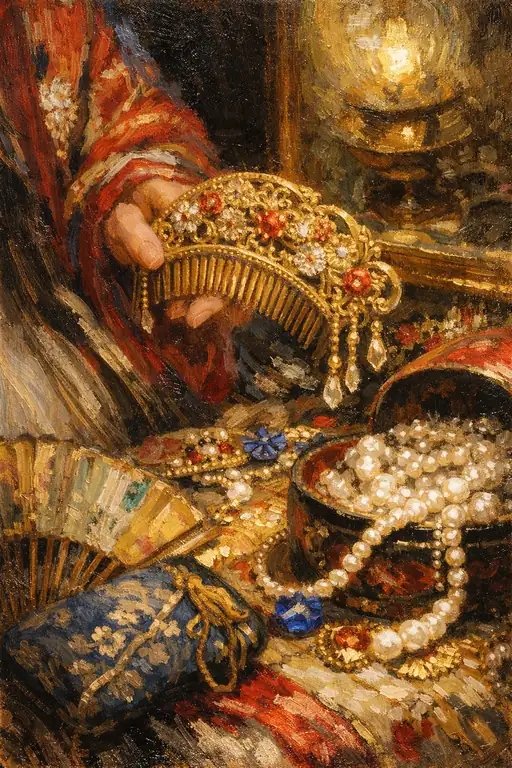 Echoes of Forgotten Elegance
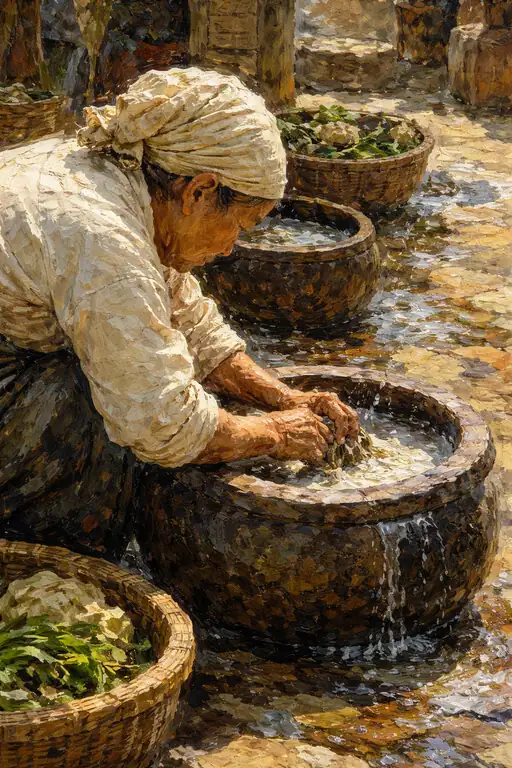 The Weight of Time and Water