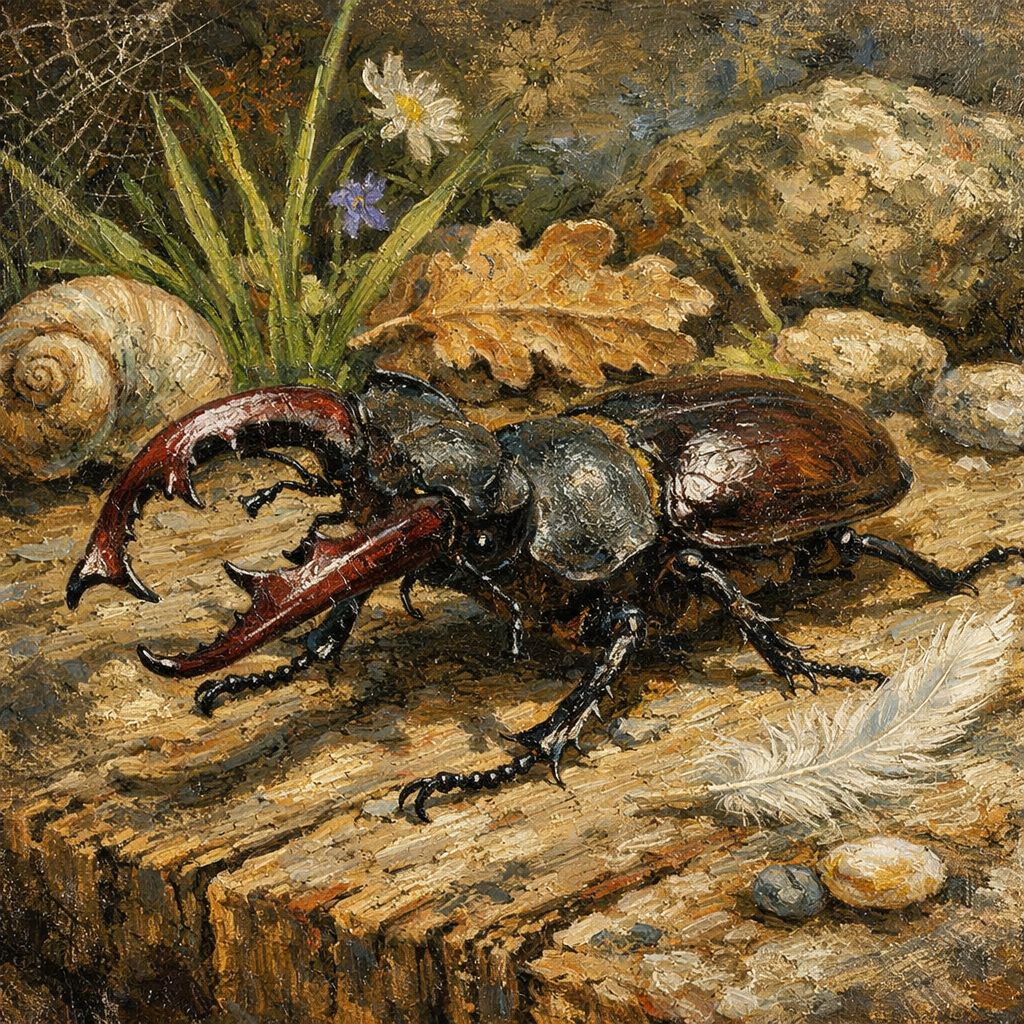
The Silent Emperor of the Undergrowth
Critique
1. Introduction This meticulously detailed oil painting presents a focused study of a stag beetle within its natural micro-environment, reminiscent of seventeenth-century scientific illustrations. The composition emphasizes the beauty of the overlooked details in nature, combining a realistic portrayal of an insect with various organic elements. Through a careful balance of earthy tones and varied textures, the artist creates a sense of quiet observation and biological curiosity. This work serves as an intimate exploration of the intricate complexity found on the forest floor. 2. Description The central subject is a large stag beetle, characterized by its formidable mandibles and glossy, dark carapace, positioned on a piece of weathered bark. In the lower right, a delicate white feather rests near small, smooth stones, while the background features a coiled snail shell and scattered oak leaves. Small wildflowers, including a white daisy and a tiny blue blossom, emerge from thin stalks of grass behind the beetle. A faint spider web in the upper left corner adds another layer of detail to this densely populated miniature landscape. 3. Analysis The artist employs a highly realistic style that highlights the tactile differences between the subjects, from the hard, reflective shell of the beetle to the soft, airy texture of the feather. A warm, earthy palette of browns, ochres, and muted greens establishes a harmonious and grounded atmosphere. The fine brushwork is particularly evident in the intricate rendering of the beetle窶冱 anatomy and the fragile structure of the web. The composition is grounded by the horizontal line of the bark, which provides a stable platform for the diverse collection of natural objects. 4. Interpretation and Evaluation This work masterfully bridges the gap between scientific documentation and fine art, offering a profound appreciation for the miniature wonders of the natural world. The inclusion of the feather and the snail shell alongside the beetle creates a narrative of life, death, and decay within a single frame. The technical precision in capturing light reflections on the beetle's carapace is exceptional, demonstrating a high level of skill in observational painting. The overall composition is well-balanced, successfully transforming a collection of mundane objects into a compelling and aesthetically rich visual experience. 5. Conclusion An initial focus on the impressive form of the stag beetle gradually expands to include the many delicate details that surround it, revealing a complete and vibrant ecosystem. The painting succeeds in elevating its humble subjects through meticulous attention to detail and a sophisticated understanding of light and texture. Its primary strength lies in its ability to inspire a sense of wonder toward the small, often ignored aspects of the environment. Ultimately, the work stands as a beautiful and technically accomplished tribute to the intricate tapestry of life found in nature's smallest corners.
Same Subcategory
 Roar of the Golden Cascade
 Abyss of Silence
Similar Artworks
 Echoes in the Emerald Deep
 The Hidden Breath of the Forest Whispering Through Dripping Moss
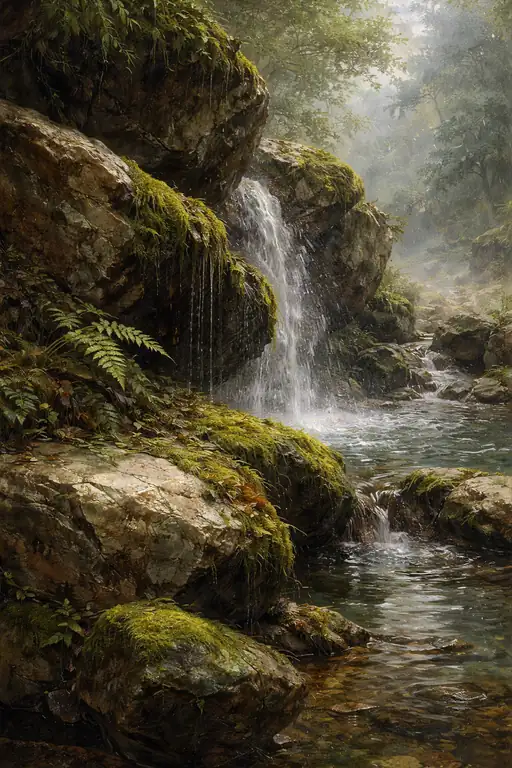 Echoes of the Hidden Cascade
 The Eternal Song of the Mountain Stream
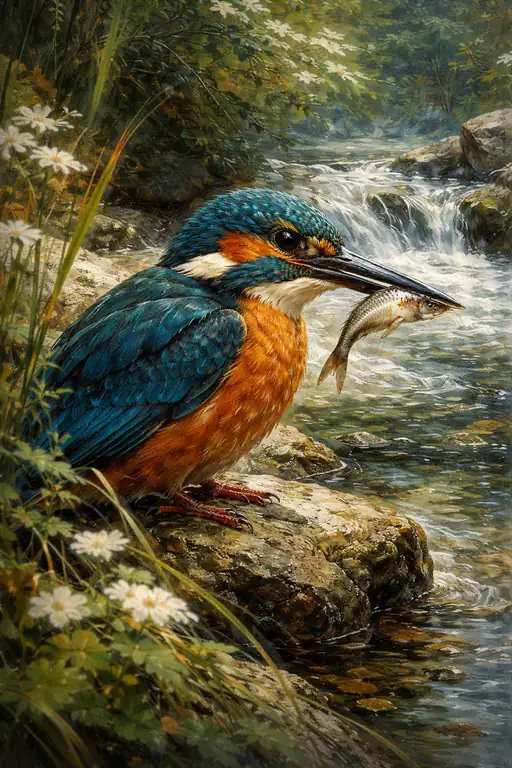 Emerald Depths and the Flash of the Catch
 Solitude in the Silver Mist
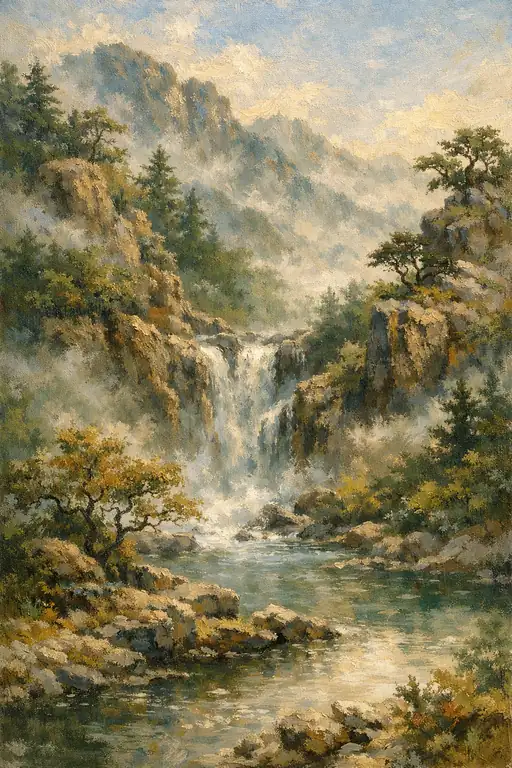 Bathed in the Light of the Crystal Pool
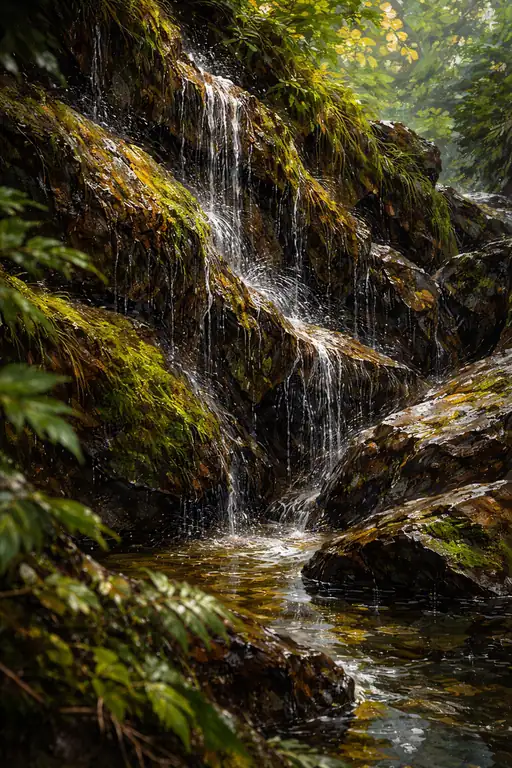 Whispers of the Mossy Stream
 Roar of the Untamed Canyon
 Pulse of the Autumn Forest Stream