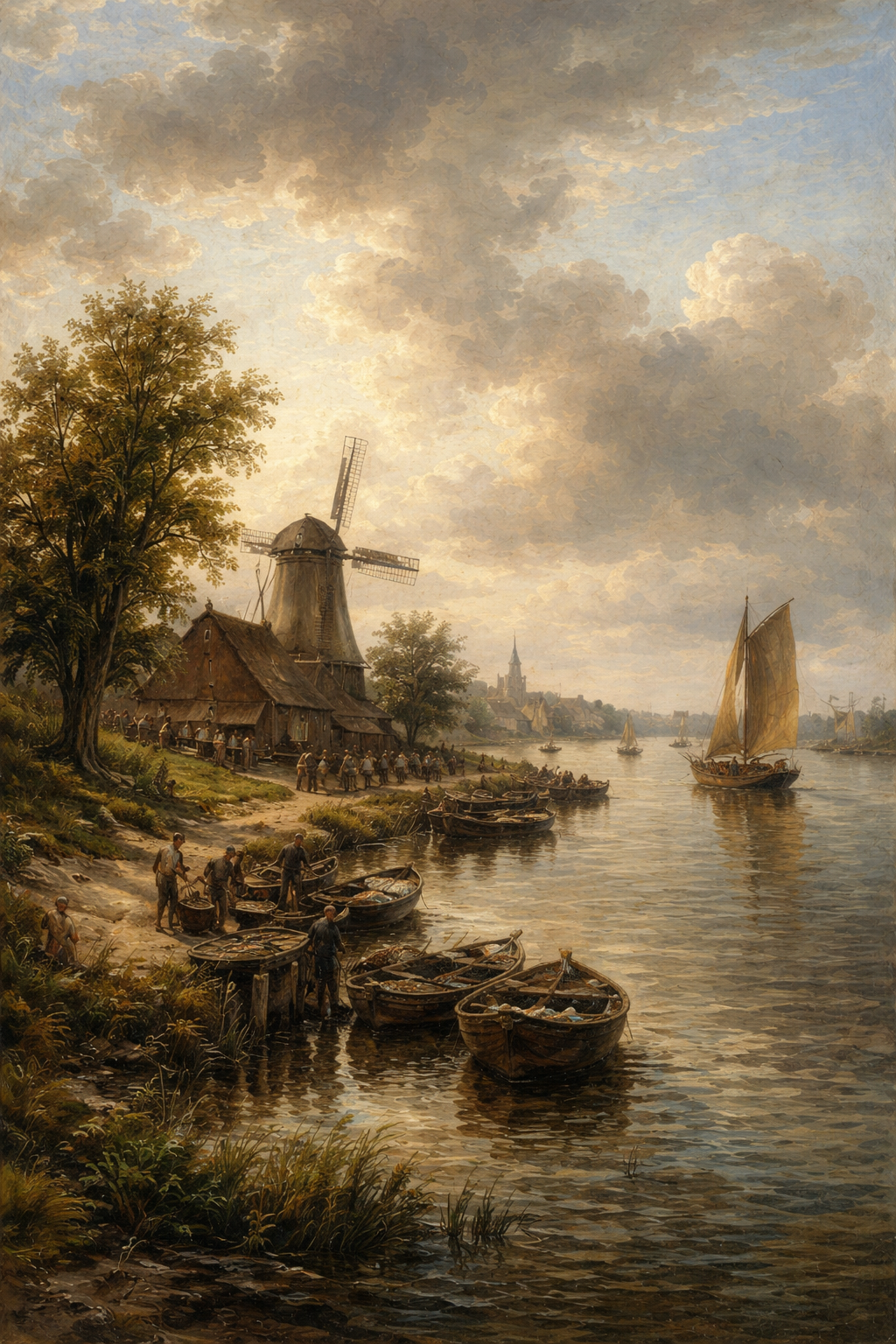
The Windmill by the River
Critique
1. Introduction This oil painting presents a classical landscape featuring a prominent windmill by a wide river, capturing a scene of communal labor. Evoking the tradition of 17th-century Dutch landscape art, the work is characterized by its expansive sky and the gentle ripples of the water, creating a sense of profound tranquility. The composition achieves a remarkable balance between the vastness of nature and the industrious activities of man. 2. Description On the left side of the canvas, a majestic wooden windmill stands next to rustic dwellings, surrounded by a group of workers engaged in loading and unloading goods. Several wooden boats are moored along the shore, while a single sailboat with caught wind glides across the river. The sky, which occupies more than half of the composition, is filled with layered clouds through which soft, diffused sunlight filters down. 3. Analysis The color palette is dominated by subdued earth tones, such as ochre, brown, and grey, which contribute to a sense of historical weight. A low horizon line emphasizes the vastness of the sky, effectively capturing the atmospheric texture and humidity of the riverside environment. The visual hierarchy, moving from the detailed grasses in the foreground to the windmill in the middle ground and the distant far bank, provides the scene with immense depth. 4. Interpretation and Evaluation The painting transcends mere topographical recording, offering an epic depiction of the interplay between shifting natural light and the enduring dignity of human toil. Meticulous attention to details, such as the angle of the windmill blades and the postures of the workers, speaks to the artist's high level of compositional skill. The original and effective treatment of water reflections using minimal brushstrokes is a technical achievement that merits high praise. 5. Conclusion A scene of daily labor is elevated into a sublime artistic statement through exceptional spatial awareness and atmospheric rendering. Prolonged observation reveals a strong sense of presence, almost allowing the viewer to hear the wind and smell the river water. Ultimately, the work serves as an exemplary landscape painting that conveys the primal relationship between nature and humanity with dignity and grace.
Same Subcategory
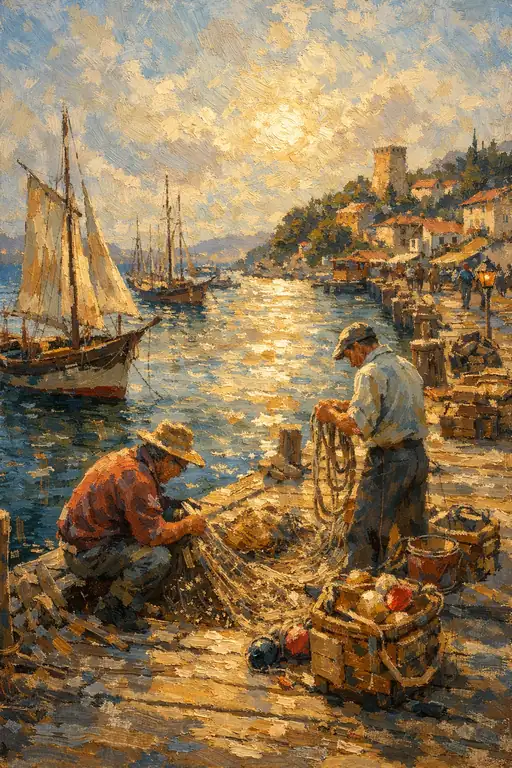 The Toil of the Tides
Similar Artworks
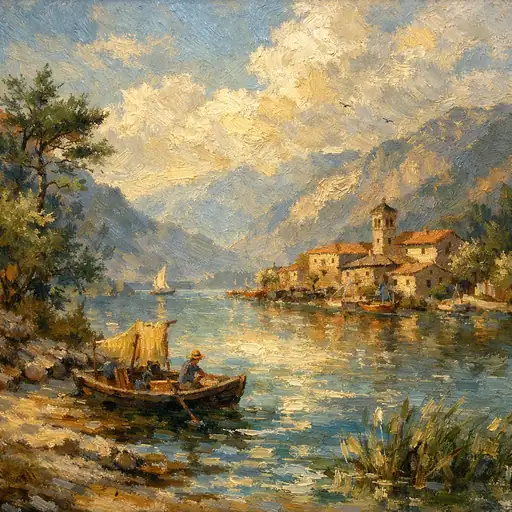 Whispers of the Sun-Drenched Bay
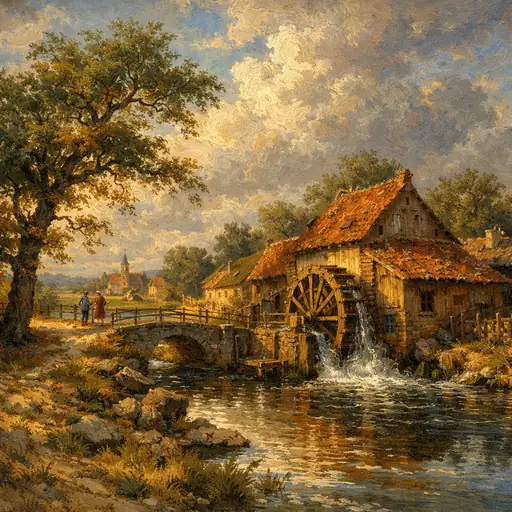 Silent Watcher by the River
 Tethers of the Quiet Sea
 Beyond the Golden Arch
 A Bridge to Forgotten Afternoon
 A Sailor's Gaze at the Sun-Kissed Port
 Whispers of the Misty Haven
 Tranquil Reverie by the Reeds
 The Lively Pulse of the Current
 Chronicles of the Idyllic Path