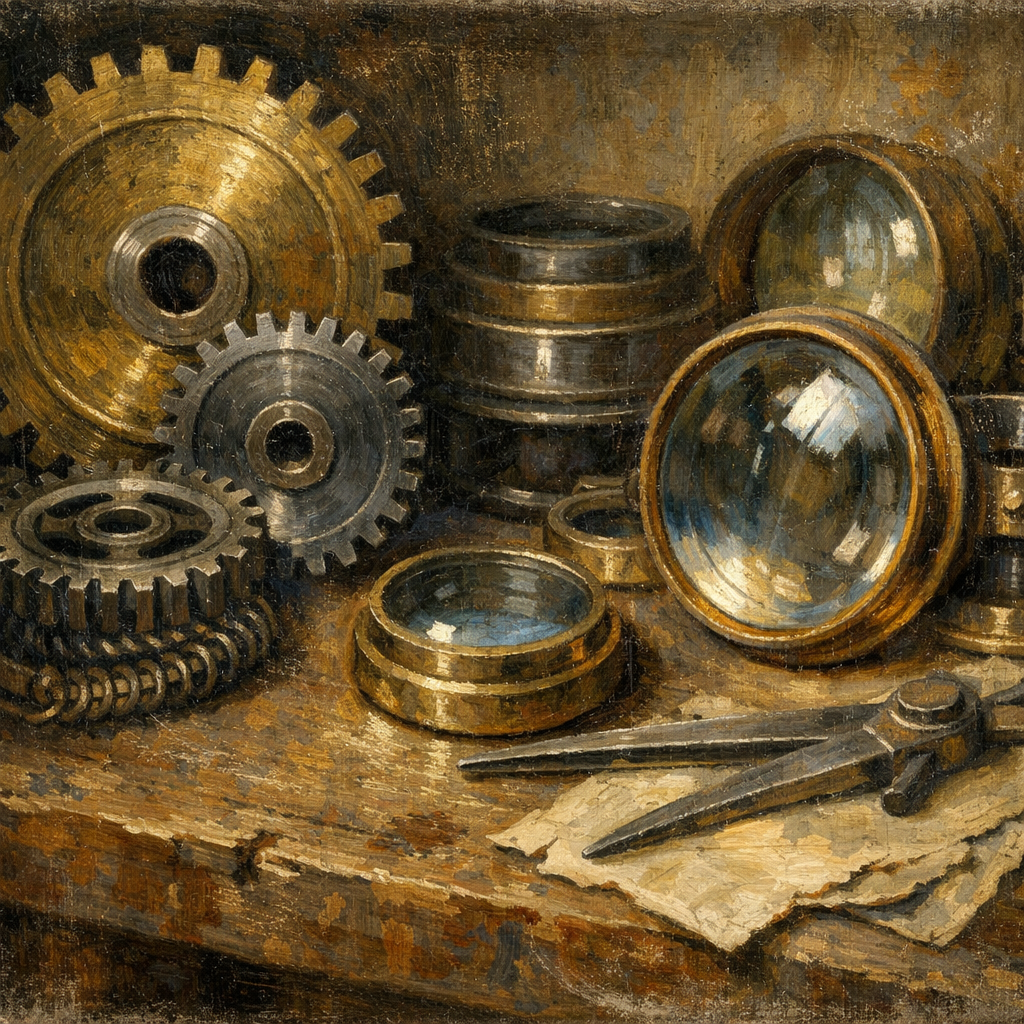
Visions Through the Brass Eye
Critique
1. Introduction This oil painting is a compelling still life that focuses on mechanical components and optical instruments. The arrangement features brass gears, magnifying lenses, and measurement tools, evoking a sense of scientific curiosity and intellectual rigor. By exploring the aesthetic potential of industrial objects, the artist highlights the intricate relationship between light and metallic surfaces. This work bridges the gap between technical precision and artistic expression through a classic compositional approach. 2. Description In the upper left of the canvas, a large golden brass gear dominates the space, partially overlapped by a smaller silver one. To the right, several lenses of varying sizes are encased in brass frames, their glass surfaces capturing complex reflections of an unseen environment. In the foreground, a pair of metal calipers rests on a stack of aged papers on a wooden surface. The dark, textured background provides a stark contrast that emphasizes the luster and material reality of the objects. 3. Analysis The composition is built around the repetition of circular forms, which creates a rhythmic visual flow across the canvas. A sophisticated color palette juxtaposes the warm, radiant yellows of the brass against the cool, translucent highlights found on the glass lenses. Natural lighting from the upper left casts deliberate shadows to the right, enhancing the three-dimensional presence of each component. The brushwork is exceptionally detailed, successfully rendering the varying textures of polished metal, worn paper, and clear glass. 4. Interpretation and Evaluation The work demonstrates remarkable technical skill in its ability to transform utilitarian objects into subjects of aesthetic contemplation. The abstract reflections within the lenses suggest an original perspective that transcends simple realism. By combining gears and measuring tools, the painting can be interpreted as an allegory for human reason and the orderly nature of the universe. The artist窶冱 control over lighting and composition imbues the scene with a dignified, intellectual quality that is highly commendable. 5. Conclusion While the subject matter initially appears to be a collection of cold, mechanical parts, closer observation reveals a delicate interplay of light and form. The painting successfully presents a unique fusion of scientific inquiry and artistic beauty. By finding harmony in the precision of engineering, the artist provides the viewer with a deeply satisfying and thought-provoking visual experience.
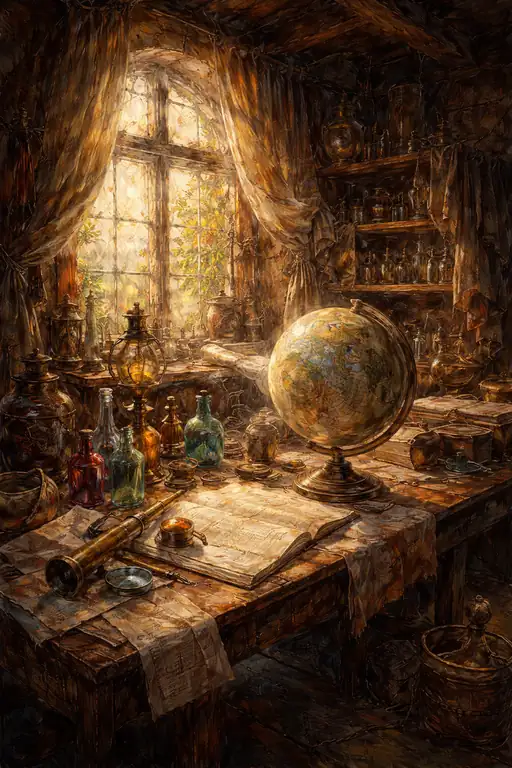 Voyage Beyond the Scholar's Desk
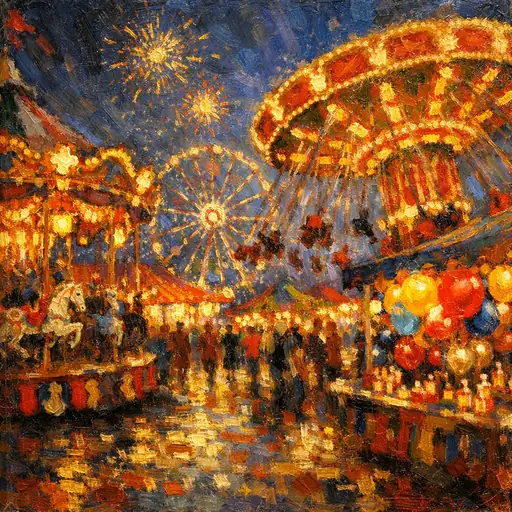 Night Carnival
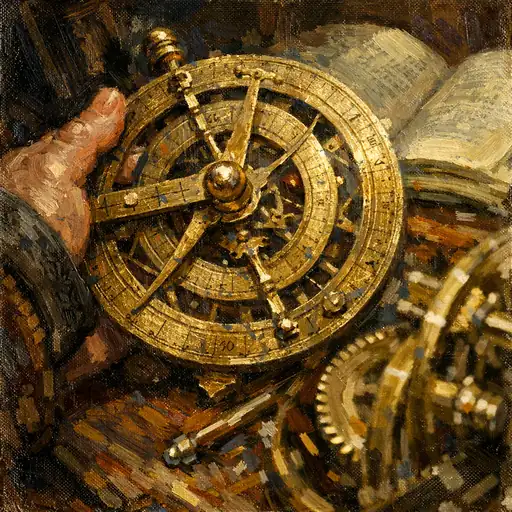 Turning the Wheels of Knowledge
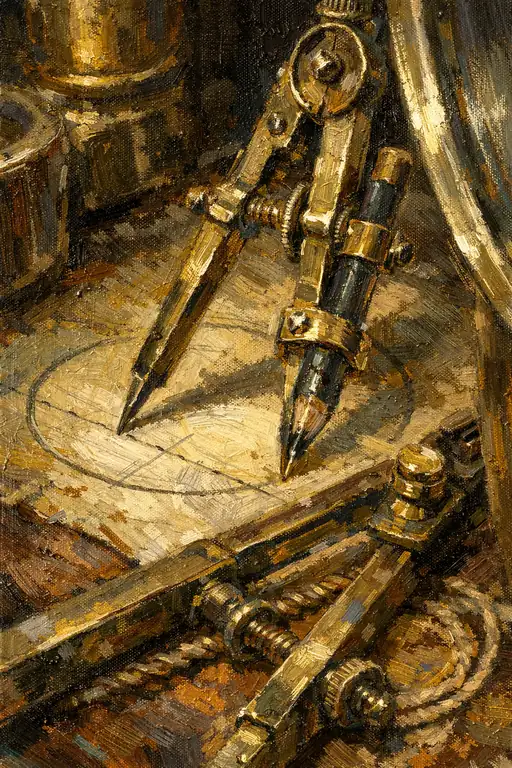 Measuring the Golden Ratio
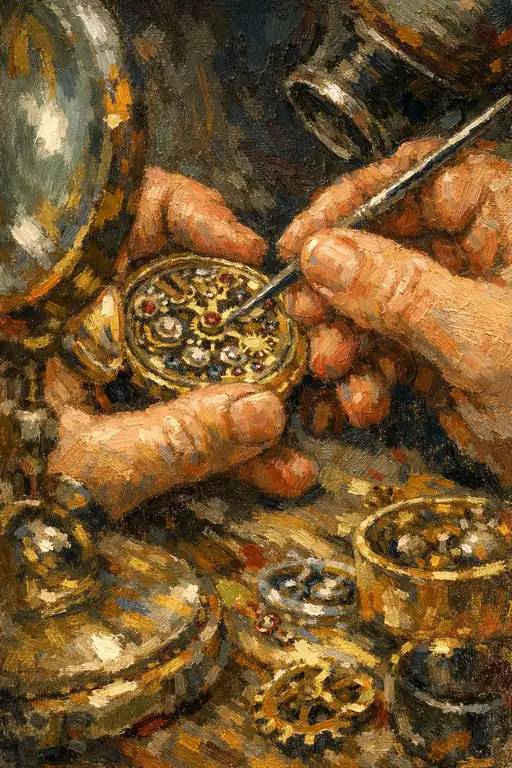 The Golden Heartbeat of Time
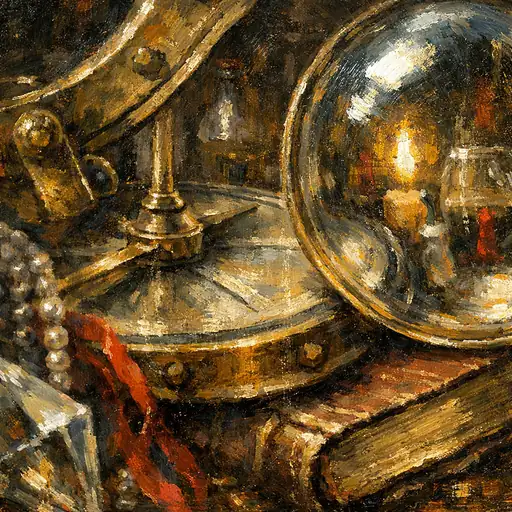 Whispers of Forgotten Wisdom
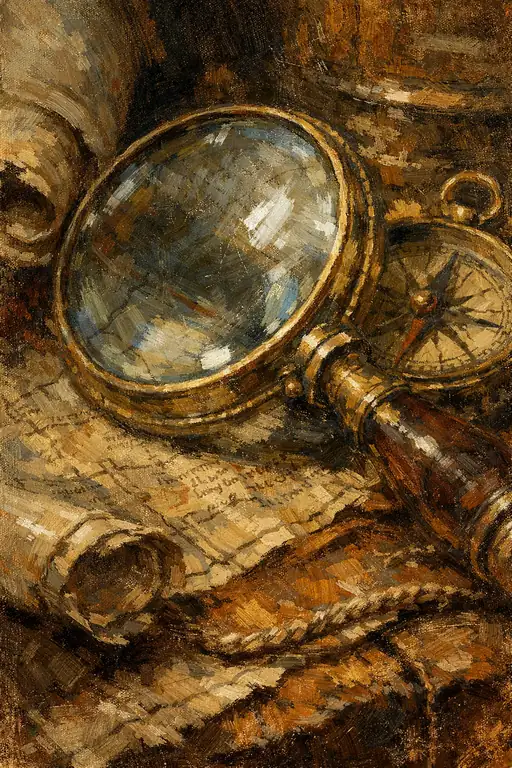 The Navigator's Golden Dream
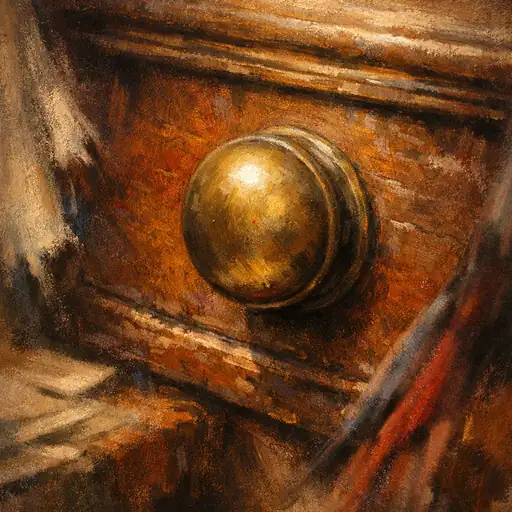 Melody in the Morning Light
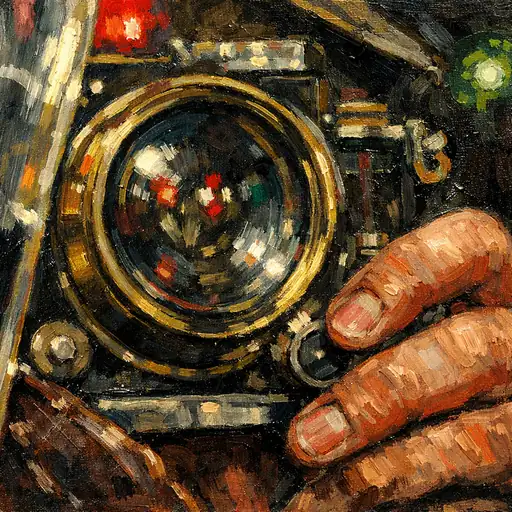 The Touch of Time
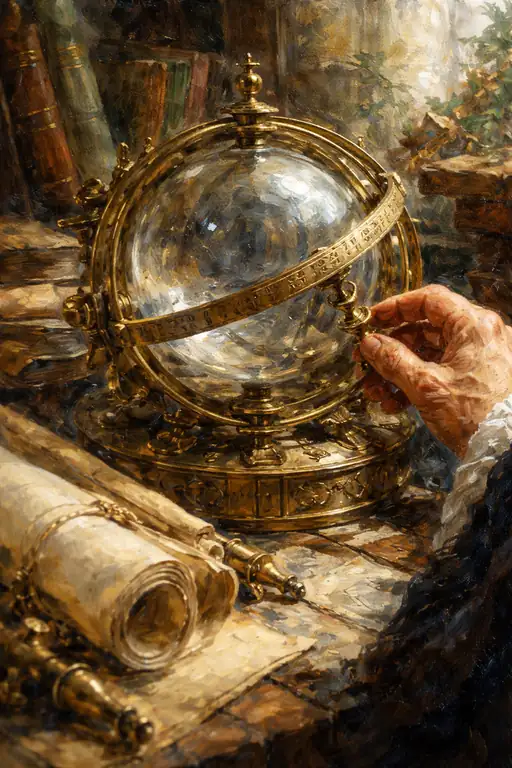 Touch of Time Upon the Stars
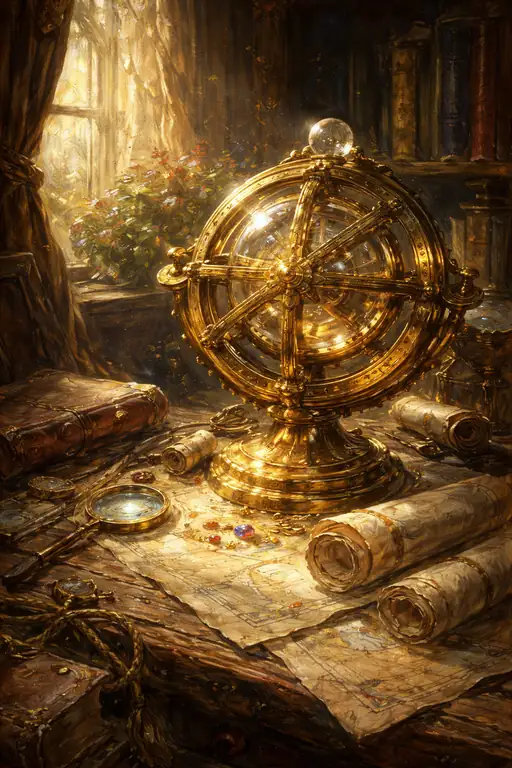 Wandering Through the Celestial Spheres
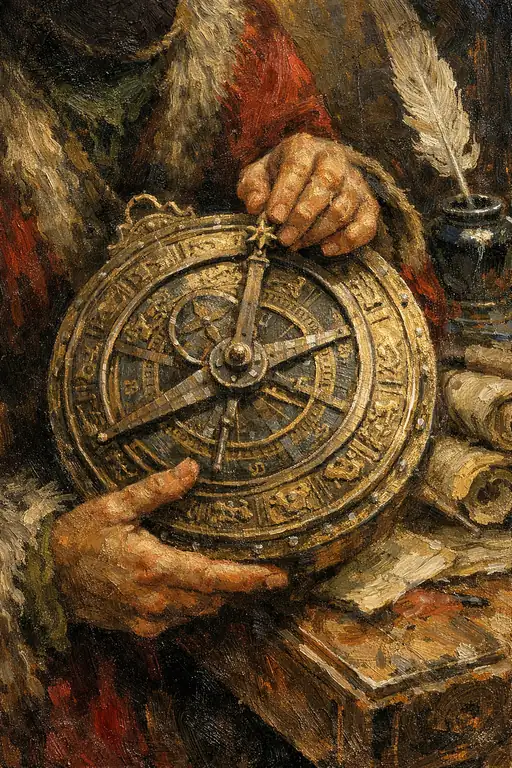 Wisdom Enshrined in Brass