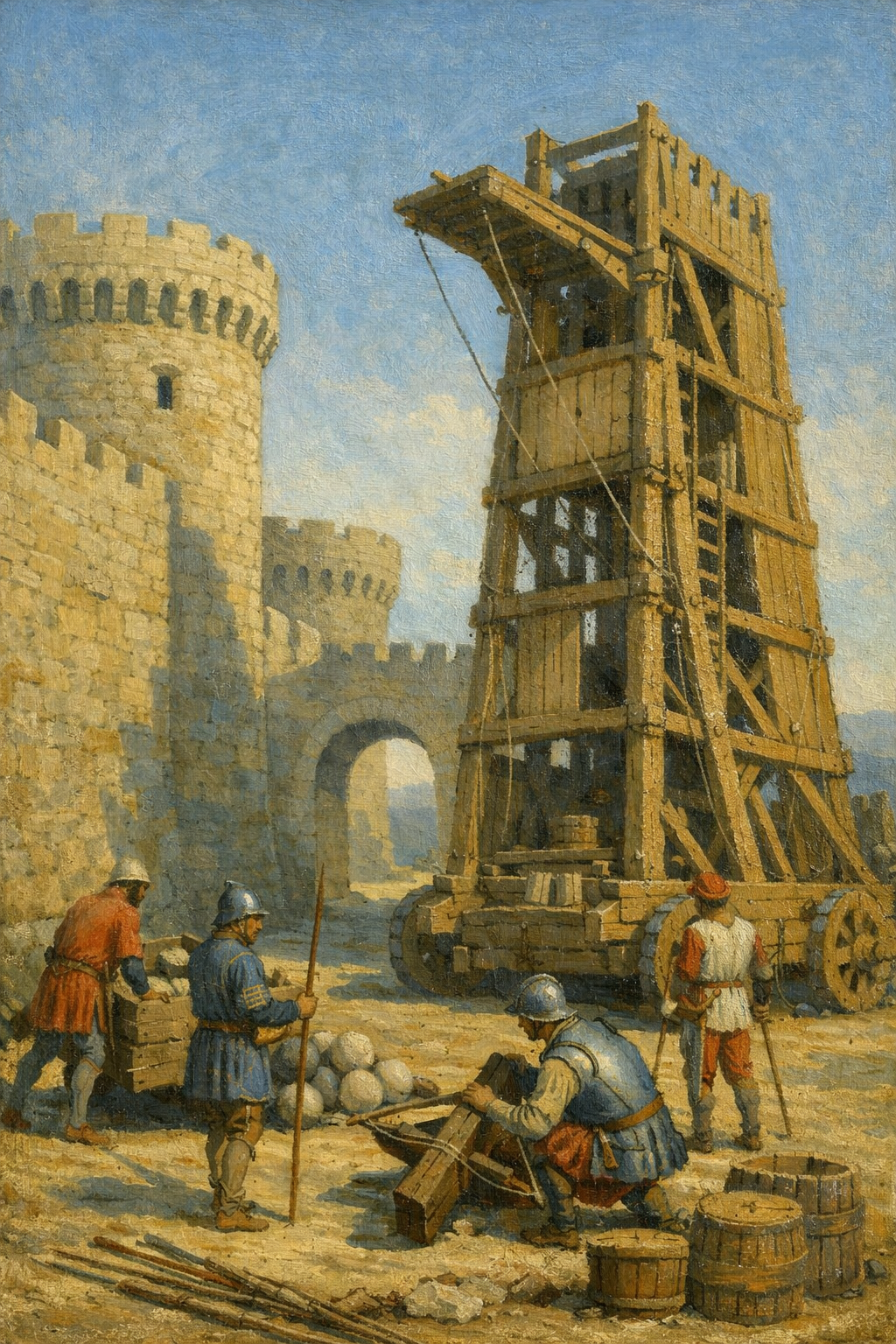
The Wooden Mountain Approaches
Critique
1. Introduction This oil painting presents a meticulous depiction of a medieval siege, focusing on the historical technology of warfare. The composition features a massive wooden siege tower positioned adjacent to a formidable stone fortress wall. By choosing a moment of preparation rather than active combat, the artist captures a sense of disciplined tension. This work serves as a compelling visual record of historical military engineering and the human element involved in ancient conflicts. 2. Description On the right side of the canvas, a towering multi-story wooden siege tower on wheels dominates the scene. Several soldiers wearing blue and red tunics are distributed across the foreground, engaged in various tasks. One soldier in the center is adjusting a large crossbow-like weapon, while piles of rounded stone projectiles lie scattered nearby. In the background, a clear blue sky contrasts with the rugged texture of the stone towers and the dusty ground below. 3. Analysis The visual structure is defined by strong vertical lines from the castle walls and the siege tower, emphasizing a sense of monumental scale. A balanced color palette juxtaposes the warm earthy tones of the ground and wood against the cool cerulean of the sky. The primary colors in the soldiers' uniforms provide focal points that guide the viewer窶冱 eye through the narrative space. Natural lighting from the upper right creates sharp shadows, enhancing the three-dimensional presence of every element. 4. Interpretation and Evaluation The work demonstrates exceptional technical skill in rendering diverse textures, from the weathered grain of the timber to the cold surface of the stone. By focusing on the logistical preparations for an assault, the painting offers a thoughtful perspective on the reality of medieval warfare. The composition is remarkably stable, providing a rational order to a potentially chaotic subject. The artist窶冱 attention to detail and historical accuracy imbues the scene with significant credibility and artistic merit. 5. Conclusion While the initial impact of the massive siege tower is profound, a closer examination reveals the intricate human activity that defines the scene's emotional weight. The transition from observing grand architecture to individual effort highlights the complexity of the historical narrative. Ultimately, the painting successfully transforms a moment of tactical preparation into a timeless observation on human resolve and mechanical ingenuity.
Same Subcategory
Similar Artworks
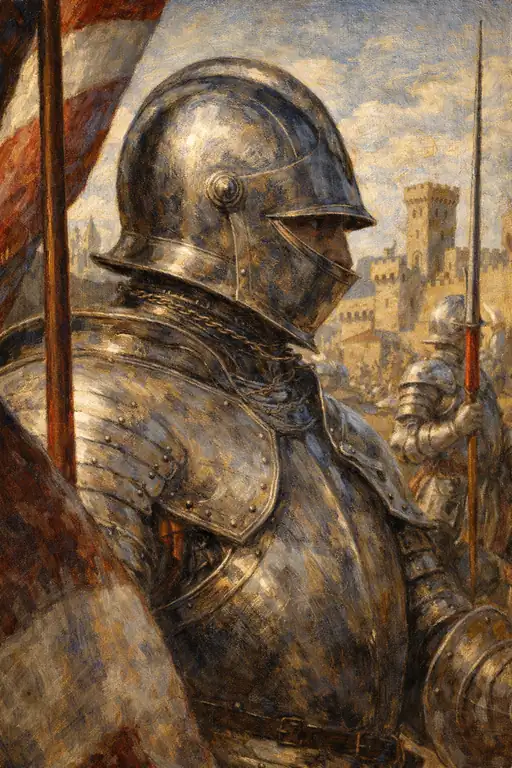 The Noble Knight Under the Sunlit Sky
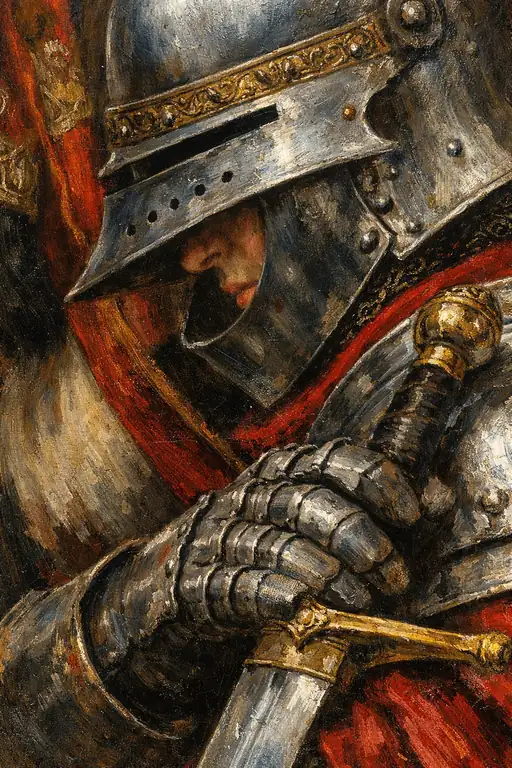 Grip of the Valiant Knight
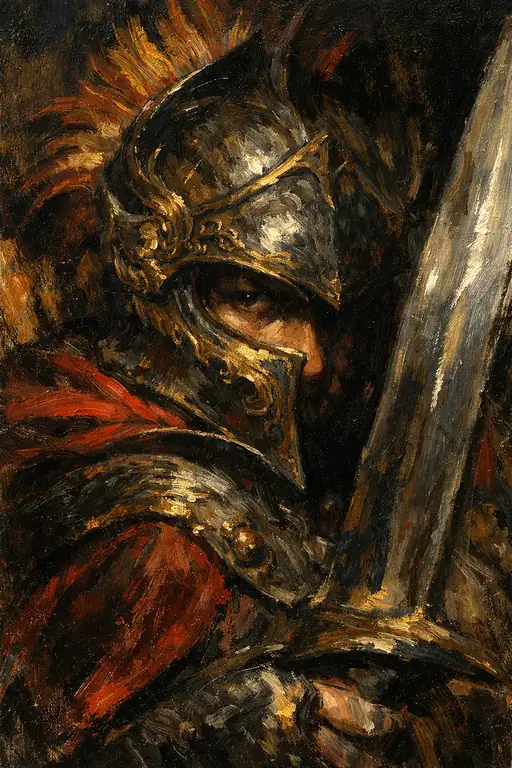 Steadfast Resolve in Iron
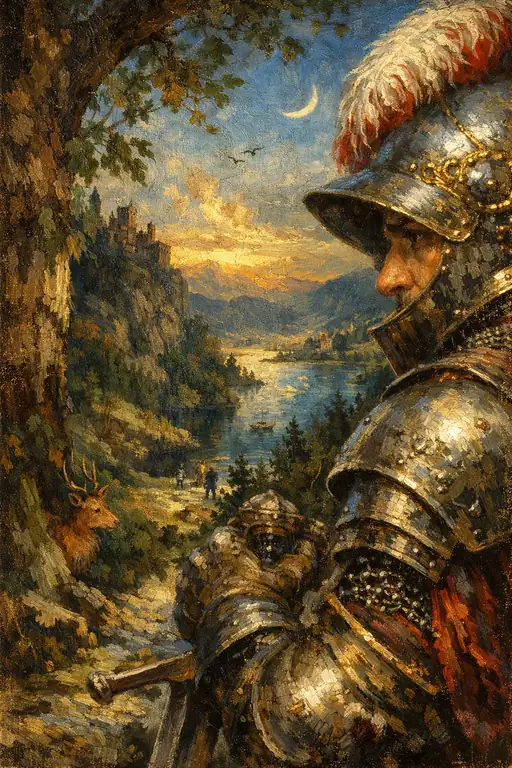 A Blade Sworn to the Moonlight, Journey Under the Stars
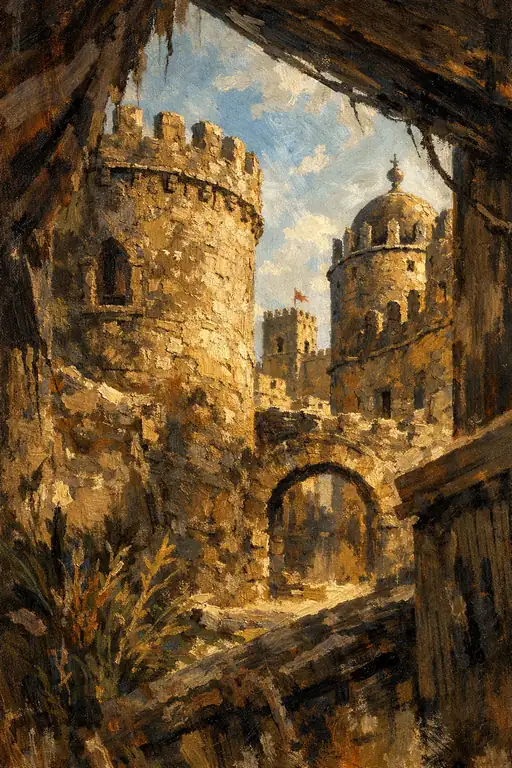 Echoes in Sunlit Stone
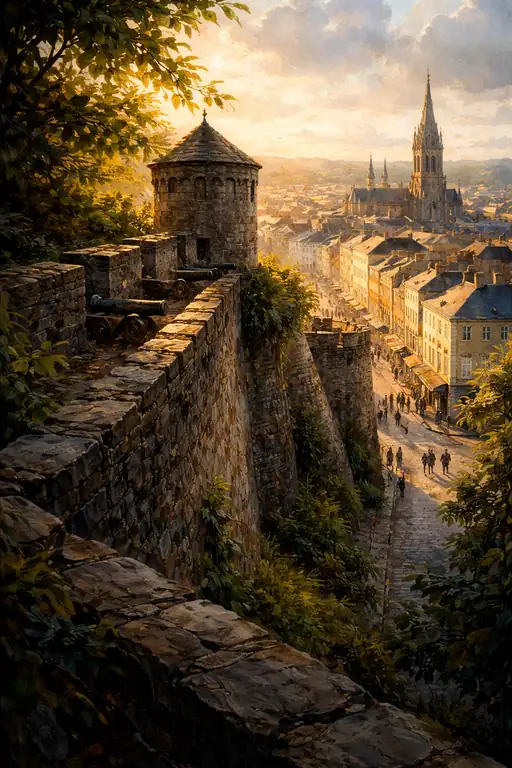 Golden Shadows Over the Stone Guardians
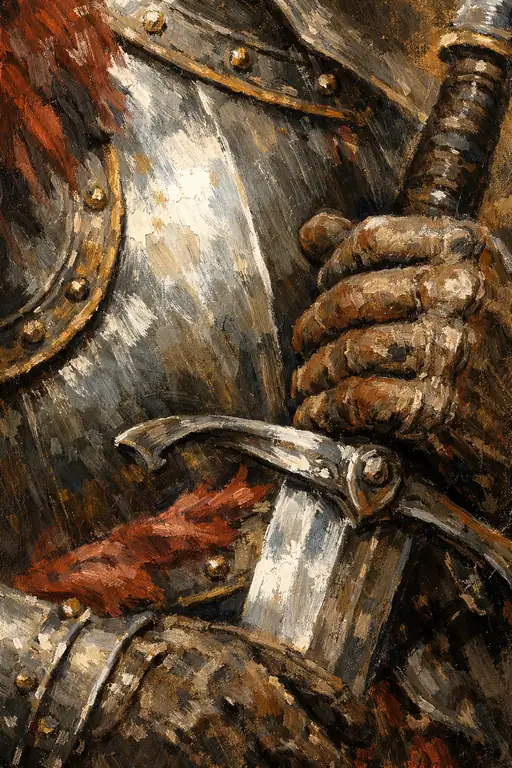 Echoes of a Forgotten Vow
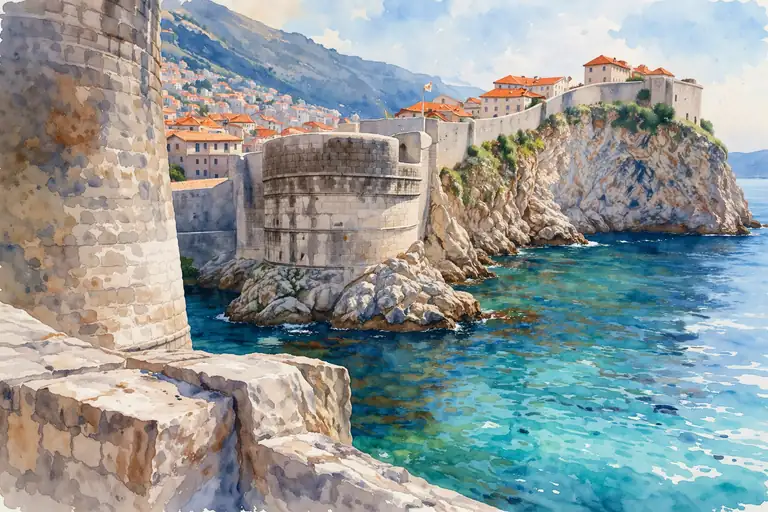 Dubrovnik Walls
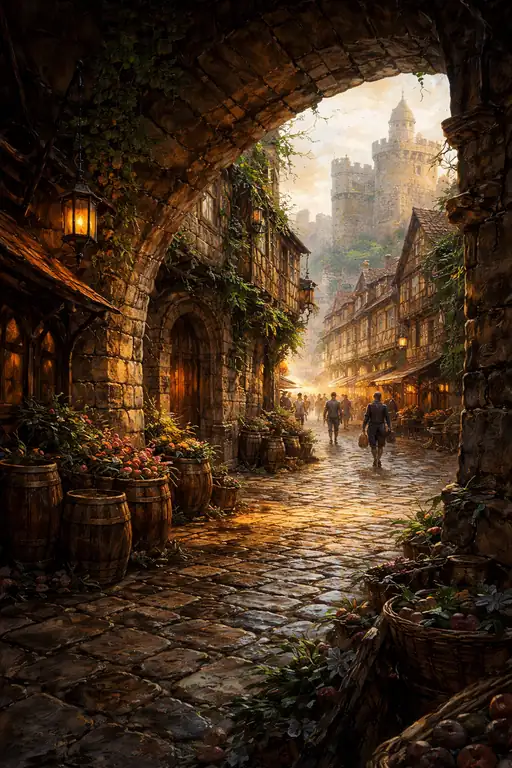 Echoes of the Medieval Market
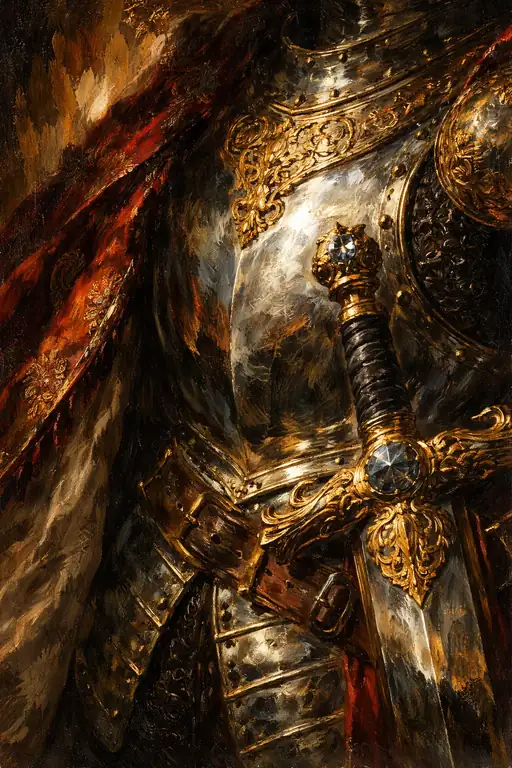 Steel Resolve in Golden Light