Tension in the Heart of Iron
Critique
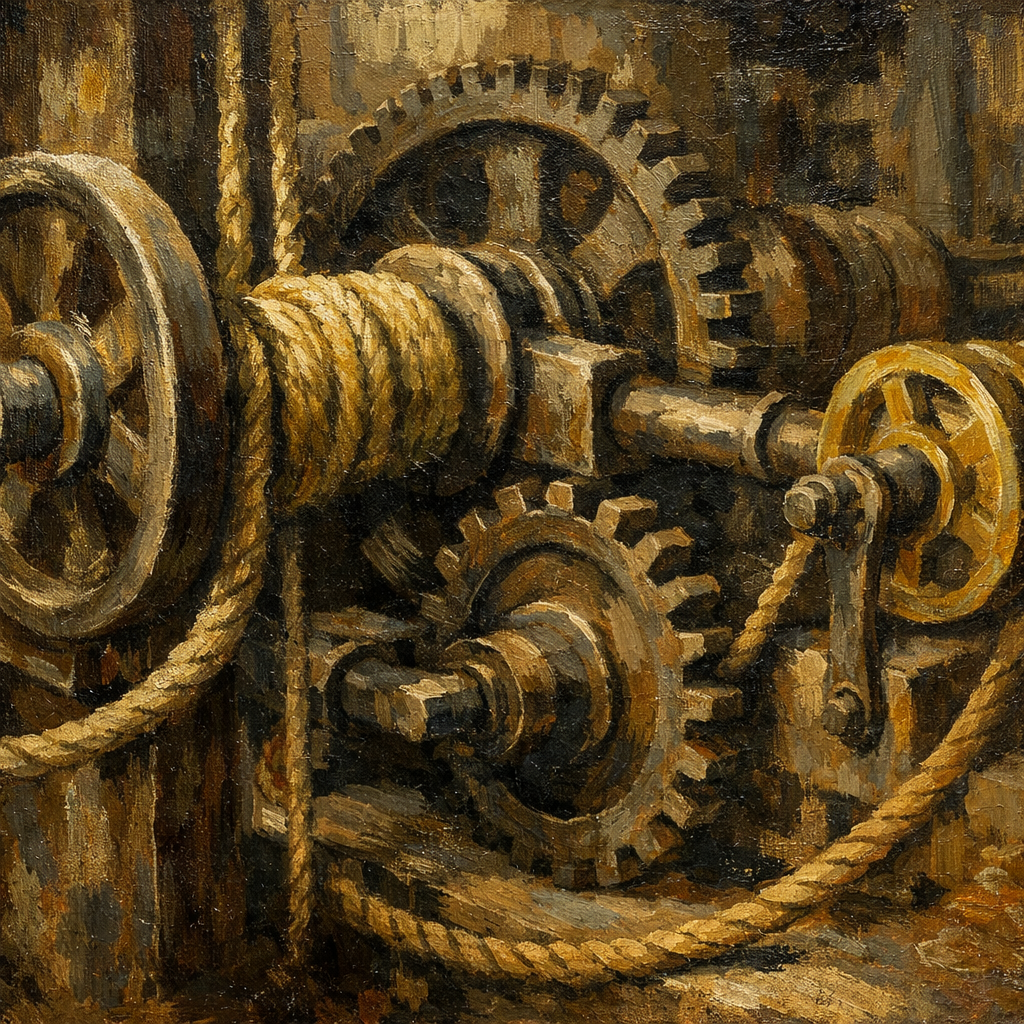
1. Introduction The painting presents a complex and fascinating study of mechanical interdependence, featuring a series of large gears and thick, winding ropes. This composition focuses on the physical connections and the functional logic of a powerful machine, treated with an artistic flair that emphasizes its tactile and structural qualities. The work invites the viewer to appreciate the rugged beauty of industrial components that are often hidden from public view. 2. Description A massive central pulley is tightly wound with a thick, textured rope that appears to be under considerable tension. This central element is flanked by several interlocking gears of various sizes, their teeth rendered with a gritty, realistic detail. The rope winds through the mechanism, creating a dynamic sense of movement and connection between the rigid metallic parts. The background is a dense collection of dark, weathered wood and metal, providing a somber and industrious setting for the intricate machinery. 3. Analysis The artist utilizes a compact, interlocking composition that fills the frame, creating a sense of being inside the machine itself. The thick, impasto brushwork is particularly effective in depicting the frayed texture of the rope and the pitted, oily surfaces of the gears. A warm, diffused light catches the individual fibers of the rope and the edges of the gear teeth, highlighting the physical depth and complexity of the assembly. The dominant earthy palette of browns and ochres reinforces the grounded, material nature of the subject. 4. Interpretation and Evaluation This work is a compelling celebration of mechanical harmony and the raw power of manual and industrial systems. The contrast between the flexible, organic quality of the rope and the hard, uncompromising geometry of the gears suggests a narrative of human ingenuity and physical effort. Technically, the painting excels in its ability to convey weight and tension through its expressive brushwork and careful management of tonal values. The artist successfully transforms a purely functional subject into a study of form, light, and texture. 5. Conclusion The initial impression of a dense and complicated mechanism gradually gives way to an appreciation for the rhythmic beauty of its parts. The painting captures the soul of the machine age, blending a realistic focus on detail with a soulful, atmospheric execution. It stands as a powerful testament to the artistic potential inherent in the world of industry and the enduring appeal of well-crafted, functional design.
 The Slumbering Giant's Gold
 Poetry of the Golden Gears
 The Golden Heart of Invention
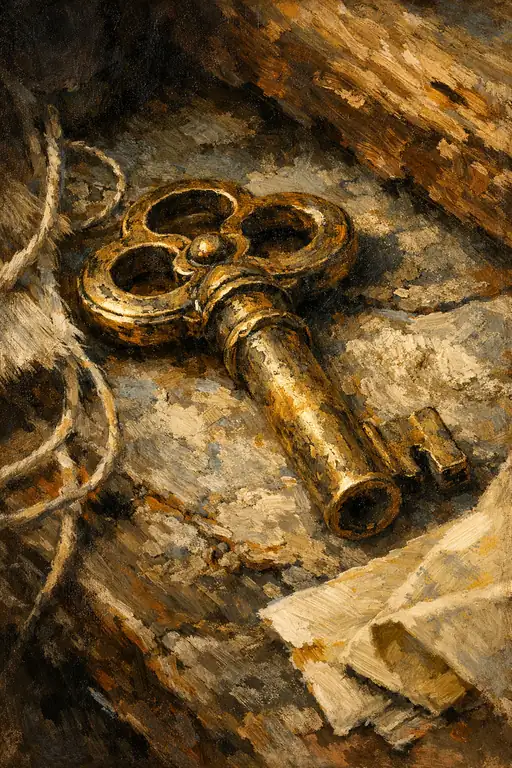 The Weight of Forgotten Doors
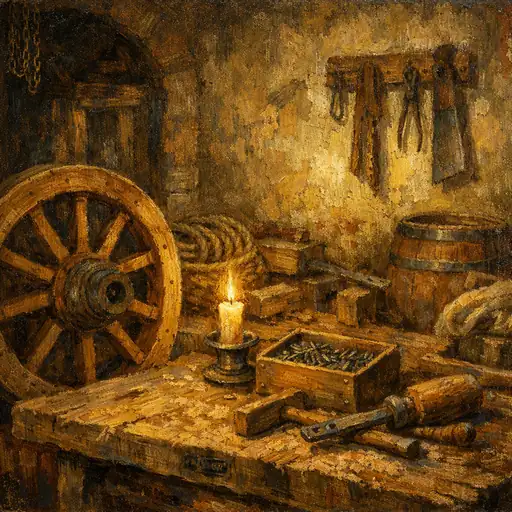 Whispers in the Candlelight
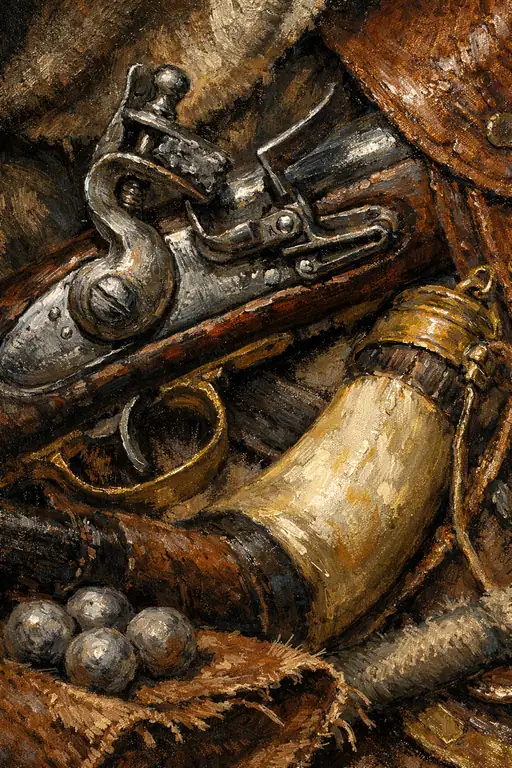 Echoes of a Restless Frontier
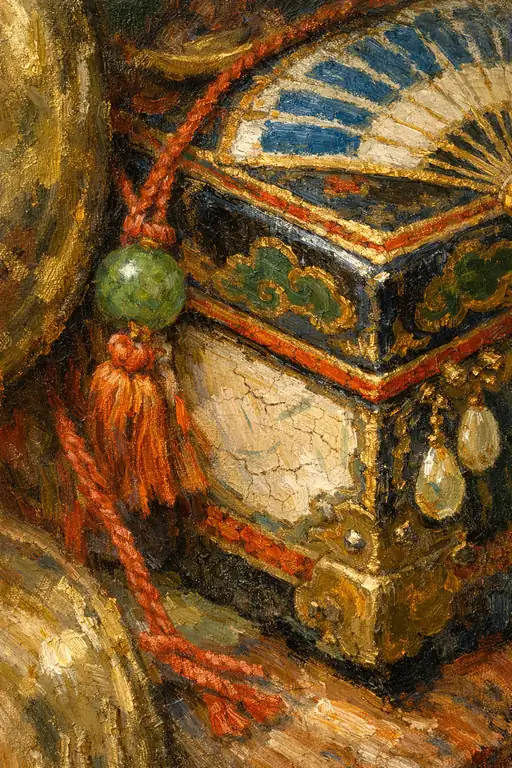 Secrets Held in Lacquer and Gold
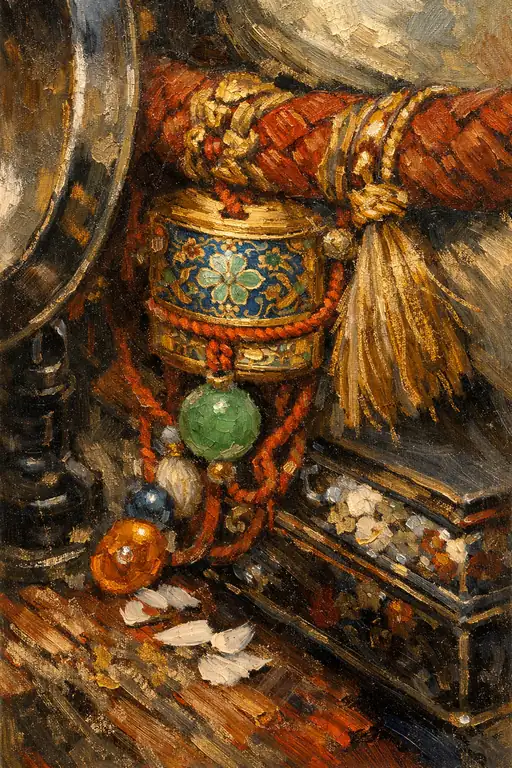 Echoes of a Forgotten Dynasty
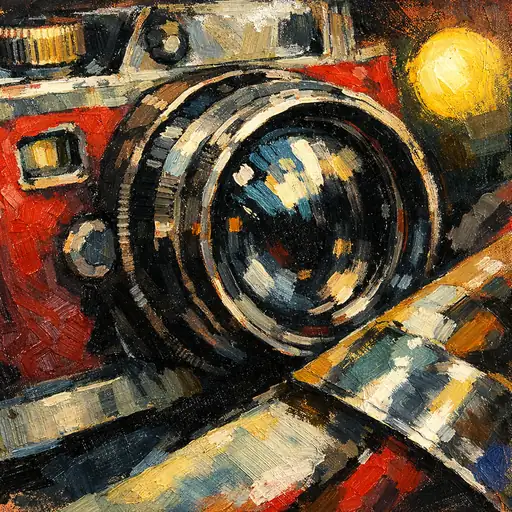 The Red Eye of Memory
 Silence Before the Storm