The Slumbering Giant's Gold
Critique
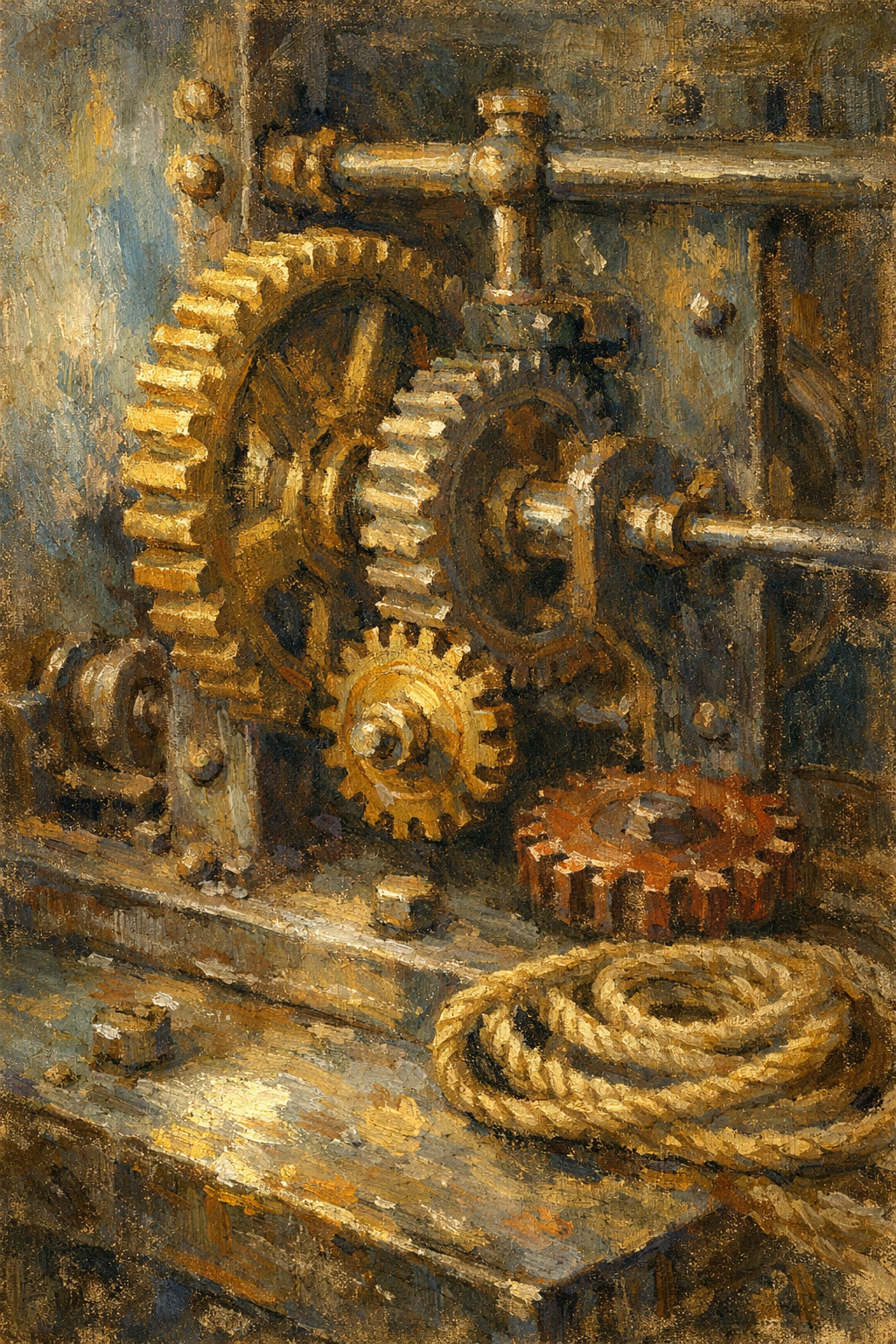
1. Introduction The painting offers an intimate and detailed exploration of mechanical components, specifically a series of interlocking gears and a coiled rope. This industrial subject matter is treated with a painterly sensibility that emphasizes the aesthetic qualities of functional objects. By focusing on the intricate textures and metallic surfaces, the work elevates the machinery of a bygone era into a subject of contemplation and artistic study. 2. Description A large, brass-colored gear dominates the left side of the composition, its teeth meticulously rendered with thick applications of paint. It connects to smaller gears, one of which glows with a vibrant golden hue, suggesting the reflection of a nearby light source. In the foreground, a coiled rope of earthy ochre rests on a weathered metallic surface, its fibers captured with expressive brushstrokes. The background is composed of dark, industrial machinery with visible bolts and pipes, set against a muted blue and grey backdrop. 3. Analysis The artist employs a vertical composition that emphasizes the height and complexity of the mechanical assembly. The use of impasto is particularly effective in conveying the physical weight and rugged texture of the metal and rope. There is a compelling contrast between the warm, luminous tones of the gears and the cool, shadowy background, which creates a strong sense of depth. The rhythmic repetition of the gear teeth provides a visual cadence that leads the eye through the various layers of the machine. 4. Interpretation and Evaluation This work successfully highlights the inherent beauty in industrial design and the harmony of moving parts. The focus on texture and light suggests a deep appreciation for the materiality of iron, brass, and fiber. Technically, the painting is impressive for its handling of metallic reflections and its ability to give a sense of life to inanimate objects. The creative choice to pair the rigid geometry of the gears with the organic form of the rope adds a narrative of manual labor and mechanical power. 5. Conclusion While the subject may initially seem stark or purely functional, the artist's expressive style reveals a world of rich color and tactile complexity. The painting transforms a fragment of machinery into a compelling visual experience that celebrates the ingenuity of the industrial age. It leaves the viewer with a renewed perspective on the aesthetic potential found in the most practical aspects of our built environment.
 The Golden Heart of Invention
 Tension in the Heart of Iron
 Poetry of the Golden Gears
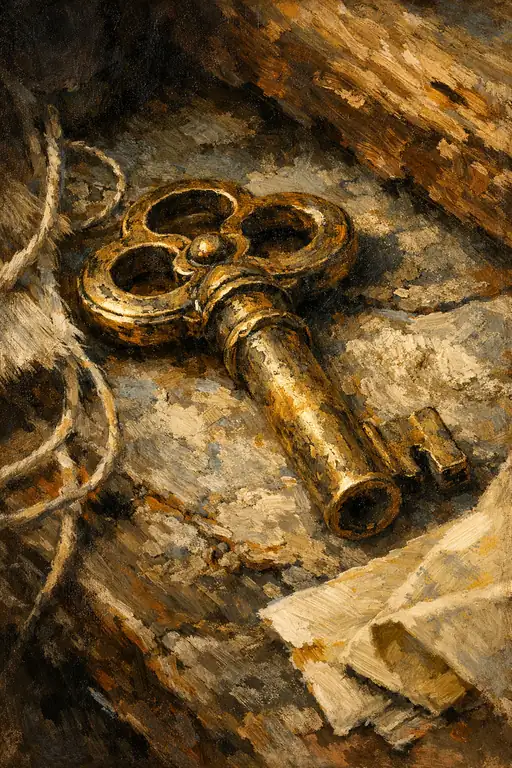 The Weight of Forgotten Doors
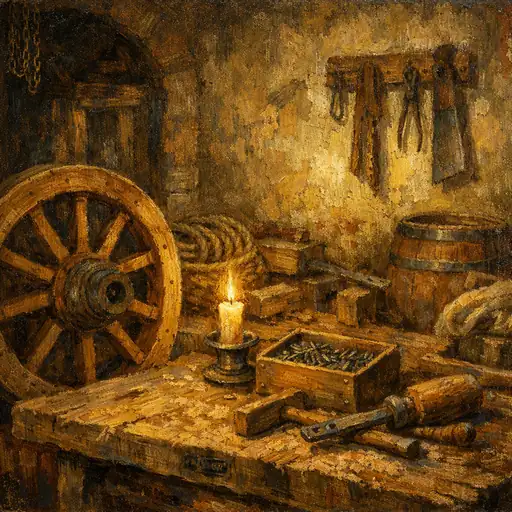 Whispers in the Candlelight
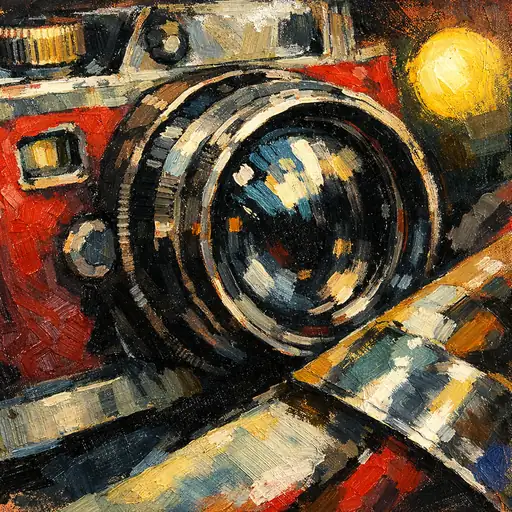 The Red Eye of Memory
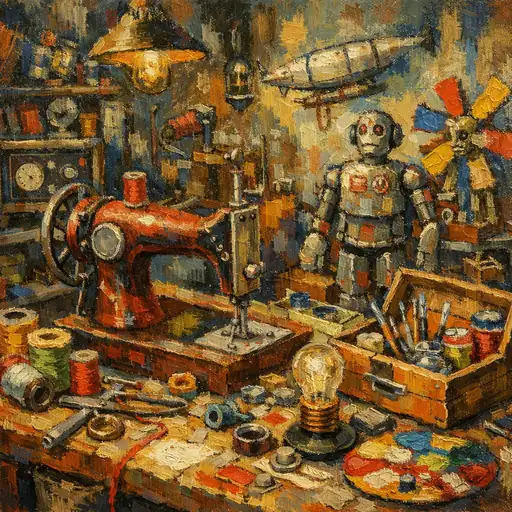 Steampunk Workshop
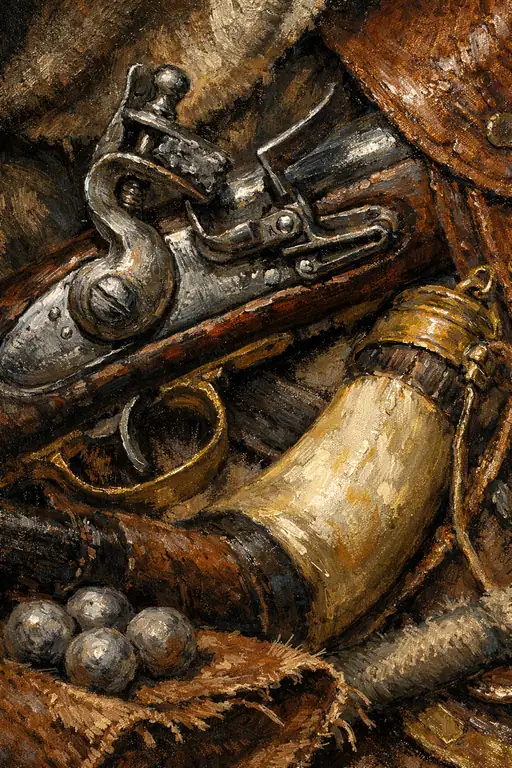 Echoes of a Restless Frontier
 Tears of the Frozen Light
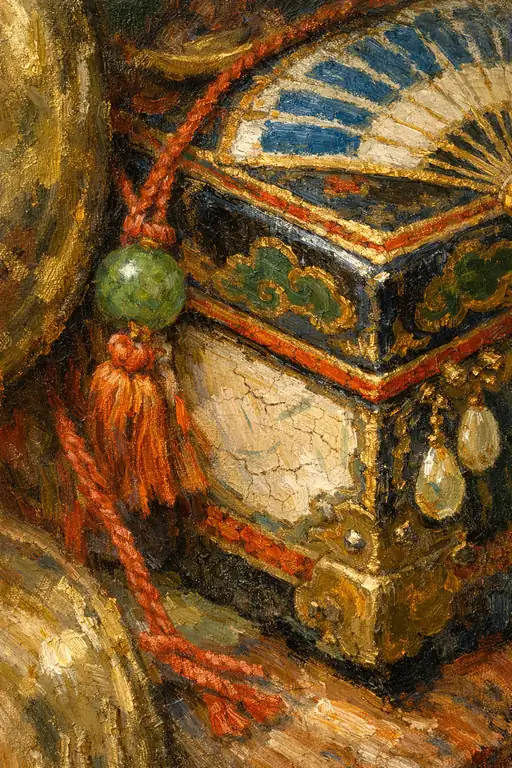 Secrets Held in Lacquer and Gold