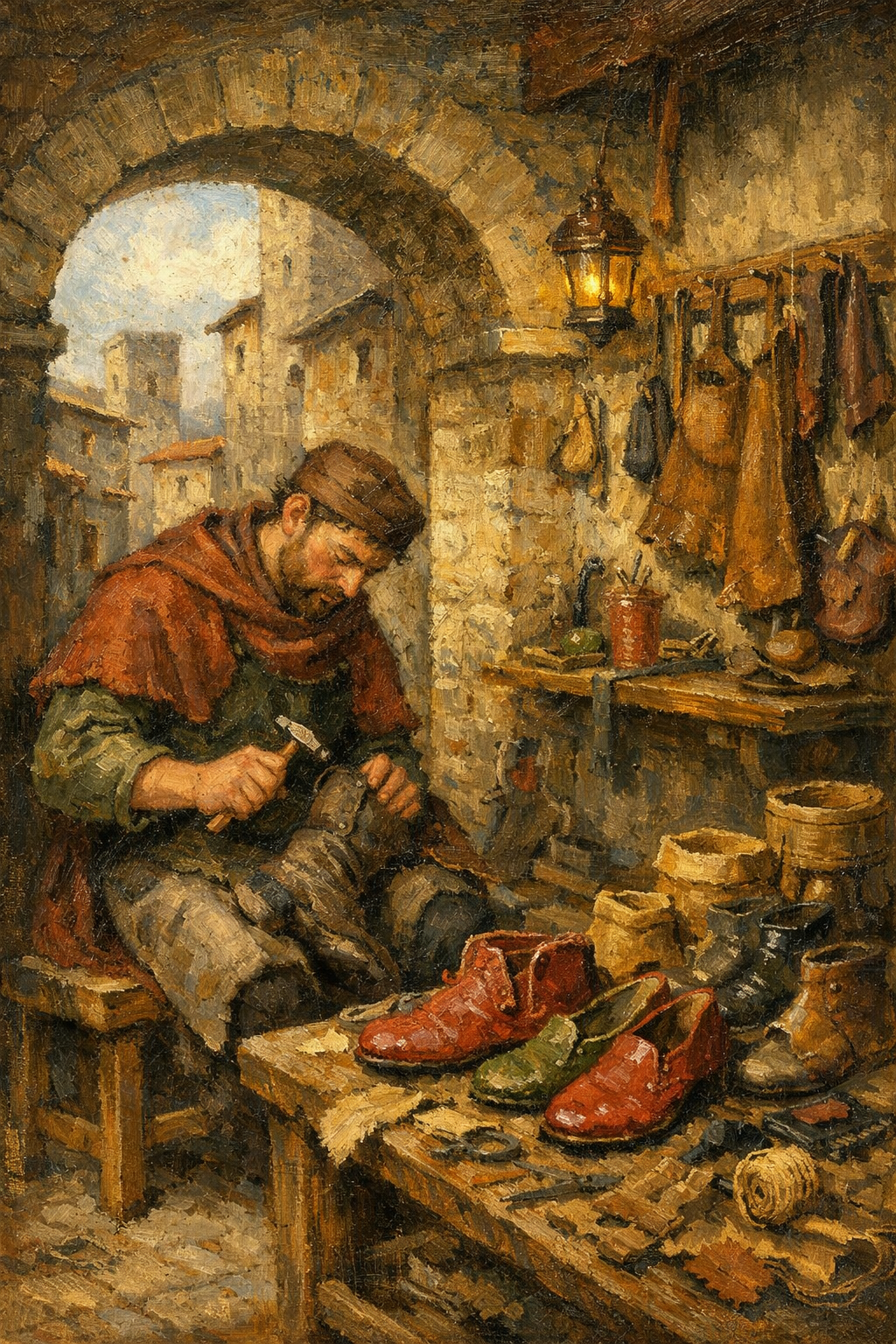
A Stitch in the Archway's Shadow
Critique
1. Introduction The painting presents a focused study of a craftsman engaged in the traditional art of shoemaking. Set within an arched workshop that opens onto a historic European streetscape, the scene captures a moment of quiet industry. The composition immediately draws the viewer into the intimate space of the artisan, where the tools of the trade and the finished products tell a story of dedication and skill. 2. Description In the foreground, a bearded cobbler sits on a simple wooden stool, hunched over his work with intense concentration. He is dressed in rustic garments of green and reddish-brown, wielding a small hammer to shape a piece of dark leather. Surrounding him are the various elements of his craft: leather aprons hang from the stone wall, a warm lantern glows above his workbench, and several completed shoes in vibrant shades of red and green rest on the table. The background reveals a sunlit street with towering stone buildings under a pale blue sky. 3. Analysis The artist employs a vertical composition that uses the architectural arch to frame the central figure, creating a sense of depth and enclosure. A warm, golden light emanates from the lantern, casting soft shadows and highlighting the textures of the leather and the rugged stone walls. The brushwork is expressive and visible, lending a tactile quality to the scene and emphasizing the physical nature of the cobbler's labor. The contrast between the cool tones of the distant street and the warm interior focuses the viewer's attention on the artisan's environment. 4. Interpretation and Evaluation This work serves as a poignant tribute to the enduring value of manual craftsmanship in an evolving world. The artisan's posture and the meticulous arrangement of his tools suggest a deep respect for tradition and the dignity of labor. The painting is technically accomplished, particularly in its handling of light and the rich, earthy palette that harmonizes the various elements of the workshop. The creative use of the archway as a portal between the private workspace and the public street adds a layer of narrative complexity to the simple subject matter. 5. Conclusion The initial impression of a quaint historical scene matures into a profound appreciation for the quiet persistence of the human spirit through work. The painting successfully balances detailed realism with an atmospheric, impressionistic touch, making it a compelling exploration of its theme. It remains a powerful testament to the beauty found in the everyday acts of creation and the mastery of a time-honored craft.
 The Golden Reflection of Dedication
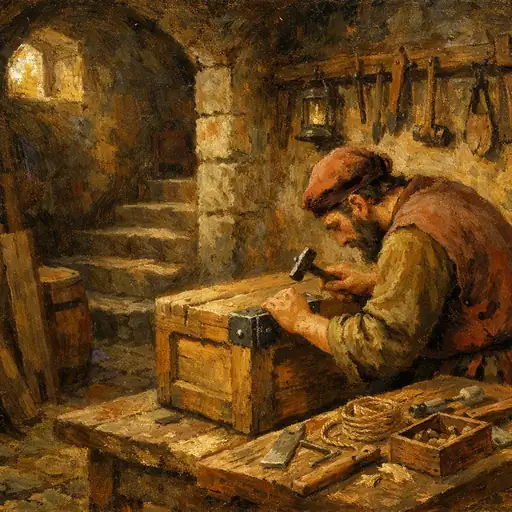 Echoes of the Hammer in the Dark
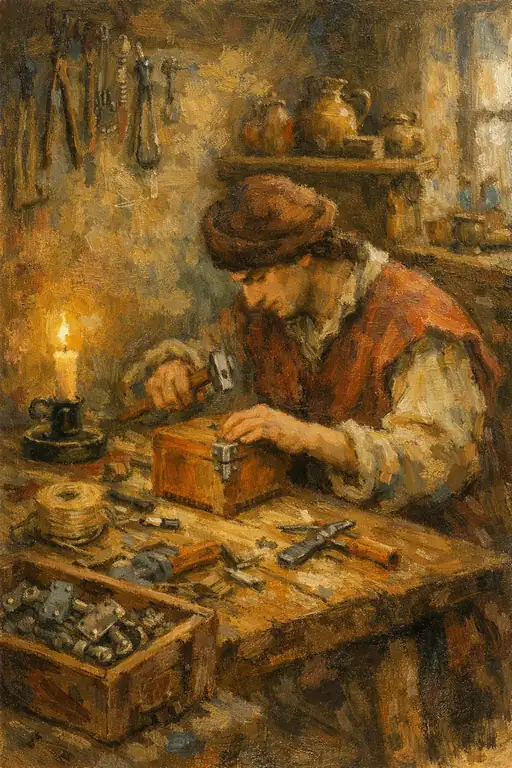 The Warmth of a Single Spark
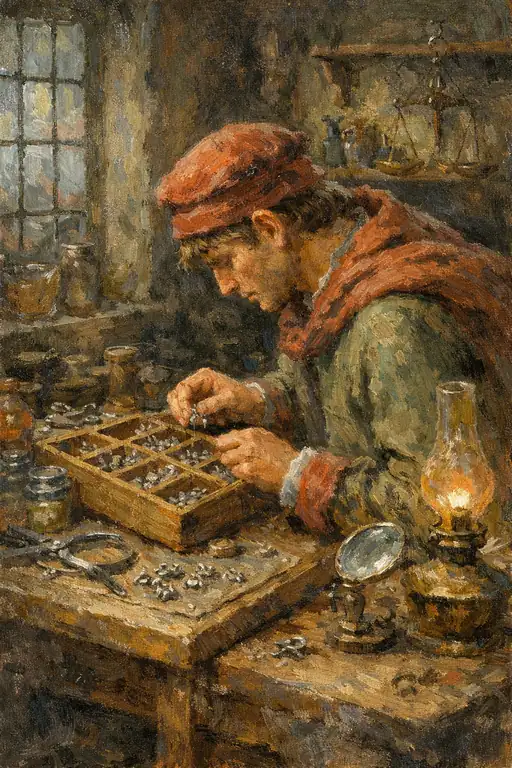 The Soul in the Smallest Parts
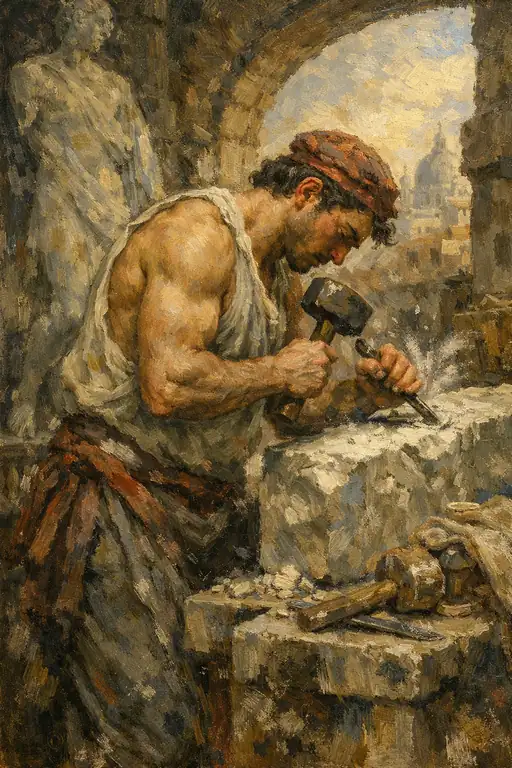 The Soul Carved in Stone
 The Artisan's Devotion
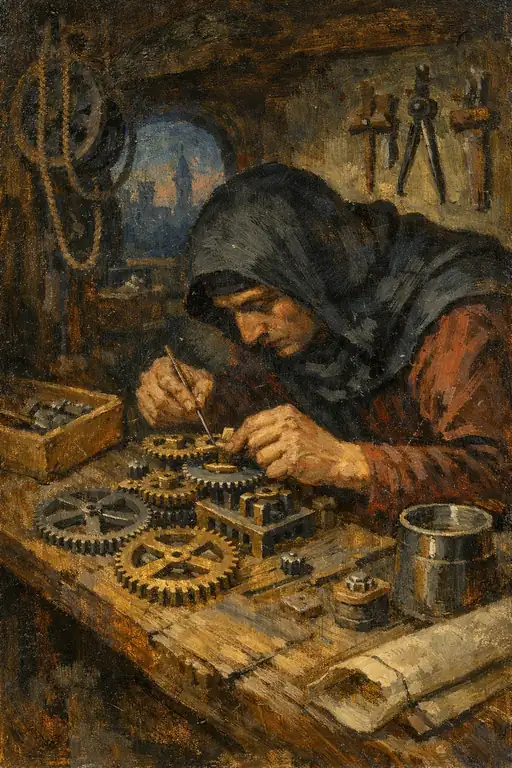 Orchestrating Time in the Shadows
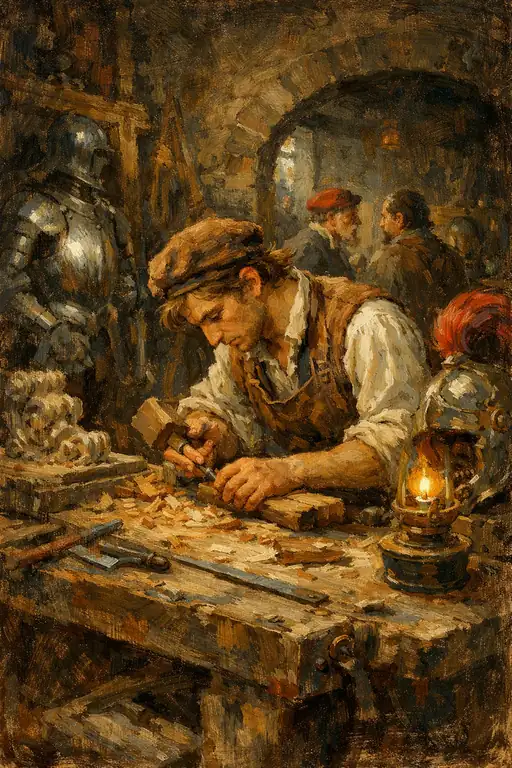 The Artisan's Light
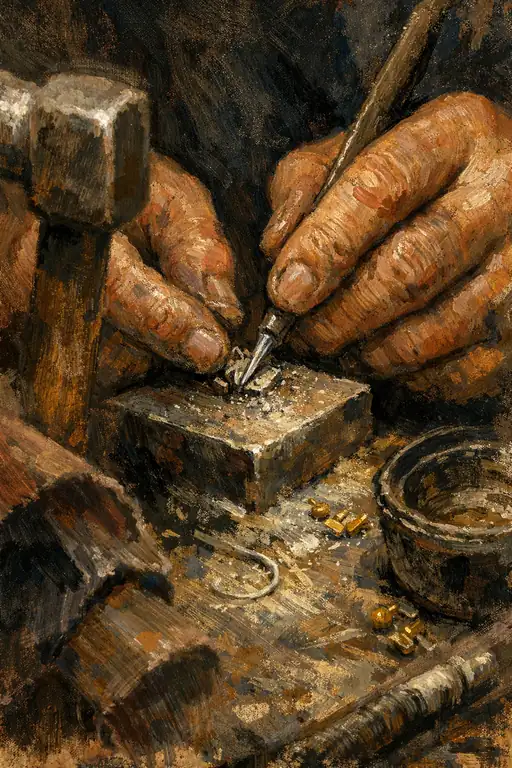 The Weight of Time in Calloused Hands
 Reviving the Sole